{{ 'now' | timezone: 'America/New_York' | date: '%b %d, %Y' }} |
|
|
|
Hello, and welcome back to The Best & The Brightest. I’m Leigh Ann Caldwell, back
in D.C. in time to appear on ABC’s This Week—although I just missed Congress, which will be out of session for the next two weeks. D.H.S. is still shut down after a major disagreement between House and Senate Republicans, but Trump insists that T.S.A. agents will be paid tomorrow regardless. Security lines have been interminable at some airports, but I was incredibly lucky—Harry Reid International in Las Vegas was the picture of efficiency yesterday. I’ll be fully back
in your inbox tomorrow.
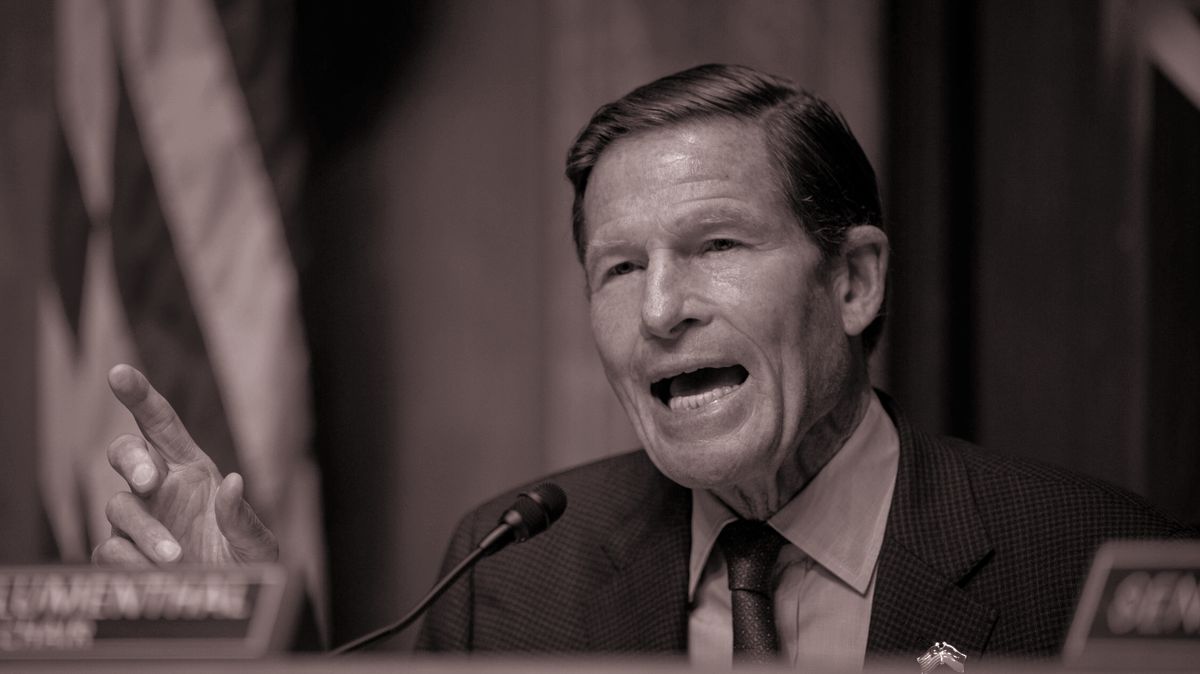
Today, I’m handing the mic to my colleague John Heilemann, who has been exploring every single angle of the metastasizing Iran war on his essential podcast, Impolitic. Here he shares his sit-down with Sen. Richard Blumenthal of Connecticut, who sits on the Armed Services and
Homeland Security committees and provided the not-very-reassuring intel that “the chaos you see publicly is mirrored in the briefings that I receive in classified settings.” Up top, Abby Livingston brings you inside a Democratic meltdown over ethics.
Also mentioned in this issue: General Dan Caine, Pete Hegseth, Markwayne Mullin, Sheila Cherfilus-McCormick, Ron DeSantis,
Tony Gonzales, Chris Dodd, Vladimir Putin, Kristi Noem, and many more… |
|
|
|
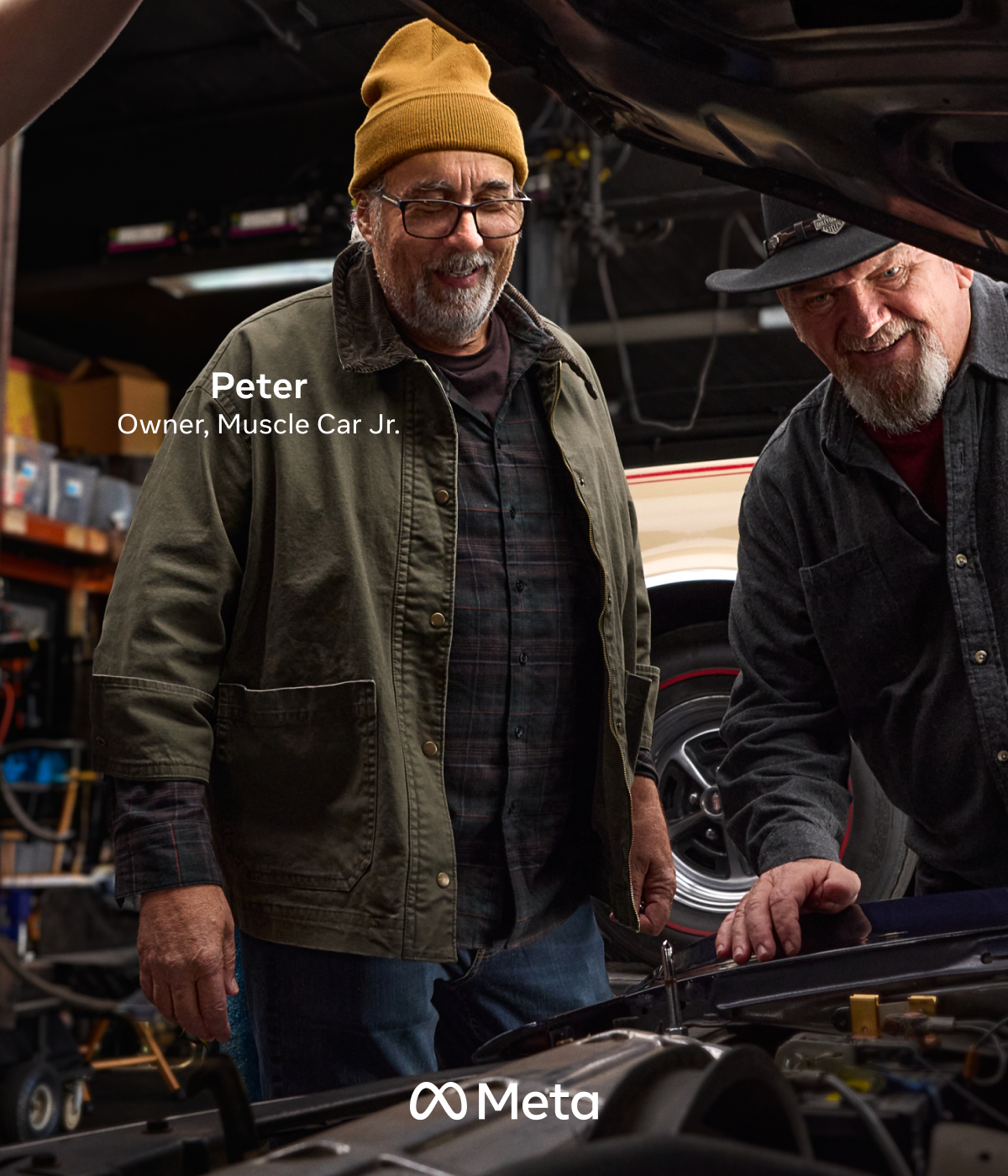
Meta apps help over 35 million American businesses grow.
Muscle Car Jr. is one of them. From a single post, it’s grown into a community of over 230,000 car lovers on Facebook, Instagram and WhatsApp — and a thriving business. “Restoring cars started as a hobby," says Peter, Muscle Car Jr.'s owner. "Now it's a full-time job." See Peter's story. |
|
|
|

| Abby Livingston
|
|
The House Ethics Committee is the only truly bipartisan committee on the Hill, stacked with the
soberest members of each party. So when one of its subcommittees found Democratic Florida Rep. Sheila Cherfilus-McCormick guilty of 25 ethics violations involving allegations that she embezzled emergency-response funds to finance her campaign, it clearly signaled that her own party had turned against her. Cherfilus-McCormick said she’ll prove her innocence, but expulsion by her colleagues isn’t out of the question.
This is a mess for Democrats on two fronts. House G.O.P.
leadership is already making noise about holding a vote, which could create a Democratic vacancy in a Florida House district where Gov. Ron DeSantis has the power to drag out a special election indefinitely. That would reduce Dems’ leverage in a narrowly divided House, though leadership may be eager to put this behind them. The allegations are an awkward look for a party headed into the midterms with an anti-corruption message—even if the party of Tony Gonzales
has already abandoned the high ground. |
|
|
|
Sen. Richard Blumenthal sits in classified briefings on the Iran war. But he says you don’t
need a security clearance to see that Trump didn’t think this through—and that all signs point to a ground invasion. |
|
|
|
Richard Blumenthal, the senior U.S. senator from Connecticut, turned 80 last month, but his
workload would exhaust a person half his age. Serving on the Armed Services, Homeland Security, Judiciary, and Veterans’ Affairs committees puts Blumenthal at the center of the action on Capitol Hill pretty much all the time—but never more so than right now, as lawmakers are enmeshed in fierce debates over the war in Iran, funding D.H.S., and Donald Trump’s efforts to turn the Department of Justice into an instrument of political retribution.
Born and raised in Brooklyn,
and educated at Harvard and Yale Law School, Blumenthal settled in Connecticut after being appointed U.S. attorney for the state at the age of 31. He was elected to the state House of Representatives in 1984, the state Senate in 1987, and then served five terms as attorney general, emerging as one of very few state A.G.s with a national political profile. When Chris Dodd announced in 2010 that he was retiring from the U.S. Senate seat he’d held for the previous 30 years,
Blumenthal won it with relative ease and has held it ever since. |
|
|
|
This muscle car business started with a single Facebook post.
Muscle Car Jr. connects 230,000+ car lovers across Facebook, Instagram and WhatsApp. That community helped its owner, Peter, turn a passion for restoring muscle cars into a thriving business. Meta apps help over 35 million U.S. businesses, like Muscle Car Jr., grow. Learn more. |
|
|
|
Blumenthal and I sat down to talk for my Impolitic podcast on Friday afternoon, not long after the
Senate struck a deal to end the D.H.S. impasse, and not long before House Republicans angrily rejected that deal, prolonging both the partial government shutdown and the resulting airport logjam across the country due to T.S.A. agents not getting paid. Blumenthal had much to say about the larger ICE-related questions that hover over the T.S.A. funding imbroglio, as well as about the war in Iran—from his concerns regarding what he sees as the increasing likelihood of U.S. boots on the ground and the strategic implications of America’s dwindling munitions
stockpiles, to the fact that the one clear winner in the conflict so far is Vladimir Putin. As always, this transcript has been edited for length and condensed for clarity, but you can hear the whole thing here or here
first thing on Monday morning. |
John Heilemann: The Pentagon is reportedly weighing plans to send 10,000
more combat troops to the Middle East—on top of the 150 aircraft, two carrier strike groups, and more than a dozen warships we have in the Gulf now, and the 82nd Airborne on the way. The history of modern warfare tells us that when a government amasses that much force in one place, it almost always ends up using it. How concerned are you about the likelihood of U.S. boots on the ground?
Sen. Richard Blumenthal: I can’t talk about the
classified briefings I’ve received, but a president of the United States doesn’t order a massive number of ships and military assets and troops to a region without some intention of putting our sons and daughters in harm’s way on the ground in Iran. I am more afraid than ever that Donald Trump is boxing himself into putting troops on the ground.
He cannot accomplish most of his objectives—whether it’s securing enriched uranium or changing the regime or even stopping missile
production—without putting troops on the ground. Maybe he’s backing away from some of those objectives. The chaos that you see publicly is mirrored in the briefings that I receive in classified settings. We are spending billions and billions of dollars that we could be using for education and healthcare on this show of force and bombing that cannot accomplish the objectives at 30,000 feet. He’s not even talking about enough troops to accomplish military objectives in difficult terrain, attacked
by drones and missiles and fast attack boats, subject to mines and other kinds of asymmetric warfare. I am deeply afraid of the massive casualties that would be caused to our sons and daughters if he proceeds with troops on the ground.
You didn’t need classified briefings to believe that if the U.S. went to war with Iran, they’d close the Strait of Hormuz and strike our allies in the region; that was the conventional wisdom going back decades. And based on the reporting we’ve
seen, Joint Chiefs chairman Dan Caine and the other generals conveyed all this to Trump beforehand. Is it really possible that Trump essentially said, Nah, you guys are just wrong—we’ll bomb the crap out of Tehran and they’ll surrender?
Trump said in one of his offhand remarks, “Nobody told me they were going to close the strait”—which is just totally unbelievable. When he said nobody expected the price
of oil to go up, or the shipping to be paralyzed, or the gasoline to be higher in price—absolutely unbelievable. He says Iran gave him a present by allowing some Pakistani flagged tankers, 10 of them, to go through the strait. The present he gave Iran is so much bigger when he lifted sanctions on them. Billions of dollars are going into Iran’s coffers to kill our troops as a result of his lifting sanctions. Likewise, he lifted sanctions on Russia, which is providing intelligence to Iran so they
can kill our troops. The war itself, the way he is conducting it, is so self-destructive to America. It is a self-inflicted wound.
The Washington Post reported that we’ve fired more than 850 Tomahawk cruise missiles in the first four weeks of the war; only a few hundred are manufactured every year. An A.E.I. report this week said, “The United States does not look like it can sustain high-intensity conflict with a
near-peer adversary,” and that “the war is a real-time stress test of the American arsenal, and the early results are troubling.” What say you?
The limits of our defense industrial base has been a topic of concern for many of us over, literally, years. In my advocacy for more munitions to Ukraine, the argument has always been we’re limited in our supplies, we don’t have the stock that we can provide Ukraine with more. Particularly the
interceptors for the Patriot system and the THAAD defense systems—these interceptors are very effective, but they’re very costly. So we knew from the outset that there were limits on the ordnance and munitions in our stockpile. But General Caine, speaking from the podium during one of his press conferences with Pete Hegseth, said we have plenty of this stuff, we don’t need to worry about it.
Well, we do need to worry about it, because our supplies are limited, and they
produce less than we need. And expanding that defense production is not just a matter of money, but it’s having the skilled labor, the production capacity—you can’t just issue an order and have it done.
It is definitely a challenge, not just in Iran, but in parts of the world where our national security is really at risk. China is our main competitor, militarily, economically, politically—and so it really is a worldwide strategic question that comes down to not just the Tomahawk
missiles, but a whole array of our arsenal that makes us strong so we can keep the peace. |
This has been a financial windfall for Russia. It’s been devastating for Ukraine. Is there any other
way to interpret the war in Iran than as a big in-kind contribution to Vladimir Putin from Donald Trump?
The big winner here is Vladimir Putin. Part of the tragedy of this war is that it has elevated Vladimir Putin economically and militarily at a point where Russia was on its heels in the war in Ukraine. I have just come back from Ukraine. I’ve been there nine times since the war began. I have been so inspired and moved by the courage and
strength of the Ukrainian people. And they are fighting our fight, because if Putin isn’t stopped in Ukraine, he will go against Moldova or Poland or the Baltic states or Sweden or Finland—our NATO allies, where we will be compelled to put troops on the ground. |
|
|
|
Russia is not winning. Ukraine actually has begun a counteroffensive that has taken back some territory.
Russia was running out of money because its oil sales were going down. My bill—and it’s bipartisan, it has, I think, 85 co-sponsors—to impose sanctions on buyers of Russian oil and gas, like China, India, Hungary, Slovakia. Imposing those sanctions and providing more military [aid] would enable Ukraine to literally win this war. But the billions of dollars that Vladimir Putin is now gaining from the sales of oil and gas, the price of which is rising, are going to fuel that war machine. And the
throughline of the Trump presidencies is that Vladimir Putin wins.
Democrats went into the D.H.S. funding battle saying they wouldn’t give ICE another dime without substantive reform. If you don’t get real ICE reform out of this, has it all been a waste of time?
I will not vote for another dime of ICE funding or C.B.P. funding unless there are real reforms—far-reaching, fundamental reforms. That includes wearing badges and body
cameras, no masks, no mass sweeps, judicial warrants. By the way, [D.H.S. Secretary Markwayne] Mullin, in the confirmation hearing, told me he would favor judicial warrants if they’re going to break into somebody’s home or any kind of forcible entry. Good. It’s the Fourth Amendment, and these reforms are routine for every police department in the country. They’re not really reforms. They’re basic, routine operating procedures for our police forces. And by the
way, if police forces fail to obey these rules, they can be sued—federal agents, no. And that’s why I have championed a bill that would make federal agents subject to the same rules, same right of action by people who have been harmed when their civil rights are violated.
Where are we in this battle? Well, I think we’re going to stand strong. We’re going to use the leverage that we have, and it’s the only leverage we do have. We’re in the minority.
Trump is still pushing
the SAVE Act, and there’s talk of jamming it through via reconciliation. What happens when the Senate comes back from recess?
We’re going to defeat it. I rarely make predictions about what the United States Senate is going to do, but we’ve shown in this D.H.S. battle that we have some power when we are unified. And I’m proud to be part of a group of senators who will stick together. It’s not SAVE America. It’s destroy America. It’s
purging voter rolls. It’s demanding passports and birth certificates from people who can’t afford passports, who don’t have birth certificates—God knows where my birth certificate is—and requiring married women to have their marriage certificates at the time they want to register to vote.
The purging of voter rolls and the creation of obstacles to voters is the only way Donald Trump can win the next election at the midterms, and he knows it. That’s why for him, as his former D.H.S.
secretary said, it is a means to ensure the right people vote. The right people vote, as Kristi Noem said, for the right leaders. |
|
|
|
Join Emmy Award-winning journalist Peter Hamby, along with the team of expert journalists at Puck, as they let you in on the
conversations insiders are having across the four corners of power in America: Wall Street, Washington, Silicon Valley, and Hollywood. Presented in partnership with Audacy, new episodes publish daily, Monday through Friday. |
|
|
|
Unique and privileged insight into the private conversations taking place inside boardrooms and corner offices up and down Wall
Street, relayed by best-selling author, journalist, and former M&A senior banker William D. Cohan. |
|
|
|
Need help? Review our
FAQ page or contact us for assistance. For brand partnerships, email ads@puck.news.
You received this email because you signed up to receive emails from Puck, or as part of your Puck account associated with {{customer.email}}. To stop receiving this newsletter and/or manage all your email preferences, click here.
|
Puck is published by Heat Media LLC. 107 Greenwich St., New York, NY 10006 |
|
|
|
|