 |
|
Welcome back to The Stratosphere.
|
|
In today’s issue, a close look at this cycle’s political kingmakers in Silicon Valley—and how Nikki Haley may have outpunched Ron DeSantis. Plus, dish on S.B.F.’s immensely lucky legal break, which lets many of his political allies off the hook thanks to a technicality.
Mentioned in this email: WhatsApp founder Jan Koum; one Lawrence J. Ellison; DeSantis mega-donors Saul Fox and Doug Leone; bundlers Dick Boyce and Gregory Wendt; PayPal Mafia members Reid Hoffman and David Sacks: R.F.K. allies Gavin De Becker and Tim Mellon; and friends of Sam Bankman-Fried like Michael Sadowsky, Sean McElwee, Ryan Salame, Nishad Singh and brother Gabe.
|
|
|
| Over the last two years, the dominant theme in Silicon Valley politics has been the backlash to San Francisco-style liberalism. Sure, your median techie still worries about climate change, H-1B visas, and the democratic threat of Trumpism, but we all know that the political culture of tech is not shaped by the median software engineer at Google. Fairly or not, it is leaders like Elon Musk who cast the industry’s image, inveighing against the “wokes,” vaccines, criminals, and the local government officials who won’t let him hang a giant, unsecured ‘X’ from the roof of Twitter HQ.
Of course, tech billionaires tweeting their feelings is one thing—it’s much more complex for them to operationalize their wealth into political influence. Which is why I have been awaiting the ’24 presidential candidates’ super PAC filings, which blessedly arrived this week. Who are the members of the technorati supporting? And who has been sitting things out? |
| Where Is Larry? Where Is Elon? |
|
| There were some surprises. Jan Koum, the billionaire founder of WhatsApp, just made the largest political donation of his life in the form of a $5 million bet on Nikki Haley and her super PAC. Koum has not traditionally been a political guy, but I wrote last year that since he stepped away from Facebook—the 47-year-old is now listed on F.E.C. forms, in the ultimate flex, as “retired”—he seems to have caught the bug. Last cycle, he put $2 million into an AIPAC-aligned super PAC, his first check of significance. Most of his giving has coalesced around Israel issues, but the donation to Haley’s super PAC suggests that his politics may be expanding to a general affinity for hawkish pols like the former U.N. Ambassador. In fact, Koum was the Haley super PAC’s single biggest donor this year, followed by another Silicon Valley heavy: Tim Draper. As I reported earlier in the past, Draper has served as Haley’s emissary to the industry, bringing her around the Valley for a series of events. Draper put $1.3 million into her super PAC, too.
But tech establishment types were also missing in some of the places you’d expect. While there was a lot of activity this week from the various Tim Scott super PACs as they transferred money between them and consolidated into one group, I was struck by the absence of one name amid all of that commotion: Lawrence J. Ellison. For all the chatter about the Oracle billionaire—people around Scott are expecting tens of millions of dollars from him—Ellison has yet to cut a check to any of the pro-Scott groups for the 2024 cycle.
L.J.E., as he is known in donorworld shorthand, only makes an appearance as a small in-kind donor in March for lodging, suggesting that Ellison hosted Scott (or at least a few Scott super PAC officials). The Scott super PACs have said they are booking $40 million in pro-Scott advertising, which means that they got a check from someone in the weeks after the June 30 filing deadline. Perhaps from one of the world’s wealthiest people, who personally attended Scott’s presidential announcement and was shouted-out by the candidate from the stage as a “mentor”?
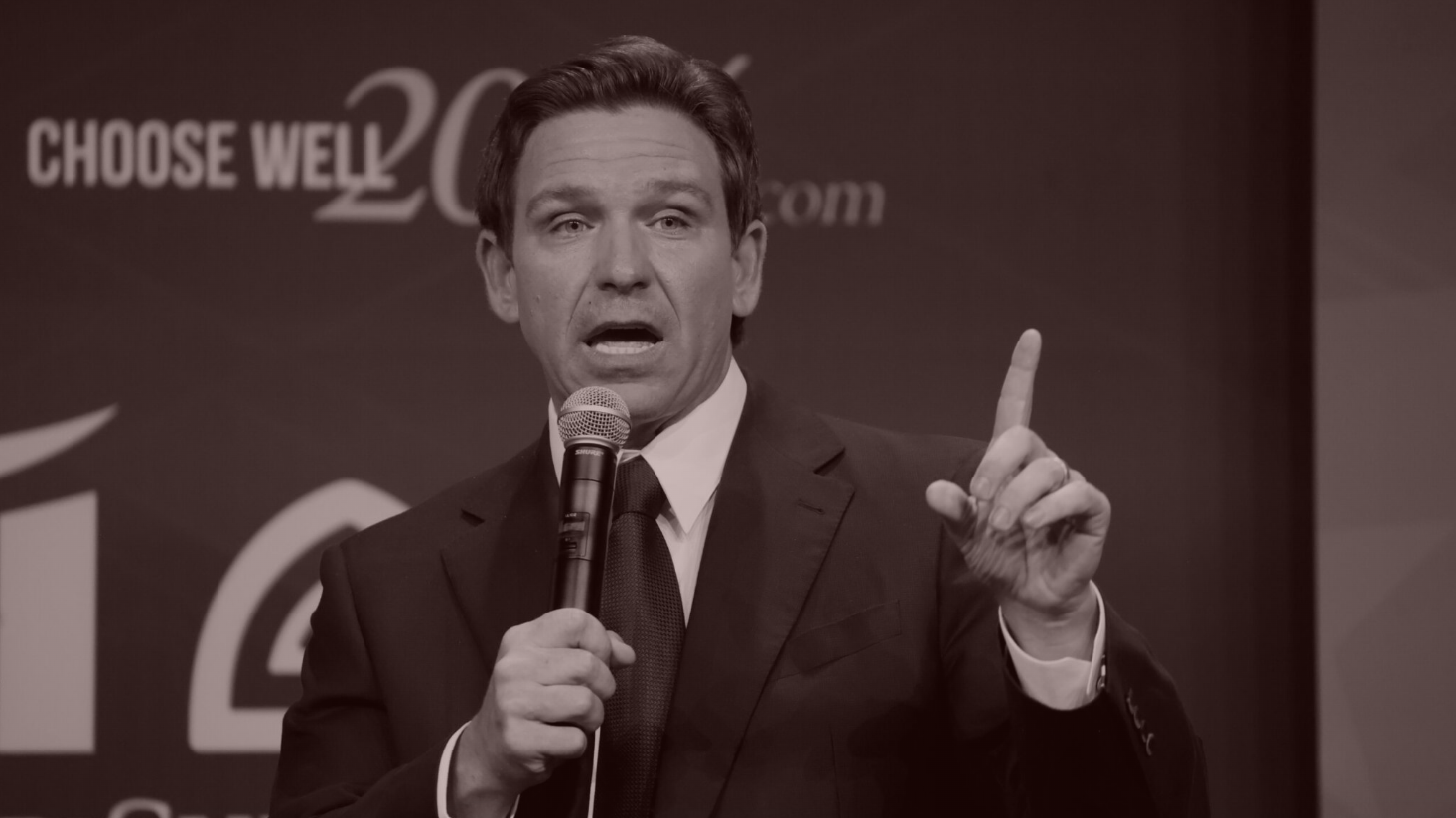
Meanwhile, I was similarly struck by the absence of notable Silicon Valley names on Ron DeSantis’s donor roll. In fact, his entire super PAC filing was lacking in as many seven-figure checks as I expected to see. The super PAC, Never Back Down, appears more dependent on a crew of Florida lobbyists and longtime allies who are close with Tallahassee. The only Silicon Valley people who cut seven-figure-or-higher checks to Never Back Down were Doug Leone, the longtime Sequoia Capital leader who was once one of Trump’s most stalwart industry backers before renouncing him after January 6, and Saul Fox, the low-profile private-equity megadonor of Woodside. (Leone gave NBD $2 million; Fox bequeathed $1 million.) No, I wasn’t much surprised at the absence of an Elon check—perhaps his Twitter/X campaign launch interview was enough to send DeSantis in another direction—but I am surprised that Haley outraised the Florida governor with tech billionaires.
A few other major Silicon Valley donations worth a mention: Marc Benioff’s former co-C.E.O. at Salesforce, Keith Block, is almost single-handedly financing longshot Will Hurd’s super PAC with a $500,000 donation; reliable G.O.P. bundler Dick Boyce put $500,000 into the super PAC of his longtime friend Doug Burgum (why exactly does a billionaire need a super PAC?); and San Francisco investment manager and former McCain compatriot Greg Wendt put a total of $500,000 into the outside group behind Scott. |
|
|
| On the Democratic side, the leading donor nonpareil is once again Reid Hoffman, the LinkedIn founder who has devoted his life to politics ever since Trump first took office. There was concern in some circles that Hoffman would step away from this passion after Trump ignominiously departed the Oval Office, but so far, all that anxiety appears unjustified. Hoffman is all over the latest F.E.C. filings with $5.5 million invested this cycle—$4 million went into a super PAC founded by former Republican operative Sarah Longwell; $1 million went to a controversial group he helped seed called the Mainstream Democrats PAC; and $600,000 went to a similarly centrist group, Welcome PAC.
But the most surprising Democratic donation with a Silicon Valley twist came from Gavin de Becker, the famous security consultant whose most prominent client was Jeff Bezos during his National Enquirer era of intrigue. (As you might recall, de Becker alleged, somewhat speciously in retrospect, that Bezos was the victim of a hack by the Saudis.) According to filings, de Becker contributed $4.5 million to his longtime friend Robert F. Kennedy Jr., his first major political contribution. That makes de Becker the second-largest backer of R.F.K. after G.O.P. mega-donor Tim Mellon, a recluse who gave a rare quote in a pro-Kennedy press release. Meanwhile PayPal Mafia member and podcast impresario David Sacks, who hosted Kennedy for a high-dollar fundraiser in San Francisco just the other week, gave $100,000 to Kennedy via Sacks’ personal super PAC. |
|
|
| My partner Bill Cohan wondered yesterday if things “are looking up for Sam Bankman-Fried, or down?” When it comes to S.B.F. himself, it’s a mixed bag. On one hand, it now appears possible that S.B.F. could end up imprisoned until his October trial, after it was revealed that he leaked diary entries by Caroline Ellison, his ex-girlfriend and former Alameda Research C.E.O, to The New York Times. Imprisonment would make his pre-trial prep decidedly more difficult, obviously—and even if he escapes this fate, I suspect that he will be much more circumspect about, shall we say, defending himself going forward.
At the same time, he also scored a major, somewhat unexpected win last week, when federal prosecutors dropped their campaign-finance charge against him. Mark Cohen, S.B.F.’s lawyer, successfully argued that the former crypto wunderkind was extradited from the Bahamas only to face a battery of fraud charges in the U.S.—not to face a campaign-finance violation. The Bahamian government eventually agreed, and prosecutors from Damien Williams’ office last week dropped the count altogether. The irony: the defendant who styled himself as a political savant was saved from political prosecution by… a geopolitical technicality.
But Bill’s question has an easy answer when you ponder how things are looking for Sam’s team. This is all a huge relief for Gabe Bankman-Fried, the younger brother who oversaw Sam’s political spending: the odds that he faces criminal charges himself are now pretty low. Ditto all of the folks who were enmeshed in S.B.F’s political operation and worked for Gabe. For prosecutors, targeting people like Michael Sadowsky or Sean McElwee is no longer a fruitful effort, given that they had no visibility into the alleged fraud at FTX.
And what about Ryan Salame, the Republican mega-donor in S.B.F.’s C-suite? Is he still in the federal crosshairs? Yes, at one point he was all-but accused of a crime, appearing in a superseding indictment as an unnamed co-conspirator to S.B.F. But now that charge… has been dropped. At the very least, he still appears to be of interest to prosecutors looking intoother campaign-finance charges involving his girlfriend, Michelle Bond, but who knows if that tangential investigation has teeth without there being live ammo in the S.B.F. campaign-finance case. Nevertheless, Salame is surely sleeping easier tonight than he was a week ago.
The cruelest purgatory surrounds Nishad Singh, the former FTX executive and one of Williams’ star witnesses. Singh caught a tough break, and is likely kicking himself. This spring, Singh pleaded guilty to participating in a straw-donor scheme that is now not being prosecuted against S.B.F., himself. (Although he did also plead guilty to five other charges, including conspiracy to commit wire fraud and money laundering. Those offenses are still very much a live issue in the S.B.F. trial.) Anyway, the Justice Department used its leverage while they had it against Singh, who will still presumably be called to testify against Bankman-Fried in October.
In the year or so since S.B.F self-immolated, I’ve spoken with many potential targets of the feds’ campaign-finance investigation, along with their friends and lawyers. From the start, there was an overriding concern about whether there could ever be any absolution in this matter. The vagueness of the campaign-finance allegation seemed to cast aspersions on nearly everyone who dealt with the Bankman-Fried brothers, perhaps unfairly suggesting that these effective-altruist do-gooders knew about crypto crime or straw-donor schemes. I would get asked: What might be the best-case scenario for them? The feds will sometimes issue a so-called “letter of declination,” which formally alerts someone that they are not being charged with a crime, which the recipient can choose to make public in order to clear their name. But as a lawyer involved once noted, a godsend like that is harder to get than a Taylor Swift ticket.
For people like Gabe, who hope to resume their careers when the FTX matter is finally resolved, it’s hard to say whether it would have been better for S.B.F. to formally, affirmatively beat the campaign-finance charge, or to have it dropped. At least this way, lawyers involved in the case say, people like Gabe probably won’t have to testify. But now, in the court of public opinion, the insinuation of wrongdoing may hover over both S.B.F. and his associates forever, a scarlet letter on his once-sprawling, deliriously ambitious political shop. Does dropping the charges on a technicality clear that up? Only kinda-sorta. |
|
|
|
| FOUR STORIES WE’RE TALKING ABOUT |
|
|
|
|
|
 |
|
|
|
Need help? Review our FAQs
page or contact
us for assistance. For brand partnerships, email ads@puck.news.
|
|
You received this email because you signed up to receive emails from Puck, or as part of your Puck account associated with . To stop receiving this newsletter and/or manage all your email preferences, click here.
|
|
Puck is published by Heat Media LLC. 227 W 17th St New York, NY 10011.
|
|
|
|