Hello and welcome back to The Best & The Brightest. I’m Leigh Ann Caldwell, inside the D.C. heat dome.
In today’s issue, a preview of tomorrow’s House Democratic election to select a new ranking member of the powerful Oversight Committee. The race, which kicked off following the tragic death of Rep. Gerry Connolly last month, is shaping up to be yet another generational test. Old habits die hard, so to speak, especially in an institution that rewards members with leadership roles at an age when most people enthusiastically retire.
But first… some fresh reporting from me and Abby Livingston on the latest fallout from the Iran strike, plus a note from my newest Puck partner, Ian Krietzberg, on the A.I. firms jockeying for military contracts. As you’ve heard me mention, Puck is getting into the A.I. space with Ian’s new must-read private email, The Hidden Layer. Sign up here for the first issue, landing in inboxes on July 7. In the meanwhile, we’ll be featuring Ian’s reporting and analysis here in The Best & The Brightest and across Puck.
Let’s dive in…
|
- Iran strikes back: Wall Street seemed to be breathing a sigh of relief after Iran launched a largely symbolic retaliatory missile strike toward a U.S. military base in Qatar—one that came with advance notice, was intercepted, and caused no casualties. Stocks rose on the hope that further escalation had been avoided.Meanwhile, in Washington, Democrats are fuming over the Trump administration’s lack of consultation with Congress before or after the strikes. The White House seems to be falling into a familiar pattern of keeping Democrats out of the loop while briefing Republicans: House Speaker Mike Johnson said he was given a classified briefing on Monday morning, while Democratic leaders Hakeem Jeffries and Chuck Schumer were not briefed. Schumer was simply notified of a strike on Saturday night, just before it happened, but was not told any details or even what country was involved.
The administration is required by the War Powers Act of 1973 to keep Congress abreast of what’s happening in international conflict. But informing only Republicans is an unusual and unprecedented interpretation of the law, especially on issues of war. (The administration has adopted the strategy of cutting out Democrats from briefings on a number of other issues, including health policy and the dismantling of USAID.) “The White House was not obligated to call anyone because the president was acting within his legal authority under Article Two of the Constitution as commander in chief,” White House Press Secretary Karoline Leavitt said.
|
|
|
|
A MESSAGE FROM OUR SPONSOR
|
|
Medicaid funding cuts hurt everyone, resulting in closed hospitals and crowded emergency rooms.
|
|
|
|
Here’s Abby with more on the Hill fallout…
|
|
|
 |
Abby Livingston |
|
- “Unconstitutional” crisis: House Democrats from Alexandria Ocasio-Cortez to House Intel ranking member Jim Himes have declared Trump’s decision to bomb Iran without first consulting Congress “unconstitutional.” A few, including A.O.C., have even raised the prospect of impeachment. Yet despite all the chatter on the Hill about reining in the president’s war-making powers, it’s hard to see Congress making any serious effort to reclaim that constitutional role anytime soon. “That ship has sailed,” a seasoned former House chief told me Monday.Congress, after all, has ceded that constitutional responsibility to presidents of both parties in recent decades, which conveniently lets them off the hook from taking a vote that might brand them as either a warmonger or weak on national security. Most Republicans don’t want to check Trump on anything anyway (MAGAworld debate over the war notwithstanding), and Democrats are still haunted by how many in their party voted to authorize the use of force in Iraq in 2002—a vote that arguably cost Hillary Clinton the 2008 Democratic nomination, and which Trump used against her in 2016.
But many Democrats felt rattled that Trump gave scant information to Democratic congressional leaders ahead of the strikes. (Congress was “notified when the planes were safely out,” SecDef Pete Hegseth told reporters.) Currently, Democrat Ro Khanna and Republican Thomas Massie are pushing to limit Trump’s unilateral use of war powers, as is Virginia Sen. Tim Kaine. Meanwhile, Republican leaders John Thune and Mike Johnson have firmly supported the Saturday night attack, so it’s hard to see these movements getting any traction.
- #SassyWithMassie: Speaking of Massie, he’s the rare House Republican who seems to only grow more strident when it comes to challenging Trump. He’s such a reliable “no” vote that Johnson has baked his dissent into the expected margin for key votes this term. Trump has clearly had enough, though, assailing him with such force on social media that Massie joked that the president’s “war on me … should require an Act of Congress.” Two of Trump’s most fearsome lieutenants, Chris LaCivita and Tony Fabrizio, have now launched a super PAC for the express purpose of dislodging Massie from his northern Kentucky district, where the off-the-grid congressman and cattle farmer remains wildly popular.Massie has survived primary challenges from the right before, stomping his rival by more than 60 points in 2020, even after Trump had called him a “third-rate grandstander.” Prior to the super PAC launch, I spoke with a Republican operative who had recently polled Massie’s mostly rural 4th District for potential primary opportunities. This person saw a bleak path. “Both polling and sentiments on the ground found there was little appetite for a challenge,” the operative told me.
|
|
|
 |
Ian Krietzberg |
|
- A.I. at war: As the U.S. military turns its attention back to the Middle East, another arms race is underway in Washington, where a half-dozen A.I. firms are jockeying for major new government contracts. Militaries around the world have quietly explored A.I. applications since long before ChatGPT was a thing; the Department of Defense announced its major A.I. initiative, Project Maven, back in 2017. But recent military conflicts have accelerated the trend. Israel has deployed newer algorithms to aid target selection in Gaza and Iran, and Ukraine has used them in attack drones in Russia.It’s not yet clear what role, if any, A.I. played in the U.S. bombings of Iranian nuclear facilities over the weekend. But D.O.D. is clearly interested in adding A.I. to its arsenal. In March, its Defense Innovation Unit awarded a prototype contract to Scale AI for a new project called, rather dramatically, “Thunderforge.” The goal of the project, which includes Microsoft and Anduril as partners, is to bring agentic A.I. tools—automated analysis, insights, workflows, data processing, and simulations—to the theater of war.
Meanwhile, OpenAI recently secured a $200 million contract to supply D.O.D. with its tech, having revised its policy against making it available to militaries. (Google has removed similar restrictions on its A.I. tech, as well.) And in November, OpenAI rival Anthropic partnered with Amazon and Palantir to bring its Claude chatbot to the Pentagon, one month before defense tech startup Anduril received a $100 million contract of its own. [Sign up for The Hidden Layer]
|
|
|
|
And now, on to the main event…
|
|
|
|
A generational battle will be fought on Tuesday as Democrats vote for the next head of the Oversight Committee, the powerful launchpad for Democratic investigations, potential impeachments, and career advancement, of course. Here’s how insiders are ranking the candidates before voting commences.
|
|
|
|
After all the intraparty melodrama last month over whether Alexandria Ocasio-Cortez would run again, four candidates remain in the race to become the top Democrat on the House Oversight Committee—among the most high-profile jobs on the Hill, and one that will be essential to the party’s messaging heading into the midterms and, if Democrats retake the majority, any future investigations into President Trump. The full caucus will make their choice on Tuesday, and many in the party are hoping to separate the race from the existential conversations that have ensnared Democrats since Biden’s debate appearance, if not for years—that they’re too old and too woke, out of touch with working people, obsessed with divisive and often marginal social issues, neglectful of broader societal shifts, etcetera.
Oh, and that the party is directionless, leaderless, and bereft of the transformative ideas that befit its history of F.D.R.’s New Deal, L.B.J.’s Great Society, and Obama’s healthcare ambitions. But it’s hard to ignore the donkey in the room given that each of the contenders represents one of the factions fighting for power, relevance, and the future of the party.
|
|
|
|
A MESSAGE FROM OUR SPONSOR
|
|
Decisions made in the halls of Congress have devastating impacts on the halls of local hospitals.
|
|
|
|
Of course, one of the party’s largest fissures is its generational divide. The Oversight Committee, with its insidery, student government vibes, got tangled up in this fight earlier this year when A.O.C. lost a bid for the ranking spot to the ailing 75-year-old Rep. Gerry Connolly. The latter died of esophageal cancer just five months later, leaving the post vacant. A.O.C., of course, decided against running again because, as she told a colleague, she lacked the explicit support of leadership and the Congressional Black Caucus, which made it almost impossible for her to secure a win. (She’s also spending a lot of time outside Washington these days, firing up disgruntled Democrats.)
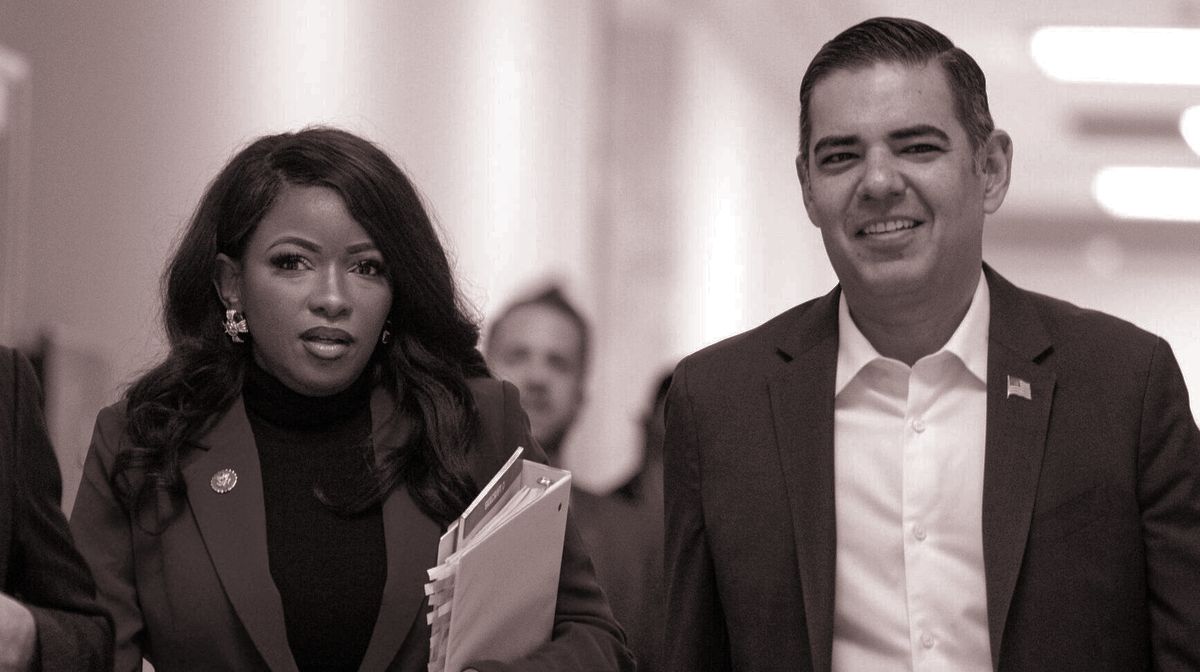
Instead, the race is pitting two seasoned but not especially social-media-savvy politicians against a pair of rising stars, both of whom embody the wit and fight the party desperately needs, but lack leadership experience. On one side are Reps. Kweisi Mfume, a 76-year-old former leader of the NAACP, and Stephen Lynch, a 70-year-old senior member of the committee, who’s next in line for the job. On the other flank are two members in their second terms: Rep. Jasmine Crockett, a 44-year-old who’s not afraid of verbal altercation, and 47-year-old Robert Garcia, another feisty and fearless member. House Democrats know they will be judged by the route they take here: Do they elevate someone who knows how to run a serious and thorny investigation, or someone who can connect with the young voters that Democrats desperately need to win back?
Historically, House Democrats have rewarded plum, powerful, and permanent positions on committees like Oversight to more senior members. In recent sessions, however, the party’s severe age issue has put that tradition in the crosshairs. People are literally dying in office—three House Dems have died this session, giving Republicans a more comfortable majority with which to pass their agenda, including their tax and spending bill. (Two of those seats fall in states with Republican governors, who are slow-walking special elections to fill them.)
As the political ramifications sink in, rumors are swirling that some of the House’s oldest Democratic members might call it quits, including former Speaker Nancy Pelosi, 85, and her longtime number two, Rep. Steny Hoyer, 86. (In the Senate, four Democrats in their sixties and seventies have decided to retire—Sens. Dick Durbin, Jeanne Shaheen, Gary Peters, and Tina Smith—which is basically unprecedented.) As one Democratic aide put it, “It’s a huge risk to go with a 70-year-old white guy and say, This isn’t who we are as a party. If you keep doing the same thing, then it is who we are as a party.”
|
|
If Oversight Dems choose youth over experience, they’ll likely go with Garcia, who seems to be the frontrunner heading into tomorrow’s vote, according to multiple Democratic sources. (It’s a secret ballot that will likely go through at least two rounds of voting, so anything can happen.) Still, members have concerns. Garcia is only in his second term, and he’s never experienced the subpoena, deposition, and investigation process from the committee majority. But he’s emphasizing his experience as mayor of Long Beach, California, a city of nearly half a million people, as proof of his record, and he’s doing the work: He’s spoken to more than 200 members of the caucus about his candidacy.
Perhaps most notably, Garcia has met with Pelosi in her office about his run, a person familiar with that meeting told me. The former speaker hasn’t endorsed publicly, but people think she’s backing her fellow Californian. Lynch, for his part, didn’t back Pelosi for speaker, and made her life much more difficult by voting against the Affordable Care Act 15 years ago. As everyone in Washington knows, Pelosi has a very long memory.
Garcia, who’s been endorsed by the Congressional Hispanic Caucus, is expected to get support from most of the 40-plus Democrats in the California delegation, which would put him on solid footing. He’s not too progressive or too moderate; not too timid or too outrageous; not too young or too old. If he wins, it could bring both symbolic and substantive change within the party. One senior Democratic aide predicted it would open the door for other senior members on committees to be challenged by younger members.
|
|
|
Crockett, meanwhile, rose to national prominence with her explosive speech at the Democratic National Convention last year, and her biting wit has given her some star power. She’s also got an entrepreneurial streak: She started a t-shirt line called “The Clapback Collection,” featuring her viral disses like the “bleach blonde bad built butch body” zinger she hurled at Rep. Marjorie Taylor Greene. (This is marketed as the “B6 tee” for short; you can also get one featuring her face and the phrase “Chile please,” a reference to a debate she got in with Rep. Nancy Mace.) Her supporters say her ability to message and connect with younger people is exactly what the party needs. “The magnitude of these unprecedented times warrants a resistance and tactics never before seen,” Crockett wrote in a letter to her colleagues asking for their vote.
Multiple Democrats, though, see Crockett’s zeal as a liability, especially for frontline members who may get dragged down by anything she says. Not included in The Clapback Collection was her unfortunate reference to Texas Gov. Greg Abbott, who’s paralyzed from the waist down and uses a wheelchair, as “Governor Hot Wheels,” nor her suggestion that Trump supporters are mentally ill—which made White House Press Secretary Karoline Leavitt say she hopes Crockett continues to be a rising star in the party. Anyway, many Democrats don’t expect her to make it past the first round of voting. (The lowest vote-getter is dropped until a candidate reaches a majority.)
Along with A.O.C., Crockett has expressed interest in impeaching the president—a process that could be initiated in the Oversight Committee—should Democrats take back the majority in the midterms. Crockett told Inside Texas Politics that she would “ absolutely” launch an inquiry into impeachment, the preliminary step to justify proceedings. But the Democratic caucus leaders are lukewarm, at best, on the matter. After all, Trump has already been impeached twice and was reelected.
Nevertheless, Crockett is a good fundraiser: She’s already paid 19 percent of her dues to the Democratic Congressional Campaign Committee through the first five months of the 24-month cycle, according to a draft document of members’ payments to the D.C.C.C. While that goes a long way, some Democrats say she hasn’t done an effective job of building support inside the caucus. To wit, her effort to rally clergy and various advocacy groups to urge House Democratic Leader Hakeem Jeffries to get behind her fell flat. Leadership, of course, is about remaining neutral. “She doesn’t understand that this is not an outside game,” one House Democrat told me.
|
|
As for the seasoned contenders, Mfume has pledged to defend democratic institutions and protect civil rights and voting rights if elected. He feels a special affinity for the position, given that he holds the Maryland congressional seat of the late, beloved civil rights icon Elijah Cummings, who was chair of Oversight during the first Trump administration. But a risk for Mfume and Crockett is that they could split the powerful 59-member Black Caucus, where the older members support the seniority system that has helped them gain and maintain power within the Democratic caucus.
Lynch, meanwhile, has a real shot, too, despite Pelosi’s grudge. He’s expected to be Garcia’s biggest competitor, according to multiple Democrats. He has been filling in as interim ranking member of the committee, having been deputized by Connolly before he died. Experience matters, he argues, and that happens to be his biggest asset. He’s served in Congress since 2001, having made a lot of friends over that time, and knows how to quarterback an investigation into an administration that’s expected to thwart Congress at every turn. No one said that generational challenges were easy…
|
|
|
Need help? Review our FAQ page or contact us for assistance. For brand partnerships, email ads@puck.news.
You received this email because you signed up to receive emails from Puck, or as part of your Puck account associated with . To stop receiving this newsletter and/or manage all your email preferences, click here.
|
|
Puck is published by Heat Media LLC. 107 Greenwich St, New York, NY 10006
|
|
|
|



_01JY75NY2T5QA676ZF7VT30N67.png "Coalition to Strengthen America's Healthcare")
_01JY75P0TDPHGP5PE4ASQHTYN2.png "Coalition to Strengthen America's Healthcare")