 |
 |
|
Welcome back to The Best & The Brightest, I’m Peter Hamby. If you’re reading this, congratulations, you didn’t burn your retinas watching the eclipse today.
In tonight’s issue, a eulogy for No Labels and their effort to run a centrist presidential ticket in 2024. It was a silly, expensive enterprise that defied political logic and was always doomed to fail, but that didn’t stop Washington from giving it far more attention than it deserved.
But first, here’s Abby Livingston’s latest dispatch as Congress returns to town…
|
|
A MESSAGE FROM META
|
 |
| Cataracts are the primary cause of avoidable blindness.
FundamentalVR and Orbis International created a VR training platform that helps surgeons practice cataract surgery.
As a result, more surgeons have access to the training they need to treat cataracts around the world.
Explore the impact of the metaverse. |
|
|
| Primary Feuds & Dems’ $186M Battle Plan |
|
Congress is finally returning to Washington and its familiar problems: Ukraine funding, tech regulation, FISA reauthorization, the ever-worsening Israel-Gaza war, and yes, the first impeachment of a cabinet official in almost 150 years. But despite how all-consuming these issues appear, curious eyes are turning toward the campaign trail, where primaries are raging and super PACs are unveiling their strategies for the fall. Some critical updates from the field:
- Bowman’s rally: Among the candidates notably leaking their first-quarter fundraising numbers is Rep. Jamaal Bowman, who’s boasting a $1.3 million haul. This is an impressive escalation for an incumbent facing a serious primary threat in Westchester County executive George Latimer, who outraised Bowman in the fourth quarter by a nearly two-to-one margin.
Their contest is worth tracking for a few reasons: Bowman is an outspoken pro-Palestinian advocate, and the race will embody the party’s deepest divisions over the Israel-Gaza war. It will also be expensive, given that the 6th District (the southern section of Westchester County) sits squarely within the pricey New York City media market. In fact, Latimer has already begun placing ad reservations ahead of the June 25 primary.
- With friends like these…: On the Republican side, tensions are simmering in Virginia’s 5th District, where Freedom Caucus incumbent Bob Good is facing a credible rival in state senator John McGuire. Speaker Mike Johnson has been trying to calm the waters here, but to no avail.
This race became a minor sensation a few weeks ago, after an invitation for a McGuire fundraiser featured a handful of Good’s colleagues, including Armed Services Chair Mike Rogers, Austin Scott, Jennifer Kiggans, Ryan Zinke, Derrick Van Orden, and Morgan Luttrell. According to recent F.E.C. reports, none of them has donated to McGuire—but in many ways, showing up on an opponent’s fundraising invitation is almost the same thing. Last year, meanwhile, Good enjoyed broad political support, with donors including Judiciary Chairman Jim Jordan, Lauren Boebert, Matt Gaetz, Morgan Griffith, Alex Mooney, and Ralph Norman, plus donations from Ron DeSantis, Rick Scott, and Mark Meadows’ old leadership PAC.
So far, fundraising in this contest has been pretty light. Good holds a small cash-on-hand advantage, but that might not matter much, given how close this central Virginia district sits to the expensive Washington, D.C., television market. The primary is on June 18.
- Dems’ $186M largesse: Over the weekend, the Democrats’ House Majority PAC unveiled its $186 million plan for the fall’s national television ad campaign wars. A mind-boggling chunk of capital will be deployed in the two most expensive media markets: New York City ($16 million) and Los Angeles ($19 million), backing up the big game that Democrats have talked over the last year about waging an aggressive offensive in these states. (Nota bene: Groups explicitly telegraph this information to signal potential fundraising gaps for allied groups to fill.)
It’s worth noting that several races are clustered together in New York (CNN’s Manu Raju pointed to Dem targets Mike Lawler, Anthony D’Esposito, Nick LaLota, and New Jersey’s Tom Kean Jr.) and California (Young Kim, Michelle Steel, Ken Calvert, and Mike Garcia, plus defending the seat left open by Katie Porter’s exit), which means it will be much easier to move money from one race to another as the need arises.
|
 |
| No Labels, Mo’ Problems |
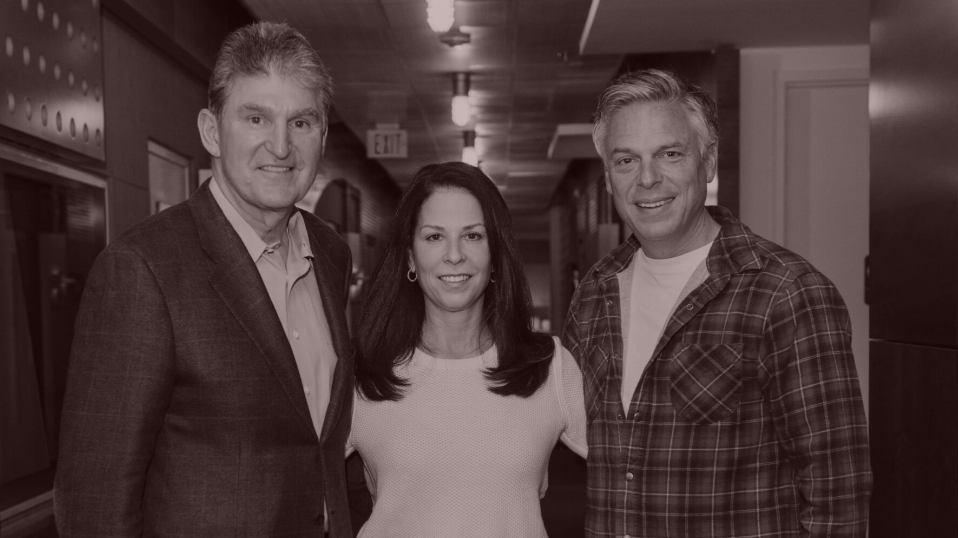
| There was never any constituency for the bipartisan brain poison that Nancy Jacobson was selling donors. But the No Labels gambit was also doomed to fail because it was fundamentally misaligned with the guiding north star of any politician: self-interest. |
|
|
|
| When No Labels announced late last week that they were finally abandoning their multimillion-dollar effort to field a centrist, third-party ticket for president this November, I texted a Democrat close to Joe Biden’s campaign to see if they wanted to gloat. “Ha, negative,” this Democrat said. “That’s how little they matter.”
That’s been the vibe lately, sure. No Labels has been positively necrotic for months now. They asked some 30 politicians (plus The Rock) to run for president under their vapid banner of bipartisanship and “commonsense solutions.” All of them said no. It all became an embarrassing, barrel-scraping exercise that emasculated the No Labels cause in real time, as one after another would-be candidate announced to the media they weren’t interested in risking their necks for a doomed cause. (The Rock returned to the WWE instead.) After the death last month of their founding chairman, Joe Lieberman, it felt like the end was near for No Labels, too.
It was always going to end this way, of course, with a press release announcing that No Labels couldn’t field a candidate and that there was “no credible path to winning the White House.” But for much of 2023, the No Labels saga was one of the most talked-about stories in Washington. More than that, this goofy, logic-defying, consultant-driven scheme was positively obsessed over—a gleaming example of an all-consuming Beltway process story that couldn’t be less relevant to anyone living outside the 202.
No sentient person believed a No Labels ticket could actually win the presidency. The two-party system is just too entrenched, even if Joe Biden and Donald Trump are running as historically unpopular nominees. A third-party candidate hasn’t won an electoral vote since the pomade-slick segregationist George Wallace nabbed 46 of them back in 1968. Yes, in polls, voters always say they want more options on the ballot, which was always the core rationale for No Labels and their donors. But the truth is that the overwhelming majority of Americans fall in line when elections arrive, voting for one of the two major parties.
That’s especially true today, in our age of supercharged polarization. The idea that this election year would be different—that some humdrum, boardroom-friendly centrist like Nikki Haley or Joe Manchin could somehow win even a single state in November—was absolutely preposterous. Like then-Starbucks C.E.O. Howard Schultz’s own attempted independent act, back in 2020, it was an affront to common sense. |
|
A MESSAGE FROM META
|
| |
 |
| “VR let me practice hundreds of times before I operated on a patient.”
Dr. Baid used FundamentalVR and Orbis International's VR platform for additional training in a hands-on environment.
In the past year, Dr. Baid has performed 300 life-changing surgeries to preserve her patients' vision.
Discover other stories. |
|
|
| The Huntsman Becomes the Hunted |
|
| Sure, I’m coming at this from the perspective of a political journalist who gets to lean back and say I told you so. I’ve seen way too many politicians flirt with campaigns before bailing, too many thirsty candidates embark on corny “listening tours” just for a morsel of press attention (I’m looking at you, Joe Manchin). I’ve read enough polls to know that including “No Labels” as a ballot choice alongside real candidates like Biden, Trump, and Robert F. Kennedy Jr. is just a waste of a poll question. I’ve talked to enough voters who have no clue what No Labels is, and wouldn’t care even if they did.
I’m also old enough to know that No Labels isn’t some new 2024 phenomenon. They’ve been around for 14 years with absolutely nothing to show for it, other than a bunch of cash harvested from a list of rich people who fantasize about Jon Huntsman and E.T.F. returns. Why would things be any different for No Labels this cycle?
That being said, I can admit why some Democrats were preoccupied with this long-shot enterprise. They didn’t want to leave anything to chance in what will likely be a nail-biter election. Given the lack of enthusiasm for his presidency, Biden’s reelection hopes depend on getting every single vote he can possibly muster. So the prospect of moderate “problem-solvers” siphoning a few anti-Trump votes from the president in a swing state made some Democrats in Washington want to chug Pepto. “For a long time it felt like it was going to be difficult to stop them,” said Matt Bennett, a co-founder of Third Way, a center-left group that worked to keep No Labels out of the race. “The threat was enormous.” (Again, I have a hard time categorizing a ticket that might have featured Larry Hogan or Mitch Daniels as an enormous threat to anything, but I’m also not in the paid service of reelecting Joe Biden.)
Reporters, meanwhile, loved the drama. The No Labels story had everything the D.C. media could possibly want—something to write about other than those boring retreads, dark money, and a husband-and-wife pair of secretive consultants (Nancy Jacobson and Mark Penn) running the show? And of course, No Labels was channeling Washington’s ultimate, unobtainable fantasy: bipartisanship!
The hunt for a No Labels candidate generated swarming coverage for another reason, too. Many of the main characters approached to run on the ticket happened to be politicians that reporters spend a lot of time around, either on Capitol Hill or in TV green rooms. In fact, the No Labels recruiting list doubled as a top-tier roster of background sources for political journalists. Among them, known Washington figures like Manchin, Hogan, Chris Christie, former Wyoming Rep. Liz Cheney, and New Hampshire Gov. Chris Sununu, maybe the only person in politics more Available for Comment than Larry Sabato. Meanwhile, the independent candidates who could actually inflict real political damage on Biden—Kennedy, Jill Stein, Cornel West—swim in alternative media waters far away from the D.C. circle jerk. |
|
|
| No Country for Old Manchin |
|
| It was Manchin’s flirtation, though, that best showcased why the whole No Labels charade was never a serious project. For months last year, especially after he announced he wouldn’t run for reelection in West Virginia, Manchin wouldn’t rule out a 2024 run for president. An avowed moderate who frequently scuttled liberal priorities in the Senate, Manchin declared himself “politically homeless” and launched a two-month “listening tour,” also appearing at events hosted by No Labels. The press, in turn, hung on Manchin’s every word, squinting for any sign that Hamlet-on-the-Kanawha would run on the No Labels ticket in 2024.
It was a typical Washington game. Manchin was never going to take the plunge. His political talents include knowing his limitations, and despite being pals with Nick Saban, Manchin has no juice beyond Capitol Hill and West Virginia. What attentional powers could this guy possibly bring to the presidential campaign to rival Trump, Biden, and their combined billions of dollars? It was obvious Manchin was using his listening tour, and No Labels, to bathe in warm glow of studio klieg lights one last time before leaving office.
All of the politicians recruited by No Labels—Manchin chief among them—also had their own politics to worry about. For all his moderate inclinations and his criticisms of the Democratic Party, Manchin is still… a Democrat. He voted with Joe Biden almost 90 percent of the time. He also happens to like Biden personally. On the flip side, Manchin doesn’t like Trump at all, and quite obviously did not want to lend a hand in helping Trump return to the White House.
The same is true for most of the other pols who took a friendly call from No Labels. Sure, they don’t love Biden. They’re flattered to be asked. They’re worried about the demise of bipartisanship in Washington. They like seeing their names in the headlines. But, crucially, none of them wanted the first line of their obituary to say that they had spoiled the 2024 election and helped usher in a second Trump administration.
The incentives were never there for these politicians, making it hard to believe the No Labels concept would become anything more than a maddening donor fantasy. How would a bipartisan ticket actually work, anyway? Which candidate would take the top spot, and who would settle for running mate? What if one candidate supported abortion rights, and their running mate didn’t? Would there be any messaging on policy, or just gauzy appeals to bipartisan comity? Which person’s consultant would run the campaign, or would it be Penn and Jacobson? Who would pocket the money from the ad buys? How on earth would any of these politicians scale up a national presidential campaign in a matter of months? The whole thing made absolutely no sense!
Fundamentally, the No Labels gambit was doomed to fail because it was misaligned with the guiding north star of any politician: self-interest. As far-fetched as it sounds, Nikki Haley still wants a future in the Republican Party. So do Hogan and Sununu, at least in their states. Any Democrat curious about No Labels would have to face the fact that they would be exiled from their party, too (see Phillips, Dean). And for the recruits who probably don’t have a future in electoral politics—Cheney, Christie, Deval Patrick, Kyrsten Sinema—they still need to stay in the good graces of the political establishment to keep their book deals coming, their TV contracts renewed, their board positions safe, and their Chamber of Commerce speaking fees rolling in.
Running as a No Labels candidate and helping Trump bring about the demise of democracy? You do that, and guess what: Morning Joe isn’t going to want you around anymore. And if you’re any of the people I’ve named above, if you’ve lost Joe and Mika, do you even exist at all? |
|
|
|
| FOUR STORIES WE’RE TALKING ABOUT |
 |
|
 |
| Altered Carbon |
| Spotlighting green shoots in the global war against carbon emissions. |
| BARATUNDE THURSTON |
|
 |
|
 |
| The Perfume Wars |
| A close look at the lucrative business of fragrance dupes. |
| RACHEL STRUGATZ |
|
|
|

|
 |
|
|
|
Need help? Review our FAQs
page or contact
us for assistance. For brand partnerships, email ads@puck.news.
|
|
You received this email because you signed up to receive emails from Puck, or as part of your Puck account associated with . To stop receiving this newsletter and/or manage all your email preferences, click here.
|
|
Puck is published by Heat Media LLC. 227 W 17th St New York, NY 10011.
|
|
|
|