{{ 'now' | timezone: 'America/New_York' | date: '%b %d, %Y' }} |
|
|
|
Hello, and welcome back to The Best & The Brightest. I’m Leigh Ann Caldwell,
headed out west for my son’s spring break. I’m mostly off this week, but my brilliant colleagues will keep you in the loop.
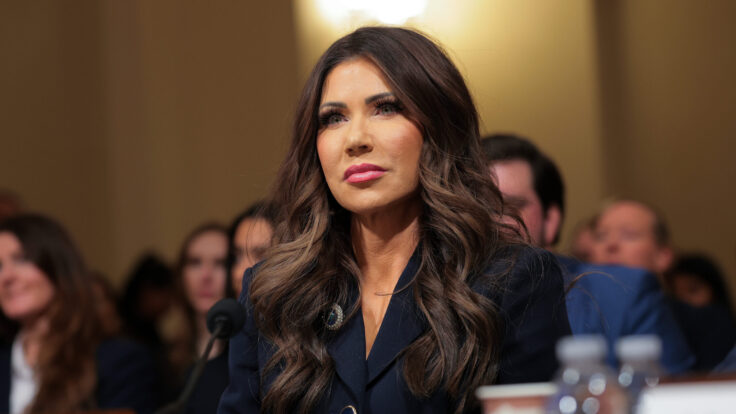
Meanwhile, as promised, an update from DCA: Security lines were on par with normal and I didn’t spot any ICE agents. But the most conspicuous change as we awaited the T.S.A. checkpoint was the absence of any public service videos starring Kristi Noem. She was technically still in the job—D.H.S. Secretary Markwayne Mullin wasn’t confirmed until tonight—but her 15 minutes (and $200 million) of fame were already over.
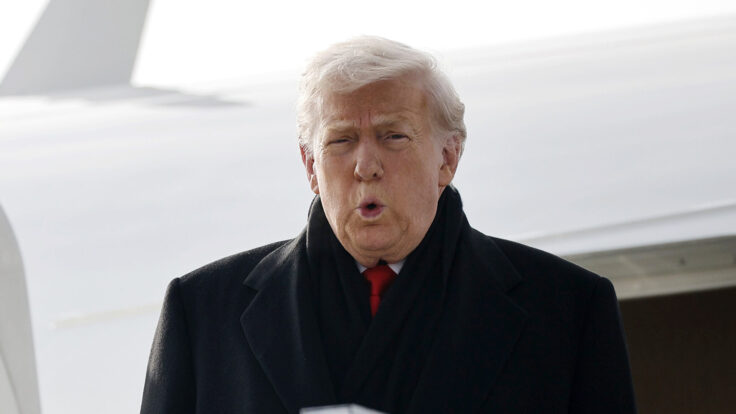
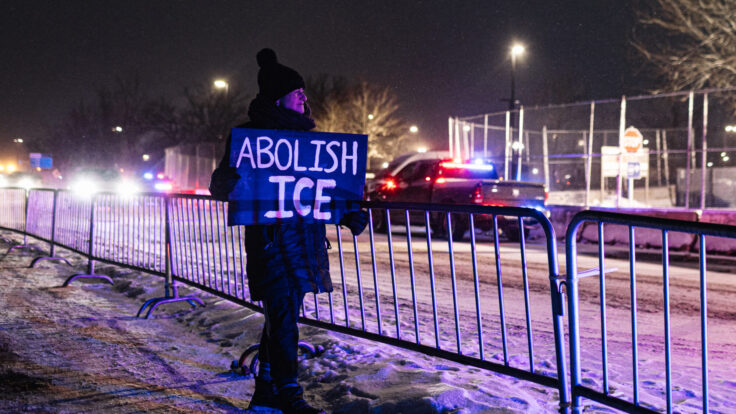
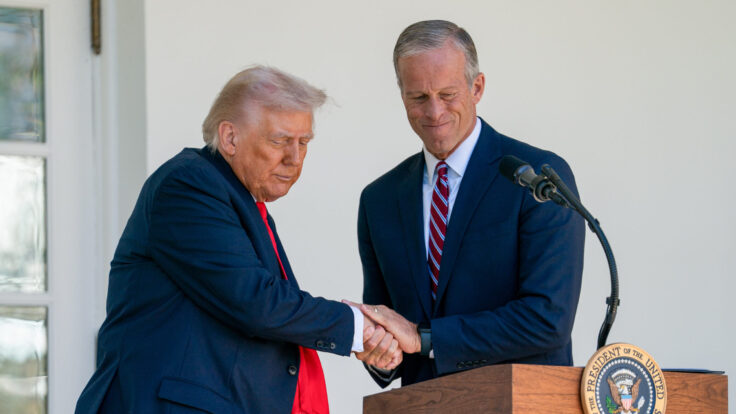
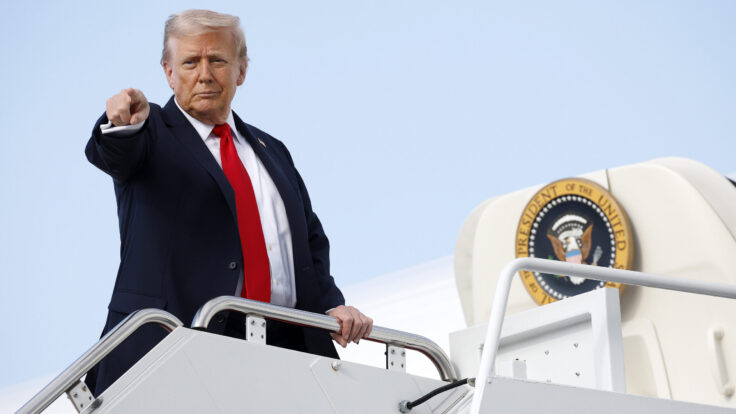
Speaking of T.S.A., Trump has preemptively rejected a compromise on D.H.S. funding that Democrats and many Republicans were prepared to make. The agreement would have funded all the department’s functions except for ICE, which would be addressed at a later date (and ICE already got a funding infusion via the One Big Beautiful Bill last summer). It’s been Democrats withholding the
votes to reopen D.H.S. absent reforms, but on day 37, Trump’s refusal to accept a potential deal makes it easier for them to brand this as his shutdown.
In tonight’s issue, Abby Livingston returns with an inside look at what Democrats learned from last week’s primary wars—and why PAC money can’t buy you love. Plus, Julia Ioffe has the latest on Putin’s Iran war paranoia.
Also mentioned in this issue: JB
Pritzker, Alex Bores, Juliana Stratton, Daniel Biss, Kristi Noem, Gavin Newsom, Robin Kelly, Muammar Qaddafi, Tom Bowen, Jesse Jackson Jr., Haley Stevens, Abdul El-Sayed, and… Jack Schlossberg. |
|
|
|
For people managing chronic and complex conditions, traveling to a doctor’s office isn’t
always easy – even a simple appointment can become a major hurdle. UnitedHealth Group is working to remove these barriers by bringing doctors and nurses directly to patients' homes. This allows them to receive personalized care in a more comfortable, convenient setting.
Ultimately, these in-home visits make managing chronic care less stressful, helping patients stay healthier over time.
Learn more.
|
|
|
|

| Julia Ioffe
|
|
- Putin’s post-Iran
paranoia: Trump’s war on Iran is having all kinds of unexpected ripple effects: In London, an Iran-linked group has taken responsibility for torching four Jewish charity ambulances, and two men were arrested for spying on the city’s Jewish community. The war has choked off the global supplies of helium, much of which is made in Qatar and is a critical component in manufacturing A.I. chips. Oil prices have gone haywire. (Okay, just kidding, all of that was totally predictable.) Meanwhile, in
Russia, a different sort of political psychosis has taken hold.
Vladimir Putin is, according to the chatter, completely spooked by the U.S.-Israeli war against Russia’s old ally, particularly the reports that Israel targeted
the ayatollah by hacking traffic cameras in Tehran. Earlier this month, the Russian president stopped going to the Kremlin and all his public events vanished from the calendar. Now, Moscow has virtually no cell service and it’s become impossible to message, call, or surf the web in large
parts of the city. Even V.P.N.s have been affected: One friend told me he needed to try three different services to see the videos I was sending him.
The Kremlin has experimented with shutting off cell service in other, smaller cities, but to do this in the nation’s capital—a city of 13 million people, where so many of the country’s businesses are headquartered—is shocking. The official explanation is that Moscow is protecting itself from Ukrainian drones, but even pro-Kremlin
propagandists are speculating that this has more to do with the war in Iran than the one in Ukraine. (One rumor, via the right-wing Tsargrad TV network, posits that the new ayatollah, Mojtaba Khamenei, is in Moscow for medical treatment after being wounded in an
Israeli attack, though the Iranian government has denied this.)
Regardless, it’s clear that Putin—who has taken extreme measures to protect himself from everything from Covid infection to political assassination—is very concerned about his personal safety. The public and quite humiliating 2011 death of
Muammar Qaddafi, another ally, made a huge impression on Putin, who is said to have repeatedly watched the footage of his final hours; in many ways, that event marked the beginning of his hard-right, revanchist turn. Now, Putin’s already sky-high paranoia appears to be kicking into still-higher gear.
|
|
|
|
A tidal wave of outside spending is flooding Democratic races. But as last week’s contest in
Illinois suggests, big-money influence has its limits, especially where AIPAC and the A.I. industry are concerned. And while JB Pritzker’s $6 million intervention in the Senate primary won him recognition, it earned him some new enemies, too. |
|
|
|
Last week, on St. Patrick’s Day, the entire Democratic establishment watched as Illinois voters went to the
polls to select their midterm nominees. The primary races had been absolutely besieged by outside spending from groups aligned with Israel, crypto, and the A.I. industry—not to mention from the state’s own billionaire governor, JB Pritzker. With the 2026 midterms expected to be the most expensive on record and control of the
House (and possibly the Senate) up for grabs, political professionals were desperate to understand which messages had resonated with Democratic voters and whether those big-money influence campaigns had made a difference.
Perhaps no one outside of Chicago was watching more intently than Alex Bores, the young New York state assemblyman, who was anxious when I saw him that morning at a St. Patrick’s Day party in Manhattan—with step dancers, bagpipes, and
plenty of Guinness—some 800 miles away. While much of the interest in his congressional race is focused on J.F.K.’s grandson, Jack Schlossberg, Bores has also become an object of fascination because of his A.I. skepticism, which has made him public enemy number one for certain Silicon Valley–aligned groups. Bores said that the A.I. sector is trying to make an example of him for other candidates and members. “You almost have to admire their candidness—not
everyone just comes right out and says that they’re going to use their fortunes to bend Congress to their will,” Bores told me after the Illinois election. |
|
|
|
Getting care isn’t always easy. For some patients, simply traveling to a doctor’s office is
a challenge, let alone managing complex health needs. UnitedHealth Group recognizes that bringing care directly to patients is essential for a modernized health system. By deploying nurse practitioners to provide care in the comfort of patients' homes – completing 19 million home visits last year alone – UnitedHealth Group enables clinicians to deliver a highly personalized approach. The result?
Earlier identification of health risks, prevented diseases and better overall outcomes. Learn more. |
|
|
|
But money isn’t everything these days—and in the end, the results coming out of Illinois were
inconclusive at best: Groups aligned with A.I. backed one winner and one loser, AIPAC’s candidates won two of the five races it played in, and crypto money went one for three. Indeed, the most one might conclude from last Tuesday is that while outside spending can play a role, campaigns still matter,
and money can’t outright buy a seat in Congress. In Evanston, for instance, AIPAC-aligned groups rained money on State Sen. Laura Fine and bought ads against Mayor Daniel Biss. The latter is pro-Israel but has criticized the conduct of its war in Gaza—as well as AIPAC’s involvement in the race. But when the momentum seemed to shift toward Kat Abughazaleh, a pro-Palestinian candidate, the AIPAC affiliates shifted to attack her, and Biss came out
the winner.
Even in the post–Citizens United era, after all, candidate quality still matters: Former Rep. Melissa Bean had the support of all three sectors (pro-Israel, crypto, and A.I.) and skated to her nomination, but Jesse Jackson Jr., who was hoping for an A.I.-backed post-prison revival, failed to overcome his own weak campaign and scandal-plagued brand—not to mention the AIPAC money fueling Cook County commissioner
Donna Miller. |
Sometimes the blunt force of seven- and eight-figure outside spending backfires. “There’s big money that’s
helpful and big money that’s hurtful, based on the results we saw here,” said Tom Bowen, a Chicago Democratic consultant. “If you’re in the big-money clique that nobody’s got problems with, you’re perfectly fine. If you’re not, watch out.” Especially among white, college-educated progressives, he noted, the injection of “big-money politics” only reinforces suspicions about Trump-era special interests run amok.
Of course, there are exceptions: Bowen nodded
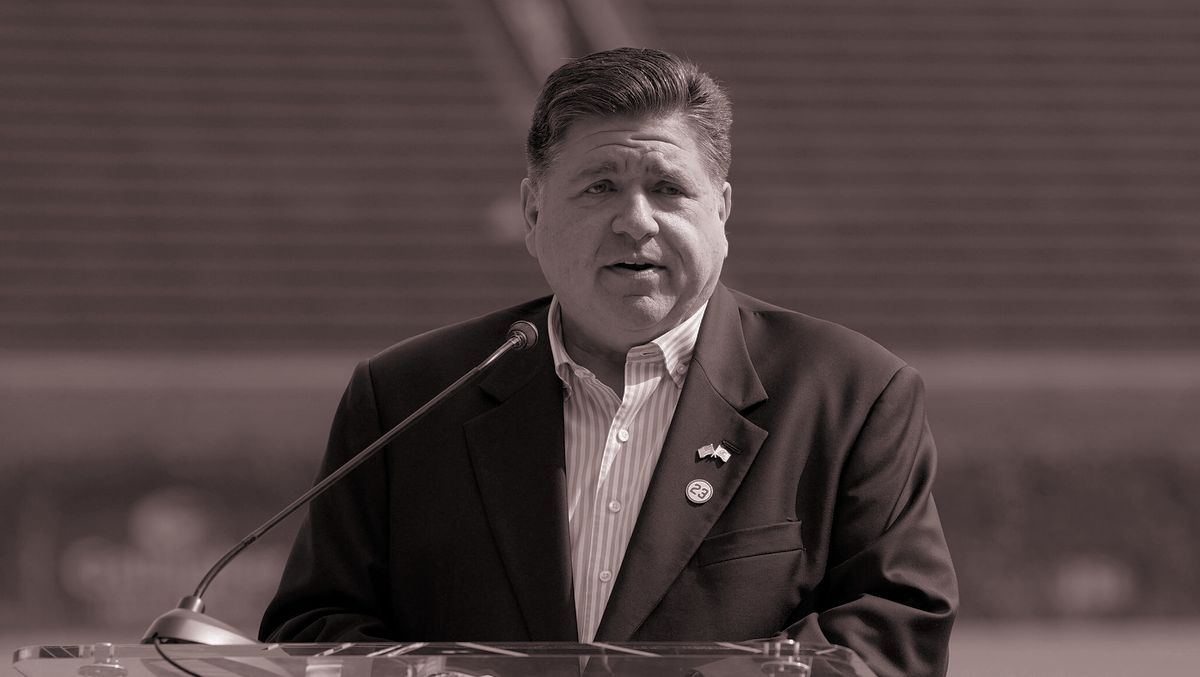
to the more than $6 million that Gov. Pritzker and his family spent to boost Lt. Gov. Juliana Stratton in her Senate primary against Rep. Raja Krishnamoorthi, who had a $30 million war chest. Illinois Democrats largely trust Pritzker, who is in his eighth year as governor and almost certainly running for president, so it seems those dollars were tolerable.
Meanwhile, Democratic candidates without a sugar daddy of their own face two options: Get right with
the interest groups and avoid their wrath, or take them on. Among those choosing the former path, many consultants, candidates, and members are now assessing how they can make nice with the groups and earn their support—or, at a minimum, placate them enough to avoid their wrath.
Bores, who says he left his job at Palantir over their cooperation with ICE, has charted a sort of middle path. Yes, multiple groups associated with the A.I. industry have marshaled millions of dollars to
potentially spend against him, but he’s also attracting donations from employees at A.I. companies who agree with his view that they ought to be more regulated. And the anti-regulation crowd isn’t happy. “Alex Bores is bought and sold by fringe elements of the tech world who have spent hundreds of thousands of dollars bankrolling his political career,” said Josh Vlasto of Leading the Future, a pro-A.I. group. Vlasto further knocked Bores for benefitting from
past support from a Sam Bankman-Fried–funded super PAC and, more recently, an Anthropic-backed entity. |
|
|
|
Democrats are also bracing for more spending in Michigan, where outside groups are expected to play big in
the state’s Senate primary between former Wayne County health director Abdul El-Sayed, State Sen. Mallory McMorrow, and Rep. Haley Stevens. Since candidates cannot coordinate with super PACs, it’s anyone’s guess where these groups spend next. Speculation abounds that AIPAC could spend on behalf of Stevens, allowing her to break out of the pack. But one Michigan Democratic insider recently mused to me that AIPAC’s interventions could further
drive turnout for El-Sayed, who’s highly critical of Israel. |
At this weekend’s Gridiron Dinner in Washington, Pritzker was more than just a headliner—he was greeted as a
conqueror for having gone all in on Stratton and pulling out a win. Like Gov. Gavin Newsom, who ostensibly bet his political future on California’s redistricting referendum last year, Pritzker took the opportunity to flex his 2028 bona fides. Among the Washington establishment in the room, Stratton’s success was taken as evidence of both Pritzker’s political capital and his larger ambitions as a national party leader.
But playing primaries is risky business. Open-seat
races are usually crammed with candidates, making it hard to predict the consequences of spending for or against a single candidate. As a corporate PAC fundraiser told me, “You don’t want to take the risk of supporting someone who doesn’t win.”
Naturally, that fear is among the reasons most members and outside groups try to avoid engaging in primaries—lest they end up on the shit list of a newly installed member of Congress. Indeed, Pritzker’s money bomb enraged some members of the
Congressional Black Caucus. While Stratton herself is Black, Pritzker’s support helped preclude an opening for one of the C.B.C.’s most popular members, Rep. Robin Kelly. The caucus has historically been decisive in Democratic presidential primaries, and should Pritzker run in 2028, his intervention in the Senate primary will take time and political energy to repair. |
|
|
|
Join Emmy Award-winning journalist Peter Hamby, along with the team of expert journalists at Puck, as they let you in on the
conversations insiders are having across the four corners of power in America: Wall Street, Washington, Silicon Valley, and Hollywood. Presented in partnership with Audacy, new episodes publish daily, Monday through Friday. |
|
|
|
Unique and privileged insight into the private conversations taking place inside boardrooms and corner offices up and down Wall
Street, relayed by best-selling author, journalist, and former M&A senior banker William D. Cohan. |
|
|
|
Need help? Review our
FAQ page or contact us for assistance. For brand partnerships, email ads@puck.news.
You received this email because you signed up to receive emails from Puck, or as part of your Puck account associated with {{customer.email}}. To stop receiving this newsletter and/or manage all your email preferences, click here.
|
Puck is published by Heat Media LLC. 107 Greenwich St., New York, NY 10006 |
|
|
|
|