 |
|
Hello, and welcome back to The Best & The Brightest, your Tuesday foreign policy edition. I am currently on my way back from Europe and en route to the Aspen Security Forum, the annual gathering of national security grandees and those of us who write about them—the kind of place where you end up asking the head of MI6 to get out of the way so you can get to the water cooler. I’ll send you a readout from the mountains next week, but in the meantime, here’s last year’s letter from Aspen and a report on what’s really going on with the Ukrainian offensive.
But first, a word on our lawmakers…
|
| The Capitol Hill Cafeteria Report |
|
| An utterly indispensable, high-minded, and, yes, occasionally dishy readout of what our lawmakers are really legislating behind closed doors.
By Abby Livingston
- California Battle Royale: Republicans may not like Rep. Adam Schiff, but Democrats sure do. At least 19 current and former House and Senate Democrats lined up to donate to Schiff’s California Senate bid, not that he really needed the help. Schiff raised more than $8 million this quarter—adding to his nearly $30 million in cash on hand—after Republicans censured him into a fundraising martyr. But donations have value beyond the dollar amount. At least ten Californians in the House gave to Schiff last quarter, which indicates that he has a key base of support in districts across the state. (Nancy Pelosi already gave to Schiff earlier this year…)
Schiff’s closest rival, Katie Porter, only raised $3.2 million for the quarter (she has $10 million cash on hand). Barbara Lee raised $1 million, boosted in part by her Congressional Black Caucus colleagues. Nevertheless, Porter has been a small-donor dynamo, with more than 18,000 itemized receipts on her report, halfway to Schiff’s 36,000. A quick skim of both reports revealed a large number of repeat donors who gave less than $100, which means they can be retargeted multiple times before hitting the federal limit.
Early polling shows Porter and Schiff battling it out for first place, with Lee lagging a bit behind but still within striking distance. Which is why this fundraising is so crucial: California is a staggeringly expensive media market for candidates to introduce themselves outside of their districts. And while so many House members were willing to play here this past quarter, I am hearing there are many more House Democrats who have no interest in picking favorites, and are avoiding the Lee-Porter-Schiff battle royale like the plague.
- M.T.G.’s Secret Weapon: Campaign finance reports also showed that Marjorie Taylor Greene is continuing to mold the G.O.P. establishment in her image. In May, she gave $100,000 to the N.R.C.C., which will be deployed in late 2024 in television air support for Republicans across the country. This came after Greene made a series of campaign donations in the first quarter to members facing competitive races, including Ken Calvert, Lori Chavez-DeRemer, Juan Ciscomani, Anthony D’Esposito, Monica De La Cruz, Mike Garcia, Ashley Hinson, Jen Kiggans, Anna Paulina Luna, Scott Perry, David Schweikert, Michelle Steel, Bryan Steil, Derrick Van Orden and Ryan Zinke. No wonder Greene has quietly become one of the most popular members of the G.O.P. conference.
One name that was missing? Lauren Boebert, who’s in a tough reelection race but incurred Greene’s wrath after stealing her impeachment thunder. (As you know, Greene responded by calling Boebert “a little bitch” on the House floor.)
- Cruz Loses Altitude: As expected, Ted Cruz slipped behind in his fundraising battle with Democratic challenger Colin Allred, announcing he’d raised $3.4 million compared to Allred’s $8.8 million. The thing is, Cruz actually had a pretty healthy quarter, compared to most other Senate incumbents, and Allred benefited from transferring money from his old House account. In fact, the Cruz campaign told Patrick Svitek of the Texas Tribune, he really raised $4.4 million, if you factor in aligned committees and his leadership PAC. But not all of that money can be used on the Senate race. And Allred has a $1 million cash-on-hand advantage, which is striking because incumbent senators tend to bank money in their off-year cycles.
Yes, Allred still faces a competitive primary, but this is daunting money. National Democrats are encouraged, and hope that, at the very least, the Texas Senate race turns into a money pit for the G.O.P., forcing the N.R.S.C., and others, to redirect precious capital to bail out Cruz. But Republicans I’ve spoken with mostly shrugged. After all, they point out, Beto O’Rourke regularly outraised Cruz in 2018 and still came up short on Election Day. And there is an argument that there can be diminishing returns in nationalized Senate races; the staggering near $100 million that Democrats donated to Amy McGrath in 2020 was ultimately wasted, too.
|
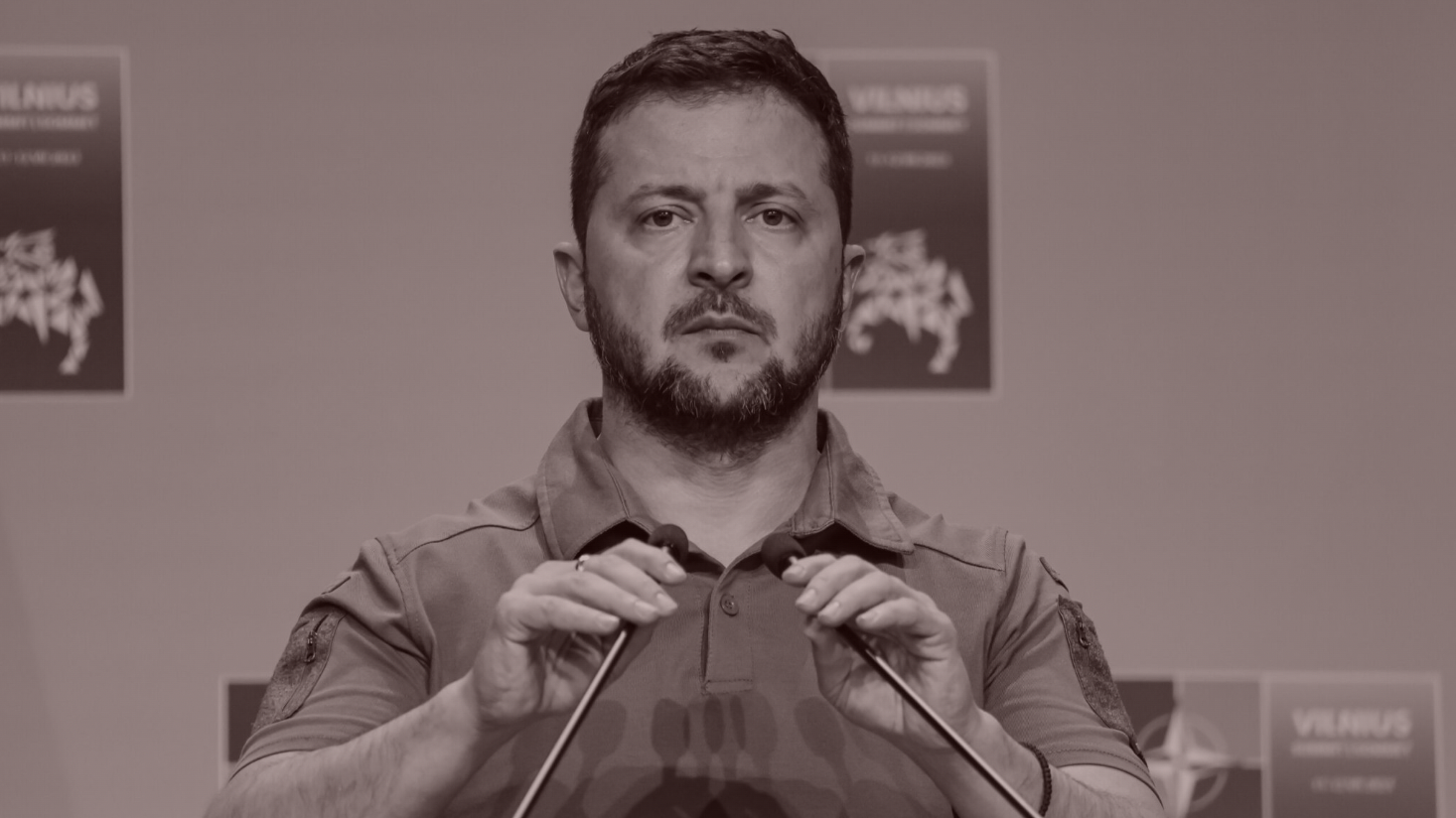 |
| It’s Approaching Desperation Time in Ukraine |
| The much hyped “spring offensive,” now well into July, hasn’t been the blitz that was hoped for in the West, but rather a low morale, high casualty battle for every muddy inch. |
|
|
|
| On Monday, an explosion ripped up a section of road across the Kerch Strait bridge, Putin’s pet project linking the Russian mainland with illegally annexed Crimea. It was the second time the bridge was hit in less than a year. The last time, in October, a truck bomb ruined part of the rail lines. This time, the damage was the work of naval drones. Vladimir Putin promised retribution and he quickly delivered: He pulled Russia out of the expiring grain deal that allowed Ukrainian agricultural products to leave the ports Russia has blockaded, and then attacked those ports—Odesa and Mykolaiv—destroying a massive fuel depot. The attack, his spokesman confirmed, was revenge.
Though Ukraine hasn’t officially taken responsibility, the attack on the Kerch bridge is part of the deep war that the country has been waging on Russian supply lines. About a month ago, Ukraine punctured another Russian-controlled bridge, across the straits of Chonhar, this time with a British Storm Shadow missile. Unlike the Kerch bridge, which was designed to square a geographic circle—Crimea isn’t actually attached to Russia by land—the Chonhar bridge was the shortest possible route from Crimea to the fronts in Kherson and Zaporizhzhia. It was also similar to Ukrainian missile strikes deep into Russian-occupied territory targeting major ammunition depots. A strike last week, on the occupied seaside town of Berdyansk, killed a Russian lieutenant general, the deputy commander of Russia’s southern military district.
These attacks make for spectacular theater, and Ukraine, which has become incredibly good at social media, has turned them into viral, triumphalist content: videos of exploding bridge spans, of missing roads, of miles-long traffic jams of Russians trying to get across for their Crimean vacations. But even when the bridges are damaged, the authorities manage to patch them up and get some train and automobile traffic through. They build pontoon bridges. They rely on ferries. It’s slow, it’s clogged, but it’s still movement.
Less than 24 hours after Monday’s attack, cars were already slowly moving across the Kerch bridge again. Meanwhile, Putin’s government, rather than telling Russians to pause their holidays in occupied territory, was advising them to simply drive around it—over the land bridge that Russia hacked through Ukrainian territory in the spring of 2022 and which remains close to the front, under Russian martial law. |
| The Spring/Summer Offensive |
|
| In the background of these missile exchanges is the long-awaited Ukrainian “spring” offensive, is now in its fifth week. For months, all talk of the war in Washington and Brussels was dependent on its outcome. So far, it’s not looking very good.
After all, while the West talked about the Ukrainian offensive, Russia prepared for it. They dug miles of trenches, prepared miles of minefields, peppered it all with bunkers, cement “dragon’s teeth,” and booby traps. The defenses are so formidable that they can be seen from space. When the Ukrainian army attacked in June, they began exactly where everyone thought they would, striking toward Melitopol and Berdyansk in the southeast, and toward the Azov Sea. Not coincidentally, this is where Russia’s main fortifications had already been set up. “There are miles and miles of minefields, of all kinds of nasty little traps,” said Dara Massicot, a senior analyst at the RAND Corporation. “The Russians have had nine months to prepare for this.”
The preparations have proven extraordinarily effective. Equipment provided by the West—Abrams and Leopard tanks and mine-clearing vehicles—has been destroyed in shocking quantities. As the Ukrainians advanced through wide, open plains, they’ve been picked off by Russian artillery and drones, which have also resown the land with mines as soon as Ukrainians clear them. Unwilling to continue sacrificing the hardware it took so much political capital to obtain from the West, the Ukrainian military has now changed course, sending small groups of uncovered soldiers, who have had to inch forward, often on their stomachs, to defuse the mines by hand.
Any wounded soldiers have to be rescued in the same way, out in the open, under the punishing eye of Russian drones and barrages of their artillery. Unsurprisingly, casualties have been extremely high. But the cost of precious Western hardware seems to be even higher. Dmitri Alperovitch, who runs the Silverado Policy Accelerator and just returned from the front, summed up Kyiv’s pivot to small infantry teams this way: “Your life matters less to us than an armored vehicle.”
The Ukrainian military’s casualty count, it seems, is inversely proportional to its territorial gains. The army is fighting hedgerow to hedgerow, tree line to tree line, and, when measured against Western expectations, progress has been painfully slow. In five weeks, Ukraine’s military hasn’t advanced very far, capturing a handful of villages and still finding themselves miles from the main Russian lines.
Ironically, this is all the work of Sergey Surovikin, Bashar al-Assad’s favorite general, who was briefly in charge of the Russian war effort last fall, when he began the project of what is now known as the Surovikin Line. He has not been seen or heard from since June 24, when he appeared in what looked like a hostage video, telling Yevgeny Prigozhin to stop his mutiny. |
|
|
| Much has been said of morale in this war: Ukraine’s is high, Russia’s is low. For the armchair generals on social media, this will somehow prove to be the deciding factor in this bloody slog, a military version of the American conviction that good inevitably conquers evil. But the assumptions about morale aren’t true across the board, analysts tell me. For Russian reservists, thrown in as cannon fodder, it is obviously very low. But for more professional units in the south, it is not. These are the ones that Ukrainians are mostly fighting, and who are pretty well-rested.
Ukrainians, meanwhile, have uneven morale. After almost a year and a half of a brutal, horrific war—one in which most Ukrainians have lost at least one loved one—it is not so much high morale with which Ukrainians fight, but desperation. “The people who talk about morale differences, well, mines don’t have morale and mines don’t run,” Alperovitch told me on his return from Kyiv. The mood, he said, was incredibly dark. The train station was a sea of ambulances as far as the eye could see, all carrying wounded from the front. It was, he was told, a light day. He spoke to a young man who had returned from the fight on leave because he now had a newborn son. “I hope,” he told Alperovitch, “that this war isn’t still going when he grows up.”
As for the low morale and grumbling on the Russian side—a high-ranking commander was just fired for telling Valery Gerasimov the truth about his mismanagement of the war—it hasn’t always proved determinative throughout Russian history. “We’re dealing with an army that has always had very low morale, so when we say their morale has fallen, what does that mean?” said Andrei Soldatov, a Russian journalist who covers the siloviki.
“This background, it’s a constant. It’s there in every single Russian conflict. What would destroy any army in the world, doesn’t destroy the Russian army. There’s an acceptance of a high level of casualties. There’s the criticizing the generals’ incompetence, the feeling of being abandoned, etcetera, but that’s a constant. Very low moral, self-pity—that’s just how the Russian army fights, always. It doesn’t mean they’ll change anything. They’d rather just pity themselves some more, drink some more vodka, and then go fight, fulfilling their orders.”
“It’s pressure,” Massicot said of Russian troop exhaustion and Ukrainian attacks on Russian infrastructure, “but when we look at what’s happening at the front line, we still see a lot of artillery coming at the Ukrainians who are trying to advance. Right now, they’re basically keeping the Ukrainians right where they want them: on the other side of the minefields, throwing artillery at them.” |
| “The Initial Execution Fell Short” |
|
| Everyone I spoke to about the offensive was incredibly pessimistic. They made sure to add the standard caveats: that it is still early and breaching operations of this nature can take months to yield success; that not even NATO countries or the U.S. would perform well in these conditions, operating with limited vehicles or ammunition and no air cover. But some pointed to other issues. “Ukraine’s military chose the most expected, and most difficult, axis of attack,” one military analyst told me from Kyiv. “The initial execution fell short of expectations for reasons that had little to do with a lack of capabilities.”
There were also hair-raising mistakes made early in the offensive, the analyst said. In one of the first fights, one Ukrainian unit mistakenly attacked another, misidentifying them as Russian. The fresh brigades trained in the West ahead of the offensive turned out to perform more poorly than those already seasoned by the war. And worse still, the fact that the Ukrainian army is now relying on these small, tactical pushes isn’t a surprise. The army seems less than capable of executing the kind of grand military strategy that Twitter warriors expect of them. “Ukraine has defaulted to a strategy of attrition in large part because of an inability to effectively employ combined arms maneuver, or scale offensive operations,” said the analyst. “It is true they have a deficit of capabilities from air defense to mine-clearing equipment, but this is only one part of the explanation for why the offensive has unfolded in this manner.”
The Biden administration’s announcement that Washington would provide cluster munitions to Kyiv is welcome news, as artillery seems to be running low—again. And Kyiv is still holding many of its brigades in reserve. The plan for now, it seems, is to grind it out. “I don’t know what Plan B would be,” Alperovitch said. “There is no miracle solution here, you just have to get through the minefields.” |
|
|
| That’s all for now, friends. I’ll see you back here next week. Until then, good night. Tomorrow will be worse.
Julia |
|
|
|
| FOUR STORIES WE’RE TALKING ABOUT |
|
|
|

|
 |
|
|
|
Need help? Review our FAQs
page or contact
us for assistance. For brand partnerships, email ads@puck.news.
|
|
You received this email because you signed up to receive emails from Puck, or as part of your Puck account associated with . To stop receiving this newsletter and/or manage all your email preferences, click here.
|
|
Puck is published by Heat Media LLC. 227 W 17th St New York, NY 10011.
|
|
|
|