 |
|
Happy Sunday, and welcome back to Dry Powder.
|
|
There are few deals in recent Wall Street history as notorious as the buyout of Citrix, or “Shitrix,” a chapter that mercifully ended this past week. Of course, Elon’s Twitter deal is one of them—and the lessons from Citrix point to where that trainwreck is likely headed. In today’s issue, some troubling back-of-the-envelope Twitter math; musings on Apple’s M&A “wallet”; and thoughts on Ron Perelman’s swan song.
|
|
|
| Wall Street doesn’t hold onto bad assets for long, and this past week, the books were finally closed on the Citrix buyout as the consortium of big banks involved in the deal—Goldman Sachs, Bank of America, and Credit Suisse, among others—sold the last tranche of the software company’s junior debt for 79 cents on the dollar, perfecting a collective loss of $1.5 billion. As Silicon Valley Bank discovered recently, disaster arises in banking when debt is bought, or underwritten, during one interest-rate environment and sold into another. I’m sure the good folks at UBS are enjoying the hit that their new toy, Credit Suisse, took on the “Shitrix” deal.
But the real chatter about Shitrix is merely what it forebodes, as I have noted before, for the other debt deals still on the balance sheets of the Wall Street banks, including the $13 billion of debt used to finance Elon Musk’s $44 billion leveraged buyout of Twitter (possibly the worst buyout in the history of Wall Street) and Apollo’s $7.1 billion acquisition of Tenneco. The implication of the Shitrix pricing is that the bloodbath for the banks that underwrote these deals—including Goldman, BofA and Morgan Stanley, among others—will continue.
I don’t want to say I told you so, but I have been writing for years about how the Federal Reserve’s 13-year policy of manipulating interest rates down close to zero rendered debt markets uninvestable. (Cue the chorus: this is not investment advice!) And the failure of SVB and these “hung” leveraged loans—Citrix, Tenneco, Twitter—provide the latest data points revealing unequivocally how dangerous the debt market can be, especially when a wrong-way bet is made on interest rates. Payback is a bitch.
Does the pricing of the Citrix junk debt at a 14 percent yield reset pricing across the leveraged loan market? Obviously, every credit is different and needs to be assessed uniquely—and that will still happen—but what’s clear is that investors, instead of issuers, are finally setting the price for risky debt and are finally getting rewarded for the risks they are taking. Sure, we’ll buy your Shitrix debt, Carlyle and HPS Investment Partners told Goldman Sachs and BofA, but it’s going to cost you. Anyone who bought a junk bond yielding 4 percent back in 2021 when junk bonds now yield 14 percent will suffer a similar mark-to-market loss.
The writedowns will be even more painful for the big Wall Street banks that underwrote the $13 billion of Twitter debt, including Morgan Stanley, BofA, and Barclays, plus a group of European and Asian banks. Elon recently told Twitter employees that Twitter is now worth about $20 billion, down 55 percent in the nearly six months that he’s owned it. It’s not at all clear how Elon arrived at the $20 billion number. But if we accept that markdown as accurate, and assume that the Twitter debt is still worth par—it isn’t, but again, just for the sake of argument—that means that the equity of the Twitter L.B.O. is now worth about $7 billion. Considering that Elon and his buddies invested $31 billion of equity into his Twitter buyout, that would suggest that the Twitter equity has lost 77 percent of its value in just six months, a land-speed record for value destruction.
And that’s Elon’s optimistic take. The reality is actually quite different. For months now, the view on Wall Street has been that if the Twitter banks were to sell their $13 billion of Twitter debt—and they will sell it, they must, as they are in the moving business, not the storage business—then the banks would be suffering a loss of around 50 percent, or $6.5 billion. In other words, similarly to what happened with the Shitrix deal, the buyers of the debt would insist on a 50 percent haircut. Indeed, it might even be worse, given the Citrix experience, if only because Twitter, which has lost billions of dollars in advertising revenue and has struggled to launch a subscription product, is performing far worse than Citrix.
Elon himself has talked openly about Twitter possibly filing for bankruptcy. Even after firing some 75 percent of its workforce, Elon has said that Twitter has only “a shot” of being cash-flow positive in Q2-23, which began on April 1. That’s not exactly a comment that is going to warm the hearts of the bankers at Morgan Stanley and Bank of America, who must sell the Twitter debt, and soon. And yet, the thing is: if the Twitter debt is only worth up to 50 cents on the dollar, the Twitter equity has to be zero right now.
Is there option value on the Twitter equity? Yes, some. Elon has also said that he thinks Twitter can one day possibly be worth $250 billion, once it realizes its destiny as a payments company. But I think the chances of Twitter becoming a viable payments company are close to zero. Trust is an important component of banking and Twitter doesn’t engender any trust. Also, if that were really an option, doesn’t one think that Twitter’s previous C.E.O., who founded and led a valuable payments company, would have discovered and executed that possibility?
Back in the real world, the Citrix mark shows that the Twitter banks will be lucky to get 50 cents on the dollar for their debt when they sell it, and soon, meaning the Twitter equity, six months in, is worth pretty much nothing. I can’t wait to read the Harvard Business School case about how Elon Musk lost $37.5 billion in six months. |
|
|
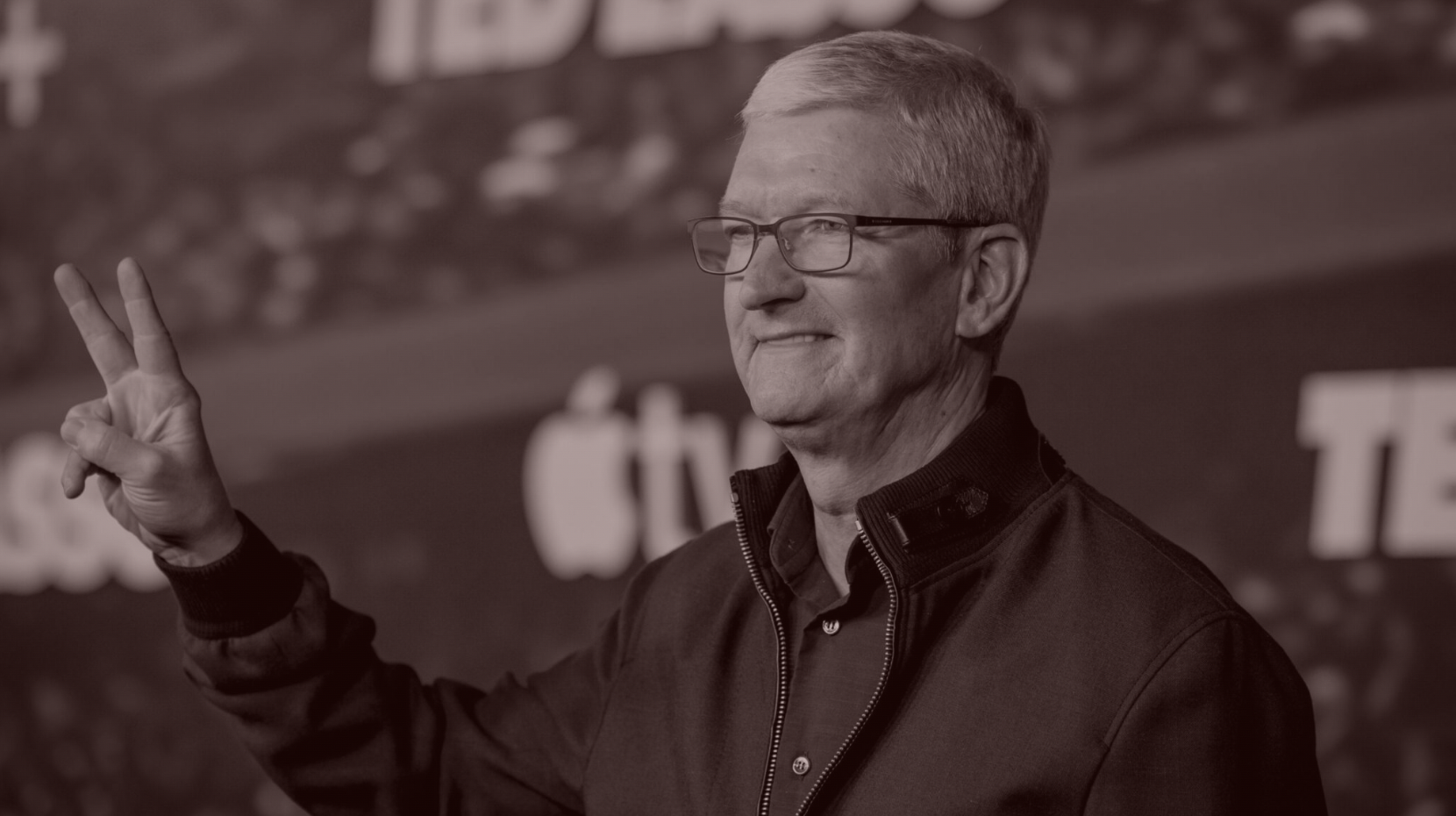
| Apple’s slowing growth and $165 billion balance sheet are fueling armchair speculation, not for the first time, that C.E.O. Tim Cook ought to put some of that cash to work to acquire the likes of Disney (not in this regulatory environment) or Netflix (not selling) or Tesla (never gonna happen). Much of this is wishful thinking, of course, on the part of Wall Street bankers and dealmakers who are handsomely rewarded for advising and facilitating M&A. I get it. I used to be one of these guys.
Apple, of course, has always been comparatively M&A averse, which makes the tech giant of little use to Wall Street, where bankers regularly discuss among themselves a company’s “wallet”—as in, how much bankers think a company can generate in investment banking fees in any given year. I’d venture to guess that Apple’s “wallet” is zero these days, which is probably exactly the way Cook likes it. If you can avoid dealing with Wall Street as a corporate C.E.O. you certainly would, as amusing as some bankers can be.
That doesn’t mean Apple doesn’t do deals. In fact, Apple has done some 20 M&A deals in the past five years but its largest deal remains its acquisition of Beats, nearly a decade ago, from Dr. Dre and Jimmy Iovine, for $3 billion. And with $165 billion in cash on its balance sheet, it doesn’t exactly need any cash. That means Apple basically has no need for Wall Street. It doesn’t need to borrow money. It doesn’t need to sell debt. It rarely needs, or wants, M&A advice. It might need some help managing that $165 billion in cash to optimize the risk and reward trade-off. So it probably is a source of some frustration on Wall Street that the world’s second most valuable company, behind Aramco at the moment, with a market value these days of $2.6 trillion, has little need for them.
Nevertheless, that probably hasn’t stopped bankers from streaming out to Cupertino to pitch M&A ideas to Cook & Co. Is Disney on a list of possible acquisitions for Apple? Possibly. With a market value of $180 billion these days, Apple could easily scoop up Disney. But I just don’t see it happening. A company without a culture of doing M&A deals, like Apple, doesn’t suddenly turn around and do one of the largest M&A deals ever, even if M&A bankers could make a credible argument for why an Apple/Disney combination could make some sense. It’s more likely, which is to say still not very likely, that Apple would buy Peloton, for $4 billion, as some once suggested, than it is that Apple would buy Disney. But I don’t see that, either.
In fact, I don’t think Apple needs to do a single thing strategically and I would not advise Tim to do any M&A deals, unless of course he wants to dabble in some consumer electronics product that Apple isn’t likely to develop itself, as was once the case with Beats. In this category, I might put companies such as the private Bose (most of the stock of which is owned by MIT and can’t be easily sold, if it all) or Oura Health, a private Finnish company with fancy investors, such as Peter Chernin, Michael Dell, and Marc Benioff, that makes the Oura Ring that I am seeing cropping up peoples’ fingers more and more these days.
But these are stretches, at best. The only thing Apple should be focused on doing, in my book, is how to make laptops that can connect to the cellular data network. Why is it that Apple laptops can only connect to the Internet with Wifi? That seems crazy to me. iPhones and iPads can connect to both Wifi and the cellular data network but not laptops? Crazy. Tim, if you want Apple to get to more than $3 trillion in market value, start selling laptops that can also connect to the 5G, or LTE networks. I’ll buy one immediately if you do. (Can’t wait to hear from readers why this can’t be done, but perhaps it just can’t be done yet.) |
| Perelman’s Rite of Passage |
|
| Let’s pour one out for Ron Perelman, once the richest man in the country and perhaps the billionaire who best defined Manhattan wealth from the ’80s to the aughts with his takeovers, Page Six romances, high-wattage philanthropy, double East Side townhouse, yacht trips, and more. In the last few years, the now 80-year-old Perelman has been busy seemingly selling everything that’s not nailed down, from his art and his jet to his office buildings in Manhattan and homes in the Hamptons; everything, everywhere, all at once.
He’s also just lost control of Revlon, a company that he’s owned—persistently and famously—since he swiped it from the Establishment in 1985 in a legendary hostile takeover battle. Perelman’s takeover of Revlon helped to establish the important legal precedent known on Wall Street as “Revlon Mode,” which essentially means that a board of directors has a fiduciary responsibility to sell a company to the highest bidder even if the board would rather not. That’s pretty much why there was little doubt that Elon Musk was going to get Twitter after he launched his hostile takeover of the company last April. He has Perelman (and the Delaware courts) to thank for making it virtually impossible for a board of directors to say no to a fully-priced hostile takeover, even if they would rather not sell.
What’s been equally amazing about Perelman’s ownership of Revlon for nearly 40 years is that he decided to keep it for that long. Most corporate raider types, like Perelman, buy and sell companies constantly, and generally own them for short periods of time. But Perelman apparently loved the glamor of Revlon and the access it provided him to the worlds of fashion and media, in which the cosmetics giant is a major advertiser. He’s been married five times, including once to the actress Ellen Barkin, and once to the actress and activist, Patricia Duff.
In fact, the consensus on Wall Street is that Perelman should have sold the company many, many years earlier. Instead, Revlon filed for bankruptcy in June 2022. At that time, Perelman still owned 85 percent of Revlon, with the rest of it publicly traded, and it had debt of around $3.5 billion.
Sure, Revlon will emerge from bankruptcy later this month. But Perelman will not own any of the newly-private Revlon. Instead, it will be owned by its creditors—a group led by Citigroup, which will own 82 of the new equity. According to bankruptcy filings, the new equity of Revlon will theoretically be valued at $1.6 billion. The company will also have $1.4 billion of new debt, bringing Revlon’s enterprise value to $3 billion. That’s only slightly more, not adjusted for inflation, than what Perelman paid for the company in 1985.
This isn’t the outcome Perelman would have wanted, but some people have fared well. Perelman, himself, has been buying and selling Revlon stock for years and paying out dividends. The bankers and lawyers involved with the bankruptcy process, which was accomplished in a relatively fast 10 months, will also walk off with fees totalling some $250 million! There have been opportunities for hedge funds and day traders, too. In bankruptcy, Revlon became a veritable meme stock, for no apparent reason, and even though the existing equity holders are getting wiped out, the Revlon stock traded as high as nearly $9 a share last August. If any of the crazy people who bought the stock sold it when it was trading at that level, or around that level, they made money. The Revlon stock now trades at 21 cents a share, down 98 percent in the past year, and soon to be worth zero.
And then there’s Perelman’s daughter, Debra, who was the Revlon C.E.O. in the years leading up to Revlon’s bankruptcy and then during the ten-month bankruptcy. She will somehow be remaining as the company’s C.E.O. now that it’s no longer owned by her father. She must be doing something right for that to happen. In any event, the end of an era for Perelman and Revlon and maybe for Wall Street, too. |
|
|
|
| FOUR STORIES WE’RE TALKING ABOUT |
 |
| DeSantis Donor Quakes |
| A Florida dispatch on G.O.P. megadonors & Youngkin’s golden opportunity. |
| TARA PALMERI |
|
 |
| Lichtology 101 |
| On CNN’s subtle pivot and new intrigue from Ari Emanuel’s combat deal. |
| DYLAN BYERS |
|
 |
|
 |
| Elon’s Blue Period |
| A close look at Elon’s pay-for-Twitter-verification scheme. |
| BARATUNDE THURSTON |
|
|
|
|
|
 |
|
|
|
Need help? Review our FAQs
page or contact
us for assistance. For brand partnerships, email ads@puck.news.
|
|
|
|
Puck is published by Heat Media LLC. 227 W 17th St New York, NY 10011.
|
|
|
|