{{ 'now' | timezone: 'America/New_York' | date: '%b %d, %Y' }} |
|
|
Hello and welcome back to The Best & The Brightest. I’m Leigh Ann
Caldwell.
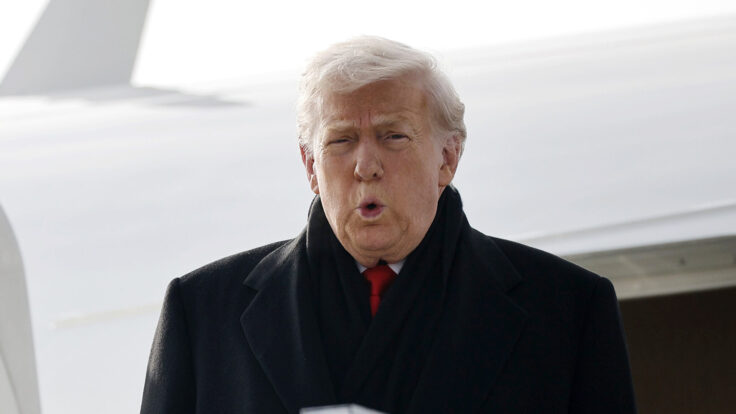
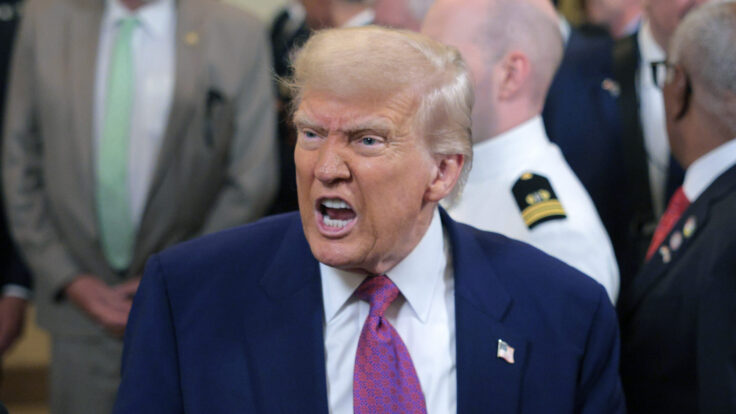
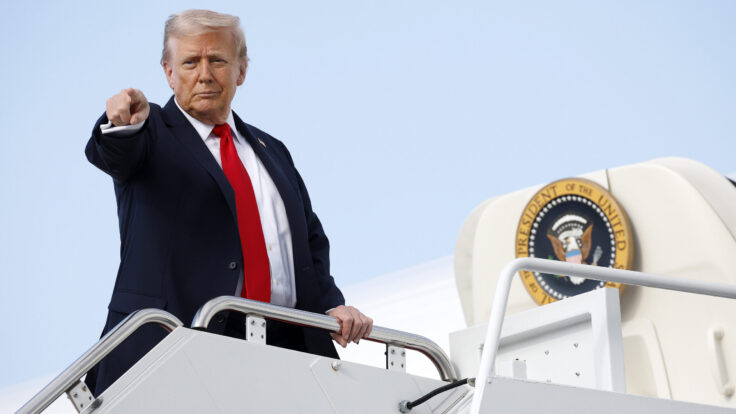
President Donald Trump continued his “anti-crime” crusade today by signing new executive orders that, not coincidentally, target criminal-justice practices in blue jurisdictions. White House Staff Secretary Will Scharf noted that an E.O. targeting cashless bail, for example, would affect “some of the most left-wing states in America,” with Illinois as a “great example” of a place at risk of losing federal funding over the policy.
Meanwhile, a D.C.-specific E.O. would bypass the city’s cashless bail policy by putting as many criminal defendants as possible into federal custody. As I wrote yesterday, Trump is using crime as a wedge issue against the Democrats, and today he mused aloud that “Democrats better get smart—and, you know, politically, I hope they don’t—but actually in terms of love for the country, I hope they do.”
In today’s issue, my colleague Abby Livingston sits down with the legendary
Dave Wasserman of the Cook Political Report, who has studied redistricting for decades, to talk Texas, California, and all the map hijinks there and beyond.
But first… |
- Blue
slip blues: Trump is targeting one of the Senate’s last vestiges of bipartisanship—the “blue slip” tradition that encourages collaboration on judicial nominations. Basically, it allows home-state senators to have a say in whether or not to advance a nominee. Earlier today, the president said that he’s likely to challenge the practice in court, which comes after he failed to persuade Senate Republicans to get rid of it. “This is based on an old custom. It’s not based on law, and I
think it’s unconstitutional, and I’ll probably be filing a suit on that pretty soon,” he told reporters after an executive order signing ceremony in the Oval Office today.
The most recent high-profile example of the blue slip process involves Alina Habba, Trump’s nominee to be U.S. Attorney in New Jersey. Senators Cory Booker and Andy Kim have effectively blocked her nomination from moving forward by declining to return their blue slips
to the Judiciary Committee. (She’s currently serving in the role on an interim basis, which a federal judge recently ruled unlawful.) Trump’s nominees for the Southern and Northern districts of New York, Jay Clayton and John Sarcone III, have also been held up because New York senators didn’t return blue slips. A judge ruled last week that Clayton can serve in an interim capacity, and the Justice Department created a workaround by changing the title for Sarcone,
naming him a “special attorney for the Attorney General,” so he can serve a similar position without Senate confirmation.
Despite protestations from certain members, Trump is right that blue slips are not enshrined in Senate rules or the law—they’re a courtesy. Still, senators insist that the practice is within their rights. The Constitution says the Senate can “determine the Rules of Proceedings” and is responsible for “advice and consent” of nominations. Senators, comfortable with a
given nominee, will hand in their blue slip, and Judiciary Committee leaders have generally respected the process by not advancing nominees otherwise. Sen. Chuck Grassley, the Republican chairman of the Judiciary Committee, has defended the practice, even though Trump angrily urged him in a Truth Social post yesterday to drop it. Grassley, who turns 92 in
three weeks, shot back on X in a partially all-caps post that Republicans have benefited from the policy as much as Democrats.
Democrats, for their part, are dismissing Trump’s threat, calling a potential lawsuit “baseless.” Josh Sorbe, spokesperson for the top Democrat on the committee, Sen. Dick Durbin, said, “The president needs to read the Constitution, which gives the Senate responsibility for providing advice and consent on nominations.” - Epstein’s back: The House Oversight Committee issued more subpoenas today relating to the Jeffrey Epstein case. This time, the committee called on Trump’s former Labor Secretary, Alex Acosta—who oversaw Epstein’s 2008 case and controversial plea deal as U.S. Attorney for the Southern District of Florida—to testify. The committee also issued a subpoena to Epstein’s estate for documents
including the now-infamous 50th birthday book to which Trump allegedly contributed. (Trump, as you know, denies being the hand behind the suggestive drawing, and sued The Wall Street Journal for $10 billion for reporting it.)
Trump allies hoped that the Epstein issue would go away, especially after Ghislaine Maxwell, who is seeking a pardon from Trump,
told Deputy Attorney General Todd Blanche over the course of a two-day interview that she is pleased to see Trump’s success as president and that she didn’t witness him doing anything “inappropriate.” But the Oversight Committee’s subpoenas are sure to keep the story in the news, regardless of what is released.
|
|
|
A scintillating conversation with redistricting wiz Dave Wasserman of the Cook Political
Report on the fate of the current mid-decade arms race and its effects on the midterms and beyond. |
|
|
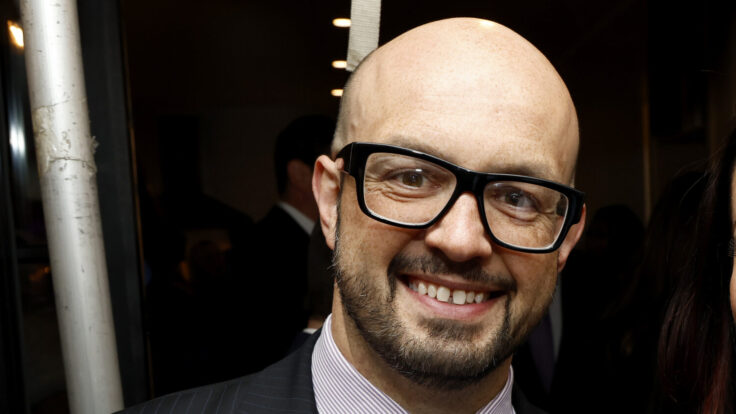
Dave Wasserman, the ubiquitous elections analyst for the Cook Political Report, has been
following redistricting for decades—not only was it the subject of his college thesis, but his X handle is literally @Redistrict. As the lead author of Cook’s signature product, the Partisan Voting Index (PVI), Wasserman is in charge of documenting the “lean” of each of the country’s 435 congressional districts—from R+33 in AL-04 to D+40 in PA-03, and all the districts in between. With both parties rushing to redraw district maps in Texas and California, and setting their sights on future
states, he’s become one of the most important data oracles in Washington.
Naturally, I was eager to get Wasserman’s insider perspective on the gerrymandering arms race consuming the country. Herewith, our conversation about whether Trump’s push for redistricting will backfire, which incumbents might be in trouble, the subtle art of the new California map, and which states might be next. (The following has been lightly edited for length and clarity.) |
Abby Livingston: Dave, how strange is it to be dealing with redistricting
in the middle of a decade?
Dave Wasserman: It’s no longer that strange. Republicans obviously pursued a mid-decade redraw of Texas in 2003 and 2004 that yielded five additional seats. In 2018, the Pennsylvania Supreme Court threw out a Republican-drawn map and replaced it with a plan that was neutral. We’ve seen other states revisit their plans, like New York in advance of 2024. So it’s not new, but what is unprecedented is an all-out free-for-all between
the states.
We shouldn’t be shocked, given the margin in the House and the relatively low number of competitive seats. The other element that’s new: Back in 2004, when Texas Republicans redrew their map, they were replacing a court-drawn plan with a legislative-drawn plan. In this case, Republicans are replacing their own gerrymander with an even more aggressive gerrymander, and it’s only possible because of the trend line in the state.
Texas Republicans redrew the map in
2021, on the heels of Biden coming within five and a half points of winning the state, and they had no choice but to shore up their own incumbents. Today, though, Republicans are redrawing a map on the heels of Trump winning the state by 14, and after making huge inroads with Hispanic voters—so they have an opportunity to go after more Democratic seats without hurting their own incumbents.
One of the most heated arguments in Texas is whether using the Trump 2024
numbers to redraw those districts is wise, or whether those might be inflated compared to the norm. Do you have an opinion?
For purposes of congressional elections, they’re likely inflated by two things. Number one, particularly in House races, partisan performance tends to lag the presidential trend line, and this is true in both directions. We’ve seen a number of seats that are ancestrally Republican, where Trump is unpopular but non-Trumpy Republicans hold on—just think of
Brian Fitzpatrick [PA-1] or Don Bacon [NE-2]. And we’ve seen the reverse. Hispanic Democrats tend to outrun non-Hispanic Democrats in Hispanic areas, so Vicente Gonzalez [TX-34] and Henry Cuellar [TX-28] are really popular in their home regions in a way that Kamala Harris was not. It also has a lot to do with ideology.
But the other factor is that the midterm is not going to feature Trump on the ballot,
so a lot of Trump voters will not be showing up, and the electorate is likely to include greater numbers of older Hispanic voters who still consider themselves Democrats. That’s why those two South Texas seats are not automatic pickups for Republicans. I was expecting Republicans to go even further with those districts—maybe take the 34th up to Rockport, or take Cuellar up north of San Antonio. But neither of those things happened. So those are still competitive seats.
Do you see
a scenario where any of the Republican incumbents could be in trouble this cycle in Texas?
Not really. What distinguishes Texas from other states is that midterms still feature enough high-profile races that turnout tends to be high. It doesn’t fall off a cliff the way it can in some other states’ midterms, and I think the early voting culture also has something to do with that. So you’re unlikely to see a turnout disparity between the parties in Texas that causes Republicans in
Trump+18 districts to suddenly be in danger. There are also far fewer independent voters in Texas—truly persuadable voters—than there are in, say, Iowa or New Hampshire, so that limits the potential for a swing. And there really wasn’t a single Republican incumbent who saw a serious hit to their district’s partisan performance. |
Let’s move to California. What was your reaction when you started to absorb the decisions the
Democrats made there? What do you think was on their minds?
They knew that whatever they would draw would need to pass muster with voters, which is a different calculation from Texas. And they could have targeted even more Republican districts. They could have, for example, taken David Valadao [CA-22] from Bakersfield to Monterey to make that a safe democratic seat that would have drawn ridicule in the Central Valley, and they didn’t. You know, his seat would
still be a winnable seat for Valadao. Darrell Issa [CA-48] would be a competitive seat. It’s not as if Democrats went maximal in what they drew, but they also knew that they needed to shore up some of their own incumbents, which is a little bit different from Texas, where there really weren’t vulnerable incumbents to begin with. In California, Democrats needed to boost Adam Gray [CA-13] and Dave Min [CA-47] and Josh Harder
[CA-9]. So it’s as clean-looking a map as Democrats could draw without sacrificing their potential to win three to five seats.
Some people have floated getting really aggressive in places like Maryland or Missouri. In the past, the majority has made a conscious effort not to draw the most aggressive maps, because they want some padding in there. Could that backfire?
It’s rare that maps actually backfire. They can
unravel as demographic or political trend lines overtake the intent of the mapmaker. But I don’t know if I fully agree with your premise, because Democrats have been very aggressive in spreading out their voters in the states where they can. Democrats in Illinois are pretty maxed out at 14-3. Democrats in New Mexico and Oregon and Nevada spread out their voters to win as many districts as they possibly could. Where Democrats in Maryland and New York have stalled is, they are fearful of adverse
rulings from their state’s Supreme Court because those Supreme Courts have recently acted to uphold the spirit of the state’s prohibitions on partisan gerrymandering, whereas Republican states have not policed it to the same extent. The Ohio Supreme Court has become literally a partisan body, which is different from even five years ago.
How worried should the parties be about member-vs.-member races?
I expect that this year there will be isolated events relative to
a true post-census year, where states gain and lose districts, but they still siphon party money and attention away from competitive districts. In this case, I think we may see Ken Calvert [CA-41] versus Young Kim [CA-40], and we may see Julie Johnson [TX-32] versus Marc Veasey [TX-33]. But will they take the party’s eyes off the ball when it comes to winning the majority? Not really.
What impact has the Supreme
Court ruling on the Voting Rights Act had on what we’re seeing right now?
The Supreme Court is ever shifting its views on the V.R.A. It upheld the Gingles Test by a 5-4 margin, and interpreted it to mean that there should be additional Black majority seats drawn in Alabama and Louisiana. But it could go back later this year and determine that the lines
that were drawn in Louisiana were excessively based on race. So it could plainly contradict itself.
Now, of course, the way that Louisiana Republicans complied with the Supreme Court ruling was to draw a really unsightly 6th district, so as to bolster their own case that the district is the definition of obscenity and a racial gerrymander. I would say that Republicans went out of their way to draw an ugly district for this purpose, but that strategy could work. |
Elegy for the
Blue-State Republican
|
What’s your best guess, at this point, as to which party has the upper hand in terms of the seats
they’ll gain? How could it determine control of the House?
A lot hinges on California and Florida. Those are the two biggest question marks remaining. And let’s say that Republicans get everything they want out of every state we’re talking about, and California Democrats fail to convince voters to bypass the commission. Republicans could pad their margin in the house by 10-12 seats.
But if California Democrats do get what they want, we’re probably talking more like a five
or six seat net benefit for Republicans. At five or six seats, I still think Republicans are the slight underdogs to retain control of the House, but at 10 to 12, I would say the House is a very close fight.
My theory is this could go two ways: Either redistricting will become a regular part of the election cycle, turning state legislators into hugely powerful figures, or this will be so exhausting and expensive that parties question whether further redistricting is worth
it.
It highlights the absurdity of the Supreme Court’s ruling from several years ago in the Rucho case that partisan gerrymandering claims are not justiciable in federal courts, and it has the parties plainly making a farce out of what in most other countries is a simple bureaucratic process, and maybe that leads
to a reckoning. But I’m not inclined to believe that will happen. Could there be some form of détente between congressional leaders after this cycle, because both parties are so exhausted? Maybe.
It would seem like the logical endpoint to all of this is the eradication of blue-state Republicans and red-state Democrats. But it’s not that simple, because every state has its own redistricting culture and rules. |
|
|
Join Emmy Award-winning journalist Peter Hamby, along with the team of expert journalists at Puck, as they let you in on the
conversations insiders are having across the four corners of power in America: Wall Street, Washington, Silicon Valley, and Hollywood. Presented in partnership with Audacy, new episodes publish daily, Monday through Friday. |
|
|
Unique and privileged insight into the private conversations taking place inside boardrooms and corner offices up and down Wall
Street, relayed by best-selling author, journalist, and former M&A senior banker William D. Cohan. |
|
|
Need help? Review our FAQ page or contact us for assistance. For brand partnerships, email ads@puck.news. You received this email because you signed up to receive emails from Puck, or as part of your Puck account associated with {{customer.email}}. To stop receiving this newsletter and/or manage all your email preferences,
click here. |
Puck is published by Heat Media LLC. 107 Greenwich St, New York, NY 10006 |
|
|
|