 |
|
Happy Wednesday, and welcome back to Dry Powder.
|
|
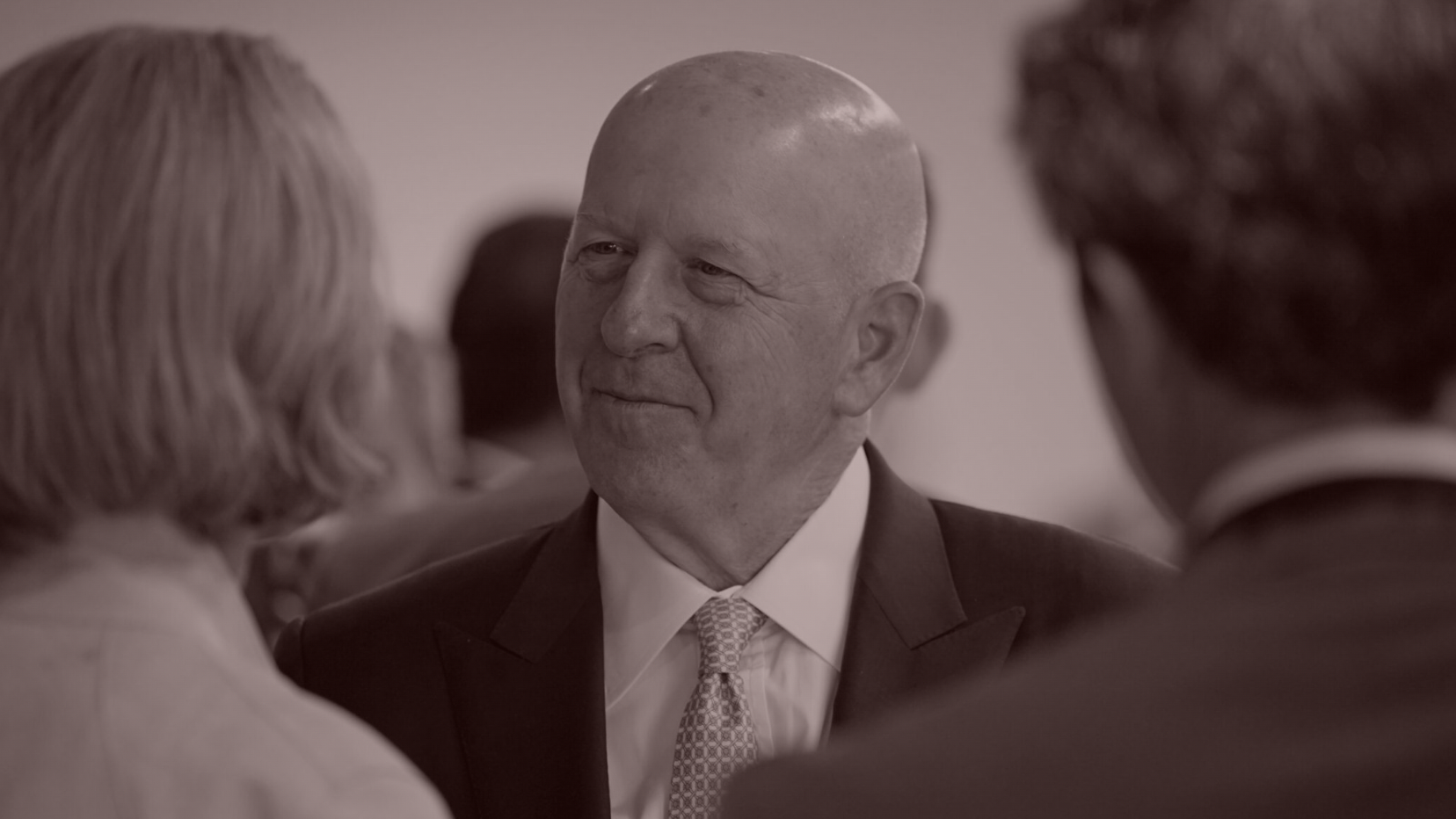
You might have noticed the wave of recent media reports, ranging from whispered speculation to full-throated predictions, regarding the fate of David Solomon at Goldman Sachs. For today’s issue, I chatted with sources inside and around the firm for a more candid assessment. Don’t believe everything you read…
|
 |
| David vs. The Goldman Goliaths |
| Wall Street has been rife with rumors, many of which have found their way into the media, that David Solomon’s seat atop Goldman Sachs is increasingly hot. But I think the challenges for him at 200 West Street are largely exaggerated. |
|
|
|
| The media has been having a field day on the topic of David Solomon’s tenure atop Goldman Sachs, thanks in large part to the restless unnamed Goldman partners and other executives who seem to have it in for the guy. From the New York Times, the Wall Street Journal, and the New York Post, to another Economist cover, to the august Financial Times, and Insider, speculation is rife about Solomon. There have been stories about how John Waldron, Solomon’s No. 2, will take over for him. Or that Richard Gnodde, the C.E.O. of Goldman’s international operations, might step in. Or that Steve Scherr, the bank’s former C.F.O. and current C.E.O. of Hertz, would return as the head of Goldman. Then there is the insane idea, recently socialized in Jimmy Finkelstein’s The Messenger, that Goldman might return to the days when it was a partnership and appoint two men to lead the firm together, as it was run during the eras of Bob Rubin and Steve Friedman, or even John Whitehead and John Weinberg.
So, yes, at the moment, there’s been a lot of smoke coming out of 200 West Street. But is there any actual fire? I’m thinking not, to be honest. Waldron is too close to Solomon to be disloyal. Gnodde is a proper, older, less charismatic banker, a safe pair of hands, but unlikely to get the troops excited. Scherr was well-liked in his days as the Goldman C.F.O. but he has a potential payout of $178 million at Hertz if he sticks around until 2026 and certain stock price targets are met. And return trips to Goldman are rare indeed (with the notable exception of Dina Powell McCormick, who has since departed the firm again). And that idea of co-C.E.O.s of Goldman Sachs, the publicly traded corporation, is not only unfathomable, it’s simply not going to happen.
Fairly or not, these days it seems that everything Solomon does endures extreme scrutiny. Was his decision to add Tom Montag to the Goldman board a brilliant strategic move or akin to bringing the fox into the henhouse, as some have asserted? Montag, of course, was a longtime Goldman partner who left the firm for Merrill Lynch after Blankfein, Solomon’s predecessor, chose Gary Cohn and Jon Winkelried to be his deputies, rather than Montag, who was not nearly as senior as those two guys. But I really don’t see Montag, who is 66, ever possibly replacing Solomon. (This innuendo-filled New York Times piece probably put an end to that idea anyway.) After all, bringing highly accomplished executives onto a board of directors is a way for other board members, as well as the C.E.O., to tap into their expertise.
The craziest reports, however, have coalesced around the far-fetched notion, also first aired in Finkelstein’s Messenger, that John F. W. Rogers, the longtime Goldman consigliere and the firm’s liaison with the board of directors, has turned on Solomon. The top Goldman people whom I speak with on a regular basis vehemently deny that there is any distance between Rogers and Solomon: John Rogers’ main job is to support the C.E.O. of Goldman Sachs, whoever it may happen to be at any given time.
And Rogers has been there, and I mean really been there, for all of Jon Corzine, Hank Paulson, Blankfein and Solomon—four more different men you could not find. Tony Fratto, Goldman’s newish head of communications, has been understandably emphatic about denying there was a rift between Solomon and Rogers. “There is absolutely no truth to this,” he told Insider, which amplified the Messenger’s reporting about the rift between Solomon and Rogers. “It’s complete nonsense. Anyone who knows John Rogers would understand that this is a lie. It is categorically false. Period.”
My conversations with Goldman sources back Fratto up. “John Rogers is a one-master dog and his master is David,” one longtime Goldman hand told me recently. “He gets up every morning and before he brushes his teeth, he’s thinking, ‘How do I best position David?’ He’s probably thinking, ‘David is not making this easy for me, but it’s my job to help him.’ I don't think he exercises a lot of critical faculty about David. I think he’s there to enable David.” This person noted that “the hydrogen bomb would actually have to land on his head,” for Rogers to no longer support the C.E.O. of Goldman Sachs. |
|
|
| The hysteria, on some level, feels like an overreaction to a series of seemingly unrelated events that, when taken together, could be combined to create the narrative that Goldman isn’t quite, well, Goldman these days. The bank fell behind JPMorgan Chase in the first-half 2023 M&A rankings, a rare dethroning for the folks at 200 West. And the expectation is that the firm’s recently completed second quarter won’t be all that great. Then, as I’ve previously noted, there has been the ongoing departures of top partners, including Dina, and Tammy Kiely, the co-head of tech banking.
Both women left for rivals: Dina for the mellifluously named BDT & MSD Partners and Kiely for Evercore. Fratto has pointed out to me, and I agree with him to some extent, that this is the normal course of business at Goldman, not a sign of weakness, and a throwback to how the partnership structure used to work. To mix a few metaphors, Goldman functions best when the top dogs move on out of Goldman so the young bucks can have their moment in the sun.
And then there is the whole failed consumer banking effort from which Solomon is quickly backtracking. The bank will likely have to take a sizable writedown of its ill-fated acquisition of GreenSky, a fintech player, which Solomon acquired to try to bolster the consumer strategy. (Why Goldman can’t get its own acquisitions right is an ongoing mystery at the 154-year-old firm.) There is also a S.E.C. investigation into Goldman’s dual roles in the Silicon Valley Bank saga, which I have previously written about here. But, as I have also previously noted, I suspect this won’t amount to a hill of beans; my understanding is that Goldman behaved properly.
At the end of the day, as I’ve noted in the past, I suspect much of the bickering simply comes down to Goldman bankers and traders being miffed about their 2022 bonuses. The combination of losses in the consumer banking effort and the growing number of Goldman employees under Solomon’s tenure—up some 40 percent in headcount before the recent layoffs—has reduced individual bonuses in 2022. But if you combine Goldman payouts from 2021 and 2022, who down at 200 West really has anything at all to complain about?
These people are extremely well paid, especially when you consider the fact that none of their personal capital is at risk. Yes, Goldman’s stock is off its August 2021 high of nearly $420 a share, but in the past five years, roughly congruent to Solomon’s tenure, the Goldman stock is still up 47 percent. That’s better than Jamie Dimon’s last five years at JPM (up 40 percent) though not as exalted as James Gorman’s last five years at Morgan Stanley (up 83 percent).
And, for good measure, Goldman just announced it was increasing its dividend by 10 percent a share: Goldman’s shares now have a dividend yield of more than 3 percent, which also will win over shareholders to David’s side. In sum, throughout its storied history, Goldman has always managed to find the right man at the right time (yes, alas, always men) to lead the firm. The Goldman crowd may not always like David Solomon—his style, his habits (I’m amazed how much the deejaying really does seem to rankle)—but he may, in fact, be the right man for this current era on Wall Street, where Goldman needs to experiment to regain its stature. One does not have to be liked to be a good leader.
Especially important, the Goldman board of directors seems to be unified in support of Solomon. Last week, the board held its quarterly meeting in India. In its wake, there’s not even a discordant note of dissatisfaction with Solomon, according to my Goldman sources. “Nobody is saying anything lately,” shared one Goldman lifer, “And post the board meeting. So therefore, I’m assuming that there was nothing but support at the board meeting because I’m not hearing otherwise.” Fratto, who did not make the trip, texted me,“From all reports it was a great board meeting.”
One of my sources, someone who is really tied into the inner workings of the firm, puts Solomon’s year-end chances of survival at Goldman at 55-45, in his favor. Not overwhelming, of course, but not nearly as ominous as the recent spate of media stories would have one believe. And this person also conceded that the noise appears not to have penetrated the board room. “For all the hubbub,” my Goldman friend, the odds-maker, says, “the board is not showing any indications of unhappiness.” Responded Fratto to the odds-maker, “I’m not going to comment every time someone makes things up about Goldman Sachs.” Well said, Tony. |
|
|
| One perhaps underappreciated aspect of all the Solomon succession rumor-mongering is how buttoned up Goldman’s culture has always been. Yes, in 1935, after the bank suffered the embarrassment of the Goldman Sachs Trading Company debacle, Walter Sachs, the son of one of the founders, and the legendary Sidney Weinberg decided to oust Waddill Catchings, the first outsider in the firm’s history to run the place. And, sure, some 64 years later, in 1999, the equally legendary Paulson joined together with two other members of the Goldman management committee to remove Corzine after he tried to engineer a merger between Goldman and Bank of New York Mellon without even consulting the partnership.
But, usually, the place wards off rogue actors. In September 2015, when Blankfein was out of the office for a spell dealing with a diagnosis of lymphoma, his then second-in-command, Gary Cohn, approached the board of directors about succeeding him, as I later reported in Vanity Fair, only to not find the support he expected. Cohn left Goldman in 2016. Soon after, he was approached by his friend Jared Kushner about joining the Trump administration. Trump named Cohn, a lifelong Democrat, as his first National Economic Advisor.
Not only do I not see a Cohn-like coup attempt brewing against Solomon, I also don’t see the whisper campaign leading anywhere. The Goldman stock has performed too well, the Goldman talent bench is simply too deep, the consumer banking fiasco will be rectified, and Goldman will once again be Goldman. That doesn’t mean David shouldn’t make some mid-course corrections, both on some of the more light-touch stuff—the deejaying, re-engaging with the media—and by figuring out how Goldman can get more balance sheet, maybe by acquiring an insurance company, assuming the Federal Reserve would block a deal with a smaller bank, like the aforementioned Bank of New York Mellon.
Running Goldman is like being the manager of the Yankees: along with the wealth and the fame and the expectations come plenty of headaches. But I don’t think the real risk is internal. Although this is not investment advice, there is little question Goldman Sachs is undervalued these days. It is trading around 1x book value, a fraction of the 4x book value that Goldman was valued by the market at the time of its 1999 I.P.O. (The I.P.O. valuation was an anomaly, as the Fed requires its Wall Street charges to have much more equity capital today than the investment banks of yore.) Morgan Stanley, meanwhile, trades at 1.6x book value. JPMorgan Chase trades at 1.4x book value. For years now, as well, Morgan Stanley has been valued at some $40 billion more than Goldman, at $144 billion in market value compared to $108 billion. That never used to be the case, especially when Morgan Stanley almost went down the tubes during the 2008 financial crisis. To his credit, Gorman has done a remarkable job resurrecting the firm from the dead.
One bit of samizdat making the rounds in Goldman circles these days is the idea that an activist investor might decide to take a stake in the undervalued Goldman Sachs and start rattling the cage. Would an activist agitate for changes within the business, which might help Solomon realize his ambitions for Goldman, or would it turn on him? Who knows? As Blankfein used to like to say, he spent 98 percent of his time as Goldman C.E.O. worrying about things with a 2 percent chance of happening. But, either way, Solomon’s bigger challenges probably lie outside the Goldman headquarters at the moment. |
|
|
|
| FOUR STORIES WE’RE TALKING ABOUT |
|
|
|
|
|
 |
|
|
|
Need help? Review our FAQs
page or contact
us for assistance. For brand partnerships, email ads@puck.news.
|
|
You received this email because you signed up to receive emails from Puck, or as part of your Puck account associated with . To stop receiving this newsletter and/or manage all your email preferences, click here.
|
|
Puck is published by Heat Media LLC. 227 W 17th St New York, NY 10011.
|
|
|
|