|
Welcome back to a special Inner Circle edition of Wall Power, where we get up close and personal with some of the art world’s leading figures. I’m Marion Maneker.
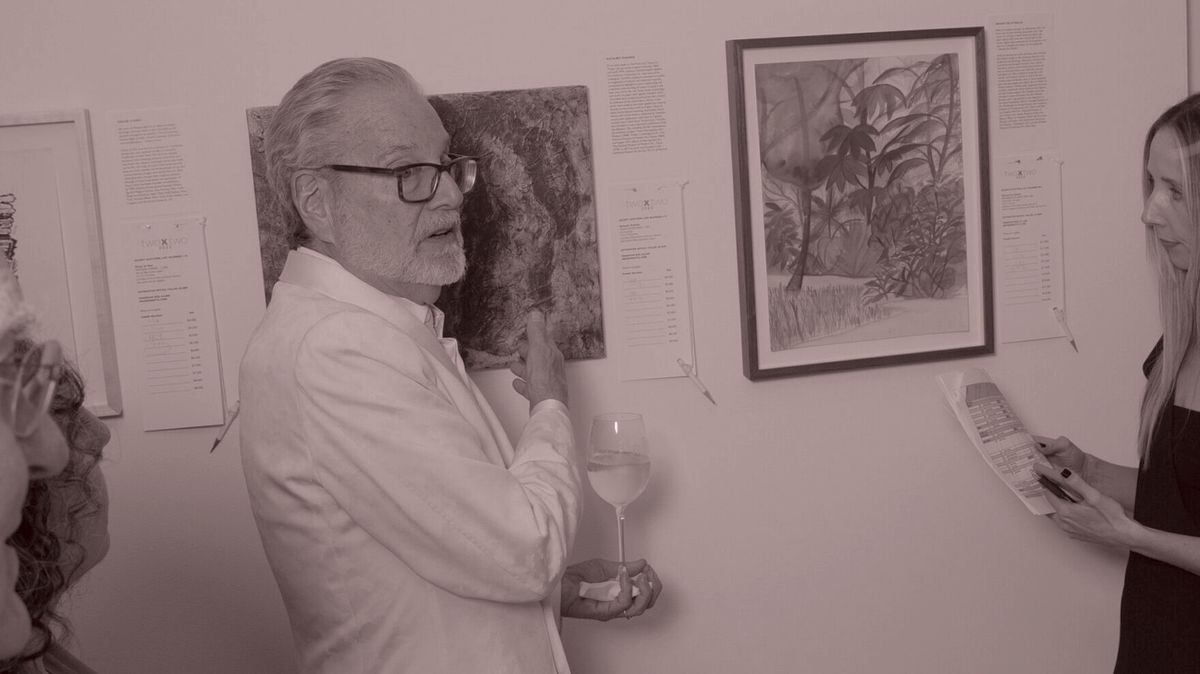
Tonight, while wandering around L.A., escaping the biting East Coast temperatures to attend both Felix and Frieze art fairs, I’m sharing my recent conversation with two important Dallas art collectors, Howard Rachofsky and Thomas Hartland-Mackie. Howard and his wife, Cindy, just completed a 25-year run as the hosts of Two x Two, an annual auction and charity fundraising event benefiting amfAR and the Dallas Museum of Art. Two x Two has offered a unique introduction to collecting contemporary art, and helped to create a vibrant collecting community in Dallas.
But first…
|
- The Times’s war on the art industry: Apparently, bankrupt former art advisor Lisa Schiff, who is awaiting sentencing in a Stuy Town rental paid for by her aging parents, has destabilized the art world. “Today the art world is reeling over not just her deception,” The New York Times wrote with portentous drama, “but also the stain Ms. Schiff has left on the largely unregulated business of art advising.”
Sure, Schiff’s story is a sad one—the tale of a woman who bilked her friends out of millions to live beyond her means in a fading art market. But I’m not sure there’s been much of an issue with the way the art advising industry operates in general. Schiff clearly violated best practices that exist to prevent this exact situation, but it’s telling that we haven’t seen another art advisor, at least recently, wind up in a similar position in a way that would cause anyone to question the industry as a whole.
|
|
|
|
An inside look at The Warehouse, the Dallas exhibition space fusing two collectors—and two generations—to create a hybrid experiential and educational platform to engage with the public.
|
|
|
Howard Rachofsky founded The Warehouse in 2012 with a dual purpose: to store his massive art collection, but also to serve as an exhibition and education space for the community in Dallas. Lately, though, he’s been focused on The Warehouse’s future. As he tells me, he’s pragmatic—but he’s also 80. So last year, he teamed up with his friend and sometime canasta buddy, fellow collector Thomas Hartland-Mackie—who also has a strong connection to Dallas’s collaborative art community—and created The Warehouse Dallas Art Foundation, to jointly operate The Warehouse.
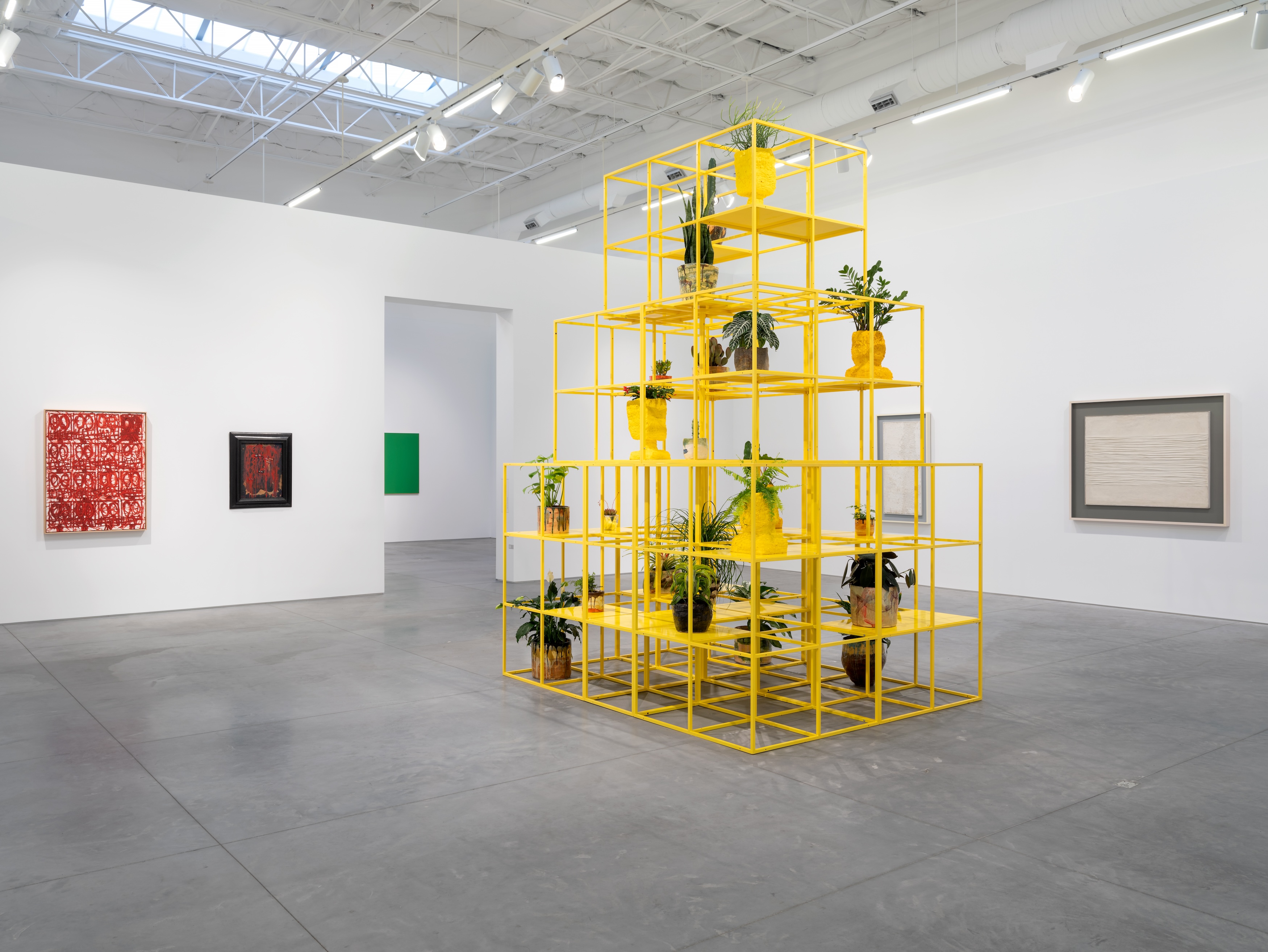
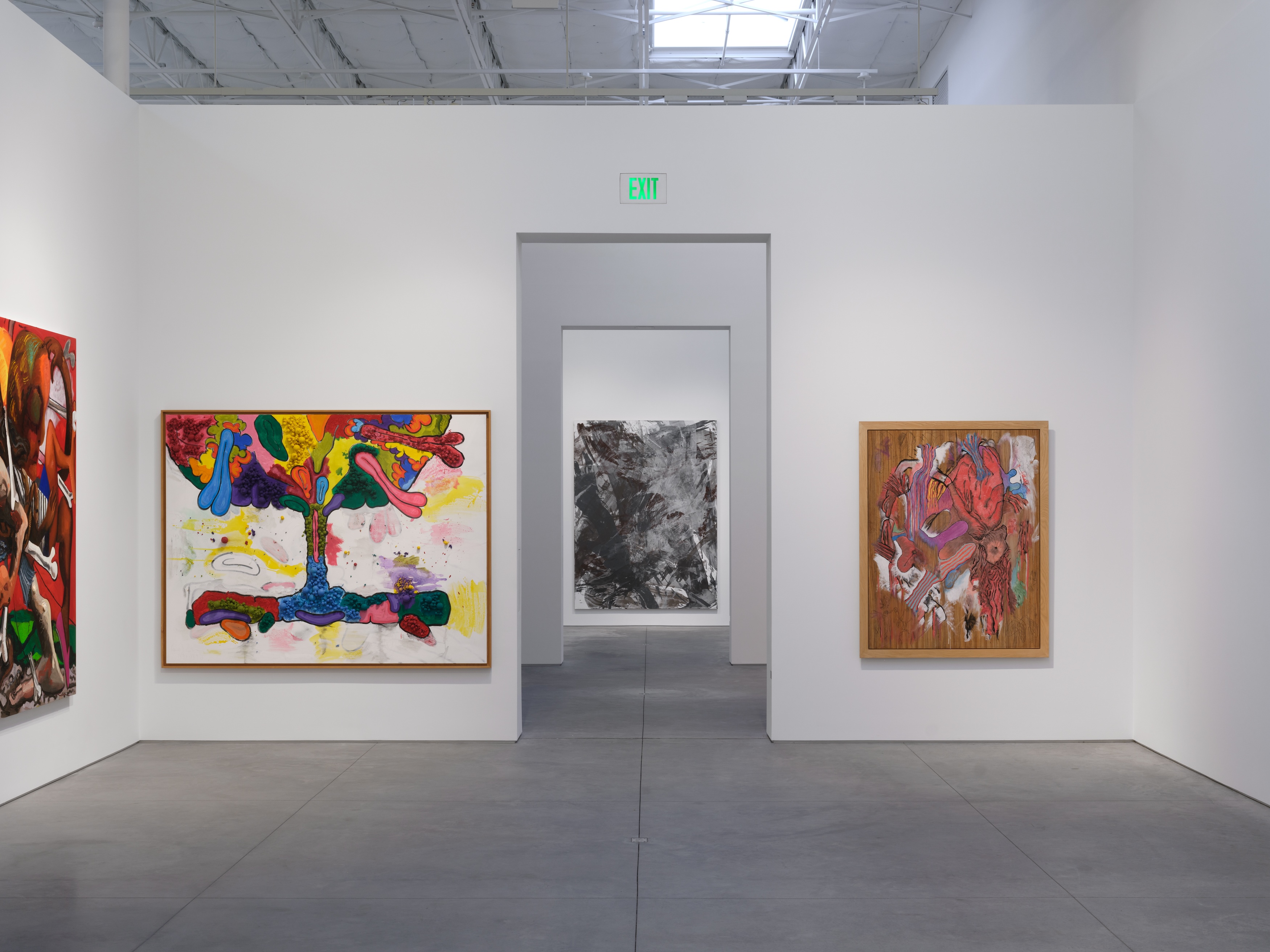
The result—and the foundation’s first exhibition, Double Vision: The Rachofsky Collection and the Hartland & Mackie / Labora Collection—is a dialog between the two art collections. As Hartland-Mackie tells me, he and Rachofsky discovered surprising connections, despite their different angles and approaches to artists. In a joint interview, lightly edited and condensed for clarity, they discussed the origins of The Warehouse, its education focus, and its next phase—plus its enduring value as a space for, in Hartland-Mackie’s words, “things that our wives wouldn’t be very happy with us installing at home.”
|
“You Could Be as Creative as You Wanted”
|
|
Marion Maneker: Could you describe what The Warehouse Foundation is, what it’s been, what you’re creating now, and what you hope it’ll become?
Howard Rachofsky: The Warehouse has existed for a dozen years as both my storage and exhibition space for the Rachofsky Collection, and also for exploring ideas in contemporary art. I’ve been on and off the board of the Dallas Museum for years, on the board of the Dia Art Foundation—I have a commitment to this community to make sure, to the extent I can help, that the visual arts are appreciated and understood. We have always had The Warehouse as a sort of open source, open-ended opportunity for people to come visit. We’ve done publications, we’ve done exhibitions, and we’ve brought in guest curators.
The Warehouse originally was envisioned by my partner in crime, the art advisor Allan Schwartzman. We were motivated by the notion of having a place where you could really explore ideas, and where you didn’t have an infrastructure in place that mandated long lead times—to be more spontaneous. You could be as creative as you wanted. You could be controversial, if you wanted to be, but the idea was really more about getting ideas out. And quite frankly, I also liked having a place to store my collection. To exhibit it was a big seduction. So that’s been its existence on this informal level for a dozen years.
|
|
Double Vision: The Rachofsky Collection and the Hartland & Mackie / Labora Collection, The Warehouse, Dallas, 2024. Photo: Kevin Todora/Courtesy of The Warehouse
|
|
Being pragmatic, and also being 80 years old, I wanted The Warehouse to have a future, too. Thomas and I have known each other for more than a decade. Over the years, we’ve purchased a few things together. The idea bubbled up—not so much by me, but sort of collectively—that it would be a good idea, if we want The Warehouse to have a future, to formalize a relationship.
As Thomas and I discussed it, it became clear that we could formalize this by forming the foundation. I’m in Dallas most of the time, and he’s not. I could be the partner on the ground, and he the partner in absentia who sort of flies in and sprinkles fairy dust, and helps make the magic work. We didn’t start out with a specific mission statement, other than that education is a primary focus, because we really want people to have the opportunity to come to terms with contemporary art—at their convenience and leisure, without intimidation.
It’s a collaboration between two collectors from different generations with different points of view, and both of us are well advised. Ben Godsill advises Thomas. Allan Schwartzman continues to be the primary inspiration of the Rachofsky collection. But over time, we want this to evolve and to form its own identity. The foundation is a good beginning signpost to do this structurally.
The foundation becomes a third entity triangulating between your two collections, which allows you to both collaborate.
Rachofsky: What I’ve done in the past, which I suspect we’re going to do in the future, is flex our intellectual muscle with the first exhibition or two. Those shows will primarily come from our collections. We view the
foundation as an opportunity to go way beyond what we do. We can borrow works from other institutions or private collections so we can do creative thinking. We will enlist outside curatorial talent to give fresh perspectives, both to our collections and to art conversations in general. We want this to be very flexible—and very agile.
|
A Collaborative Art Community
|
|
Thomas, you’re not on the ground in Dallas that much anymore. How does The Warehouse fit into your art collecting?
Thomas Hartland-Mackie: Dallas is where I’ve spent the most years of my life. I was in Dallas for 15 years. What I really like about the Dallas art community is that it is very collaborative. I haven’t lived in too many other big art communities, at least not in my adult life, but I am in touch with friends who live in those communities. I think those are maybe more competitive. But I think Dallas is special: People really like to collaborate and work together. They think about how to make Dallas a great place for art.
The Warehouse started around the same time I started collecting. I come from a family that collects things, but not contemporary art. I had the great good fortune of getting to know Howard and Cindy and some of the other collectors in town. I started buying a few things I was interested in. Very quickly, I realized the collection wasn’t always very easy to live with. I was collecting more works than I could ever display in a home.
Since I left Dallas in 2020, our family has lived in rental homes. We’re building a house now in Costa Rica. So I’ve actually lived with none of my art in the past five years—but I’ve continued to collect. For me, it’s become about collecting works that I think have an interesting perspective on the world. I’ve mostly collected artists of my generation, not exclusively, but virtually entirely living artists.
The Warehouse, for me, is really about some of these works that I’ve had the great fortune of being able to collect actually being seen by me, and also by other people in the community—and the education that can come from that. There are also the works that Howard and I have ended up collecting together. They tend to be, let’s say, non-domestic. We both like things that are at scale, often things that are installation based, often things that our wives wouldn’t be very happy with us installing at home.
The thing I find so interesting is that my collection and Howard’s come from completely different places. But there’s this overlap, this connection of artists we’ve often found coming from different angles. Howard has an amazing historical collection that’s able to contextualize some of the work that either we’ve both collected of more contemporary artists, or that maybe Howard hasn’t collected but I have. So it’s been a super fun collaboration. When my wife and I lived in Dallas, Howard and Cindy would often come over Sunday nights and we would make Chinese food and play canasta. So our friendship is first, and what we do with art is second.
|
|
Double Vision: The Rachofsky Collection and the Hartland & Mackie / Labora Collection, The Warehouse, Dallas, 2024. Photo: Kevin Todora/Courtesy of The Warehouse
|
|
Let’s talk about the exhibition. I want to get your perspectives on the dialogs taking place, either around an artist or between artists. There’s a Rashid Johnson room, where he’s drawn from Howard’s collection, in dialog with his own work, correct?
Rachofsky: I think this is an idea that Ben Godsill originated. Here’s your first exhibition of the two collections to begin with—the amuse-bouche, if you want to call it that. We said, let’s invite an artist that Thomas collects to look at Howard’s collection. That might be an interesting conversation. And Rashid, being the gracious person he is, as busy as he is, offered to take a shot at it.
You can see where he would find these works of interest. These are historical works of postwar Italy and Japan and Korea. And there’s a certain tactility to it, a certain energy to it, which sort of shares the emotional content of the way he tells his story through art and artmaking. Rashid curated it in a way that the works speak to one another in a very interesting way. It’s one of those funny situations where you’re 50 or 60 years or 70 years apart from when the works were first exhibited. Next to them are works from the past few years. Whether through osmosis or some other process, they seem to have a nice conversation. I give credit to Ben for visualizing that this could actually happen. I leave it to the critics and the folks who get to see the show to make the judgment. Maybe it’s Curatorial 101, but for us, it was a very interesting way of jump-starting, and I think that room is singular in the exhibition.
There’s another, smaller exhibition also running at The Warehouse now, too, with Francesca Mollett. How does that fit in?
Rachofsky: What we call Warehouse:01—which really originated about four or five years ago—is where we identify a younger artist who’s quite interesting, but who hasn’t had a museum show, who we think has a meaningful career going forward. We wanted to give them opportunities to do things. The first was Justin Caguiat, a young artist from the Bay Area. The second one, Lucy Bull, is an artist who, by the time we got to do the show, was already famous, but we did it anyway. This year’s exhibition—our third, but we still call it Warehouse:01—is an opportunity to have a single room or two to exhibit work so a broader audience can see it. This year, it’s an abstract painter from London, Francesca Mollett, and the show is stunning.
These are juicy, beautiful abstractions with a very personal touch. The world’s been making abstractions for a long time. How do you do something fresh? How do you begin to have an iconography that brings people back repeatedly to see the evolution of the work? But she does it. I think this is an area we’ll definitely continue to focus on. We’ve got these clichés now built into the art world—“young and vibrant,” or “overlooked”—and I don’t want to get caught in that nomenclature. But it is about giving an artist a moment.
|
I read this Wall Street Journal story about the Miami real estate market—where starter homes have gone extinct amid the influx of finance types driving up demand—and thought I heard faint echoes of the art market’s trajectory over the past few years. Artists like Andy Warhol and Pablo Picasso come to mind as having stopped trading in recent years—not due to a lack of demand, but because there is so much demand that few collectors are willing to sell. In the case of art, the logjam is more easily resolved: Buyers just move on to other artists.
I also wanted to use the admittedly tenuous connection that James Murdoch’s investment in Art Basel provides to comment briefly on the two fascinating and complementary stories that appeared over the weekend in The New York Times and The Atlantic, detailing Rupert Murdoch’s attempts to reshape his trust to give control of Fox Corporation and News Corp to his son Lachlan. The recurring theme that’s most striking—especially in an era when conservative media and radical authoritarian politicians are ascendant—is Rupert’s level of paranoia. It’s also worth noting the parallels between Donald Trump’s increasing authoritarianism and Rupert’s own attempts to subvert the democracy of his trust. A judge stopped Rupert; we’ll see what happens to Trump.
That’s my way of saying: Be sure to read my very astute colleagues who cover Washington via The Best & The Brightest—especially the essential Julia Ioffe, who has returned right when we need her most.
We’ll be back on Friday with our regular programming,
M
|
|
|
|
The ultimate fashion industry bible, offering incisive reportage on all aspects of the business and its biggest players. Anchored by preeminent fashion journalist Lauren Sherman, Line Sheet also features veteran reporter Rachel Strugatz, who delivers unparalleled intel on what’s happening in the beauty industry, and Sarah Shapiro, a longtime retail strategist who writes about e-commerce, brick-and-mortar, D.T.C., and more.
|
|
|
|
Join Emmy Award-winning journalist Peter Hamby, along with the team of expert journalists at Puck, as they let you in on the conversations insiders are having across the four corners of power in America: Wall Street, Washington, Silicon Valley, and Hollywood. Presented in partnership with Audacy, new episodes publish daily, Monday through Friday.
|
|
|
Need help? Review our FAQ page or contact us for assistance. For brand partnerships, email ads@puck.news.
You received this email because you signed up to receive emails from Puck, or as part of your Puck account associated with . To stop receiving this newsletter and/or manage all your email preferences, click here.
|
|
Puck is published by Heat Media LLC. 107 Greenwich St, New York, NY 10006
|
|
|
|