 |
|
Happy Sunday, and welcome back to Dry Powder.
|
|
On Tuesday, Rob Copeland’s blistering new book on Bridgewater, The Fund, will finally hit the shelves. Today, I highlight a few remarkable anecdotes from the book (my interview with Copeland will be featured in Wednesday’s Dry Powder), before examining two fascinating Wall Street plotlines: Paramount Global’s stock jump, and what, if anything, it means for Shari’s ability to sell the business; and Charlie Munger’s memorable two-hour interview with The Journal, and who might take the reins at Berkshire after the Munger-Buffett era ends.
|
|
|
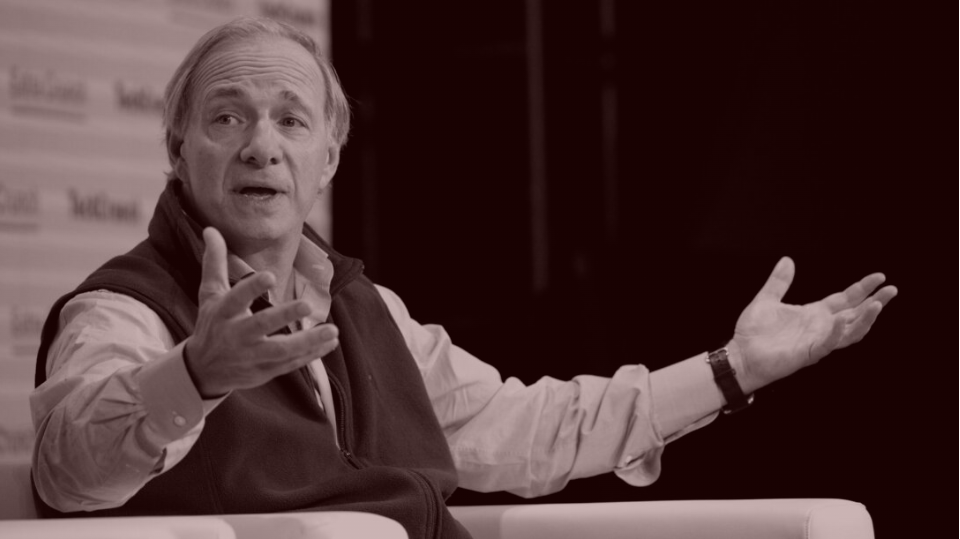
| I wanted to share a couple of interesting tidbits about some friends of Dry Powder, Larry Culp, the C.E.O. of General Electric, and our favorite power couple, Dave McCormick and Dina Powell. These little anecdotes come from the pages of The Fund, Rob Copeland’s blistering new book about Bridgewater—the world’s largest hedge fund, with roughly $100 billion under management—and Ray Dalio, its founder, with a net worth of around $16.5 billion. The Fund comes out on Tuesday but has already been the talk of much of Wall Street for a few months now, if for no other reason than for its revelations about Dalio and the firm, which has long been an enigmatic enclave on the coast of Connecticut. (I interviewed Copeland earlier today about the book and will share that conversation on Wednesday.)
In the meantime, here are a couple of nuggets from the book that caught my eye. It turns out that after Larry Culp left Danaher, where he was the C.E.O., and before he engineered the coup that made him C.E.O. of General Electric, on October 1, 2018, Culp worked at Bridgewater, at least for a short time before Dalio fired him. This was news to me: These details never emerged in my extensive research on the company for my latest best-seller, Power Failure, about the rise and fall of GE. Culp’s GE biography makes no mention of his stint at Bridgewater nor of his defenestration by Dalio, nor do any of the other other typical biographies of Culp. What gives?
I found this quite curious. (GE did not respond to a request to explain the omission in Culp’s resume.) In any event, according to Copeland, after Culp retired from his successful 14-year stint at Danaher, in March 2015, he was hired as an adviser to the Bridgewater management committee in “a tryout for a long-term role” at the firm. At a meeting later that year, around Thanksgiving 2015, Dalio gathered his most senior troops around him to hear from Culp about his idea to utilize Dalio’s infamous principles—Dalio’s dogmatic, pithy, often nonsensical business idioms that have been collected in book (and even children’s book!) form—“to set the firm straight” during a particularly rough patch. Among those principles is “radical transparency,” which is enforced in the Bridgewater workplace by recording all its employees’ conversations and occasionally meting out blunt public feedback.
“But,” according to Copeland, “Culp delivered a different message altogether: he told Dalio that too many people at Bridgewater had nebulous responsibilities and titles and spent all day listening to tapes of others, looking to spring a trap. Culp told Dalio to slash, not to build. Put one person in charge and give him or her some space. Dalio had been doing the exact opposite for the better part of a decade.”
According to Copeland, Dalio was pissed. The surprise attack presumably violated Dalio principle 483,209: Don’t fuck with the boss! This was not what he wanted to hear from Culp, whose reputation at Danaher was formed largely by building a successful conglomerate with a small corporate overhead, in the style of Warren Buffett’s Berkshire Hathaway. Bridgewater was big and bloated and successful and Dalio was hoping Culp would ratify that model, not denigrate it. And Dalio presumably didn’t appreciate the candid feedback in front of his underlings. Copeland continued, “Dalio offered a response for his newest hire: The problem was clearly Culp. Culp was not capable of understanding the advanced nature of Bridgewater’s management system.”
According to the book, Dalio told Culp, “You’re not conceptual enough.” Dalio then fired Culp, the future C.E.O. of GE, stood up and left the room. “As the others present silently absorbed the firm’s latest hanging, Culp sat flabbergasted,” Copeland wrote. “He’d presented his honest take to a man who claimed to prize frank feedback—itself a principle!—and had instead been abruptly shown the door.” Greg Jensen, Dalio’s longtime number two who had hired Culp, “moved to clean up the mess,” according to Copeland. “Ray can be difficult,” Jensen told Culp. And that was the end of Culp at Bridgewater and the end of Bridgewater in Culp’s biography. |
|
|
| I have often wondered about the catalyst for Dave McCormick’s own departure from Bridgewater. McCormick joined the firm as its president in 2009 after serving in a variety of different roles in the two George W. Bush administrations. McCormick became C.E.O. of Bridgwater in 2020 and left two years later, in part to launch his first (unsuccessful) run for U.S. Senate, from Pennsylvania.
But if Copeland is to be believed, McCormick’s unexpected departure from Bridgewater had something to do with what happened at the wedding celebration that Dalio threw for McCormick and Powell. On June 9, 2019, Dalio convened a party at the exclusive Belle Haven Club in Greenwich for the newlyweds, the second marriage for both. “It was shaping up as a swell evening,” Copeland wrote. “Cocktail hour was held outside, with sweeping views of the Long Island Sound. Guests entered the main ballroom to discover Harry Connick, Jr., hired to entertain; he regaled the well-heeled crowd with jazz standards on the piano. After dinner, the speeches held to form: congratulations to the happy couple, what luck it was for them to find each other, and the like. Powell made a few light jokes about her career, including one about President Trump requiring maps and charts, rather than printed briefings, in the Oval Office. That got titters from the crowd. The stakes felt light and easy.”
Then, it was Dalio’s turn to toast the happy couple. He read from his notes on his iPhone. “His delivery was stuttered and almost formal, but several guests saw it as sincere and moving,” Copeland reported. “He described McCormick as one of his most trusted confidants, and a rising talent. Several in attendance said afterward it seemed to be shaping up as a toast one would give his or her son. That was, until Dalio turned to address Powell. ‘David can be anything he wants—including president of the United States, and he found a person: the best party girl in America.’”
Copeland described the comment as creating a “a scratch-the-record moment,” one that “stunned” the guests and McCormick and Powell—an accomplished Wall Street executive and former government official, not some flighty socialite. Dina, in fact, is the former member of the Goldman Sachs management committee who once worked in the Trump White House as deputy National Security Advisor. She now works for her old Goldman colleagues, Gregg Lemkau and Byron Trott, at their high-wattage quasi-eponymous advisory and investment firm, BDT & MSD Partners.
Copeland’s story continued: “McCormick and Powell, both in their own ways cognizant of the power of perception, sat and forced blank faces. She was hurt and embarrassed, and he was enraged. Although it couldn’t have been a surprise to hear such words from Dalio—McCormick had heard him say worse inside Bridgewater—being forced to allow Dalio to treat him like this in public was quite something else. McCormick later railed about Dalio’s words to colleagues. How could he do this to me? McCormick would call it a turning point in his relationship with the elder man.”
That’s pretty much when he decided to leave Bridgwater, Copeland suggested, and to move on to try out a new career in politics. He is currently campaigning to replace incumbent Democratic Senator Bob Casey. The election is a year away. (I contacted Dave and Dina to get their perspective on the toast, but they declined to comment.)
More Dalio and Copeland on Wednesday. |
|
|
| Elsewhere on Wall Street, streaming continues to be a very tough, P&L-crushing enterprise, and investors are still grappling with how to value the businesses and the companies that have staked their future on it, or much of it anyway. Take Paramount Global, whose stock has been on a wild ride over the last several days.
It’s been a long, strange trip for the company since Shari Redstone, who controls nearly 80 percent of the voting shares of the company (but only around 10 percent of the economic ownership), forced the merger of CBS and Viacom to create Paramount Global four years ago. Since then, the Paramount Global stock has fallen around 65 percent and the company now has a market value of around $9.1 billion, and that’s after the stock shot up 28 percent this past week, apparently on the news that the company’s streaming business, Paramount+, lost less money in the third quarter than it did in the previous quarter and than it did in its year-earlier period.
That’s what passes for good news these days at Paramount Global, which is suffering from owning CBS, a glamorous but fading linear TV network, as well as a collection of once glorious cable networks and a still-admired Hollywood studio. Paramount Global owned Simon & Schuster until recently, when it sold the book publisher to KKR for $1.62 billion in cash. The company still owns BET Network, which it wanted to sell but then decided to take off the market after determining that the bids it received were less than it was hoping to receive. That may turn out to be a mistake, as BET itself is suffering from the same kinds of declines as other linear TV offerings.
But in the crazy, through-the-looking-glass world of digital streamers, where up is down and left is right, investors seemed to go hog wild for Paramount Global’s third-quarter earnings report. In the third quarter, Paramount+ gained 2.7 million subscribers and now has 63 million subscribers around the world, which is about a quarter of Netflix’s subscribers and about half of Disney+’s subscribers. Paramount+ “adjusted”—don’t get me started—operating loss for the quarter was $238 million, 31 percent less than the $343 million the streaming business lost a year earlier and 44 percent less than the $424 million the business lost last quarter.
Okay, that’s what investors consider good news these days for the Times Square-headquartered company. But is it really good news for Shari and the company’s largest economic shareholder, Warren Buffett, whose Berkshire Hathaway owns about 15 percent of the non-voting shares of Paramount Global, some 50 percent more than Shari Redstone. (It has not been a good investment for Buffett, despite last week’s bump.)
Of course, Shari’s plan all along for creating Paramount Global was to make it easier to sell the combined company in one fell swoop. But she never admitted that was the plan until recently, when she finally conceded she’d be happy to sell if the right offer came along. Well, duh, Shari. The problem is she may have waited too long and, it turns out, she may have been better off in trying to sell CBS and Viacom individually, before the 2019 merger, since the buyers for each were likely to be very different. But at least they could be found, or so I believe. The problem for Shari now is that there may not be a single buyer who wants all of Paramount Global and its combination of a money-losing streaming business, a declining linear TV business, a movie studio, and a bunch of less relevant cable networks.
Even with a market capitalization of around $23 billion—the $9 billion of equity and nearly $14 billion of net debt—Paramount Global appears to have few realistic buyers. Those for which buying Paramount would be a chip-shot—among them Apple, Alphabet, Microsoft and Amazon—don’t seem to want it, even though they could buy it out of petty cash. Buffett could also use some of his cash hoard of $157 billion to buy the company, too, but I doubt he wants the whole thing. (I think he bought his stake at the urging of his younger deputies who figured it would be sold at some point.)
For financial buyers, even the well-heeled ones like Apollo, Blackstone, and KKR, which might be interested in milking the Paramount cash flows (ex-streaming, of course), the $23 billion bite (like plus a premium) is probably beyond their appetite. In this more challenging debt environment, $14 billion of net debt is nothing to sneeze at, and that’s even if it could be assumed as part of a buyout rather than be refinanced, which might prove difficult and expensive. In other words, I don’t see any of the big “alternative asset management” firms stepping up to the plate on Paramount Global at this particular moment.
Would, say, Apollo, want just CBS and its affiliated television stations to marry with its regional TV network? I could see that. But the tax implications of that carve-out for Shari are likely unattractive, and then what would Shari have left to sell? So that probably is a non-starter. And, of course, other possible buyers—Disney and Comcast—have their hands full and own competing television networks (also a non-starter). What about our old friend David Zaslav, and Warner Brothers Discovery? I know once upon a time, before he bought Warner Media (and CNN), Zaz was interested in CBS. Back then, Shari wouldn’t sell.
Would Zaz be interested in Paramount Global now? Could CBS be combined with CNN? Possibly. But as loyal readers know, WBD can’t do a damn thing until at least April 2024 (two years after the reverse Morris Trust rules lapse). Would WBD benefit from adding another $14 billion-plus of debt to its already heavy debt burden? Although it was also a good week for WBD’s stock—up 22 percent—it’s overall been a tough run for the Zaz at the helm of WBD; the stock is down 52 percent since it emerged as a public company in April 2022. Zaz gets rewarded for paying down his mountain of debt, not adding to it.
My personal preference is for Zaz to do a deal where WBD is combined with Comcast’s NBCU to create a formidable competitor to the other media behemoths. But if Brian Roberts and Mike Cavanagh decide not to go for that, I could see Zaz turning instead to Paramount Global. I’m not sure it’s likely to be much comfort for Shari to know that her long hoped-for takeout for the dwindling Redstone family fortune is… The Zaz. But that does seem to be where we are at, to be honest. |
|
|
| Even though Warren Buffett is 92 years old and his longtime partner Charlie Munger is 99, the dynamic duo have not lost their touch. It’s pretty inspiring to be honest. It’s also a bit funny that Buffett and Munger are still going strong and widely admired in their 90s while lots of people think that Joe Biden, the youngster at 80 years old, is washed up. Go figure.
In any event, Berkshire Hathaway, of which I am a shareholder, put up some dyn-o-mite third-quarter numbers, announced Saturday morning. In addition to that record cash horde of $157 billion, Buffett’s machine had operating earnings of $10.8 billion last quarter, some 41 percent more than the $7.7 billion that Berkshire earned in the same quarter a year earlier. No surprise, through the course of 2023, Buffett has been gobbling up U.S. Treasuries, which now yield around 5 percent, and he now owns some $126 billion worth of government bonds. Not everything Buffett touches turns to gold, of course. In addition to his Paramount Global blunder, the third quarter of 2023 wasn’t a great one for Apple, which fell nearly 12 percent in the quarter. Apple is Buffett’s largest single investment. On the other hand, the stock is up an astounding 41 percent this year, even with the tough third quarter.
The looming question for Berkshire, of course, is succession. Believe it or not, even Buffett and Munger aren’t going to live forever. Although they both seem to be going strong. It was clear in a recent two-hour interview with the Wall Street Journal in his Los Angeles home—the same one he’s owned for 70 years—that Munger is still making sense, especially on Bitcoin. “The only way to get from hunter-gathering to civilization that we know of that’s ever worked is to have a strong currency,” Munger said. “It can be seashells, it can be corn kernels, it can be a lot of things. It can be gold coins, it can be promises in banking systems like we have in the United States and England and so on. When you start creating an artificial currency… you’re throwing your stink ball into a recipe that’s been around for a long time, that’s worked very well for a lot of people.”
The Journal and Munger did not talk about succession at Berkshire, or if they did, it didn’t get into the article. Of course, as with any company, public or private, finding a successor is the single most important thing that Warren and Charlie have left to do. Not that it’s easy. Not everyone seems to be able to pull off the seamless succession process as did James Gorman and Ted Pick, at Morgan Stanley. But Warren and Charlie have had a long time, a very long time, to think about succession.
At the moment, it appears that Greg Abel, a Berkshire vice-chairman who is in charge of all of the company’s non-insurance businesses, will take over as C.E.O., although Buffett has said he has no plans to retire. At the annual shareholder meeting in April, Buffett said of Abel, who is 61 years old, “I don’t have a second choice. I mean it is that tough to find. But I have also seen Greg in action and I feel 100 percent comfortable. Greg is inheriting a good business and I think he’ll make it better.” Abel has been running much of the Berkshire empire since 2018 and the market seems to have responded well to his anointing. In the last five years, Berkshire’s stock is up 62 percent, as compared to the S&P 500 index, which is up 57 percent during the same five-year period.
Of course, no one will be able to fill the shoes of Buffett and Munger. They are investing legends and we may never see their likes again. On the other hand, Abel may be just the person to carry on the legacy of the Oracle of Omaha. Buffett even said himself that Abel may be a better steward of the Berkshire assets than he turned out to be. In a recent CNBC interview, Buffett suggested that Abel would be less wedded to the Berkshire portfolio than he was because he wasn’t the one doing the initial purchases and therefore might be less emotionally attached to them. In any event, I’m not selling my Berkshire stock anytime soon, that’s for sure. (This is not investment advice.) |
|
|
|
| FOUR STORIES WE’RE TALKING ABOUT |
|
|
|
|
|
 |
|
|
|
Need help? Review our FAQs
page or contact
us for assistance. For brand partnerships, email ads@puck.news.
|
|
You received this email because you signed up to receive emails from Puck, or as part of your Puck account associated with . To stop receiving this newsletter and/or manage all your email preferences, click here.
|
|
Puck is published by Heat Media LLC. 227 W 17th St New York, NY 10011.
|
|
|
|