 |
 |
|
Welcome back to The Best & The Brightest, I’m Peter Hamby, currently cracking open a Cheerwine to honor N.C. State’s return to the Final Four. In today’s edition, my conversation with author Sasha Issenberg about his new book, The Lie Detectives, a journey into the war against online disinformation and how Democrats might finally—at long last—be figuring out how to meme.
But first, here’s Abby Livingston with the latest on Capitol Hill…
|
|
A MESSAGE FROM META
|
 |
| The world faces a shortage of skilled tradespeople.
Today, students at the skilled trades school RSI use the metaverse to gain hands-on welding experience and develop the exact muscle memory they need.
Making quality training more accessible helps combat a global shortage of welders.
Explore the impact of the metaverse. |
|
|
|
|
For any longtime congressional reporter, there are few more enjoyable ways to pass a quiet recess week than by sifting through campaign finance reports. And a fresh skim of the D.C.C.C.’s most recent campaign records, which cover the month of February, reveals that House Democrats are feeling enthusiastic about the upcoming election. Here are the most intriguing takeaways:
- Hakeem checks in: Member donations included a $125,000 contribution from the Hakeem Jeffries congressional campaign, plus checks from several committee ranking members, including Brendan Boyle (Budget), Rosa DeLauro (Appropriations), Jim Himes (Intel), and Jamie Raskin (Oversight). Leadership puts higher expectations, known as “dues,” on ranking members to donate big money to the committee. There is also, of course, a personal incentive: If the D.C.C.C. does its job, these members can become committee chairs, which is a lot more fun than being a ranking member.
- Donations on the way out: I counted 44 Democratic members who gave to the D.C.C.C. in February, including Dan Kildee and Earl Blumenauer, who are both retiring. I found that strange: For many departing members, retirement induces a form of fundraising senioritis. With their climb up the Hill officially over, there’s no longer pressure to hustle money for themselves or the campaign committee; there are no chairmen’s gavels to grasp, or gnawing fantasies of better committee assignments. Kildee’s donation, however, is a real head-scratcher, given that he kicked in $100,000 to the committee between his campaign and leadership PAC.
- Garden State brawl: New Jersey’s Bill Pascrell, a senior member of Ways & Means (and longtime, dutiful dues-payer), sent $25,000 to the D.C.C.C. In the past several cycles, he’s posted between $200,000 and $300,000 in donations to the committee. This spring, however, he’s facing lively primary opposition from Prospect Park Mayor Mohamed T. Khairullah. Typically, when a member is under primary or general election threat, leadership gives them a winking pass from hitting their numbers—at least until the campaign threat passes. Pascrell gave to the D.C.C.C. anyway.
Khairullah jumped into the Garden State’s primary race, which takes place on June 4, fairly late. We’ll know more about Khairullah’s campaign strength by April 15, once the next round of F.E.C. reports is filed, but what we do know is that Pascrell was sitting on $1.4 million in cash as of his latest report. At 87, Pascrell is one of the oldest members of Congress, but also one of its most tenacious campaigners. Multiple Jersey and Capitol Hill sources tell me that Pascrell is taking the primary threat seriously.
|
 |
| How to Fake It in America |
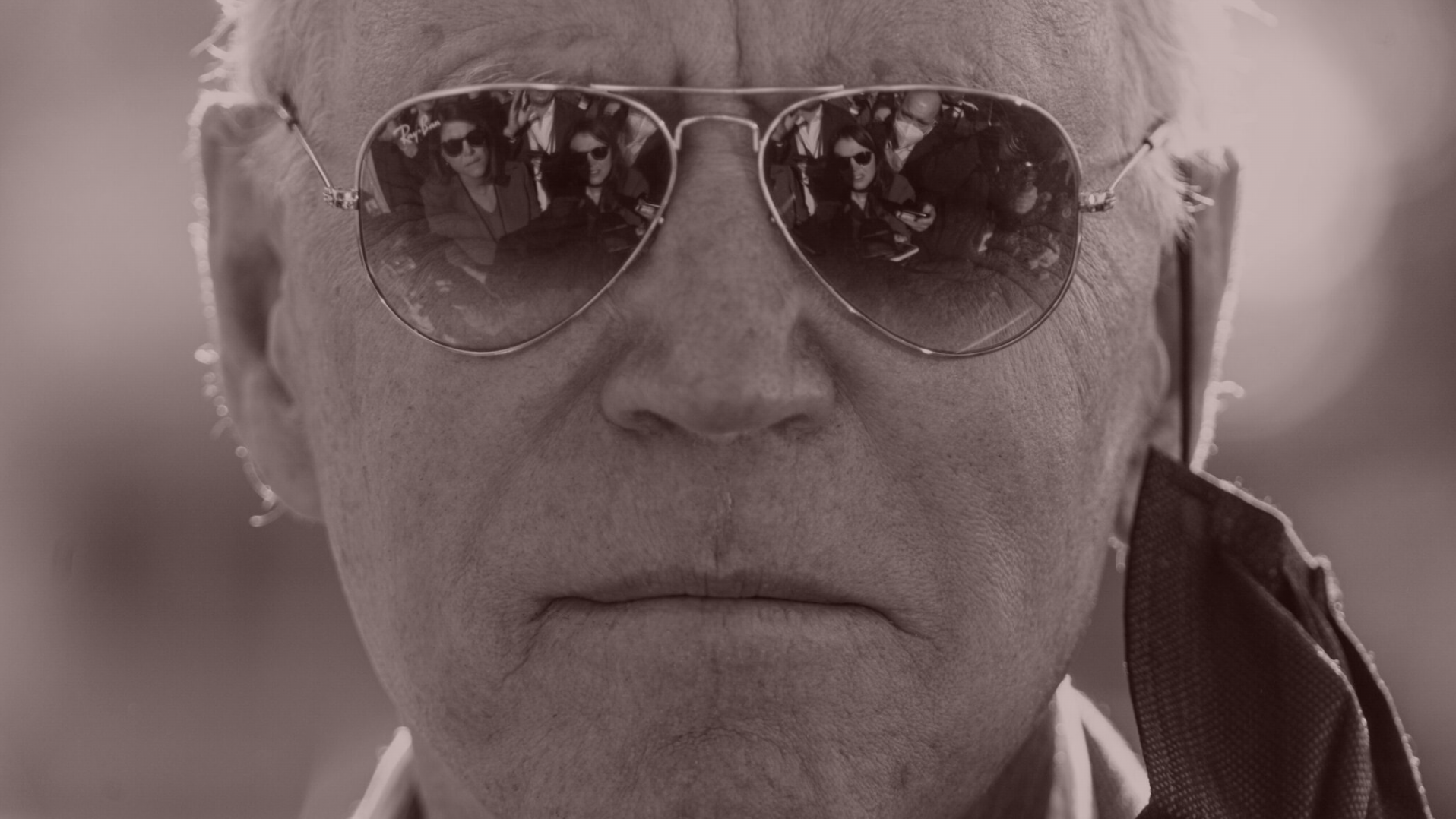
| A candid conversation with Sasha Issenberg, author of “The Lie Detectives,” about the new frontlines of the disinformation arms race, how Biden can win the meme wars, and why ivory tower panic obscures the distinction between internet bullshit and genuine threats. |
|
|
|
| When the journalist Sasha Issenberg published his book The Victory Lab, back in 2012, it was hailed as “Moneyball for Politics,” the definitive look at a new generation of operatives who were using statistical modeling and microtargeting to reach voters in new ways. Every smart person I know in politics has it on their bookshelf.
But in the years since, the technology of politics went haywire. Social media saturated American society, obliterating our shared reality and giving partisan mischief-makers new tools to confuse the electorate and “flood the zone with shit,” as Steve Bannon once said. Watching these developments, Issenberg felt uneasy about the optimism that coursed through his old book. After Donald Trump’s victory in 2016, he began talking to some of the Democratic operatives who committed themselves to fighting back against the disinformation campaigns and anti-democratic tactics polluting the modern political process. Those conversations turned into The Lie Detectives, Issenberg’s new book about winning elections in the disinformation age.
I met up with Issenberg over the weekend in Los Angeles to talk about his book, how Democrats are working to win back the internet, how A.I. could impact elections, whether our worries about disinformation are overblown, if the left has finally figured out how to meme—and yes, what we can learn from that edited Kate Middleton photo. |
|
A MESSAGE FROM META
|
| |
 |
| “The more muscle memory that you have, the smoother your weld is.”
Shanna Ford gets high-quality welding practice with a VR training platform powered by ForgeFX. When training is more accessible, welders can practice over and over again to improve their skills and advance their careers.
Discover other stories. |
|
|
|
|
| Peter Hamby: One of the first of the first things I picked up on in The Lie Detectives was that, in hindsight, after writing The Victory Lab, you felt some regret that you weren’t able to see around the corner a little bit—that all of your reporting on microtargeting and modeling might one day have negative consequences that you didn’t foresee. Is that one reason you felt compelled to write this?
Sasha Issenberg: Yeah. I was naive. That was a largely happy story about innovations that campaigns were using to get better, to become more efficient at registering and turning out voters and delivering information and arguments to voters that would align with their interests. Those seemed like positive advances for democracy. I think it’s one reason that voter turnout has gone up since the mid-1990s. Campaigns are better at actually doing the work of engaging with voters. In that book, I hardly mentioned the internet because a lot of those innovations were offline. It was about getting better at targeting, direct mail, door knocks, having better scripts in a doorstep conversation. It was almost aggressively pre-digital.
It was very much about these transformations in old-school voter contact because all the data was tied to people’s offline identities. But there was also a type of optimism in how we talked about the internet, and how it was changing politics. Some of that, at the time, was the Arab Spring. And Barack Obama’s campaigns. The internet was making it possible for individuals to connect with one another about politics. That people no longer had to go into a field office to learn how to be a volunteer, but could do that from their own home.
The barriers to entry to political civic engagement had fallen, in particular, due to social media. Our sense was that it was good for democracy. But during the 2016 campaign—and I tell the story in the book of my reporting for Bloomberg on Donald Trump’s digital operation—it was the first time that I encountered somebody speaking the language of modern, data-driven electioneering about practices that were anti-democratic. And obviously, we’ve seen a lot more of that in the last seven or eight years—of people using, in particular the internet, but also the apparatus of the modern campaign to try to drive voters away from the process, to discourage them from voting, mislead, confuse them. So yeah, I’ve had reason to think a lot about my naivete since 2012 when the book was published. This book is, in many respects, my effort to sort of come to terms with how you run a campaign in an era where you have all these dark forces at work that traditional political communicators had never had to contemplate.
The book focuses on key players in the Democratic and center-left coalition who felt compelled, after Trump’s victory in 2016, to fight back against the forces of disinformation. You talk about billionaire progressive Reid Hoffman and some of his controversial investments in the Alabama Senate race, back in 2017, which saw Democrats generating their own “fake news” to depress G.O.P. turnout. There’s Rob Flaherty and “The Malarkey Factory” on Joe Biden’s 2020 campaign. But the central character in the book is someone named Jiore Craig, whom my Puck colleague Baratunde recently interviewed. Why is her perspective so important?
Jiore Craig becomes, basically, the first full-time counter-disinformation operative in American politics in 2017. It’s a moment where the American left is still trying to understand why and how Trump won. There are all sorts of areas and early “Resistance” initiatives where people are rethinking how they budget campaigns. But one area is trying to understand what happened on the internet in 2016, and how Democrats can be better prepared. “Disinformation” becomes the umbrella under which all of that falls.
Jiore Craig becomes this figure in part because she’s never worked on a campaign in the United States before 2017. But she has all this experience working in other parts of the world where certain aspects of what we had gone through in 2016 actually weren’t that novel, right? Foreign interference, the rise of partisan or ideologically motivated media, the persistence of rumor, conspiracy theories: These are all essential parts of how politics works in large parts of the world. And Craig had all this experience advising candidates and parties on how to make smart decisions in those environments. The biggest hurdle she is facing on campaigns is that so much of this stuff was new, and remains new, to Americans. Candidates and campaigns here in America often make bad decisions because they feel an imperative to respond to something on the internet or social media, when actually that’s not the right answer.
So where do Craig and other smart operatives come down on the question of how to respond to negative information circulating online? Like, if you’re a campaign, does responding to a piece of phony news or misinformation elevate it? Or do you just leave it alone?
Democrats, especially during the Trump administration, bring this emotional baggage to this question. They bring this national security baggage to it. It makes them highly motivated to want to do something, to react. It’s the opposite of the right advice. The fact is that if you are a public figure, an institution, a corporation, a news organization, a celebrity, people are going to be lying about you and the things you care about online. Every day. If you decide you’re going to try to push back on every one of those, that’s a terrible idea for a few reasons. One, it’s what we call the “Streisand effect,” that you can draw attention to something that’s not getting a lot of attention by talking about it.
And second, the internet and social media in particular are often structured to reward engagement. So if you fact-check something or try to dunk on it, you drive more eyeballs to it. There’s a lot of cognitive science that suggests that if you try to debunk a lie, you can end up reinforcing it in the minds of the people who hear it. And then the bigger problem—that I think is the thing Jiore Craig has to convince people of—is that you just get distracted from your core imperatives that you as a politician want to accomplish every day. You want to talk to a certain slice of the electorate, you want to talk to your donors. If you spend every day chasing whatever is popping up online, it’s just bad campaign tactics. You’re just being reactive the whole time. |
|
|
| During the Trump years, right-wing shit-posters would often boast that “the left can’t meme.” Has that changed?
The right won the internet. But there also needs to be an acknowledgement that the left lost the internet. Barack Obama was good at using the internet, but he created a large number of very weak ties online. He has a massive contact list. He has tons of followers on every platform. He has largely used those ties to ask people for money, maybe ask them to volunteer, maybe occasionally ask them to share content, but he never really empowered or encouraged them to develop relationships of their own, to advance his goals. I argue that QAnon actually developed much deeper and more meaningful ties among its adherents than anything Obama left behind online. One reason that conspiracy theories are able to move so quickly online is that Democrats, for all the time and money that they’ve spent online, have left a big void and don’t have a lot of strong relationships that they can use to push out their own content.
So the disinformation panic has prompted Democrats to have a far broader reconsideration of how they use the internet. So, some of it is the rethinking of online communications. What language do you use? The language of humor? I write about this one group—We Defend Truth—that hired one of the most successful GIF and meme makers in the history of Reddit to make memes, very consciously trying to communicate in that way. More broadly, I think that there has been a turn toward real digital organizing: the idea that the campaigns really entrust supporters to build relationships online and communicate on their behalf, at the cost of those supporters doing things that are off-message or embarrassing. There’s now a real willingness to rethink the trust and control dynamic that campaigns have with their supporters.
For instance, John Fetterman’s campaign for Senate in 2022 had a Slack channel with like 8,000 supporters in it, who are just trading GIFs and memes and online content and jokes. It was basically a writers’ room for his enthusiastic volunteers to come up with how they were going to communicate on his behalf. That is so contrary to the traditional impulses of a campaign, which is why Democratic campaigns are slow and reluctant to do those sorts of things.
I will say, lately it feels like Joe Biden and his campaign are way more willing to mock and demean Trump than they used to be, to punch at him, to get under his skin. If you look at their tweets, TikToks, etcetera.
Yeah. They’ve also come around on the notion that amplifying Trump or giving him attention is a bad thing, which obviously was a consensus view among many on the left. Like when Biden wouldn’t say Trump’s name or whatever, I think there was this idea that if we starve him of attention, [he] will go away. And now they’ve gone the other way, which is like, let’s draw as much attention to everything, and some of that’s with sort of mocking humor. And the Biden campaign has a massive financial advantage, so they will have the money to do this stuff, on top of experimenting. |
|
|
| Joe Biden seems like an imperfect figure to lead the Democratic Party into a new era of digital organizing, digital communication, fighting the information wars, and so on. How worried should voters and Democrats actually be about disinformation in this election. What are Democrats doing this cycle to fight back?
I came away from a year and a half reporting on this area probably more worried about the threat of disinformation to democracy broadly. But I am less persuaded that any particular piece of disinformation is going to derail a presidential campaign or change the outcome. We just know how hard it is to move people’s opinions. Like, we have between 8 and 12 percent of the electorate that’s actually in play in the presidential race.
It’s not just the 8 to 12 percent, though. There’s the young people, Black people, Hispanic folks who might just stay home. Are any of those demographic groups more threatened by these trends or ideas than others?
I think that’s right. I would just say that we are already appropriately skeptical of the impact of traditional political communication. We both talk to voters all the time who will say, “Oh, all these TV ads are a waste. They’re terrible. They don’t do anything.” Or like, “Oh, my mailbox fills up with direct mail and I get all these text messages. They don’t work.” Do we actually think that disinformation has this magical power to move the same people? It’s the same voter’s brain. It’s very hard to change somebody’s opinion about a presidential candidate. We should not think that disinformation is a bit of magic.
Sounds like you’re saying that Macedonian teenagers can’t sway a presidential election.
I am saying that we should think that they are as effective as a Democratic media ad buying firm that’s spending an equivalent amount of money. Some $15 billion is going to be spent on political communication this year. Let’s recognize that having an impact on people’s opinions in the presidential race in that environment is really difficult and that disinformation doesn’t have some magical power. Traditional political rhetoric doesn’t either. |
|
|
| In the book you describe how deepfake videos have always been a little overhyped in terms of their threat. But the current sophistication of A.I. is new to this presidential cycle, for video and audio and images, and feels like it’s getting better by the day. Where are you at in terms of how dangerous A.I. will be in this election as an anti-democratic tool?
I think we should definitely be alert to it. The people who work on this, I think, are more concerned about deepfake audio than the visual stuff. The Kate Middleton thing was instructive. We actually have a lot of ways to recognize when a visual image doesn’t add up. But the thing with the fake Biden robocall in New Hampshire, it washes over you. There’s no record of it. But even if it’s online and it’s a bit of audio, you can’t do the equivalent thing of fixating on that one spot in the photo where the fabric doesn’t match up, or the light is wrong, or there’s a weird angle of something. With audio, it’s a lot harder to figure out.
The thing we haven’t yet seen is people using generative A.I. not to create one fake, but to create a large number of fakes. Steve Bannon had that line, “Flood the zone with shit.” It becomes a lot easier to flood the zone with lots of shit if you can have A.I. make it. So the scenario is not somebody coming up with a bit of audio that has Kamala Harris saying something she doesn’t actually believe about Israel and Gaza. It’s somebody coming up with a hundred or a thousand different clips of her saying slightly different things about Israel and Gaza, and nobody can tell which is true. I think A.I. is a tool for confusion more than a tool for persuasion.
That being said, I do think there is a tendency to overreact to technical changes and lose sight of what the underlying issue is here, which is that we have a citizenry which is frankly gullible, and a total weakening of the institutions that once created some shared sense of truth around basic factual questions. The disinformation episodes that have had the most durable impact on our politics in the last few years are not just individual deepfakes, but these totalizing conspiracy theories like QAnon, vaccine skepticism and coronavirus stuff, and the stolen 2020 election. They create these world-making exercises, and those are all low-tech in their way. I mean, QAnon was just text on a bulletin board. Somebody was just writing fanfic, basically, right? And a lot of people bought into it because it addressed existing anxieties they had.
You used the phrase “disinformation panic” earlier. Certainly, Trump and his pals call anything they don’t like disinformation. But there also does seem to be a cartel of academics and people on the left, and some journalists, who scream about disinformation every day, spend a lot of time attacking the big platforms. Sometimes it’s real, but sometimes it feels like they’re crying wolf. How much of the disinformation talk in the popular media conversation is overblown versus reasonable?
No, I think you’re absolutely right. The biggest task that campaigns have, and that someone like Jiore Craig has, is trying to get decision-makers and campaigns to have a sense of proportion, which is to say that not all online disinformation is the same type of problem. But there’s a flattening effect to a lot of the media coverage. We’re still in the novelty phase of covering this, and so just about every newsroom around the country has created a disinformation beat. Well intended, sure. Responsive to stuff that’s in the news. But almost by definition, the incentives for reporters and editors on these beats is to go find a piece of disinformation.
By definition, you’re now bringing disinformation to audiences that haven’t seen it. For instance, I consume a lot of media. But I had no idea that there were Taylor Swift porn deepfakes until I heard about it from ABC News or wherever. And I do think on the disinformation beat, the game ends up being, “Let’s pluck the craziest thing that’s said in a corner of the internet, and let’s make the fact that it exists, news.” I think the job inside campaigns is to bring a sense of proportion. The job of the media should be to bring a sense of proportion.
I think the useful way to think about it is to think about the offline analog. On any given night at any bar in America, there’s going to be a crazy guy at the end of the bar spouting some nutty stuff, and nobody would say, “Hey, that should be on the NBC Nightly News tonight or on the front page of The New York Times.” Or there’s going to be crazy stuff written on men’s bathroom walls in that bar, and nobody would say like, “Oh, that should be a Washington Post story.” Now, if something shows up on every men’s room wall in the country on the same night, claiming the same thing, maybe there’s an interesting story there, and certainly if 25,000 people show up in front of the White House holding signs saying that crazy thing, then yeah, let’s understand how and why they came to believe that! Who’s behind it? But I think often the disinformation coverage does not. |
|
|
|
| FOUR STORIES WE’RE TALKING ABOUT |
 |
| NBC Blame Games |
| On the palace intrigue consuming NBC News post-Ronnaghazi. |
| DYLAN BYERS |
|
 |
| Shari’s Silver Lining |
| Chronicling the latest twist in the Paramount Global bidding wars. |
| WILLIAM D. COHAN |
|
 |
| Tubi or Not Tubi |
| Revealing the alchemy behind Tubi’s Gen Z foothold. |
| JULIA ALEXANDER |
|
 |
|
|
|

|
 |
|
|
|
Need help? Review our FAQs
page or contact
us for assistance. For brand partnerships, email ads@puck.news.
|
|
You received this email because you signed up to receive emails from Puck, or as part of your Puck account associated with . To stop receiving this newsletter and/or manage all your email preferences, click here.
|
|
Puck is published by Heat Media LLC. 227 W 17th St New York, NY 10011.
|
|
|
|