• Washington
  • Wall Street
  • A.I.
  • Hollywood
  • Media
  • Fashion
  • Sports
  • Art
  • Join Puck Newsletters What is puck? Authors Podcasts Gift Puck Careers Events
  • Join Puck

    Directly Supporting Authors

    A new economic model in which writers are also partners in the business.

    Personalized Subscriptions

    Customize your settings to receive the newsletters you want from the authors you follow.

    Stay in the Know

    Connect directly with Puck talent through email and exclusive events.

  • What is puck? Newsletters Authors Podcasts Events Gift Puck Careers
Happy Sunday from Dry Powder.
 ‌ ‌ ‌ ‌ ‌ ‌ ‌ ‌ ‌ ‌ ‌ ‌ ‌ ‌ ‌ ‌ ‌ ‌ ‌  ‌ ‌ ‌ ‌ ‌ ‌ ‌ ‌ ‌ ‌ ‌ ‌ ‌ ‌ ‌ ‌ ‌ ‌ ‌  ‌ ‌ ‌ ‌ ‌ ‌ ‌ ‌ ‌ ‌ ‌ ‌ ‌ ‌ ‌ ‌ ‌ ‌ ‌  ‌ ‌ ‌ ‌ ‌ ‌ ‌ ‌ ‌ ‌ ‌ ‌ ‌ ‌ ‌ ‌ ‌ ‌ ‌  ‌ ‌ ‌ ‌ ‌ ‌ ‌ ‌ ‌ ‌ ‌ ‌ ‌ ‌ ‌ ‌ ‌ ‌ ‌  ‌ ‌ ‌ ‌ ‌ ‌ ‌ ‌ ‌ ‌ ‌ ‌ ‌ ‌ ‌ ‌ ‌ ‌ ‌  ‌ ‌ ‌ ‌ ‌ ‌ ‌ ‌ ‌ ‌ ‌ ‌ ‌ ‌ ‌ ‌ ‌ ‌ ‌  ‌ ‌ ‌ ‌ ‌ ‌ ‌ ‌ ‌ ‌ ‌ ‌ ‌ ‌ ‌ ‌ ‌ ‌ ‌  ‌ ‌ ‌ ‌ ‌ ‌ ‌ ‌ ‌ ‌ ‌ ‌ ‌ ‌ ‌ ‌ ‌ ‌ ‌  ‌ ‌ ‌ ‌ ‌ ‌ ‌ ‌ ‌ ‌ ‌ ‌ ‌ ‌ ‌ ‌ ‌ ‌ ‌ 
Dry Powder

Happy Sunday from Dry Powder.

To all my new subscribers, welcome. To everyone else, thanks as always for supporting my work here at Puck.

Since launching this private email last June, I’ve talked to Jamie Dimon and The Mooch; chased down Carlos Watson; punctured the crypto bubble; profiled young Zaz; had lunch with James Gorman; revealed Apollo’s life after Leon; said farewell to Jimmy Cayne; charted the rise and fall of SPACs; and predicted how Elon Musk would inevitably corner Twitter.

And, of course, we’re just getting started. In today’s email, fresh analysis on Michael Saylor, Jonah Peretti, Warren Buffett, and more. If you have a friend, colleague, or client who would enjoy these notes, feel free to forward this their way—and encourage them to subscribe.

Bill

Crypto Civil War & Wall Street’s ‘24 Agenda
News and notes on Bitcoin’s true believers, BuzzFeed’s self-immolation, Buffett’s $19 million meal, and the cynical upside of divided government.
WILLIAM D. COHAN WILLIAM D. COHAN
Following the most recent collapse of the crypto market, MicroStrategy C.E.O. Michael Saylor, who turned his software company into a highly levered bet on Bitcoin, is calling on the government to step in and regulate the 20,000 or so competing digital tokens in circulation as “unregistered securities.” The idea is to differentiate these projects—a large portion of which are jokes or scams or outright Ponzis—from Satoshi Nakamoto’s ur-digital asset, Bitcoin, which Saylor likens to a hard commodity such as gold.

Of course Saylor is talking his book, and he’s damned good at it too. First of all, the 20,000 or so ridiculous cryptocurrencies should just disappear and go back down the drain they crawled out of. There is no reason for them to exist, other than as a way for foolish investors to speculate on the possibility that a greater fool will come along and buy their idiotic cryptocurrency at a price higher than they paid for it. Bitcoin, however, seems to be a little different. It does have some underlying logic to it, with its proof-of-work mining operation and limited supply. Unlike various DeFi projects and crypto funds that have recently imploded in spectacular ways—Terraform Labs, Celsius, Three Arrow Capital—Bitcoin has no central management, employees, or product cycle beyond what is already etched into its code. As I’ve written previously, if people focused on the promise of Bitcoin’s blockchain technology rather than its daily fluctuations in price, we might have a better appreciation of its use cases.

Saylor, after all, has a financial conundrum. His company, Microstrategy, owns roughly 130,000 Bitcoins that it paid roughly $4 billion to buy. That Bitcoin is worth around $2.7 billion these days. The company has repeatedly denied that it will face a margin call on the loans that it used to buy the Bitcoins and says it has plenty of additional Bitcoins it can add as collateral if needed. Still, investors have taken it out on the company. Microstrategy stock is down 64 percent this year and has a market value of $2.2 billion, less than the value of the company’s Bitcoin, let alone the value of its software business.

I have a lot of respect for Michael Saylor. He is an incredibly eloquent and frequent advocate for the wonders of Bitcoin. In many ways, he’s just the kind of spokesperson the Bitcoin movement needs. But he’s probably trying to differentiate Bitcoin from the rest of the cryptocurrency junk as a way to restore confidence in the asset from investors’ point of view. I don’t blame him for trying and I can see why he is doing it. There really are things that differentiate Bitcoin from other cryptocurrencies, although whether that can be shown to be of value over time remains to be seen.

BuzzFeed’s Self-Immolation
BuzzFeed stock is now trading below $2, valuing the company at less than its annual revenue. This grim fate has had the media in knots, naturally, but it shouldn’t come as any surprise. What’s going on here is the combination of the fact that BuzzFeed should not be a public company and that SPACs, the vehicle through which it I.P.O.’d, are in the process of being utterly discredited as an investment opportunity.

Since BuzzFeed went public late last year, its stock is down 82 percent and its market value is now around $250 million, or about 60 percent of 2021 revenue. These are hardly the heady days of high-falutin new media valuations. Plus, BuzzFeed has had to cut into some serious muscle, essentially dismantling its news division, to try to bring its costs down. In the three months ended March 31, BuzzFeed lost $45 million, or $17 million on an “adjusted EBITDA” basis (my favorite metric). For the last twelve months, BuzzFeed was basically a break-even enterprise, with adjusted EBITDA of around $29 million. That means, despite the 80 percent decline in the stock price, the company is still valued at around nine times adjusted EBITDA, which, frankly, is still pretty generous.

Part of the problem may be Jonah Peretti, the ambitious BuzzFeed founder, who staked the company’s future on the $287.5 million raised by its SPAC, 890 Fifth Avenue Partners, of which a stunning 94 percent was hastily withdrawn by investors immediately prior to the merger. That left just $16 million for Buzzfeed (plus another $150 million in cash from the issuance of convertible debt) to finance Peretti’s expansion plans, which included the acquisition of Complex Networks for about $200 million in cash and $100 million in equity. Peretti said at the time that the bursting of the SPAC bubble and the investor redemptions wouldn’t change his vision of rolling up smaller players into a digital media giant, creating enough audience scale (and back office synergies) to compete with the Google-Meta duopoly for advertising dollars. But the plan always hinged on tapping public market capital, which has run dry at the moment.

In the meantime, Peretti will also have to contend with that $150 million in unsecured convertible debt that BuzzFeed issued at the time of its SPAC merger. The debt is not due until 2026—phew—but does require BuzzFeed to pay debt holders $12 million a year in interest. The debt is convertible into BuzzFeed equity at $12.50 a share but it seems like we’re a long, long way from that happening, or from a forced conversion after three years at $16.25 a share. That debt can end up being a drag on earnings and on the stock price.

So who knows? A combination of an overly aggressive C.E.O., who is considered much more of a digital visionary and financial engineer, combined with a discredited financing structure has led BuzzFeed down a rabbit hole from which it won’t soon be able to escape. Maybe the next step for Jonah and BuzzFeed is a sale of the company? But, to whom?

Wall Street’s ‘24 Agenda
There’s growing speculation in Washington that Joe Biden may not run for re-election, and recent articles in The Atlantic and The Times outline his various headwinds. Tara Palmeri, one of my partners at Puck, has also reported on the growing anxiety within the White House that the president is dragging his feet before making his true intentions known. It’s a serious headache for the Democratic Party, but also an opportunity for the financial industry and its donor class. Who does Wall Street want in Washington?

Well, of course, it depends who you ask and when. At the moment, it seems, only the die-hard Biden fans are enthusiastic about him and his prospects for re-election. It’s a very challenging situation for the Democrats. After all, Biden is a sitting president with all the benefits of incumbency, despite the problems he faces. He is also not a young man, filled with energy and exciting and inspiring ideas. Wouldn’t it be nice if we had such a person as President of the United States? (Obviously Donald Trump is no better, or the least bit more desirable; quite the opposite in fact.)

The obvious difficulty is that there is no clear choice to lead the Democratic Party should Biden decide not to run. I suppose there are people like Amy Klobuchar, Pete Buttigieg, and Gavin Newsom. But none of these people will light a political fire. A real conundrum. On Wall Street, if there is a consensus around an idea, it would probably be around the idea of gridlock, where very little gets done and the status quo, however frustrating, is maintained. Think the last six years of the Obama administration and the last two years of the Trump administration. Clearly that is where we are heading after the November election, which will likely flip one or both houses of Congress back to the Republicans, guaranteeing that nothing of substance gets done in the next two years, and probably for longer.

It may be counterintuitive but this is a dynamic that Wall Street actually likes, and can get its mind around. It’s always easier for investors to plan and to make investment decisions when it’s clear that very little is going to change fiscally for a prolonged period of time. Of course, that won’t relieve the rapidly changing monetary dynamics, which are doing more to roil and to frustrate the industry than anything happening, or not happening, along Pennsylvania Avenue.

Invoking the Oracle
An anonymous bidder has paid $19 million, at a charity auction, for a private steakhouse conversation with Warren Buffet. That’s a lot of money to pick one man’s brain, although Buffett is of course one of the most successful investors ever and, at 91 years old, is reaching the age at which he is thinking about putting his affairs in order. Buffett has said this particular charity lunch, benefitting the Glide Foundation, will be his last.

I have been fortunate to be able to ask Warren a few questions over the years, some of which he has responded to, without paying $19 million for the privilege. So hopefully, I will be fortunate enough to be able to continue doing that on occasion. I suppose if I had won the right to have lunch with the Oracle of Omaha, I would actually shy away from asking him questions about investing since he has pretty well laid out, in writing, and in action, his approach to investing over the decades. And knowing what he has done certainly is no guarantee at all that it can be replicated.

Buffett has a real nose for finding value where others don’t and his unparalleled commitment to long-term investing has been rarely replicated. As I have written before, I am delighted to have bought two shares of Berkshire Hathaway’s Class A shares in 1991 and I am happy to report that I still own them. I guess then I would focus on the bigger questions of whether Buffett thinks America can keep it together, or whether the human race will burn itself up, or where he sees technology taking us from here. Not that he’ll have definitive answers, of course, but he’s an optimist and it sure would be nice to hear him share his optimism about the future when we’re hard-pressed to hear much optimism from anyone else these days.

FOUR STORIES WE'RE TALKING ABOUT
Trump vs. The Media: Redux
The media industry is bracing for the reality that it’ll be stuck covering Donald Trump again.
DYLAN BYERS
The Long Road to Moscow
Conscientious objectors who initially fled Russia are wending their way back home.
JULIA IOFFE
Alito's Pandora's Box
Ioffe, Gardner, and Palmeri unpack the Roe bombshell: how we got here and what comes next.
PETER HAMBY
Destantis-itis
Destantis-itis
Trump has DeSantis and his expanding $124 million war chest on the brain.
TARA PALMERI
swash divider
Facebook Twitter Instagram LinkedIn
You received this message because you signed up to receive emails from Puck

Was this email forwarded to you?

Sign up for Puck here

Sent to


Unsubscribe

Interested in exploring our newsletter offerings?

Manage your preferences

Puck is published by Heat Media LLC

64 Bank Street

New York, NY 10014

For support, just reply to this e-mail

For brand partnerships, email ads@puck.news

SEE THE ARCHIVES

SHARE
Try Puck for free

Sign up today to join the inside conversation at the nexus of Wall Street, Washington, A.I., Hollywood, and more.

Already a member? Log In


  • Daily articles and breaking news
  • Personal emails directly from our authors
  • Gift subscriber-only stories to friends & family
  • Unlimited access to archives

  • Exclusive bonus days of select newsletters
  • Exclusive access to Puck merch
  • Early bird access to new editorial and product features
  • Invitations to private conference calls with Puck authors

Exclusive to Inner Circle only


Latest Articles from Wall Street

Geoffroy van Raemdonck
William D. Cohan • June 26, 2022
The Saks Financial Colonoscopy
Amid a torrent of bankruptcy filings, a blunt declaration by Saks Global’s newly appointed chief restructuring officer lays out precisely what went wrong and when, and who got screwed hardest—plus which risk-hungry investors are likely to call the shots moving forward. As it turns out, the company’s capital structure became “unsustainable” almost immediately after its $2.7 billion acquisition of Neiman Marcus Group in December 2024.
David Ellison
William D. Cohan • June 26, 2022
The Ellison Way of Parenting
David Ellison’s latest schemes to wrest Warner Bros. from Netflix have proved insufficient after his previous negotiating tactics ran up the price. Meanwhile, he’s losing the respect of the WBD guys across the table. But will his dad come to the rescue with another, say, $10 billion to bail him out?
Patrick Drahi
William D. Cohan • June 26, 2022
A History of Creditor-on-Creditor Violence
Wall Street invented the coercive liability management exercise, which allows companies to play their creditors against one another as they extract beneficial terms for themselves—a now-routinized tradition referred to as “creditor-on-creditor violence.” But now Apollo, Oaktree, BlackRock, and JPMorgan Chase are teaming up to put an end to this mess.


Larry Ellison, David Ellison
William D. Cohan • June 26, 2022
The Zaz–Ellison Dagger Contest
Warner Bros. Discovery’s most recent S.E.C. filing reveals the latest battle lines between the company and its hostile suitor. In particular, the document evinces a deep distrust of Paramount Skydance’s proposed deal financing, recasting the $108 billion all-cash offer as an $87 billion L.B.O. that could fall apart before closing.
David Zaslav
William D. Cohan • June 26, 2022
What Is Zaz TV Really Worth?
The battle for Warner Bros. Discovery is increasingly coming down to how Netflix and Paramount Skydance value the declining TV assets (and CNN) that David Zaslav is determined to separate from the Warners mothership. Versant, which just started trading on Nasdaq this week, may provide the answer.
greg abel
William D. Cohan • June 26, 2022
Make Berkshire Hathaway Great Again?
Greg Abel, the handpicked successor to Warren Buffett, faces one of the most exalted and daunting jobs in finance: determining what to do with the staggering $358 billion bequeathed to him by the most legendary investor of his generation. Herewith, three proposals for what Abel should buy with all that cash.


David Ellison, Larry Ellison
William D. Cohan • June 26, 2022
Zaz Is From Mars, the Ellisons Are From Venus
Murmurs from sources close to the Warner Bros. Discovery deal illuminate the latest machinations surrounding the Paramount-Netflix showdown—and where this thing is headed.


Get access to this story

Enter your email for a free preview of Puck’s full offering, including exclusive articles, private emails from authors, and more.

Verify your email and sign in by clicking the link we just sent.

Already a member? Log In


Start 14 Day Free Trial for Unlimited Access Instead →


Latest Articles from Wall Street

Larry Ellison
William D. Cohan • June 26, 2022
“Larry Didn’t Show Up, and David Got Ahead of His Skis”
Everything you wanted to know about the Warner Bros. Discovery board’s doubts with the Ellisons’ bid (but were afraid to ask) is revealed in its 14D-9 filing—a mother lode of alleged Paramount missteps, from squabbles over consent provisions and breakup fee reimbursements to junior lien debt and the financial capacity of the world’s fifth-richest man.
larry ellison david ellison
William D. Cohan • June 26, 2022
Ellison Irrevocable Trust Issues
Despite their numerous bids for all of WBD, a rift has opened between the principals at Paramount Skydance and the board and advisors of their target company—at least for now. Can money heal all wounds?
larry ellison david ellison
William D. Cohan • June 26, 2022
The Ellisons at the Gates
Paramount has raised the stakes in its hostile bid for Warner Bros. Discovery, and may yet go higher. Now Netflix must decide how much it wants to venture into junk credit-rating territory, or play games with its stock, to secure the prize.


Larry Ellison, David Ellison
William D. Cohan • June 26, 2022
Netflix’s $83B Math & The Ellison Hostile Meter
A talmudic reading of the mishegas following the $83 billion Netflix-WBD deal: Zaz’s personal economics; the likelihood that this turns hostile; the unusual consortium of banks underwriting the deal; the value of the Gunnar stub; regulatory open questions; the $5.8 billion breakup fee; and more.
Leon Black
William D. Cohan • June 26, 2022
The Epstein Monologues
The recently released, one-sided correspondence between Jeffrey Epstein and Leon Black illustrates a discourse between a hustler and a billionaire with too much money and too little time on his hands. So why couldn’t Black get rid of him sooner?
Mike Mayo
William D. Cohan • June 26, 2022
Wall Street Enters the “Cockroach” Wars
The multitrillion-dollar growth of private credit is fueling an acrimonious debate on Wall Street over whether this surging shadow market is the future of finance or the seed corn of the next crisis. Is Rowan right? Or Dimon? Or Gundlach? As Mike Mayo put it, someone is wrong.


david zaslav
William D. Cohan • June 26, 2022
Zaz the World Turns
News, notes, and palace intrigues from all sides of what might become the largest M&A deal of the year: the three-way tussle for David Zaslav’s Warner Bros. Discovery.
Get access to this story

Enter your email to get access to one article and free previews of our private emails from Puck authors and editors.

OR

Already a Member? Sign in


Latest Articles from Wall Street

wall street 1929
William D. Cohan • June 26, 2022
The Spirit of ’29
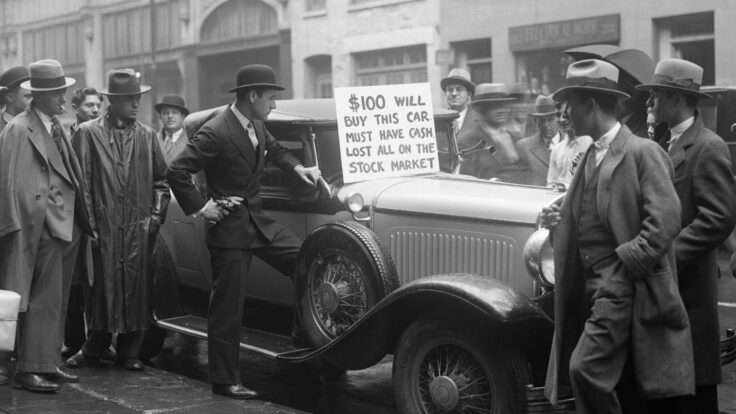
Financial history doesn’t repeat itself, but it does often rhyme. Amid a speculative frenzy, deregulation, trade wars, and a handful of megacaps propping up the markets, some of Wall Street’s brightest minds wonder whether 2026 might resemble 1929.
Marc Rowan
William D. Cohan • June 26, 2022
Street Credit
A recent string of bankruptcies and defaults suggests some challenges in the seemingly indomitable private credit market. And yet, according to some O.G.s, things have never been better. Apollo’s Marc Rowan lays bare the risks and rewards.
David Ellison
William D. Cohan • June 26, 2022
Ellisonology 101
In his first earnings call as C.E.O. of Paramount Skydance, David Ellison offered a masterclass in corporate optimism, promising “synergies” and artfully dodging questions about a possible Warner Bros. Discovery takeover. Alas, the time to act is here.


Michael Bloomberg
William D. Cohan • June 26, 2022
What Does Bloomberg Want for Bloomberg L.P.?
A modest proposal for how New York’s $100 billion man could bequeath his namesake, and its monumental profits in perpetuity.
Jim Chanos
William D. Cohan • June 26, 2022
The Mag Seven Itch
The market is notching record highs for the so-called Magnificent Seven—or should that be Mag 10?—but a subterranean counternarrative is forming as once-secure food and consumer staples crater, and cracks emerge in the $3 trillion private-credit boom.
Brian Roberts
William D. Cohan • June 26, 2022
The Brian Roberts–WBD Bull Case
A new analyst note highlights a heightened sense around Wall Street that Comcast co-C.E.O. Brian Roberts doesn’t merely want WBD, but also truly needs the company—and has a real shot at the asset.


Jamie Dimon
William D. Cohan • June 26, 2022
Jamie’s Castle in the Sky
Dimon’s $3 billion (or maybe as much as $5 billion, really) new headquarters is the physical embodiment of his fortress balance sheet and a metaphor for our fractional banking system. But the seeming permanence of its bronze facade shouldn’t fool old Wall Street hands, who know nothing is forever.


  • Terms
  • Privacy
  • Contact
  • FAQ
  • Careers
© 2026 Heat Media All rights reserved.
Create an account

Already a member? Log In

CREATE AN ACCOUNT with Google
OR YOUR EMAIL

OR

Use Email & Password Instead

USE EMAIL & PASSWORD
Password strength:

OR

Use Another Sign-Up Method

Become a member

All of the insider knowledge from our top tier authors, in your inbox.

Create an account

Already a member? Log In

Verify your email!

You should receive a link to log in at .

I DID NOT RECEIVE A LINK

Didn't get an email? Check your spam folder and confirm the spelling of your email, and try again. If you continue to have trouble, reach out to fritz@puck.news.

CREATE AN ACCOUNT with Google
CREATE AN ACCOUNT with Apple
OR USE EMAIL & PASSWORD
Password strength:

OR
Log In

Not a member yet? Sign up today

Log in with Google
Log in with Google
Log in with Apple
Log in with Apple
OR USE EMAIL & PASSWORD
Don't have a password or need to reset it?

OR
Verify Account

Verify your email!

You should receive a link to log in at .

I DID NOT RECEIVE A LINK

Didn't get an email? Check your spam folder and confirm the spelling of your email, and try again. If you continue to have trouble, reach out to fritz@puck.news.

YOUR EMAIL

Use a different sign in option instead

Member Exclusive

Get access to this story

Create a free account to preview Puck’s full offering, including exclusive articles, private emails from authors, and more.

Already a member? Sign in

Free article unlocked!

You are logged into a free account as unknown@example.com

ENJOY 1 FREE ARTICLE EACH MONTH

Subscribe today to join the inside conversation at the nexus of Wall Street, Washington, A.I., Hollywood, and more.

START 14-DAY FREE TRIAL

  • Daily articles and breaking news
  • Personal emails directly from our authors
  • Gift subscriber-only stories to friends & family
  • Unlimited access to archives
  • Bookmark articles to create a Reading List
  • Quarterly calls with industry experts from the power corners we cover