Hello and welcome back to The Best & The Brightest. I’m Leigh Ann
Caldwell. Some personal news! I’ve joined the board of the Center for Effective Lawmaking, a good-governance partnership between the University of Virginia and Vanderbilt University that analyzes the efficacy of each member of Congress at actually passing legislation—you know, the point of being a lawmaker. (The reality is that many of them accomplish very little besides racking up cable
television hits.)
In the last Congress, Reps. Sam Graves and Don Bacon were the most effective Republicans, while Reps. Joaquin Castro and Joe Neguse were the most effective Democrats, according to the Center’s analysis. The least effective Republicans? Reps. Jim Jordan and Scott DesJarlais. At the bottom of the list for Democrats were Reps. LaMonica McIver and Dutch Ruppersberger (excluding leadership anyway, which rarely sponsors legislation). You can look up any lawmaker here.
In today’s issue, a deep dive into the pre-midterm race for Donald Trump’s endorsement. Plus, the would-be frontrunners in key battleground states whose indecisions have frozen the field. I have a ton of scoopy details that you don’t want to miss.
But first…
|
- Who’s afraid of the G.A.O.?: Last week, in my column about Republican efforts to gut the Government Accountability Office, I noted that Rep. David Valadao, a centrist from a purple district in central California, was the chairman of the Legislative Branch Appropriations subcommittee that proposed the G.A.O. cuts. But I’ve since been told that it wasn’t Valadao, himself, who inserted the provisions that would cut funding to Congress’s watchdog in half, effectively making the agency useless. Instead, it was the conservatives on the Appropriations Committee, according to a person familiar with the proceedings. It’s not clear which fiscal hawks did it, but the Freedom Caucus members on the committee include Reps. Andy Harris, Andrew Clyde, Michael Cloud, and Ben Cline.Also, since I published last week, the Senate Appropriations Committee released their own funding numbers, including $814 million for G.A.O. That’s nearly twice the $415 million the House allotted, setting up a standoff between the more Trump-aligned House and the quasi-independent Senate.
- Trump’s war on NPR: If the Senate is going to recall $9.4 billion in funding for the Corporation for Public Broadcasting and foreign
aid, it must do so by Friday—the 45-day deadline for adopting a rescissions package, after which the funding is released. And it’s looking dicey, thanks in part to a full-court press from Native communities who say they rely on the agency’s broadcast network and emergency alerts in rural areas.The National Congress of American Indians has voted unanimously to urge Congress to reject cuts to the agency. The United South and Eastern Tribes, which represents 33 tribes, sent a letter to Alaska Senator Lisa Murkowski urging her to save the C.P.B. And Alaska Sen. Dan Sullivan, who rarely breaks with party leadership, is also facing a ton of pressure on this issue. He’s up for reelection in 2026 and voted for the Republicans’ One Big Beautiful Bill, which is still expected to negatively impact the state despite some carve-outs. (People of Indigenous descent make up about a fifth of Alaska’s population.)
Other Republicans who have expressed dismay with the rescissions package include South Dakota Sen. Mike Rounds and Maine Sen. Susan Collins, who is concerned about cuts to the highly successful global HIV/AIDS prevention program, known as PEPFAR. Republicans can lose only three votes for it to pass.
- Trump’s Epstein island: The Trump administration’s shifting messaging on the Jeffrey Epstein saga is deepening frustration among some corners of the MAGA movement, who view it as a betrayal of campaign promises to reveal government records pertaining to the case. On Monday, the Justice Department released a memo stating that “no further disclosure would be appropriate or warranted.” The following day, after being asked about the reversal, Trump berated a reporter for “still talking about Jeffrey Epstein.”Epstein, of course, has become a nexus of conspiracy theories across the political spectrum, but especially on the far
right, despite Trump’s own long history with him. In a very lengthy Truth Social post on Saturday night, Trump defended Attorney General Pam Bondi as “doing a FANTASTIC JOB,” alleged the Epstein conspiracies were created by the “radical left,” and said F.B.I. director Kash Patel should focus on his job. There have been reams of reporting that F.B.I. deputy director Dan Bongino would quit if Trump didn’t fire Bondi over the Epstein files. Not surprisingly, Trump’s oddly defensive post did little to quiet the backlash.
|
|
|
As the ’26 cycle ramps up, both Republican and Democratic Senate recruiting efforts have been slowed by uncertainty over Trump’s endorsement strategy, who is running, and whether the job is still worth the headache.
|
|
|
In Washington, midsummer marks the unofficial start of the next year’s midterm election cycle—peak persuasion season for party leadership, donors, and strategists to lock in the incumbents and fresh recruits they’ll want on the congressional battle map the following November. This year, however, everything feels especially up for grabs. In the Senate, retirement rumors are flying as Republicans sweet-talk their colleagues to hold strong in must-protect seats. Meanwhile, Democrats are working valiantly to persuade potential high-profile candidates to run—hoping to defend their numbers and expand the Senate map.
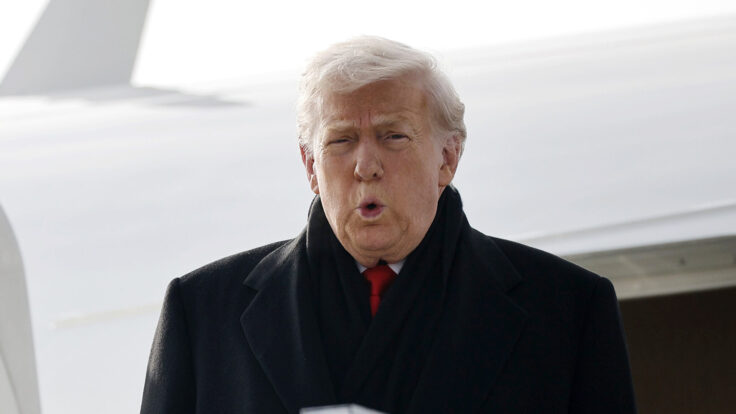
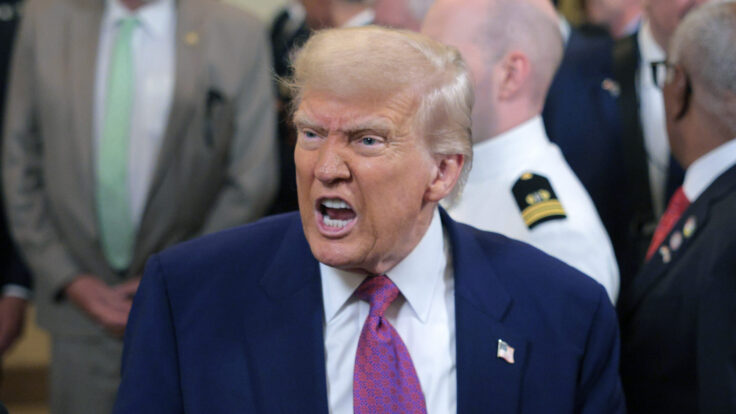
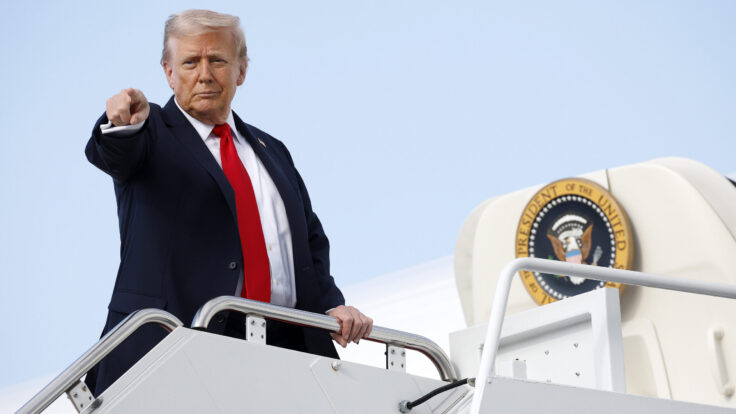
For Republicans, of course, the biggest wild card is Trump, himself. As in past years, the president is wielding his endorsement power to extract maximum leverage over the field, ensuring candidates don’t stray from his MAGA agenda. North Carolina Senator Thom Tillis, for one, has already elected to retire in 2026 rather than suffer the indignity of a Trump-backed primary challenger. But the contingent nature of Trump’s support has also injected uncertainty into the party’s 2026 planning in multiple states.
In Louisiana, I’m told that Trump is unlikely to endorse Sen. Bill Cassidy, who voted to impeach the president in 2021 and has done little since then to make amends privately, even though he’s voted in lockstep with Trump’s agenda. For now, however, Trump is unlikely to endorse a primary challenger against Cassidy either—he understands that angering more senators won’t help him on the Hill, especially when he already has skeptics in Tillis, Mitch McConnell, Lisa Murkowski, Rand Paul, and Susan Collins.
Meanwhile, Trump has made it clear that he will not endorse any House member from a remotely competitive district who is giving up a seat to run for statewide office, I’m told by multiple sources. That could complicate things in Michigan, where Rep. Bill Huizenga is looking to jump chambers, and in Kentucky, where I hear Trump isn’t thrilled that Rep. Andy Barr, who occupies a safe seat that Trump won by 11 points, is running to replace McConnell. (Rep. Mike Lawler, who had considered a run for governor in New York, is now telling people that he’s going to stay in the House.) Here’s what else I’m hearing…
|
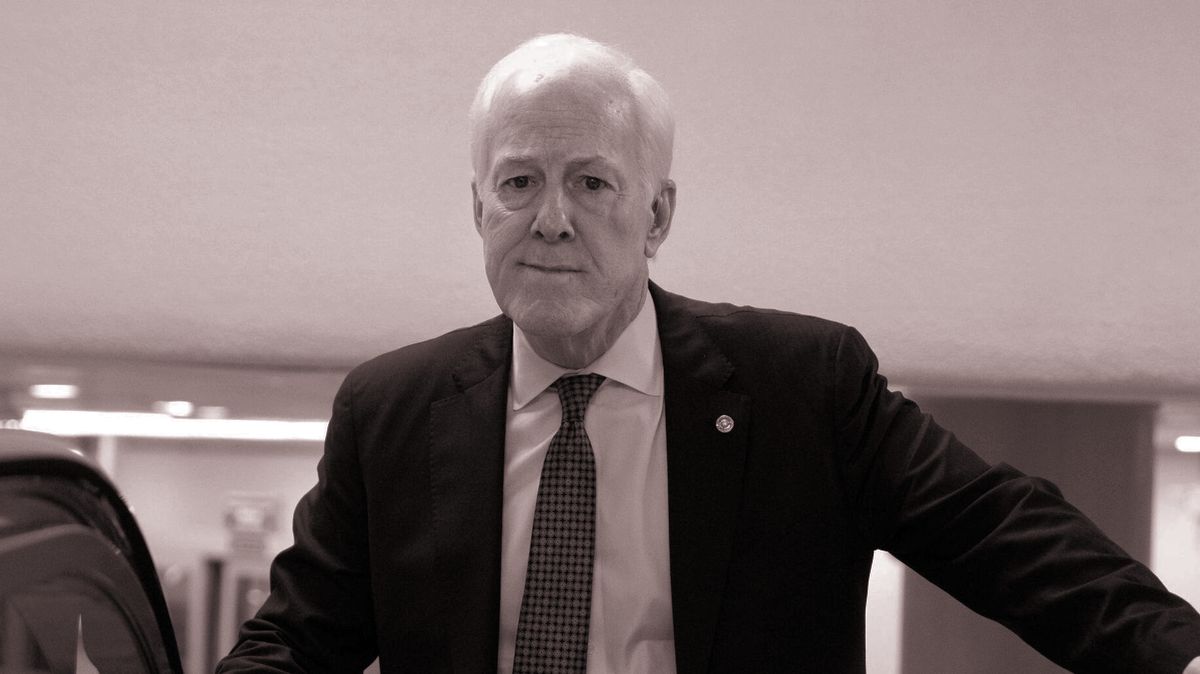
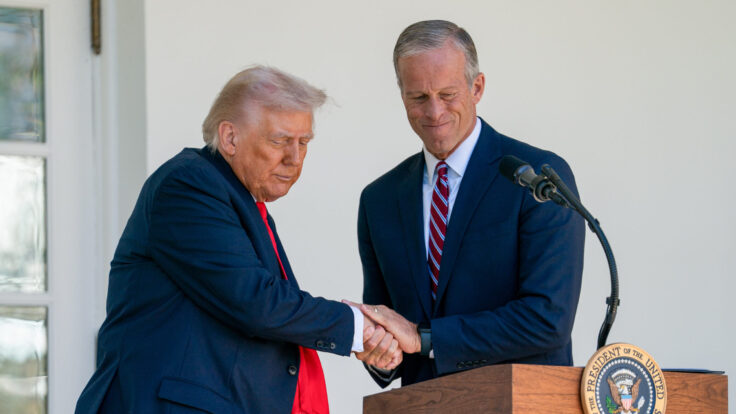
Among the most contentious battles will be the Republican primary in Texas, where Trump has yet to decide whether to support incumbent Senator John Cornyn or back far-right firebrand Ken Paxton, whose wife recently revealed she is divorcing him on biblical grounds. At an Oval Office meeting last week with Senate Majority Leader John Thune and the staff of the Senate Leadership Fund, the super PAC to elect Senate Republicans, White House aides said that Cornyn will not get an endorsement unless it’s clear he can wage a competitive race, as was first reported by Punchbowl. Cornyn, a more moderate figure who cosponsored a bipartisan gun safety law after the Uvalde school shooting massacre, is considered a stronger general election candidate but is unloved by the MAGA base, and Trump sees no upside in angering those voters unless he absolutely has to. The Senate Republican apparatus remains firmly behind Cornyn. The Senate Leadership Fund is launching television and digital ads in the state to promote Cornyn’s vote in favor of Trump’s agenda, including the One Big Beautiful Bill.
Not getting Trump’s endorsement would be devastating for Cornyn, who likely can’t win the Senate primary without it—and indeed might lose regardless. One possibility under consideration, according to two people familiar with the discussions, is that Trump issues a dual endorsement, where he says he supports both Cornyn and Paxton, essentially leaving the decision to voters. That may be ridiculous, but it wouldn’t be unprecedented: In 2022, Trump endorsed “Eric” in the Missouri Senate race between Eric Greitens and Eric Schmitt, without clarifying which candidate he meant.
|
North Carolina’s Frozen Field
|
The Senate map still favors Republicans in 2026, but a few recent developments haven’t broken their way. Georgia Gov. Brian Kemp and former New Hampshire Gov. Chris Sununu have both declined to run for the Senate, making those races much more difficult for Republicans to pick up. And North Carolina, where Tillis is retiring, could be a toss-up—even if many Republicans think a MAGA-approved candidate will perform better.
Among the variables plaguing the North Carolina race is whether Lara Trump, the president’s daughter-in-law, decides to
enter the fray. A native Tar Heel, her candidacy would almost certainly clear the field, but most Republican sources I speak to believe she’s unlikely to run. For one, she’d have to actually move to North Carolina from Florida. She has also decided against running for Senate in both Florida and North Carolina in the past.
Next in line is R.N.C. chair Michael Whatley, who previously ran the North Carolina G.O.P. and has an extensive national donor network for a race that operatives think will cost a whopping $750 million. But Trump thinks Whatley is doing a great job at the R.N.C., and might want to keep him there. If it’s not Lara or Whatley, the race for the Republican nomination is wide open.
There’s a similar situation developing on the Democratic side, where everyone is waiting for former Democratic Governor Roy Cooper to decide whether he’s going to run. Cooper won statewide in 2016 and 2020 when Trump was on the ballot, making him
the clear frontrunner among potential Democratic recruits. Campaign operatives tell me that it’s looking very likely that Cooper is going to run, and that he’ll announce soon. North Carolina Attorney General Jeff Jackson told local television station WRAL that he’ll back Cooper, which people are also reading as a
sign that an official announcement is imminent.
|
Meanwhile, in Maine and Iowa…
|
Farther north, Democrats are also salivating over the possibility that Maine Gov. Janet Mills decides to run against five-term incumbent Sen. Susan Collins, whom Democrats have tried and failed to beat on numerous occasions. Mills has said that she won’t make a decision until after Maine’s legislative session is over—a timeline that has been pushed back by an emergency session to deal with the budget strains from the Big Beautiful Bill.
Collins, of course, was one of three Republicans who voted against the BBB, due to its cuts to Medicaid, but that doesn’t necessarily mean she’s running again. Indeed, her failure to declare her candidacy has fueled rampant speculation that her current term may be her last. Collins has said repeatedly that it’s her “intention” to run again, but Democrats are hoping she won’t go through with it—reopening a battleground state that Kamala Harris won in 2024.
In the meantime, Republicans are doing everything they can to induce Collins to hold her seat. Her allies pointed me to a new super PAC supporting her that has raised $5 million. Her personal fundraising numbers, due on Tuesday, will also provide an important signal. “I will paint her house, wash her dishes, and mow her lawn if that means she runs for Senate,” a G.O.P. operative who works with Senate candidates told me, arguing that Collins is the only Republican that can win Maine. That’s why Trump is continuing to let her vote how she wants and isn’t giving her grief for when she votes against him. The smart money says she runs: Collins may be 72 years old, but she still loves the job. Why give Democrats the satisfaction of retiring?
Things may play out differently in Iowa, where rumors had swirled for months that Senator Joni Ernst won’t run for reelection. More recently, Ernst named a campaign manager, Bryan Kraber, who announced that she will do her “roast and ride” tour of Iowa this fall. But her heart doesn’t seem in it, Republicans have observed. Colleagues are begging her to run, I’m told, but those same colleagues have screwed her over repeatedly—passing her over for a leadership position and bullying her into supporting Pete Hegseth for Defense Secretary, despite her deep reservations about the sexual assault allegations against him.
|
Democrats are also waiting on some big decisions in both Ohio and Alaska. In Ohio, former Sen. Sherrod Brown, who lost to Bernie Moreno in 2024, is considering a run for either Senate or governor. The gubernatorial seat is open, and would mean running against short-time DOGE leader and former G.O.P. presidential candidate Vivek Ramaswamy. The other option is running against Sen. Jon Husted, a relative unknown in Ohio who was appointed after J.D. Vance vacated the seat to be vice president.
Senate Democrats are jonesing for Brown to run for the upper chamber. Minority Leader Chuck Schumer, the party’s Senate recruiter-in-chief, was spotted having dinner with Brown in Columbus. Republicans tell me that in either race, Brown is the only Democratic candidate who could put Ohio, now a reliably red state, back in play.
There might be an opening for Democrats in Alaska, too. Former Rep. Mary Peltola, who lost her seat to Nick Begich last cycle, is another top-tier candidate whom Democrats are hoping will run against Sen. Dan Sullivan. Democrats think Sullivan is incredibly weak heading into 2026, especially after his vote for the Big Beautiful Bill. (Despite the carve-outs secured by Murkowski for Alaska, the state is still more reliant than most on the federal government.) But like Brown, Peltola is also considering a run for governor. The Senate seat is open, which could make it an easier race than challenging an incumbent. Plus, not having to fly 4,000 miles every week to D.C. might be more enticing.
|
|
|
The industry's go-to source for unflinching reporting on the trillion-dollar business of artificial intelligence - perhaps the
single most important technology of our time. Ian Krietzberg, the powerhouse journalist behind The Deep View, delivers twice-weekly insights into the latest dealmaking and breakthroughs in A.I., and how the intersecting worlds of finance, entertainment, media, and politics are being transformed in its wake.
|
|
|
Join Emmy Award-winning journalist Peter Hamby, along with the team of expert journalists at Puck, as they let you in on the
conversations insiders are having across the four corners of power in America: Wall Street, Washington, Silicon Valley, and Hollywood. Presented in partnership with Audacy, new episodes publish daily, Monday through Friday.
|
|
|
Need help? Review our FAQ page or contact us for assistance. For brand partnerships, email ads@puck.news.
You received this email because you signed up to receive emails from Puck, or as part of your Puck account associated with {{customer.email}}. To stop receiving this newsletter and/or manage all your email preferences,
click here.
|
Puck is published by Heat Media LLC. 107 Greenwich St, New York, NY 10006
|
|
|
|