Welcome back to Wall Power’s Inner Circle. I’m Marion
Maneker.
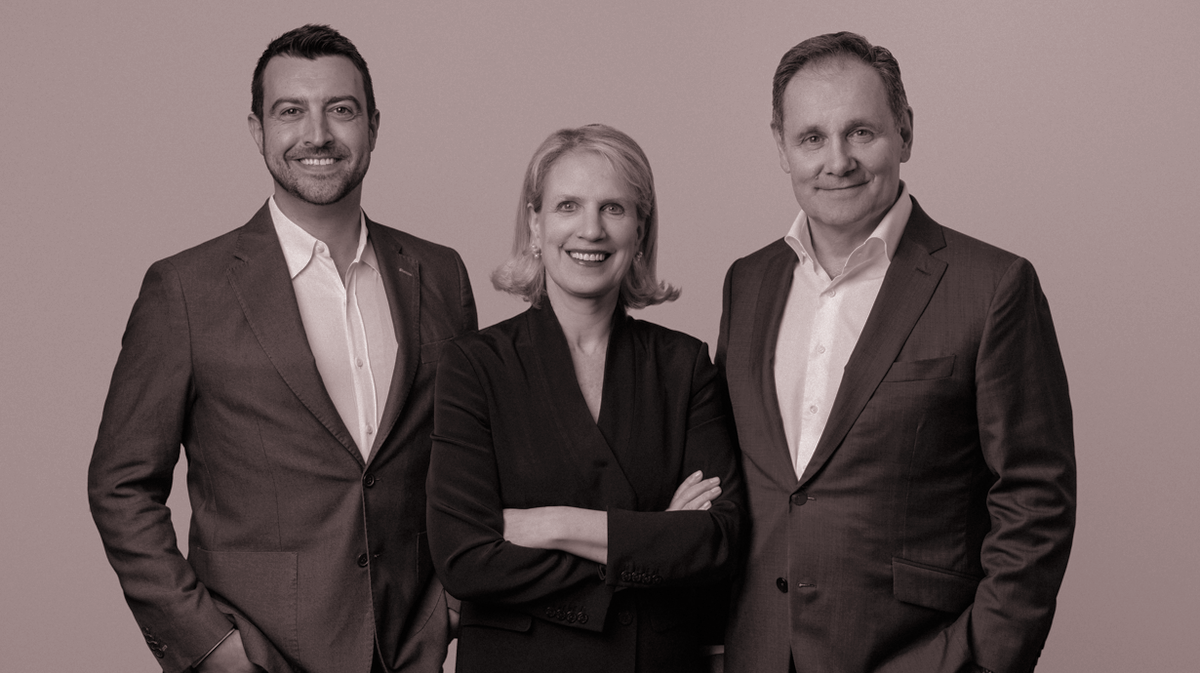
Winston Art Group, a major art appraisal firm founded by Elizabeth von Habsburg 15 years ago, has announced a merger with Artory, the art data firm founded nine years ago by Nanne Dekking. The new company, Winston Artory Group, hopes to take advantage of Artory’s data and technology to provide Winston’s client base with greater visibility into the value of their art holdings. I’ll try to explain more below.
But first, a
reminder that we’ve got only a handful of Inner Circle tickets left for our upcoming art summit… |
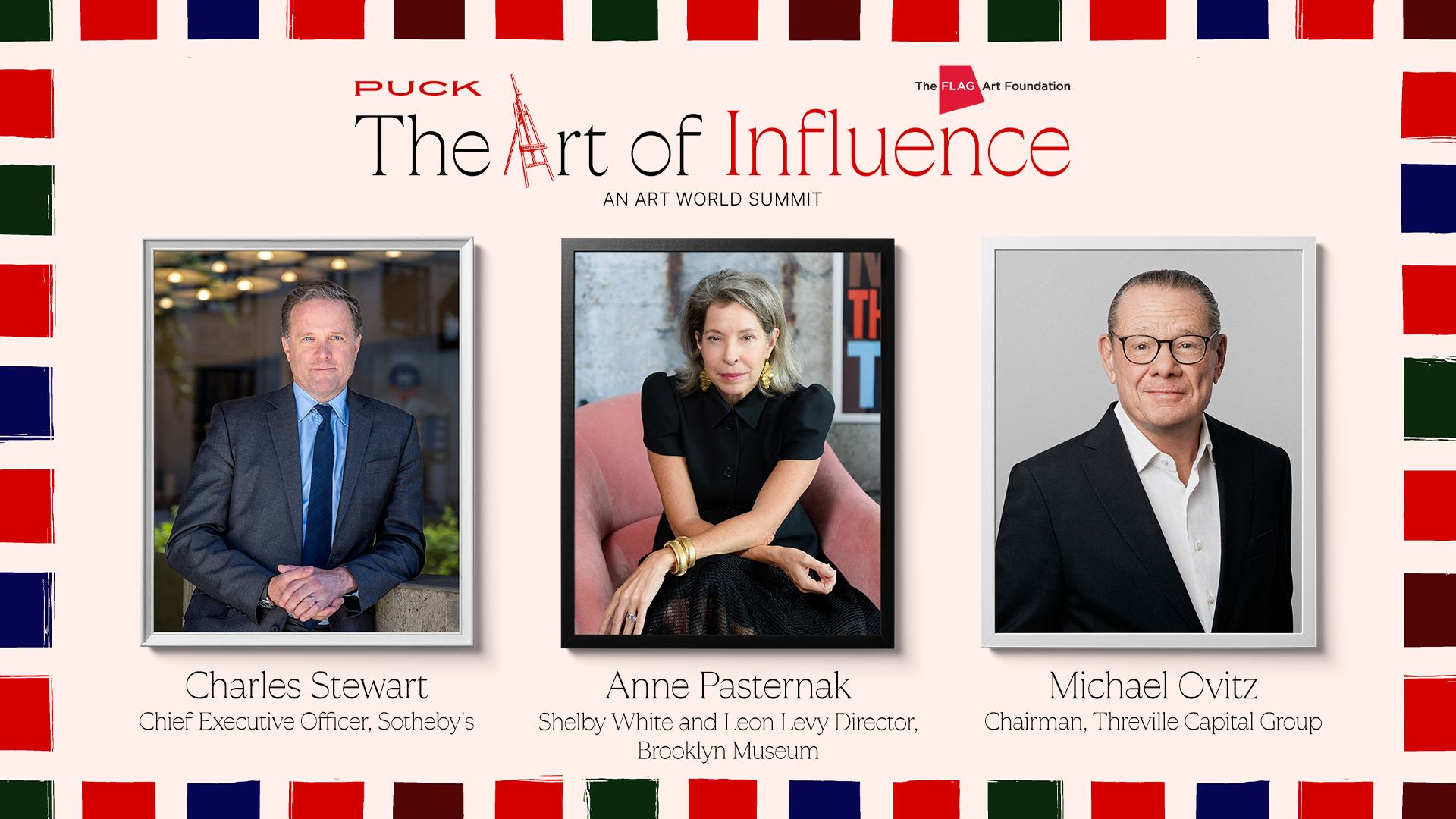
We’ve added some speakers to The Art of Influence, the one-day (10 a.m.
to 4 p.m.) event Puck is holding in partnership with the FLAG Art Foundation at SECOND in Chelsea on September 15. This will be a candid discussion about the current state of the art market and all its key constituencies: artists, collectors, dealers, auction houses, museums, and art advisors.
Joining us will be Sotheby’s C.E.O. Charles Stewart, collectors Michael Ovitz and J. Tomilson Hill, and the director of the
Brooklyn Museum, Anne Pasternak. We’ve previously announced that Larry Gagosian, Nicolas Party, Dasha Zhukova, and Glenn Fuhrman will appear, and we’re not done yet. We sold out the allocation of Inner Circle tickets, but many of you have written, asking to buy them, so we’ve added 10 more. Claim one
before they sell out. We’re keeping the summit small, so the conversation stays intimate and forthright. I hope you’ll join us.
Let’s get started… |
- Market warnings and predictions at Christie’s Art+Tech conference: I visited Radio City Music Hall last Thursday to attend the art market portion of Christie’s annual Art+Tech conference. The morning opened with Christie’s Alex Rotter interviewing art advisor Sandy Heller, making a rare public appearance to talk about the business. Heller cautioned that the art world’s success has created new challenges, and that galleries have become
too reliant on the Covid-era practice of trying to sell art via PDF, rather than in person. “My model is to never have the client experience the art world by proxy,” he told Rotter. On the positive side, Heller believes new collectors are coming into the system, but because the art world has become so big and global, you barely notice it.
Then, in the final panel of the morning, former Sotheby’s C.E.O. Tad Smith made the rosy prediction that the art market will recover
substantially in the fall—barring some unforeseen global geopolitical event, of course. He noted that the market trades on global liquidity, which he said is growing: There’s $110 trillion in bank deposits around the world, sometimes referred to as the M2 money supply, plus another $70 trillion in collateralized sources of credit, as well as activity in the repo market and the shadow banking sector.
In short, money is flowing into the system. After the event, Tad showed me a chart
illustrating that total global liquidity, which has been mostly flat since 2021, is beginning to sharply rise this year. He thinks that liquidity will have worked its way through the system to buyers’ hands by fall. (It might have even played a role this May, had the tariff turmoil not been fresh in buyers’ minds.) - Hong Kong’s M+ museum collabs: The M+ museum has been working to raise its profile in the global museum ecosystem by collaborating on
curatorial projects with other institutions in Asia. Today, it announced three different exhibitions in Korea and Japan that are meant to expand M+’s curatorial reach and stature. Each of the shows open in early September. They include Prism of the Real: Making Art in Japan 1989-2010, at The National Art Center, Tokyo; Lee Bul: From 1998 to Now at Leeum Museum of Art in Seoul; and Manifesto of Spring at the Asia Culture Center in Gwangju.
|
Now, let’s get to the main event… |
|
|
The merger of Winston Art Group with Artory is a possible step toward the greater
financialization of art. But will art ever really be an “asset”? |
|
|
Winston Art Group, one of the market’s two main art appraisal firms, has announced a
merger with Artory, an art and data venture originally backed by Hasso Plattner, to forge the new firm called—wait for it—Winston Artory Group. The combined company aims to offer wealth managers greater visibility into the asset value of their art. What’s interesting about the deal, however, is that it arrives as the art market has lost much of its mojo. Public transactions are down, and there’s the perception that the top of the market has slowed to the point where valuations
are falling.
Even more notable is the new entity’s significant backing from blockchain-oriented investment firms, at a time when no one seems to care much about blockchain. Nanne Dekking, a former head of private sales at Sotheby’s, founded Artory nine years ago as a blockchain-based art data firm; the new company is a 50/50 merger with Winston, which Elizabeth von Habsburg formed 15 years ago after defecting from Gurr Johns, the leading independent art
appraisal firm at the time. (Yes, she’s one of those Habsburgs—her husband, Géza von Habsburg, traces his lineage back to a Holy Roman Emperor.) All this has been recapitalized by Strobe Ventures, a crypto venture firm, with participation by CMT Digital, Michael Novogratz’s Galaxy Digital, and the family office of Eijk van Otterloo, a major collector of 17th century Dutch Old Masters paintings.
How the funders’ blockchain hopes
fit into the new firm, I really cannot say. Then again, I’m a blockchain skeptic: It’s a technology in search of a use case (and a cogent explanation, truly…) beyond the speculative store of value in Bitcoin. That search has been going on for more than 15 years. Winston Artory Group’s main business is providing insurance appraisals for collectors and their wealth advisors. And Artory is sitting on a database of transactions gathered from public sources, which they claim includes a million dealer
data points. (Von Habsburg told Bloomberg’s James Tarmy that these had been gleaned from dealer PDFs sent to clients before art fairs, matched against reported sales.) Right now, no one is talking about whether the new entity can spur the adoption of blockchain-based due diligence tools.
But why would crypto companies fund this merger, if they didn’t hope for some traction in the use case? The idea would be to put all of the paperwork supporting a high-value artwork’s
title, authenticity, and provenance onto the blockchain—which all sounds nice, until you realize that art owners have resisted contributing this information to a centralized database for as long as they’ve existed. And, so far, no one has demonstrated the advantages of a decentralized database to collectors. But maybe the new WAG will be able to standardize the practice someday.
Whatever the case, according to von Habsburg, Winston Artory Group will appraise around $15 billion worth of
art this year, or more than 50,000 different objects. A third of that value will be for art and collectibles insurance. Another 20 to 25 percent of that value, or $3.5 billion, will be appraised by banks whose clients want to finance their art collections. And the new company’s president, Peter Loukas, who comes from the Artory side of the merger and has a background in asset management and data technology, argues that wealth managers are finally waking up to the idea that much
of their clients’ wealth may be tied up in cultural property, including art and other objects. |
But can art be considered an asset? At Christie’s Art+Tech conference last week,
art advisor Sandy Heller and former Sotheby’s C.E.O. Tad Smith dismissed this idea. To Heller, art can be a store of value in some cases, and, in a later panel appearance, Smith added that there can be better and worse stores of value—with Bitcoin as a better one, at least recently. (Cash, one assumes, has been worse.) In any case, Smith explained that art hasn’t been fully financialized yet—that’s because it lacks the basic infrastructure for such
financialization to be easy and reliable.
So even though values seem to be down, the financial community seems interested in creating a system that might provide a real-time look at the value of art and collectibles. Of course, no art market professional thinks art and collectible values change on a daily, or weekly, basis, let alone hourly or minute-by-minute, as they do in financial markets. But one of the goals of the new Winston Artory Group is to allow financial advisors to view art
assets like other financial assets.
With this kind of tracking, Loukas said, financial advisors are waking up to the idea that they can include art in the tax planning services they perform regularly for other asset markets—fiduciaries often try to minimize tax exposure by looking for losses that can offset gains in any given year. Even though art is admittedly far less liquid than other asset classes, and takes longer to sell, the same tax strategy should theoretically apply—especially
in the sideways art market we’ve been in for arguably the past decade. If you’ve bought art any time since 2015, there’s a good chance it’s worth less today, with a number of obvious exceptions. (Not that this is a problem for most collectors, who bought the art to own it.)
At the end of the day, Winston Artory’s goal is to create a valuation service that allows wealth managers, with limited art knowledge, to take advantage of the firm’s insights about which artists’ markets are down
short-term—and should potentially be held—and which are potentially facing secular decline, which would make them attractive to sell for tax farming purposes. In this regard, it might be a good thing for the market overall. Right now, the art market needs motivated sellers who are willing to take a loss on works purchased in the past decade. Even if WAG’s clients are more motivated to sell to accrue their losses, that might be a positive market moment.
Obviously, Winston and Artory are
not merging simply to enable better tax planning. But that’s where Loukas sees potential, and the whole firm clearly hopes to build out the kind of infrastructure—data, due diligence, appraisal services, etcetera—essential for any type of art market financialization. Winston Artory Group will take the new capital invested in the firm and spend some of it on technology and services, and the rest on hiring more appraisers and looking into expanding overseas. When I asked von Habsburg about her
goal for the company in the future, she responded lightheartedly: “Total global domination.” |
Late last week, The Wall Street Journal’s Carol Ryan
waded into the fascinating question of why the art market has seemingly come to a standstill above $10 million, when global wealth conditions remain as strong as ever. Her conclusion: Interest rates. “In 1993 and again in 2010,” Ryan wrote, “Yale professor William Goetzmann analyzed more
than two centuries of art auction results, finding that painting prices are correlated with the stock market and act as a good inflation hedge. So based on history, the high end of the art market should be doing okay with the S&P 500 bobbing around record highs. But the correlation appears to have frayed.”
Of course, the high end of the art market is exactly where the weakness lies right now, at least in the public markets. Ryan thinks the vogue for treating art as an asset class has made
the market more sensitive to interest rates. “High interest rates have made the pitfalls of investing in art obvious again,” she concluded. “Paintings are illiquid, they generate no income, and are expensive to insure and store safely. They also cost money to sell.”
This coincided somewhat with Tad Smith’s observations, as mentioned above. Smith noted at the Christie’s conference that he thinks interest rates will moderate soon. In conjunction with the global liquidity that he
acknowledged, this might generate more sales in the future. |
That’s it for today. See you on Friday.
M |
|
|
Finally, a media podcast about what’s actually happening in the media—not the oversanitized,
legal-and-standards-approved version you read online. Join Dylan Byers, Puck’s veteran media reporter, as he sits down with TV personalities, moguls, pundits, and industry executives for raw, honest, sometimes salacious conversations about the business of media and its biggest egos. New episodes publish every Tuesday and Friday. |
|
|
The industry’s go-to source for unflinching reporting on the trillion-dollar business of artificial intelligence -
perhaps the single most important technology of our time. Ian Krietzberg, the powerhouse journalist behind The Deep View, delivers twice-weekly insights into the latest dealmaking and breakthroughs in A.I., and how the intersecting worlds of finance, entertainment, media, and politics are being transformed in its wake. |
|
|
Need help? Review our FAQ page or contact us for assistance. For brand partnerships, email ads@puck.news. You received this email because you signed up to receive emails from Puck, or as part of your Puck account associated with {{customer.email}}. To stop receiving this newsletter and/or manage all your email preferences, click here. |
Puck is published by Heat Media LLC. 107 Greenwich St, New York, NY 10006
|
|
|
|