Hi, and welcome back to Line Sheet. It’s been a few days since the end of the shows, and by this time I’m
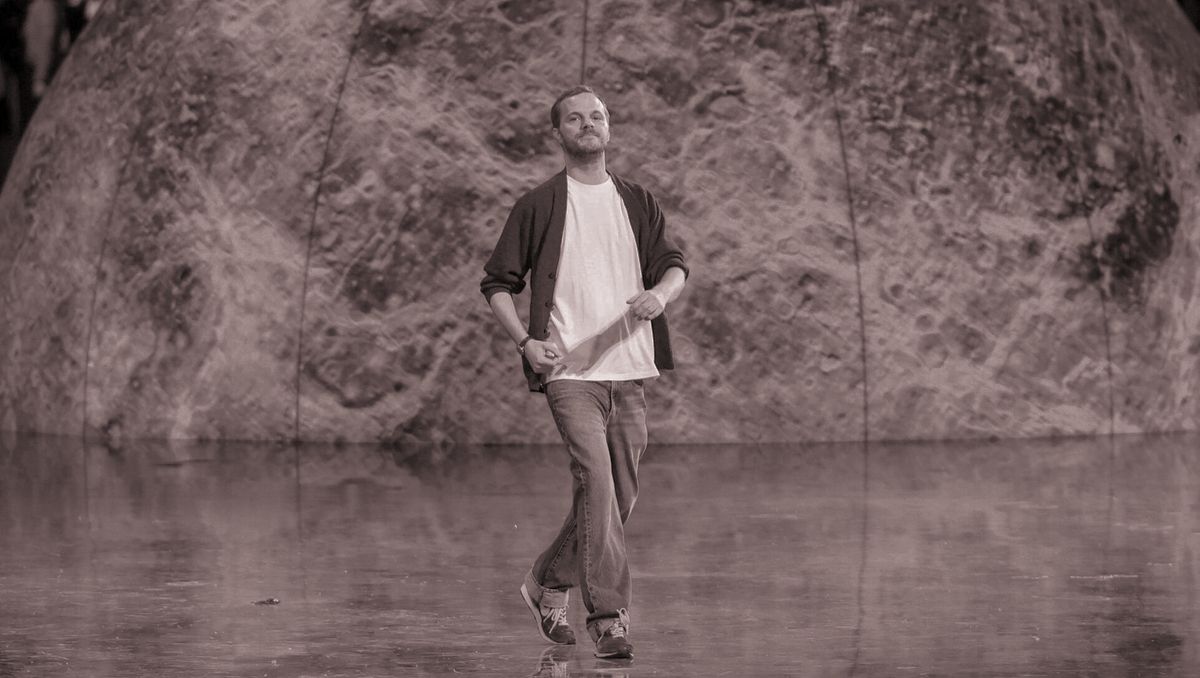
usually sick of talking about fashion. But Chanel changed that this season: We can’t stop, won’t stop. For today’s oh-so-special issue, available to Inner Circle members only (trade up here), I take a measured look at the two most important debuts of the season—Matthieu Blazy at Chanel and Jonathan Anderson at Dior—and what they mean for their businesses and the
industry overall.
Up top, more fun-and-juicy intel from Paris, Milan, and beyond; more info about superstar shoe designer Nina Christen’s not-so-secret secret investor; Dario Vitale’s Versace sales; and the fate of The Webster, which just sold a majority stake to Frasers Group. (You are really getting your money’s worth on this one.)
Programming note: Tomorrow on Fashion People, my guest is Interview
editor-in-chief Mel Ottenberg, who joins me for our traditional end-of-Fashion-Month séance. We discussed the 12 most important shows of the season (sorry, 10 was too few). Listen here and here.
Mentioned in this
issue: Matthieu Blazy, Chanel, the Wertheimer family, Leena Nair, Dior, Jonathan Anderson, Bernard Arnault, Delphine Arnault, LVMH, Nina Christen, Paul Dupuy, Dario Vitale, Versace, the Prada Group, Laure Hériard Dubreuil, The Webster, and more… |
|
|
A MESSAGE FROM OUR SPONSOR |
The refined BMW 7 Series is all luxury. With the ability to define your design, the ultimate glamour is yet to be.
Learn more at BMWUSA.com. |
|
|
Three Things You Should Know…
|
- The
Christen mystery, revealed: Last week, I asked if any of you knew who was funding Nina Christen’s new store off Place Vendôme. Well, apparently the superstar shoe designer’s investor is… Paul Dupuy, a serial entrepreneur and co-founder of Zoī, a preventive healthcare platform. I suspect that he won’t bother her too much!
- Versace for everyone!: At this point, it’s pretty much universally accepted that Dario Vitale’s first
collection for Versace was awesome. The question, however, was whether it was also sellable. The good news for the Prada Group, which is set to acquire Versace from Capri by the middle of this month, is that demand for this collection has far exceeded expectations, especially in the U.S. I’ve heard from people on the ground that there will be new wholesale partners stateside, and that demand from V.I.C.s has essentially doubled over last season. In the meantime, executives are
mulling over the pricing strategy, which will be key when the product becomes available next year.
- Defining the Webster deal: This morning, WWD ran a story noting that Laure Hériard Dubreuil, the owner of multibrand retailer The Webster, had sold a majority stake in her 16-year-old business to Frasers Group—the same company that bought Matchesfashion, bankrupted it, and has tried to relaunch it as a private shopping platform.
As part of the deal, Dubreuil will maintain a stake in the business and, according to reports, manage the company day-to-day.
There’s a lot we still don’t know here. Less than a month ago, I was told that vendors were waiting on payments from The Webster, and that they were canceling orders. I also heard as recently as this week that there may be some sort of restructuring underway. (Interestingly, Dubreuil owns some of the real estate herself.) Frasers doesn’t have a spotless record in
this space, obviously, but the number of financing opportunities are limited. Presumably, this was the best option for Dubreuil and the business. Let’s see how she manages going forward, with another party owning a controlling stake.
|
|
|
The Matthieu Blazy and Jonathan Anderson debuts (at Chanel and Dior, respectively) offered
an inflection point for the fashion industry, and perhaps an epiphany, too, about its path forward. |
|
|
By the Thursday after the Paris shows come to an end, virtually everyone on the global fashion
traveling circus is exhausted and ready to stop talking about business for a while. But not this season. Matthieu Blazy’s Chanel debut, which came at the end of an historically fraught moment in the industry, was received with the sort of superlatives that the industry is lampooned for overusing: transformational, transcendent, magical, etcetera, blah, blah. And yet, in a single show, Blazy pointed the industry in a new direction—one that relied less
on familiar tropes and selling tactics, and more on pure love of the game. Blazy’s idea of Chanel reminded me of why I joined this cult, and made me forget about the industry’s commodification. For 30 minutes, anyway.
Obviously the realities of the world, and the industry, weren’t erased or even assuaged by Blazy’s proposal. Sales of luxury goods will be down 2 to 5 percent in 2025, according to Bain, with reduced demand in China as the main culprit. The days of thinking it is
fun, or exhilarating, to queue for a new product drop are gone. As we live more of our lives online, fashion is not even about desire or practicality. An underlying impediment in the industry remains our actual inability to use many of the things we buy. On this recent trip to Paris, a reseller told me that she often meets Americans looking to offload entire wardrobes that still have the tags on them. Despite its omnipresent cynicism, the fashion industry is actually built on hope and
enthusiasm. Unfortunately, all vectors point to the sort of consolidation that has played out in other creative industries. |
|
|
A MESSAGE FROM OUR SPONSOR |
The refined BMW 7 Series is all luxury. With the ability to define your design, the ultimate glamour is yet to be.
Learn more at BMWUSA.com. |
|
|
Of course, there will be winners and losers amid this transformation. And Blazy’s first collection
underscored Chanel’s advantages. The company was already better positioned than most of its couture-house competitors: The Wertheimer family’s restructuring of the business operations under C.E.O. Leena Nair, appointed in 2022, has proven consequential. Nair not only had to reckon with the creative succession challenge—Virginie Viard, one of Karl Lagerfeld’s longtime deputies, was never a permanent solution—but
she also had to manage transition on the operations side that remains ongoing. The company’s sales have slowed more modestly than many peers, down just 4 percent in 2024, and Nair has continued to invest in the core business. That same year, Chanel chose to increase capital expenditure to nearly $1.8 billion, up 43 percent from 2023.
Yes, Chanel has many privileges: It’s a private company, run by a family without any intention of letting go of any of it, and could have hired
any designer. However, Nair and the Wertheimers somehow chose the right one—never a given.
Blazy has managed to think about why Chanel exists and apply that to modern life. His partnership with Charvet is a clear example of his sensitivity. The 187-year-old shirting store on the Place Vendôme is where Coco Chanel used to buy shirts for her boyfriend, Boy Capel. The item is part of Chanel’s history, represents a craft, and also happens to be
something that the young-and-fashionable want right now. There will be dozens of stories written over the next few months about how Charvet has captivated wealthy Millennials, who visit Paris for custom shirts, suede slippers, braided belts, socks, ties, scarves, etcetera. |
Bernard Arnault, the C.E.O. and chairman of LVMH, bought Christian Dior from the
depths of licensing hell in the early ’80s. He’d long admired Chanel, and developed Dior in its image, decades later, when he recruited John Galliano to be his Lagerfeld. He even hired Chanel’s favorite architect, Peter Marino, to design the stores.
But Dior is a smaller house in scope: The brand DNA mostly hails from a period of 10 years during the middle of the last century, before the sudden death of the founder at age 52. There’s the bar jacket, the
sad grey, the cinched waist—fewer ingredients, which meant that it never quite lived up to Chanel’s status in the same way Louis Vuitton will never be Hermès. Dior revolutionized the way women dress, but he didn’t free them the way Chanel did over several decades with everything from the dropped waist to grey jersey.
As he settles into Dior, Jonathan Anderson has been given a grander scope (men’s, women’s, couture) at a less cohesive brand. He’s also been
afforded the latitude to drive the overall brand image, all the way down to social media. That plays to his strengths—he’s an ad man at heart—but it also adds to his burden. |
|
|
Whereas Blazy was summoned to evolve Chanel, Anderson has been installed to reverse a trend line. Analysts
have put the sales decline at as much as 10 percent this year, far above the industry average. Dior, like many mega-luxury brands, was supercharged during the pandemic: too much distribution, not enough product innovation. When C.E.O. Delphine Arnault entered the picture in 2023, the house was already on the downward trajectory, and clearly needed to be taken in a new direction design-wise.
The Arnaults were right to choose Anderson; he understands LVMH and how to be
successful there better than perhaps any other designer, but he has essentially been the high-fashion equivalent of a startup guy for the past 15 years. He took Loewe from a modest shingle on the LVMH portfolio to $2 billion in sales; Dior is, at its most starved, more than triple that size. At Loewe, Anderson had time to work things out; he’ll be given time at Dior too, but his process will be public and highly scrutinized. While Anderson’s menswear received both positive and negative reviews,
the womenswear collection was universally perceived as challenging, whether you liked it or not—and a lot of people didn’t. And there are likely to be more changes behind the scenes. (For instance, Delphine recently hired Will Cooper, the longtime Saks Fifth Avenue merchant, to run the women’s business in the U.S.)
Dior needed a transformative collection, but instead Anderson presented a thinkpiece. Nonetheless, I suspect the house will be able to make his vision
commercially viable. There are plenty of women who want bunny ear shoes and pink denim skirts. (I’m serious.) In the end, though, these two shows were a lesson to the industry that expectations are generally too high, and misdirected. As the Wertheimers and the Arnaults privately know, growth shouldn’t be the only goal, but rather the result. |
I love Keri Russell!
[The New Yorker]
Now Tod’s is being targeted by Italian prosecutors over labor issues. [Reuters]
Fast Retailing, the owner of Uniqlo,
posted record profits in its most recent fiscal year. [BoF]
The new Arket x Barbour pieces are a perfect green. Unfortunately, Arket doesn’t ship to the U.S., but there are ways around it!
[WWD] |
Until tomorrow,
Lauren
P.S.: We use affiliate links because we are a business. We may make
a couple bucks off them. |
|
|
An essential, insider-friendly Hollywood tip sheet from Matthew Belloni, who spent 14 years in the trenches at The Hollywood
Reporter and five before that practicing entertainment law. What I’m Hearing also features veteran Hollywood journalist Kim Masters, as well as a special companion email from Eriq Gardner, focused on entertainment law, and weekly box office analysis from Scott Mendelson. |
|
|
Puck sports correspondent John Ourand and a rotating cast of industry insiders take you inside the executive suites and owners boxes where
the decisions that shape the entire sports business are made. You’ll hear interviews with players, network execs, and everyone in between. The Varsity is an extension of John’s private email for Puck by the same name. New episodes publish every Wednesday and Sunday. |
|
|
Need help? Review our FAQ page or contact us for assistance. For brand partnerships, email ads@puck.news. You received this email because you signed up to receive emails from Puck, or as part of your Puck account associated with {{customer.email}}. To stop receiving this newsletter and/or manage all your email preferences, click here. |
Puck is published by Heat Media LLC. 107 Greenwich St, New York, NY 10006 |
|
|
|