 |
|
Happy Sunday, and welcome back to Dry Powder.
|
|
The Oracle is often inscrutable. “What the genius does at first,” said a friend of mine, reflecting on Warren Buffet’s decision to back up the Berkshire truck on a pair of oil and gas companies, “the amateur does later.” These recent investments are likely anathema to the E.S.G. crowd, but at age 91, with a net worth of around $100 billion, Buffet almost surely does not care. Once again, he seems to be taking the long view.
Bill
|
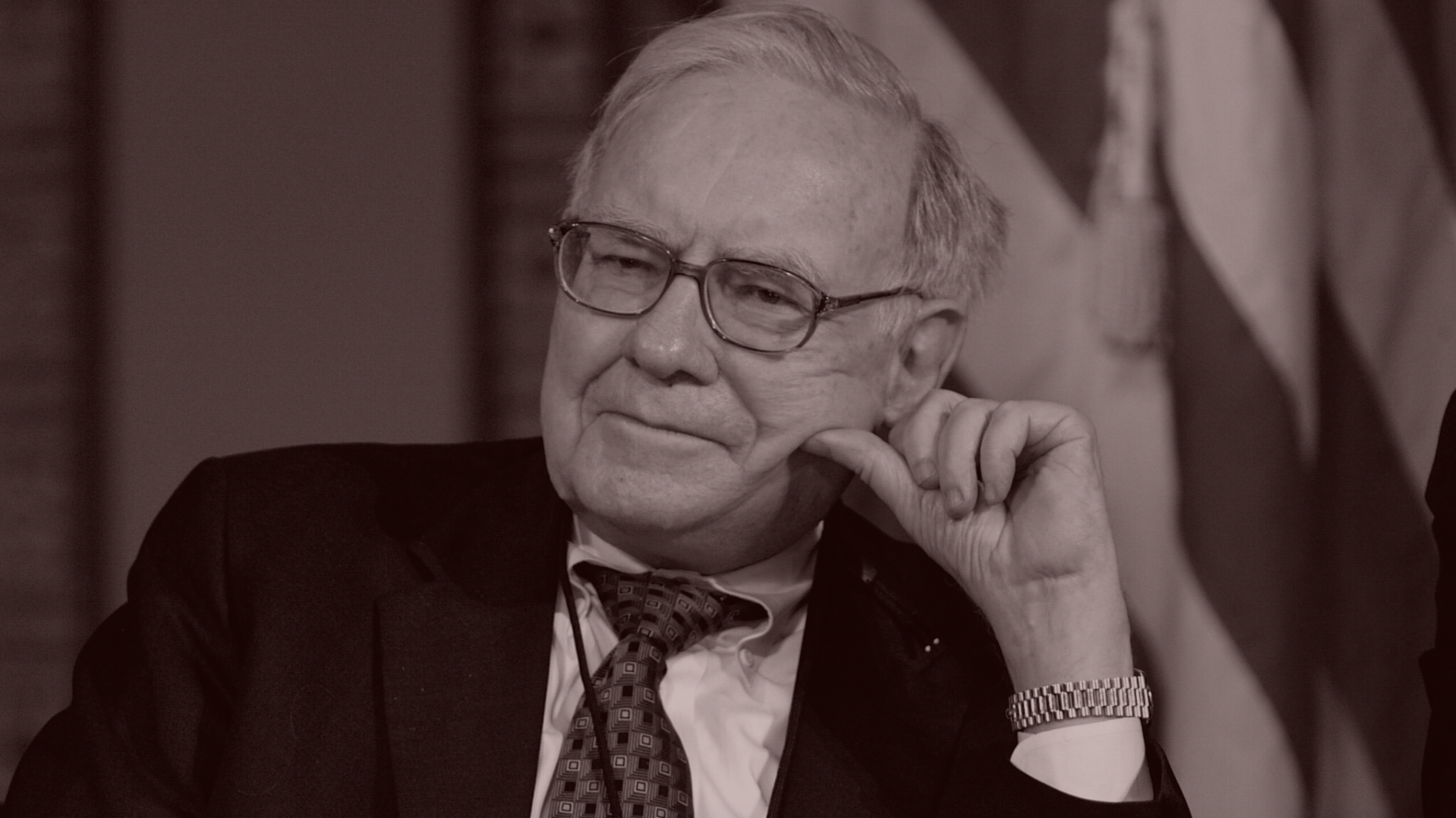 |
| What Is Warren Buffett Thinking? |
| While so many asset managers are titillated by post-correction Big Tech stocks, the Oracle is doubling down on… oil and gas? Will the asset-heavy, lower multiple play be his ultimate zag? |
|
|
|
| If we’ve learned anything about Warren Buffett over the decades, it’s that he buys in when others bail. “Be fearful when others are greedy and greedy when others are fearful,” he once famously said, perfectly capturing his investment philosophy. In 2008, when investors were running away from Goldman Sachs as fast as they could, Buffett bought $5 billion worth of Goldman Sachs preferred stock, and made about a $3 billion profit on the investment. He made similarly profitable investments in Bank of America and in GE at around the same time.
Now, he’s at it again, albeit with much less fanfare. In recent weeks, he’s backed up the truck on two companies, Occidental Petroleum and Chevron, that most other money managers wouldn’t touch with a ten-foot pole, largely because they are so capital intensive and heavily regulated, to say nothing of how politically incorrect it has become to own anything to do with oil, gas, or other fossil fuels. But apparently Warren doesn’t care about being politically correct or that he might get called on to the carpet by the E.S.G. police. He’s 91 years old and the eighth-richest person in the world, according to Bloomberg, with a net worth of around $100 billion.
So far this year, through Berkshire Hathaway, his publicly traded holding company, Buffett has bought some 175 million shares of Occidental Petroleum, worth around $10 billion. He now owns an 18.7 percent stake in the company, making him by far the company’s largest shareholder. The stock has almost doubled in 2022, in part because Warren has been buying it as rapidly as he can. The Buffett glow is still operative. Many observers believe he’s not done buying. Buffett also owns a $10 billion preferred stock stake in Occidental that he purchased in 2019 to help Occidental buy Anadarko Petroleum. That investment also gave Buffett an option to buy another nearly 84 million Occidental shares at $59.62 each, just above the $57 or so where Occidental stock is trading these days. (He won’t exercise that option until, or unless, it’s in the money.)
Buffett also owns something like $26 billion worth of Chevron stock, making it one of his four largest holdings. Buffett has flipped in and out of oil stocks for years. In November 2013, he bought a nearly $4 billion stake in ExxonMobil, held it for about a year, and then sold it for pretty much what he bought it for. He bought some Chevron in 2020, sold half of it in 2021 and then started buying it in bulk again in the third quarter of 2021, through the first quarter of 2022.
He presumably cares more about buying inexpensive out-of-favor stocks than what people think about what he’s doing. “Warren likes cheap,” explained my friend Gifford Combs, who is one of the founders of Dalton Investments, a money-management firm focused on value investing, capital preservation, and long-term growth. A longtime Buffett aficionado, Combs can’t help but notice that Warren is once again zagging while everyone else is zigging. “What the genius does at first,” Combs continued, “the amateur does later.”
And that may be the case here. Jeff Currie, the global head of commodities research at Goldman Sachs, recently noted on CNBC that we are at the start of a “commodities supercycle” because the sector has suffered from a decade of underinvestment. “The amount of money in this space is very, very small,” he said on June 9. He said it’s not just the energy sector that’s suffering from underinvestment but the whole “old economy” has been ignored by investors for years. “Even if you want to go out and grow shale production,” he said, “you're out of sand. You're out of pressure pumping capacity. All of these capital heavy industries have suffered from underinvestment, not just for the last couple of years, but in many cases, going back a decade, and in some cases, going all the way back to 2008 and 2009. This is now payback time of a long period of underinvestment.”
Combs, for one, thinks Buffett has picked up on Currie’s observation (or vice-versa), even as other money managers are ignoring the opportunity, either because they are afraid of the criticism that will result from buying fossil fuel companies or because they are still pining for the opportunity to buy Alphabet, or Meta, or Microsoft now that those stocks are off their highs—trading at, say, 27x earnings rather than 19x—but still relatively expensive compared to the oil and gas stocks. He told me the story about a friend of his who went to the Berkshire annual meeting in Omaha, in April, and joined up with a group of value investors for dinner the night before the annual meeting. He was asking them about their interest in investing in commodities and basic industries. “They all said, ‘This is a great opportunity, finally we can buy Google. We can buy Facebook. We want to buy asset-light companies. We want to buy companies with high margins. These are the companies of the future.’”
Combs noted the next day, as he was watching the meeting, that nobody asked Warren a question about why he was loading up on Chevron and Occidental. “That’s the big elephant in the room,” he said. But there was not a single direct question about the reason for the purchases. “Once again,” he continued, “Warren is going in one direction” and most everyone else, even his disciples, are going in a different direction. “The amateurs are all trying to buy Google,” he said, “while the genius is going a completely different direction and nobody’s saying that.” (In response to Becky Quick, at CNBC, mentioning at the annual meeting in passing his purchases of Occidental, Buffett did say that Occidental was “a good place to put Berskhire’s money” after reading over a weekend a presentation by Occidental’s CEO. He said that he was amazed that Berkshire could accumulate a 14 percent ownership stake in the company in two weeks, which he chalked up to most other investors ignoring the company because they were too busy speculating. “It’s almost totally a casino,” he said of the financial markets before the recent correction, “and it’s a gambling parlor.”) |
|
|
| Natural resources now make up a considerable portion of the Berkshire portfolio. As of March 31, 2022, the latest date for which information is available about Buffett’s holdings, he owned stocks worth $328 billion and still had $106 billion in cash to invest, if and when he’s ready. Berkshire’s largest holding remains Apple, which is a whopping 41.2 percent of his portfolio, with a stake worth $135 billion. His second largest holding in percentage terms is Bank of America, at 10.1 percent of his portfolio, followed by his longtime holding of Coca-Cola, at 7.7 percent. Then there’s Chevron, at 6.7 percent of his portfolio. Given his expanding footprint in Occidental, the company is becoming an ever larger component of Berkshire’s book, too.
Since no one asked Buffett why he’s buying the likes of Chevron and Occidental and he didn’t respond to my request for an explanation, we’re left to surmise that he likes these companies because they are cheap to buy, that the demand for the product they supply just isn’t going down in a material way anytime soon and that he doesn’t care what the E.S.G. crowd thinks of him or his decision.
Combs, who has been studying Warren for decades, told me he thinks people don’t care that Buffett is buying oil and gas. He said that when Warren starts going in a direction they don’t understand, they tune out. He says they’ve stopped paying attention or decided that he’s lost it or doesn’t understand technology. (He must understand something about technology, given the fortune he’s made on Apple.) Combs also pointed out that if people think about fossil fuels rationally, at least from a long-term value perspective, they will understand Warren’s motives. “We’re going to need oil in the future and we’re going to have to find it and deliver it in a socially responsible way,” he said. “But we can’t stop using oil.” Combs’ conclusion is shared by Glenn Hubbard, the former dean of the Columbia Business School and a former chairman of the council of economic advisers for George W. Bush. “I cannot imagine a world in which oil and gas isn't very important for a substantial period of time, even with long term concerns about climate change,” he said earlier today in a forum at the Economic Club of New York.
We can try to use less oil, of course, but even so we’re collectively going to consume around 100 million barrels of oil a day today and 100 million barrels of oil tomorrow. “That’s just the way it is,” Combs continued. “And even if you go into a deep recession, you’re going to go down to maybe 96 million barrels of crude oil a day. So, it’s just not practical to think that this stuff is vanishing from the economic structure.” He added that we might all rather own businesses like Google “that run on air” and where the “biggest problem is what color the wheelbarrow is today to push all the cash around that just came in the door.” But, he said, Google is still expensive at 21x earnings while Occidental trades at 8.7x earnings and Chevron trades at 13x earnings. “It’s just sort of remarkable,” Combs concluded. “I think it’s the most interesting thing that’s going on at the moment.”
One thing is for sure: whether you are determined to try to help reduce climate change or whether you are indifferent to climate change, the consumption of oil on a daily basis, at least for the moment, isn’t going down materially. That fact combined with how cheap these stocks are trading, or were trading, probably made them irresistible to Buffett. “We should be very happy that we can produce 11 million barrels a day, or something of the sort, in the United States, rather than being able to produce none and having to find 11 million barrels a day somewhere else in the world to take care of keeping the American industrial machine working,” Buffett said at the annual meeting.
But perhaps the best way to comprehend Buffett’s thesis is to glean a little bit of insight from Charlie Munger, his longtime consigliere, who made a revealing comment to Yahoo Finance in February. He said that oil is “precious stuff” that can “largely remain in the ground.” He compared it to the black topsoil of Iowa. “A national treasure,” he said. He added, “I love the idea of conserving natural resources. They're all going to be used eventually. And I'm in no hurry to use them up rapidly. That is a very unusual attitude, but it's mine. And I'm very encouraged by how much energy we can get that is renewable from solar and wind with modern technology.”
But he also said he doubted that “climate change” was as bad or going to be as bad as all the prognosticators say it will be. He noted that even with all the coal and fossil fuel burned in the past 200 years, the Earth’s temperature rose only one degree centigrade. “I’m just skeptical,” he said.
It seems to me that Buffett’s whole recent thrust into oil and gas is sound economically but highly controversial politically. Maybe when you’re one of the world’s richest people, you can do what you want, as long as it is legal, and not care what other people have to say about it. Now, where have I heard that before recently? |
|
|
|
| FOUR STORIES WE'RE TALKING ABOUT |
 |
| The Royalty Wars |
| An obscure three-judge panel will soon decide the fate of the music streaming industry. |
| ERIQ GARDNER |
|
 |
|
 |
| Silicon Valley's Roe Battle |
| A sci-fi plan to circumvent Dobbs reveals an uncomfortable truth for progressive mega-donors. |
| THEODORE SCHLEIFER |
|
 |
| S.B.F. and His Times |
| Teddy and Peter discuss about the manifold machinations of a billionaire whiz-kid. |
| PETER HAMBY |
|
|
|

|
|
|
| You received this message because you signed up to receive emails from Puck
Was this email forwarded to you?
Sign up for Puck here
Sent to
Unsubscribe
Interested in exploring our newsletter offerings?
Manage your preferences
Puck is published by Heat Media LLC
64 Bank Street
New York, NY 10014
For support, just reply to this e-mail
For brand partnerships, email ads@puck.news |
|
|