Welcome back to The Varsity. I’m John Ourand, writing from D.C., but
monitoring the situation in New York, where a crazed gunman murdered four people yesterday afternoon at the Midtown headquarters of the NFL. Several press reports focused on the fact that the shooter’s note mentioned his own CTE—the brain disease linked to the suicides of a number of former players.
Years ago, CTE was a prevalent topic, and the NFL’s challenge with brain injuries even entered the cultural conversation, among other ways, in the form of Concussion, the Will
Smith movie. The NFL, of course, has worked hard to make the game much safer, from rule changes to Guardian Caps. It will be interesting to see how the league addresses this tragedy as more details emerge. Meanwhile, our thoughts are with everyone at the NFL. I’ll keep you updated on what I’m hearing…
In tonight’s issue, Julia Alexander has a must-read story about the surprising shift in the cable landscape. More than a decade ago, Bob
Iger first sounded the alarm that the cable industry was about to contract, and Comcast, Charter, et al. have all since seen alarming rates of customer attrition. Cord-cutting is still prevalent, obviously, but now some companies are actually zagging—pursuing plans to expand their cable channels as a way to wring every last ounce of revenue from the system.
As a reminder, Julia’s stories are available only to Inner Circle members, so
click here for full access. You won’t regret it. Her reporting and analysis will make you smarter.
Take it away, Julia… |
Stat of the Week:
46.7 Million
|
Thanks to Happy Gilmore 2, partly filmed at the beautiful Montclair Golf Club, Adam
Sandler is continuing his hot streak with Netflix. The sequel to the beloved 1996 golf comedy tallied 46.7 million views in its first week. What’s more, the original Happy Gilmore jumped to the number three spot on Netflix’s global top 10 movies list, bringing in an additional 15.4 million views over the past few weeks. |
|
|
A MESSAGE FROM OUR SPONSOR |
Forever at the top of its game, the trailblazing BMW 7 Series. Engineered to win. Learn more at
BMWUSA.com |
|
|
Sandler deserves credit, but golf entertainment is having a real moment. Owen Wilson’s
Stick, which debuted on Apple TV+ in June with a strong 82 percent overall rating on Rotten Tomatoes, has already been renewed for a second season. As I reported a couple of weeks ago, golf is reentering the cultural zeitgeist. Which means it might not be too late to pitch that golf project you’ve been sitting on. |
- Boxing’s post-linear moment: As of this week, boxing is no longer associated with any major linear channel, per Sportico. On Saturday, Top Rank Boxing aired its final fight on ESPN after a 10-year run. This denouement is a sign of the sport’s diminishing value to cost-conscious cable companies—and also its rising
value to streamers. Netflix, of course, is leaning hard into boxing, one of the few truly global sports. The success of the recent Taylor-Serrano fight is merely the latest example of the sport’s potential on the platform.
The moment also encapsulates a broader paradigm shift: On linear television, tonnage used to be the winning formula. Cable networks and broadcasters relied on carrying plenty of high-value content to drive viewers and please
advertisers. The more channels the networks spun off—ESPN2, ESPNU, etcetera—the more important second- and third-tier sports, like boxing, became.
Now, as viewers migrate to streaming, niche sports hold less value in renewal negotiations with carriers like Charter. Streamers, meanwhile, can sell boxing matches as events and charge a premium to subscribers and advertisers looking to become adjacent to must-watch programming. - Charter’s
video win: Charter, for its part, is trying to squeeze every drop of juice out of the waning cable business—and somehow, it’s working. Over the past year, the cable operator and broadband provider dramatically cut its churn rate for its TV business. Charter lost a mere 80,000 customers this quarter, down from a loss of 408,000 in 2Q24.
Some credit goes to the skinny bundle, which has been making a comeback as traditional distributors lean into a once-abandoned
strategy. The goal is to create a one-stop solution for audiences by bundling streaming apps, regional sports networks, and cable networks for a competitive price, allowing fans with too many apps and channels to simply find their game. (Roku and Amazon are also chasing this dream via their aggregation offerings.) “Maybe video isn’t dead after all,” the analyst Craig Moffett quipped in a recent note, referring to Charter’s “eye-popping” churn reduction. - Caitlinsanity collectibles: As celebrity collectibles auctioneer Ken Goldin recently explained to my colleague Marion Maneker, the memorabilia market has become one of the frothiest corners of the auction world. Whether it’s rooted in nostalgia, or the growing appeal of physical
media in a digital world, today’s moneyed Millennials and Zoomers are buying fewer Monets while happily throwing down $660,000 for an autographed Caitlin Clark rookie card. Per research firm Market Decipher, the sports collectibles market is expected to surpass $200 billion by 2035.
Chris Pirrone, a former general manager of Sports Illustrated, and Jeremy Aisenberg, the former vice president at Octagon, are
leveraging the moment by launching Sports Cards Nonsense Media Group—a new media company aimed at bottling some of the energy of this rising market. Along with a newsletter, podcasts, etcetera, one of the more interesting aspects of the company is the potential to create a network for hobbyists, which could theoretically include a marketplace to drive additional revenue—think QVC meets The Ringer. I’ll be keeping an eye on this one.
|
And now, on to the main event… |
|
|
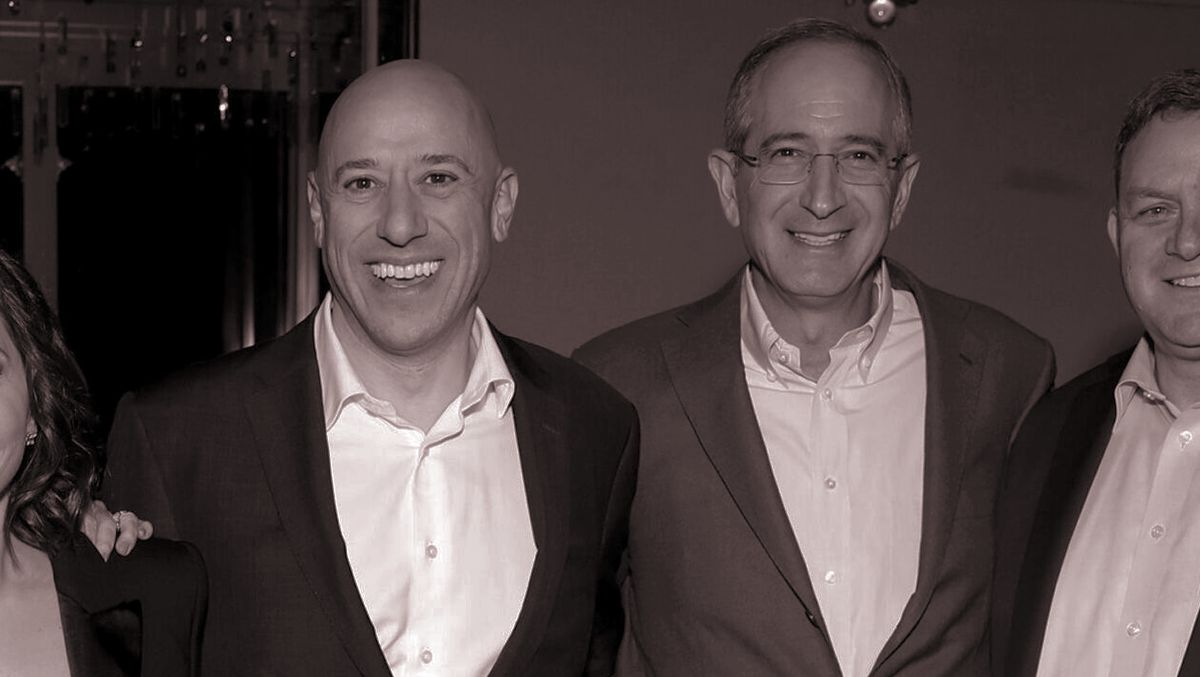
Brian Roberts and Matt Strauss’s plan to simulcast Peacock games on a new cable channel is a
smart bet on a hybrid, skinny bundle strategy to monetize the stubbornly unconverted and squeeze more life from a dying platform. It may just work, at least for a while. |
|
|
For an industry that’s supposedly dying, cable TV is showing rare signs of life: ESPN is in advanced talks to
acquire the NFL’s media arm; Charter’s cable distribution business cut its churn rate by 80 percent year over year; and, most intriguingly, NBCUniversal, which shuttered NBC Sports Network four years ago, is reportedly considering launching a new cable channel to simulcast sports that have moved exclusively to Peacock. Rather than try to re-create ESPN, FS1, or NBCSN—after all, cable is in irreversible decline—the new network would use a skinny bundle strategy to complement
Peacock and appeal to price-conscious customers frustrated with traditional cable bloat.
In our post-monoculture world, most legacy companies have bet on multiple distribution pathways for their sports offerings. At Disney, for example, there are the ESPN cable channels; FuboTV and Hulu+Live TV as hybrid solutions; and ESPN’s forthcoming direct-to-consumer service (R.I.P. “Flagship”) for the cord-cutters and cord-nevers. Of course, this strategy has vulnerabilities: Virtual M.V.P.D.s like
Fubo and Hulu+Live TV typically suffer massive subscriber losses once the NFL season ends. Even YouTube TV, the category leader, lost an estimated 500,000 customers in the first quarter, while the major v.M.V.P.D.s shed about 1 million subscribers overall—more than double the losses in the same period a year earlier, per MoffettNathanson. Welcome to the new normal. |
|
|
A MESSAGE FROM OUR SPONSOR |
Forever at the top of its game, the trailblazing BMW 7 Series. Engineered to win. Learn more at
BMWUSA.com |
|
|
What remains of cable, meanwhile, has become the province of sports. (Only 11 percent of the estimated 50
million (or fewer) remaining U.S. cable subscribers retain the service for entertainment content, according to a recent survey.) This is why Comcast C.E.O. Brian Roberts and NBCUniversal Media Group chairman Matt Strauss are exiling Versant and exploring a model that’s working for Charter and DirecTV: high-demand content delivered via skinny
bundles. Creating a presumably low-cost cable network to pair with Peacock’s exclusive sports adds a specific, if limited, revenue pathway, effectively riding out the last of pay TV’s lifespan, however long that may be.
If executed correctly, the strategy could be a cost-effective way to reach users unwilling to subscribe to Peacock, or engage with it via aggregation. And if successful, NBCUniversal could tap into three revenue streams—streaming, wholesale cable bundling, and the new
channel itself—without needing to acquire more rights or spend on supplementary programming. Smart economics, minimal expansion. |
Obviously, no one at NBCU expects a cable renaissance. But the company isn’t betting on a pure-play
future, either. Peacock’s growth has fallen short of expectations—it’s one of the last major streaming platforms in the red—and its stature within Comcast has shifted. Some inside the company claim that the decision not to replace ousted Peacock president Kelly Campbell signals increased oversight and integration of the business, but that’s nonsense. Instead, NBCU likely views the streamer as an additional offering for customers to access NBCUniversal content rather than
the sole cornerstone of the company’s video future. Disney and Paramount are in the same boat.
Indeed, these companies are now learning to once again love their enormous advertising infrastructures. At Comcast, the broader goal is to grow the video segment holistically by offering advertisers maximum reach with the help of cable. Historically, advertisers have been slow to follow audiences to new distribution models. Digital video is expected to account for 58 percent of total ad spend in
2025, according to the Interactive Advertising Bureau, up from 38 percent in 2021. The new spending now aligns with streaming’s share of TV in the U.S., but there are still millions of intransigent consumers available to be monetized.
Roberts and Strauss seem to recognize that some viewers won’t ever migrate, and some advertisers will prefer traditional platforms with proven reach, especially within targeted skinny bundles. If Comcast can sustain those relationships through the
transition, Peacock could benefit down the road.
Comcast’s move makes even more sense when you consider streaming’s transition from a premium to an ad-supported model. Until recently, streamers were laser-focused on what subscribers wanted from their televisions. In the early days, they attempted to amass a huge subscriber base by offering premium content and an ad-free experience. But that model proved expensive. Executives soon learned some hard lessons—recall HBO Now’s “Game of
Thrones Effect” in 2016, when 40 percent of new subscribers canceled following the sixth-season finale.
To counter churn and create more reliable and predictable sources of revenue, the industry pivoted to advertising, which ushered in more licensing, cheaper unscripted content, and major investments in sports. Now, given its multibillion-dollar annual commitments to the NFL and NBA, Comcast needs to monetize every eyeball that it can. |
Thanks, Julia. That was great. See you all on Thursday.
John |
|
|
Puck sports correspondent John Ourand and a rotating cast of industry insiders take you inside the executive suites and owners boxes where
the decisions that shape the entire sports business are made. You’ll hear interviews with players, network execs, and everyone in between. The Varsity is an extension of John’s private email for Puck by the same name. New episodes publish every Wednesday and Sunday. |
|
|
Ace media reporter Dylan Byers brings readers into the C-suite as he chronicles the biggest stories in the industry: the future of cable
news in the streaming era, the transformation of legacy publishers, the tech giants remaking the market, and all the egos involved. |
|
|
Need help? Review our FAQ page or contact us for assistance. For brand partnerships, email ads@puck.news. You received this email because you signed up to receive emails from Puck, or as part of your Puck account associated with {{customer.email}}. To stop receiving this newsletter and/or manage all your email preferences, click here. |
Puck is published by Heat Media LLC. 107 Greenwich St, New York, NY 10006 |
|
|
|