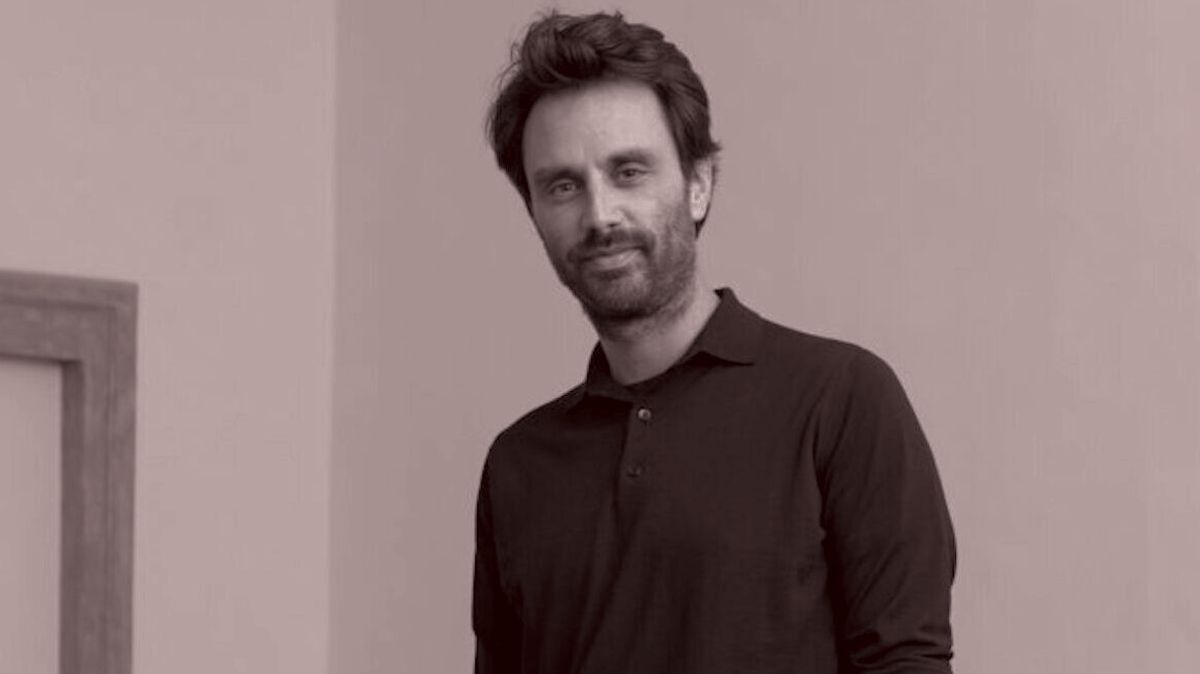
Welcome to another issue of Wall Power’s exclusive Inner Circle private email, where we get very granular, and personal, about what matters to art world professionals and collectors. Tonight, I’m sharing my candid conversation with Rome-based private dealer Mattia De Luca.
Almost everyone in the art world got into this game because of the art. You might buy, sell, auction, advise, insure, finance, provide legal services for, ship, store, catalog, or conserve art for a living. But first, you’d found something ineffable and compelling about art that kept you coming back.
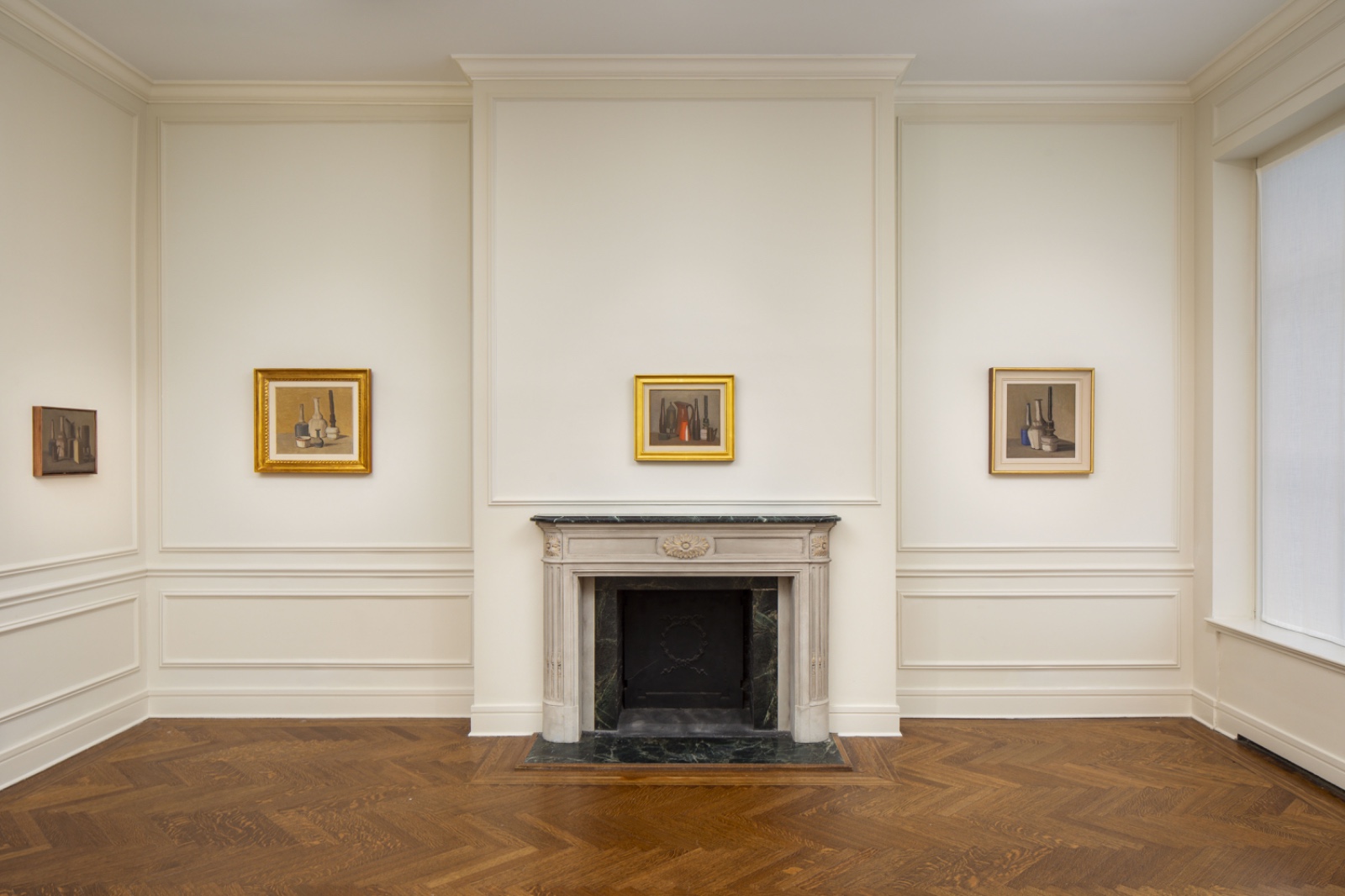
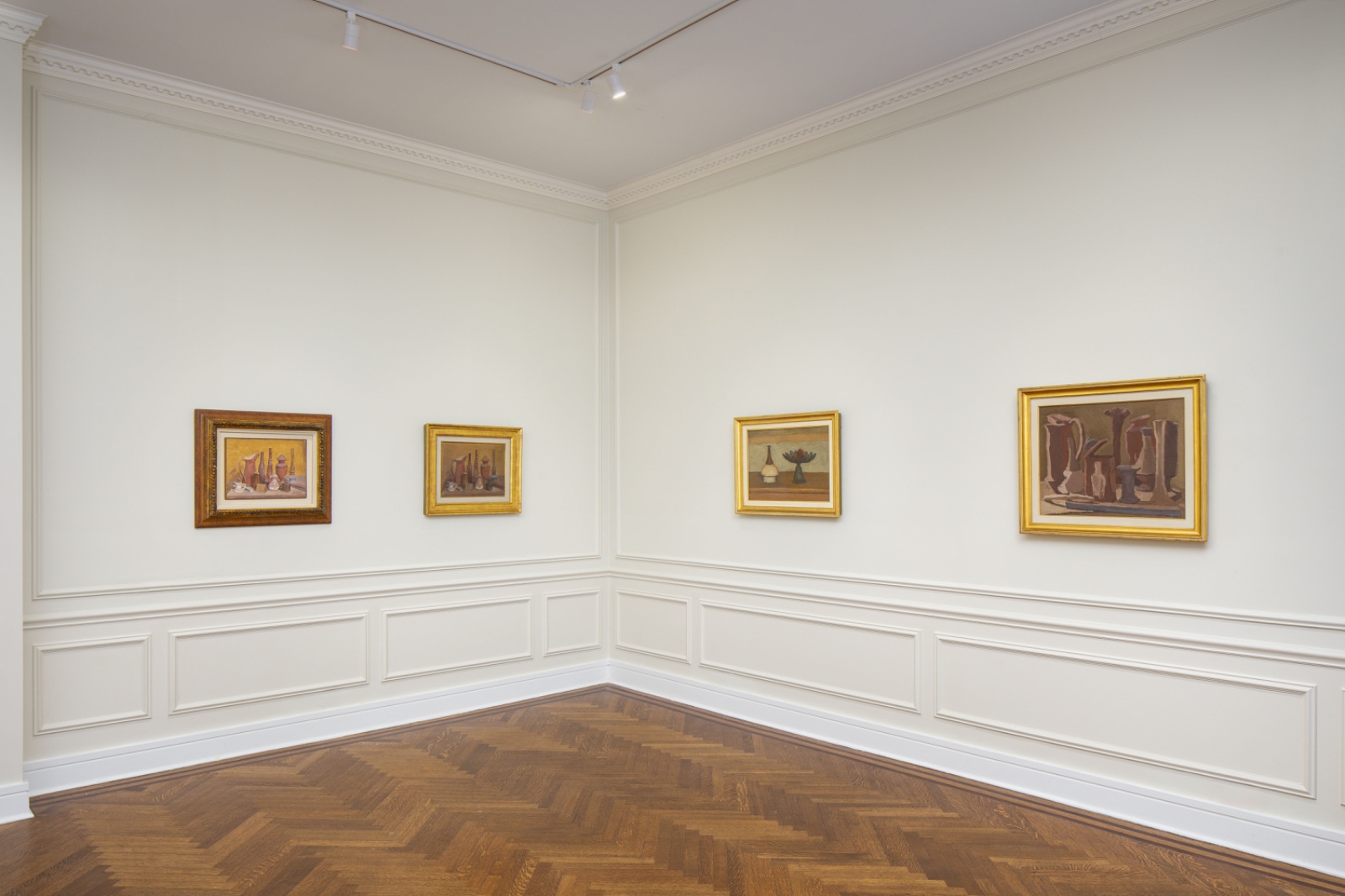
De Luca is no different. His childhood passion for Giorgio Morandi led him to private dealing, and gave him a project to focus on during the pandemic. The result was two shows of Morandi’s work— Time Suspended and Time Suspended, part II—held in Rome and New York, respectively. On the eve of David Zwirner’s show staging 50 of Morandi’s works from the Magnani-Rocca Foundation’s collection, I wanted to hear from De Luca about his experience mounting a rare and dramatic Morandi exhibition.
But first…
|
- Christie’s new C.E.O.: I’m not sure today’s news that Guillaume Cerutti is moving into a new role at Artemis, the Pinault family office that owns Christie’s, was on many people’s January bingo cards. But here we are. Bonnie Brennan, the longtime head of the Americas for Christie’s, moves up to the C.E.O. role beginning February 1. The transition is likely to be relatively seamless, given the close working relationship between Cerutti and Brennan—and the fact that Cerutti will remain within the Pinault orbit. I plan to have more on the career arcs of Cerutti and Brennan soon. Until then, congratulations to both.
- Whither Frieze Los Angeles?: Last week, as the magnitude of the L.A. fires came into full view, a collector emailed me and wondered aloud whether Frieze L.A. would be canceled this year. A week later, many others are asking the same question about the February fair. Obviously, the Los Angeles-based galleries really want the fair to take place. They need the traffic (and sympathy) generated when lots of collectors come to town. They certainly need the sales, too. Another collector called me last night to say that he was suddenly getting approached by local dealers with whom he previously had not done business, offering him really good work.
If you want to gauge how serious things are for an art dealer, the first tell is when you get a call from someone who previously wouldn’t give you the time of day. The second, which doesn’t seem to have happened yet, is when you’re offered steeper and steeper discounts. For now, we can conclude that many in the art market are very cognizant of how the fires will impact the business. So far, though, the dealers have not entered panic mode.
For Frieze, time is running out to make a go-no-go decision. Santa Monica Airport, where the fair is set to be held, is not in the fire zone, but the city’s infrastructure may not be able to handle even the small influx of art professionals and their wares. Even absent delays, or inconveniences with housing, etcetera, Frieze is surely in touch with the participating galleries to gauge their confidence levels. Last year’s fair was a solid event, but Frieze L.A. is still relatively new. Holding a frustrating or disappointing fair for galleries may be worse than holding no fair at all.
And let’s not forget that the business is for sale right now. Endeavor is off-loading the asset as it goes private, and the early rounds of offers are supposed to be taking place soon. So there’s a lot to balance with his decision. Will canceling send the wrong signal? Or will it protect the company’s P&L at a time when bankers are poring over the numbers? Does the art world want to land in Los Angeles a month from now and feel good about supporting local businesses by spending money at hotels and in restaurants—and, one hopes, buying bigger ticket items from local galleries? Or, will it feel, as one Los Angeles collector said to me, “like holding an art fair in Gaza”?
- The Knight Foundation appoints Kristina Newman-Scott vice president for arts: The $2.5 billion Knight Foundation says it has given $466 million to artists and art organizations over the past 20 years. Each year, the foundation issues around $135 million in grants, with around $25 million going to arts funding. To run that program, the foundation has hired Kristina Newman-Scott,who previously ran the Jerome L. Greene Performance Art Space at New York Public Radio/WNYC. Newman-Scott was an artist in Jamaica for three decades before moving into philanthropy.
|
|
|
|
Mattia De Luca’s dream was to hold a pop-up exhibition of his favorite artist, Giorgio Morandi, in New York. On the eve of another important Morandi show at David Zwirner, he speaks about his experience with the artist.
|
|
|
Some 10,000 visitors attended Time Suspended, part II, private dealer Mattia De Luca’s show of Giorgio Morandi’s work, in a townhouse on the Upper East Side last fall. That show was the result of De Luca’s lifelong fascination with the Italian painter and printmaker, and built upon his earlier show Time Suspended, held in Rome in 2022. Morandi is a connoisseur’s artist. David Rockefeller had one that sold for $4.3 million, an auction record. But Morandi was equally beloved by artists as diverse as Robert Rauschenberg, Robert Ryman, and Peter Doig. Earlier this week, Mattia and I spoke about putting those shows together, and the enduring appeal of an artist who made an entire universe out of everyday items. This conversation has been lightly edited and condensed for clarity.
|
|
Marion Maneker: You have now put on two large, deep retrospectives of Giorgio Morandi’s work, one in Rome in 2022 and one in New York in 2024. Can you explain your interest in the artist?
Mattia De Luca: Everything started when I was 13 years old. I went to the Tate Modern and I saw this painting—I had no clue who the artist was and what the painting was. For some reason, I gravitated toward this 1946 still life. I stood still in front of this painting. My grandfather, who was with me, asked me after we walked out: “What painting are you going to pick?” Out of all of the amazing, wonderful things I saw at the Tate, that is the painting that really struck me. And so at that point, Morandi started registering. Every time I went to a new museum, I would spend a lot of time in front of those paintings. I think there’s just some sort of connection between me and what he does. There’s some soul link, probably.
You became an art dealer because of your interest in art. Does your family collect?
My great-grandfather was actually a collector of modern art. But, after that, nobody in my family cared. My grandfather was very passionate. He loved taking me to museums. And I think he saw that I had this passion. So every time we had a Saturday morning free or sometime when I could be together with him, he would take me to museums to see shows. And that’s definitely where this passion started.
How did you get into opening a gallery?
In 2018, I had a partner. It did not last a long time, because it was not a good match. I never thought I’d run a gallery. I always saw myself as more of an advisor; but then, I love doing shows. Basically, that’s what I do. I love putting these shows together, and I enjoy not being trapped by all the dynamics of a gallery program. So I just do a show whenever I feel I can put together something of great quality. It might take me six months. It might take me a year and a half. Until I can do that, I won’t do a show. The rest of the time, I deal privately in secondary market works from about the beginning of the 20th century until 1970, more or less. That’s the period I cover.
Primarily Italian artists?
Modern international artists. But nobody kind of knows what I do. Everything I’ve put together is really a kind of discreet and silent… quiet.
|
The Morandi Dream Collection
|
|
You decided to put on the first Morandi show in Rome. Was that a substantially different show from the one in New York?
It all started in April of 2020, during Covid. We obviously all had that feeling of suspension, because we really didn't know what was going to happen with our lives—how long that situation was going to stay like that. For some reason, since I always was so passionate about Morandi, I focused on that. I have a lot of books on Morandi. I always took a lot of notes on his works, about where I would see paintings, like all the private collections where I saw them. And notes on the people who mentioned one time that they saw a painting.
I have a dining table where I put all these books out. I started all the research there. It always felt like a dream to be able to put a show together. But I never thought I could actually pull it off. So I never did it.
|
|
Mattia De Luca, Time Suspended, part II.
|
|
This was your Morandi dream collection?
Well, the first one was harder, because then once we did that, people were like, Oh, wow, yeah. Then we’re gonna loan to the one in America, you know? So that was easier to put together.
How is your show different from what we’re going to see at David Zwirner with the works from the Magnani-Rocca foundation?
I wanted to show how Morandi came back to the same objects at even a 20-year distance. How did he deal with this obsessive repetition of the same objects? He saw them from a different perspective, a different type of daylight or evening light. Or he used a different technique. Because the technique changes often over those 40 years. There were rooms where we had the same objects, but the paintings were five years apart. Whilst I think that in the collection you’re going to see now, it’s more like, there’s one work per X years…
Zwirner, I'm sure, will have enormous traffic.
I’m actually super happy that they’re doing this exhibition. I think it will be great, and it will be a wonderful tribute, and also different. I think it will be interesting—it’s a different point of view on Morandi, for sure, which is great.
|
|
You’re saying it will be more of a straightforward retrospective. You were taking license not to do a chronological show. And you made a real effort to include things like the landscapes and the flowers, which, for someone who has seen only the still lives, was a revelation. So, you were obviously at your gallery in New York a fair bit. Can you describe some of the reactions?
That is the best part of the experience for me to talk about. We had so many people coming out of the show who were in tears. We had people that came from Massachusetts, California, Canada, expressly for the show. To me, that was the biggest reward I could ever dream of—especially from artists. I mean, the reaction from artists, from 16 years old up to 90 years old. Even the giants, Ed Ruscha and Peter Doig, came. So from huge artists to the really young ones who are studying in school, to see how inspired they are by Morandi, it was really touching. It was the best part of putting this whole project together.
|
|
Mattia De Luca, Time Suspended, part II.
|
|
Were you there when Doig and Ruscha were there?
I was there when Ruscha was there. Doig, unfortunately not. Ed Ruscha remembers exactly when he saw his first Morandi in 1960, and how touched he was and how inspiring it was for him for the rest of his life. So that was so incredible to experience.
You mentioned, in the press materials, other artists who were drawn to Morandi, like Vija Celmins.
Yes. Also Robert Rauschenberg, Agnes Martin, and Robert Ryman. Someone pointed out that the signature of Ryman is never casual. He always had a very particular way of putting the signature somewhere, making it very bold, or making it disappear amongst the white. And that’s exactly what Morandi was doing, but 20 years before. I always knew that Ryman had a passion for Morandi, but never knew until someone said, But have you ever thought of their signatures? I’ve also never thought about the way that Morandi, many times, leaves the edges of the paintings where you can see the raw canvas, and then he starts painting inside. It’s the same thing that Ryman did, in the ’60s especially. So it’s just these little things that make everything so beautiful and interesting.
|
I had read about Hew Locke’s British Museum show, What Have We Here?, in various places, but didn’t pay much attention to it until I saw this post on Matthew Higgs’s Instagram. Working with curators at the British Museum, Locke has chronicled imperialism through the museum’s own collection. Combining historical objects from the museum’s collection with his own sculptures, called The Watchers—which the museum describes as “observing visitors from vantage points” throughout the exhibition—Locke “reframes” the objects to question how and why the museum is in possession of them. Locke also explores how museum representatives accompanied military expeditions to Tibet and Abyssinia, among other imperial endeavors.
Let’s give the last word on the show to Adrian Searle from The Guardian. “This is an exhibition that looks not only at works in the collection themselves,” he wrote, “but also at what they once meant and the further meanings and resonances they have accrued in their journeys here. The show’s title appears plain enough. After that, everything is complicated.”
So glad the year is getting off to an exciting and unexpected start. Julie and I will have more for you on Friday.
Let’s speak then,
M
|
|
|
|
Puck founding partner Matt Belloni takes you inside the business of Hollywood, using exclusive reporting and insight to explain the backstories on everything from Marvel movies to the streaming wars.
|
|
|
|
The ultimate fashion industry bible, offering incisive reportage on all aspects of the business and its biggest players. Anchored by preeminent fashion journalist Lauren Sherman, Line Sheet also features veteran reporter Rachel Strugatz, who delivers unparalleled intel on what’s happening in the beauty industry, and Sarah Shapiro, a longtime retail strategist who writes about e-commerce, brick-and-mortar, D.T.C., and more.
|
|
|
Need help? Review our FAQ page or contact us for assistance. For brand partnerships, email ads@puck.news.
You received this email because you signed up to receive emails from Puck, or as part of your Puck account associated with . To stop receiving this newsletter and/or manage all your email preferences, click here.
|
|
Puck is published by Heat Media LLC. 107 Greenwich St, New York, NY 10006
|
|
|
|