|
Welcome back to The Best & The Brightest. I’m Peter Hamby, pleased to host you on this election night.
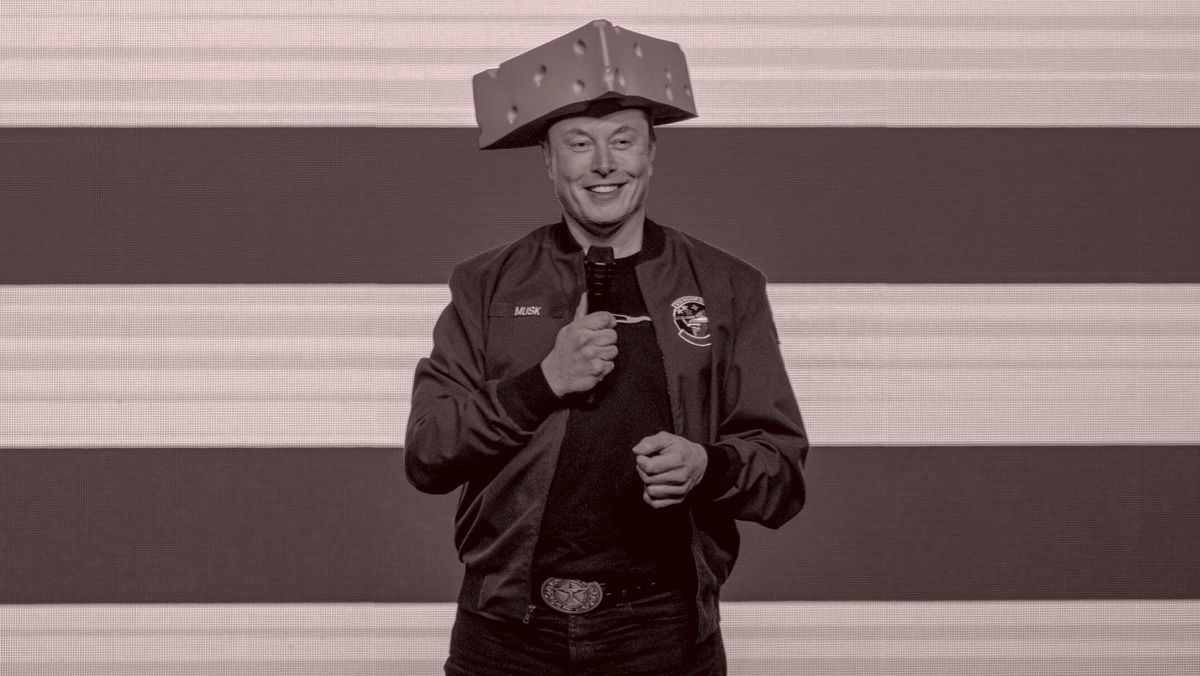
The first big (well, sorta big) elections of Donald Trump’s second term are going down as I write this—and while we shouldn’t overhype the portent of these off-year races, the results will contain a few lessons for both Dems and Republicans as they examine how voters are feeling about Trump, the weird economy, and Elon Musk’s starring role in American politics.
|
|
|
|
A MESSAGE FROM OUR SPONSOR
|
In America, farming isn't just a profession; it's a purpose. With 880 million acres of farmland and more than 2 million people dedicated to producing our food in America, farmers are the backbone of our economy. In communities nationwide, Bayer employees work alongside farmers to bring cutting-edge innovations in breeding, crop protection, and technology to their fields. American farmers trust our tools because we have a purpose, too: helping farmers thrive.
Learn more at Go.Bayer.com/Purpose.
|
|
|
|
But first, here’s Abby Livingston with the news from the Hill…
|
|
|
 |
Abby Livingston |
|
Cory Booker’s Senate Talkathon
|
New Jersey Senator Cory Booker injected a shot of adrenaline into the demoralized Democratic Party on Tuesday night, as he surpassed the record for the longest speech ever delivered in the Senate chamber. Democrats have struggled to get their footing since Trump’s inauguration, but anticipation grew in Democratic circles online and on the Hill as Booker closed in on Strom Thurmond’s 24-hour, 18-minute filibuster against the Civil Rights Act of 1957.
This physical and intellectual feat has put Booker in the history books. But it also took place in a moment of profound demoralization, if not outright depression, within the party. Democrats I spoke with over the course of Tuesday grew increasingly electrified once it became clear that Thurmond’s record was in jeopardy. While the speech was legislatively meaningless, the Democrats’ activist base has been craving this sort of performance from the Senate. Booker has proven himself a worthy champion: He brings the physical stamina of a former D1 football player (he played tight end at Stanford), and has more or less maintained composure throughout, with colleagues rallying on the floor to support him. In today’s economy of political attention, Booker’s particular skill set—he was the Senate’s first social media star when he entered the chamber in 2013—is perhaps more relevant than ever, as Peter recently observed. Here, he’s given Dems another viral moment, only he’s doing it on the C-SPAN cam instead of his iPhone.
Around the Hill, Senate Democrats are in a rare good mood over Booker’s performance, as best demonstrated by Sen. Chris Murphy’s social media mash notes. But beyond the speech itself, some beleaguered Senate Democratic sources tell me they’re starting to feel better about the political environment since Trump was sworn in, citing enthusiasm at town halls, their political prosecution of the Signal leak, and tonight’s surprisingly competitive special election. It’s been a welcome dose of almost-euphoria, just two weeks after a ferocious internal battle regarding Chuck Schumer’s leadership amid shutdown negotiations.
On the House side, meanwhile, an ultra-MAGA sophomore Republican congresswoman joined with a Democrat in open legislative warfare against her party’s leadership. Earlier today, Florida Republican Anna Paulina Luna and Colorado Democrat Brittany Pettersen outmaneuvered Speaker Mike Johnson’s leadership team in their march to secure vote-by-proxy for expectant and new parents. Since Johnson had refused to bring the bill to the floor, Luna filed a discharge petition, which requires signatures from a majority of 218 members to force a vote on a measure. It appears the move will derail House votes for the rest of the week.
There are two takeaways from this chaos: One, Republicans are losing valuable floor time this week in both chambers; and two, in the case of the House, Trump’s whipping effort over recent budget and spending resolutions has masked the fragility of the Republicans’ margin. Trump didn’t get involved in this fight—and eight Republican members joined Luna in the rebellion.
|
|
|
|
Evaluating the early bellwethers in Wisconsin and Florida, the health of the Dem #Resistance, and the Elon of it all.
|
|
|
|
The results from Tuesday’s elections—two special House contests in Florida and a historically expensive judicial race in Wisconsin—are probably starting to trickle in as this column hits your inboxes tonight. If today’s contests snuck up on you, well, you should have been listening to Elon Musk, who told an audience of Republicans in Green Bay over the weekend that the Wisconsin Supreme Court Election is “going to affect the entire destiny of humanity.”
Political commentary has always suffered from obnoxious hyperbole, long before Musk started paying attention to this stuff. No, these races won’t decide the fate of mankind. But they’re still being watched closely by strategists in Washington for clues as to whether voters out there in Real America are already souring on Donald Trump, not even 100 days into his new administration.
|
|
|
|
A MESSAGE FROM OUR SPONSOR
|
The heartbeat of American agriculture can be heard at every farmer's market and dinner table, spanning 880 million acres, supported by over 2 million people, and contributing $1.5 trillion to our economy.
Thousands of Bayer employees work alongside American farmers, providing access to innovations and support to implement them effectively. Bayer's advanced breeding, crop protection, and digital technology tools are reshaping the future of farming, and we're invested in every field, acre, and harvest. We share the same purpose as American farmers: helping agriculture thrive so we can bring high-quality, abundant, and diverse food to millions. Learn more at Go.Bayer.com/Purpose.
|
|
|
|
The Wisconsin race has drawn most of the money and attention. The contest, between liberal Susan Crawford and conservative Brad Schimel, will determine control of the state Supreme Court, which is officially nonpartisan even though its judges are elected via savage partisan combat in one of the country’s most polarized states. It’s the most expensive judicial race in the nation’s history, smashing the previous record—held by another Wisconsin Supreme Court race just two years ago, which was won by liberal judge Janet Protasiewicz. Almost $100 million has flowed into the state from outside groups and donors, paying for door knocks, texts, calls, and an avalanche of ads about abortion and immigration and labor laws. Big progressive donors like Reid Hoffman, George Soros, and Steven Spielberg have ponied up for Crawford and the state Democratic Party.
But in its final weeks, the race has been defined by Musk, who has spent more than $20 million to support Schimel through his allied groups, a staggering investment from the billionaire that has fueled a Democratic rallying cry—“Wisconsin is not for sale!”—in the closing stretch. But the race is about Trump, too, because Wisconsin is a perennial battleground state and because all politics in the Trump era is national. As the Wisconsinite Transportation secretary Sean Duffy put it at a weekend rally: “If you all turn out on Tuesday with your friends, we are going to win Wisconsin and send a message to the radical left: Don’t mess with Trump, don’t mess with DOGE, don’t mess with Elon, and don’t mess with Wisconsin!”
If that race is a jump ball, the House campaigns in Florida are decidedly not. Both are to fill seats vacated by Trump appointees. In Florida’s 1st, voters will be replacing Matt Gaetz, who resigned from Congress during his failed attempt to become U.S. attorney general. The Pensacola-area district, along the Redneck Riviera, is about as MAGA as it gets; few think the Dem nominee will come close there. More eyes are on Florida’s 6th District and the race to replace Signal enthusiast Mike Waltz. Their candidate, Josh Weil, has already been declared the loser against Republican Randy Fine in a district Trump won last year by 30 points. But Dems are mostly interested to see how much Weil can cut into that margin as they count the votes, for possible signs that voters are already growing impatient with Trump.
“If we can make it a 23-point margin, or even a 27-point margin, that’s a win!” one Dem operative working on House races told me. “I am being told by everyone that Trump has a mandate!” That may be some April Fools’–type spin, but Democrats are eager to highlight Trump’s withering poll numbers on the economy and shift the focus to next year’s midterms, especially as Republicans grapple with a paper-thin governing majority in Washington. Any overperformance by the Democrats on Tuesday might—might—be enough to spook Trump’s political team in the White House and Republicans on Capitol Hill.
Here are a few storylines I’ve noticed while watching these races play out and that I suspect will reverberate well beyond Tuesday as strategists try to get a handle on what the political landscape will look like heading into next year’s midterm elections…
|
The question on everyone’s mind in Wisconsin is whether Musk is an asset or a liability for Republicans—a factor both parties will be weighing come the 2026 midterms. On the one hand, Musk is an eccentric outsider who almost certainly can’t tell Brett Favre from Bob Uecker. Musk is also unpopular: 53 percent of Wisconsin voters view him unfavorably, a Marquette Law School poll found, including 58 percent of independents. Kari Walker, a restaurant owner and proud Democrat in swingy Sauk County, told me that her Tesla-owning friend, a “liberal, white-haired 73-year-old-grandma,” has been “flipped off twice in the last month” while driving. “If you don’t like Elon, you really don’t like Elon,” Walker told me.
On the other hand, what campaign would turn down the kind of money Musk has been throwing around? “We’ll take it!” one Wisconsin G.O.P. operative told me this week. Musk’s political outfit, America PAC, has spent more than $12 million on canvassing, digital media ads, and phone banking. That’s on top of Musk cutting multiple $1 million checks to voters encouraging—bribing?—Cheeseheads to get out for Schimel. And that’s on top of millions more from conservative groups like Americans for Prosperity, Fair Courts America, and the Republican State Leadership Committee.
The Republican operative I spoke with admitted that, while all the outside money from Musk and others is generally a good thing, it’s made it difficult to coordinate voter-contact strategies across different groups, unlike past races that have been managed by centralized campaigns or the state G.O.P. “This is a turnout fight, but you’re solely reliant on outside groups, so it makes it less controllable,” the operative told me. And because campaigns get better rates for media buys, Democrats are getting more bang for their buck on television: Crawford—not any Musk group—is actually the campaign’s top spender on television.
Mandela Barnes, the state’s former Democratic lieutenant governor, said Musk’s money is an unquestionable advantage for Republicans. “He has enough cash to spend money on stupid things but still end up with some return,” Barnes told me. Still, he said that Musk’s presence in Wisconsin has activated low-propensity Democrats to pay attention to a race they might have otherwise skipped. “Compared to the first Trump term, the Democratic base is definitely not as animated,” he continued. “But our organizers will be on the doors, and once they start talking to more infrequent voters about Musk and Trump, it’s triggered Democrats to get involved more. I think we’ve actually been able to keep up because of the Elon of it all.”
Back in Washington, Democrats eyeing the race very much want Musk to lose, in hopes that it might deter him from spending more in next year’s midterms. “If we win, great,” one source on Capitol Hill told me. “But if we lose, Elon Musk just bought a judicial seat and everyone is going to need to mobilize next year, because this will happen again in 2026.”
|
The Off-Year Turnout Question
|
|
On Monday, I texted Republican Congressman Bryan Steil, who represents Paul Ryan’s old district, a question about Tuesday’s turnout. He responded with typical Wisconsin humor: “Weather looks good which will help same day turnout. It’s over 40!” (I replied with a pic of a sun-drenched palm tree in my neighborhood.)
It all comes down to turnout! It’s a jokey cliché at this point, but in polarized Wisconsin, base turnout is the whole ballgame. It’s a famously divided state with few persuasion targets, especially when talking about an April race for a seat on the state Supreme Court. In the Trump era, Democrats upended turnout expectations for off-year elections. Who votes in midterms and special elections? Affluent, college-educated voters who care a lot about politics. Those voters used to lean Republican or swing between parties; in the Trump era, they’ve definitively drifted blue. It’s why Democratic candidates have won so many off-year races and special elections going back to 2017. Their voters show up—including in Wisconsin, where the state’s Democratic Party chairman, Ben Wikler, has made a name for himself by pulling off close victories. Meanwhile, Republicans do well when Trump himself is on the ballot, along with his unique power to expand the electorate and bring in voters who don’t follow politics very closely.
|
|
|
|
What’s fascinating about this judicial race is that Schimel is trying his damnedest to flip that dynamic on its head. In past elections, Republicans might have tried to separate themselves from Trump, who remains an unpopular figure. But Schimel is closing the race by tying himself to Trump in a bid to get MAGA voters to show up in April of a non-presidential year. Trump cut an ad for Schimel last week, and according to the Milwaukee Journal Sentinel, Schimel’s camp pulled down most of their other ads in favor of the Trump spot, running it almost exclusively around the state in the final few days of the race.
“He has to run on Trump and the Trump agenda,” the Republican operative in Wisconsin told me. “It’s literally the only way to get low-propensity folks to care about a judicial race.” Democrats are going to show up, the Republican told me, especially in progressive Dane County, home to Madison, which delivers “Saddam Hussein–level margins to Democrats.” Republicans in other states, this person told me, need to fix their off-year turnout issues: “When Trump is not on the ballot, our turnout problems are pretty significant. It’s a national issue for Republicans, not just in Wisconsin.”
|
|
Down in Florida, where politics has been swallowed by the culture wars, the Democratic campaigns spent the last two months getting back to basics: They focused on the economy, high prices, and potential Republican cuts to government services. In Florida’s 6th, more than a quarter of the district’s residents are over the age of 65, and Democrat Josh Weil devoted his campaign to that audience. “I’m not a career politician, I’m a math teacher, and I know the numbers aren’t adding up for Florida families,” Weil says in one of his TV ads. “I’ll work to lower the cost of groceries, and always protect Social Security.” In another spot, Weil promises to protect Medicare and veterans benefits—and says that “the richest people in the world are trying to crater the agencies we entrusted to fulfill those promises” while also supporting tax cuts for billionaires.
In Washington, Democrats were under no illusion that they were going to win or even come very close in either of the Florida races. And they were right—news orgs called the race for Fine shortly after the polls closed on Tuesday. Both districts are just too Republican. The Democratic National Committee and the Democratic Congressional Campaign Committee were only barely engaging, with D.N.C. chairman Ken Martin showed up for a perfunctory campaign visit with Weil. But the campaign messaging is worth considering, because it was test-driving how Democrats might run against Trump in other districts next year, if prices remain high and Republicans follow through with slashing essential services. “Medicare, Medicaid, Social Security—these will all be talking points that Democrats are going to continue to use from here on out,” one Capitol Hill Democrat told me Tuesday.
Absent from Weil’s ads were any ad hominem attacks against Trump. Weil was not running to protect democracy. And he was definitely not talking about trans rights or crime or immigration. Notably, Weil doesn’t even identify himself as a Democrat in his ads. We’ll see how many votes it gets him. But in the process, Weil raised more than $10 million for a race no one was talking about just a few weeks ago, significantly more than Fine, who only raised about $1 million.
Some Democrats say Weil’s fundraising tally—with much of the money coming from out of state—is a sign that progressive energy is alive and well. “That’s a lot of money for a short amount of time for a district that’s not competitive at all,” the Capitol Hill Democrat told me. Other Dems, who think small donor money shouldn’t be wasted on a non-winnable district, are rolling their eyes, much like they did in 2018 and 2020 when out-of-state progressives sent money to faddish candidates in red states that had no realistic shot. “There are starving voter registration programs in Pennsylvania,” sniffed Florida-based Democratic strategist Steve Schale.
So… does Weil’s financial haul mean the #Resistance is back? As a gauge of enthusiasm, a useful comparison might be the Georgia House Special election back in 2017, when Jon Ossoff became a national star running for a House seat outside of Atlanta, despite ultimately losing by a few points. That district was not as Republican as Florida’s 6th, but Ossoff became the focus of fawning media coverage, collecting $23 million in donations from supporters around the country—destroying fundraising records for a House race in the process—and then winning his Senate race in 2021. If 2017 was a high-water mark for off-year anti-Trump energy, Weil, by comparison, isn’t coming close. He’s raised less than half that, and he’s still waiting on a fawning cover profile from New York magazine.
|
|
|
|
Join Emmy Award-winning journalist Peter Hamby, along with the team of expert journalists at Puck, as they let you in on the real conversations insiders are having across the four corners of power in America: Wall Street, Washington, Silicon Valley and Hollywood. Puck’s contributors will bring you smart conversation around the inside stories happening in these worlds. Presented in partnership with Audacy, new episodes publish daily, Monday-Friday.
|
|
|
|
Unique and privileged insight into the private conversation going on inside Wall Street, as told by the best-selling journalist and former M&A banker.
|
|
|
Need help? Review our FAQ page or contact us for assistance. For brand partnerships, email ads@puck.news.
You received this email because you signed up to receive emails from Puck, or as part of your Puck account associated with . To stop receiving this newsletter and/or manage all your email preferences, click here.
|
|
Puck is published by Heat Media LLC. 107 Greenwich St, New York, NY 10006
|
|
|
|