{{ 'now' | timezone: 'America/New_York' | date: '%b %d, %Y' }} |
|
|
|
Welcome back to Wall Power’s Inner Circle. I’m Marion
Maneker.
Over the last eight years, Bonhams has gone through multiple changes of ownership and strategy. After a period of expansion through acquisitions, the auction house recently moved to the Steinway Tower on 57th Street in Manhattan. Tonight, I’m sharing my conversation with Seth Johnson, the company’s newish C.E.O., about his plans for the big coming-out party—and about the state of Bonhams’ balance sheet. On the way there, we have the usual declarations of
victory from Basel Hong Kong, a sales report from Asia Week, and James and Kathryn Murdoch’s new Basel-adjacent experience.
Also mentioned in this issue: Nate Freeman, Rachel Goslins, Marc Glimcher, Nick Simunovic, David Maupin, Marc Payot, Christine Berry, Chabi Nouri, Michael
Spencer, and many more…
Let’s get started… |
-
The Murdochs want their own Burning Man: Vanity Fair’s Nate Freeman revealed last week that James and Kathryn Murdoch are planning to launch the Futurific Institute festival—a combination of Davos, Burning Man, and TED, to take place in Basel sometime in the
summer starting in 2028. Murdoch owns a controlling stake in MCH, Art Basel’s parent company, which also owns the Herzog & de Meuron–designed convention center in Basel itself. Late last year, according to Freeman, Rachel Goslins, an executive director at the Milken Institute, became C.E.O. of the Futurific Institute, a long-gestating project of Kathryn’s that Murdoch’s Lupa Systems and MCH will now realize.
So… what will it actually be? Freeman ran through some of the
concepts getting kicked around: everything from long-outdated models like an art biennial or a world’s fair (seriously? does anyone remember those?) to some kind of agenda-setting event for billionaires, like Allen & Co.’s Sun Valley Conference. Much of what he described comes across as the Murdochs searching for relevance, rather than having a genuinely new idea for how to convene influential people—although you have to give them credit for starting with someone from the very successful Milken
Institute. Now Goslins just has to figure out where all of these fancy folks are going to stay, since Basel is notoriously limited when it comes to high-end hotels and decent restaurants.
|
|
|
|
-
Hong Kong happy talk: Art Basel’s fair in Hong Kong has barely begun, but the usual declarations of victory are already streaming out. This morning, Marc Glimcher said Pace had sold a “major Calder mobile”—and there were positive words from Gagosian’s Nick Simunovic, David Maupin of Lehmann Maupin, and Marc Payot of Hauser. Berry Campbell’s Christine Berry reported that she sold
six-figure works by Elaine de Kooning and Alice Baber. There were other big sales at David Zwirner, where a Liu Ye was sold for $3.8 million and a Marlene Dumas went for $3.5 million. Hauser sold a Louise Bourgeois for $2.95 million and a George Condo for $2.3 million. Waddington Custot sold a Zao Wou-Ki with a $2.8 million asking price and a Chu Teh-Chun with a
$1.3 million asking price. Gladstone sold an Alex Katz flower painting for $1.3 million. White Cube sold a Tracey Emin work for $1.6 million. And there were, of course, many more six-figure sales.
- Asia Week pops!: As the Asia Week auctions in New York get underway, we’re seeing some big upside surprises in Korean, Japanese, and Chinese works of art. At Sotheby’s today, a Ming-style flower vase
that was estimated at $400,000 sold for $832,000. At Christie’s, a Korean moon jar sold for almost $3.2 million, even though the starting estimate was $1 million. An example of
Hokusai’s Great Wave off Kanagawa sold for $2.15 million on an estimate of only $800,000. And Takashi Murakami’s tribute to Utagawa Hiroshige seems to have generated interest in the original prints—this set was estimated at $200,000 but sold for more than $1 million.
Earlier today, Christie’s also saw strong prices for Tyeb Mehta, S.H. Raza, M.F. Husain, and Ganesh Pyne in its South Asian Modern + Contemporary sale, but I’ll have more detailed results on that market on Friday—after Sotheby’s holds its sale tomorrow.
|
Now, let’s meet Bonhams’ new C.E.O.… |
|
|
|
New ownership. New H.Q. And now, Bonhams also has a new leader. Here,
he opens up about the auction house’s balance sheet, integrating its global acquisitions, and winning the next generation of collectors. |
|
|
|
Bonhams auction house, which is under new leadership and ownership, soft-launched last
month its new headquarters at the Steinway Tower on West 57th Street. The move comes after the dramatic departure of former C.E.O. Chabi Nouri, who had been in her post for only a year, and the quiet transfer of ownership from private equity firm Epiris to private credit firm Pemberton Asset Management.
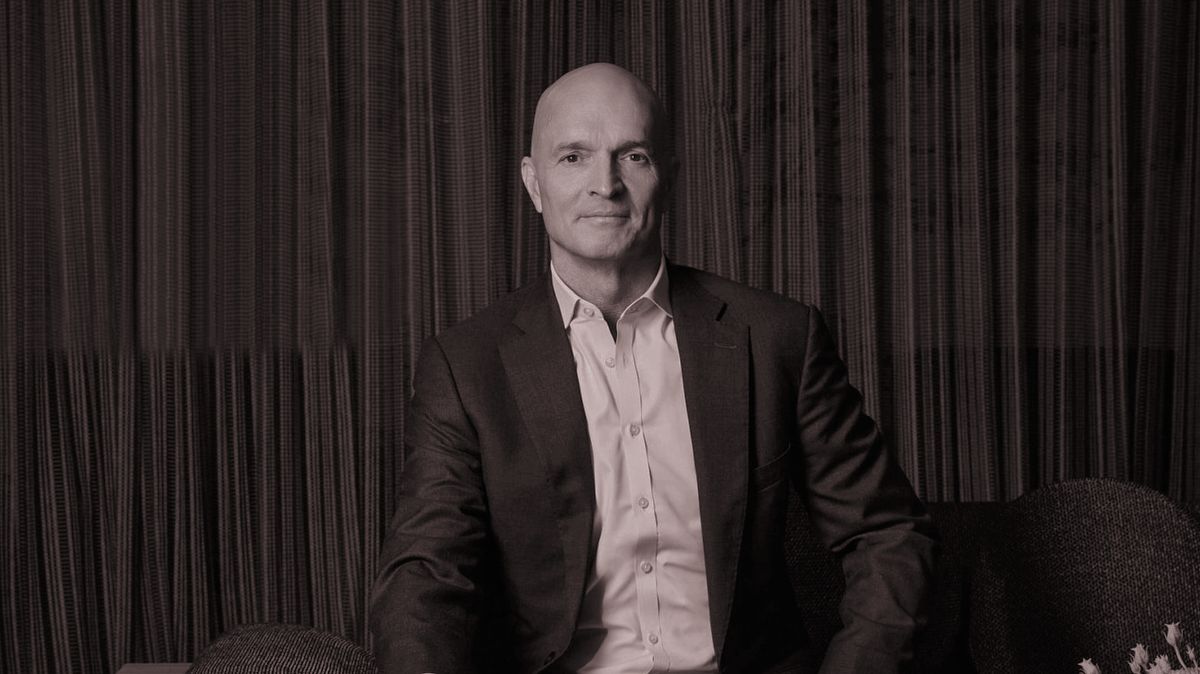
In October, Seth Johnson took charge of the auction house, overseeing the opening of its new headquarters. Formerly the head of billionaire
Michael Spencer’s family office and an executive at Nex, Spencer’s electronic trading firm, Johnson will now lead Bonhams into the thriving middle market for cultural property. How will he compete? I caught up with him to discuss his plans for Bonhams’ big coming-out party in the Steinway Tower, the state of its balance sheet after the Pemberton takeover, and his big ambitions for the U.S. market. As always, this conversation has been edited for length and clarity. |
Marion Maneker: The Steinway Tower space is now open.
Are you holding sales there yet?
Seth Johnson: We had our soft opening with an exhibition back in February, and we are in the middle of Asia Week. But the big opening, the coming-out party, is going to be for contemporary art in May, when we’ll be planning a couple of showcase events. |
|
|
|
The intention was to have a more visible headquarters, both as a salesroom and as a place
to do exhibitions, right?
You’re completely correct. The decision was made before I got appointed, and I’m very fortunate to have inherited that decision. The reason for the decision—notwithstanding whatever opinion one might’ve had about our Madison premises—is that it’s a meaningful change for us. We’ve got 33 percent more space than before. I think it’s fair to say we now have an incredible exhibition and gallery space. From a visual
perspective alone, it’s amazing. We’ve got a state-of-the-art auction space: two large auction rooms, which will double as great event spaces for programming. And way, way better facilities for our staff, which is important.
The auction world is very much one that has the human touch and the human element. It’s important for people to be able to meet with our customers, our staff, and our specialists and experts. For them to have a great place to come into the office, it’s a much
better experience for our staff and our customers. For all those reasons, the decision was made, and I’m delighted we made it.
I’d love to hear more about why you chose to move into this position, and what you see as some of the advantages at Bonhams.
I worked in financial markets for an intermediation company, and in many respects we were engaged in pretty similar activities to Bonhams. It was very much a people business, where we
spent our time building relationships of trust with our customers so they could have confidence that we knew the value of things. It’s probably fair to say that people weren’t quite as passionate about interest rate options as they can be about a Basquiat, but in essence, it’s not that different. We’d come in the morning not knowing what was going to transact that day, and spend our days on the phones hunting around for orders to buy or sell. So in reality, there were a lot more
similarities to what I was doing before than you might imagine. |
You’ve got a couple of challenges integrating several firms that Bonhams bought:
Skinner, Rasmussen, Saint Cyr, etcetera. Demand for the objects these houses sell remains surprisingly strong. But on the operational side, is it fair to assume that in handling all those objects, there are things that need to be figured out to make the company more profitable?
Skinner is largely integrated into our U.S. operations. That hasn’t been that challenging. Cornette de Saint Cyr was purchased mainly because we needed to be able to sell
items in what is now non-Brexit Europe. That created some tax challenges—not just for consignment, but also for selling—for which we needed to find a solution. Even though we already had a presence in Paris, it wasn’t big enough to support our activities, which is why the company purchased Cornette de Saint Cyr. And that integration has gone pretty well. It’s fully integrated with the rest of the business.
The Scandinavian businesses are a little more stand-alone in terms of customer
reach and the level of lots they can sign. But I wouldn’t describe that as the biggest focus for me over the next two to five years. I don’t see that making a big difference between where we are now and where I’d like us to get to.
So what’s the big focus for the next two to five years?
From a geographical perspective, the U.S. is obviously going to be a huge focus for us. It continues to be an engine of growth, economically,
across almost all markets. And I see no reason why the U.S. wouldn’t continue to be the biggest market. So we’ll spend a lot of our efforts and time in growing our U.S. presence. Then—with the caveat that things need to calm down—the Middle East will be an area where we’ll have to deploy some of our efforts.
Aside from that, we still have to decide where else we’ll really focus. The most important thing is to make this company customer-centric. We’ve got this amazing legacy of expertise
and specialists, but our customers are evolving a lot. There’s a big generational transfer of wealth. There’s a new generation of collectors, and I think the way people are engaging with collecting is changing. It’s really important for me to make sure we react to that and that we’re sensitive to it. My sense is that auction houses like Bonhams—as well as many others—have for a long time operated as gatekeepers, not being as open to customers and the public as they could be. That’s something I
want us to focus on. |
When you came in last year, the business itself seemed to be growing, but obviously there
were reasons to change management. Are there short-term or long-term things you’ll need to deal with to grow the business?
From a financial perspective, we’re on solid footing. We have no underlying, long-term challenges that we need to address other than making sure the business is successful. I won’t get into the details of the transaction, but it has meaningfully changed the financial security for the business we have. We have a good, strong
balance sheet. The debt has disappeared. That’s not a concern anymore. This is really just about making us a profitable business that’s successfully bringing consignments through the door, operating efficiently and as it should be. |
|
|
|
Regarding paying down debt, you still have either debt or working capital. Does that
primarily come from the owner or from other resources?
Like all businesses, we have access to various sorts of financing, but it’s fair to say that our owners are, by far, our primary source of finance. Last year’s transaction marked a defining moment for the business, eliminating the debt overhang, providing balance sheet strength, and, crucially, giving us strategic flexibility.
It’s interesting that this was once an industry
where everyone was public, and now all the major auction houses are private. One of the advantages is being able to provide financing throughout the process—not just loans, but some sort of bridge loan before things are sold. So you’re not just making money off of the buyer’s premium, but also able to make money by providing financial services to your clients.
That’s something which, historically, Bonhams hasn’t participated in, but it’s
something we’ll be looking to do in the future. Whether that’s in partnership with other people or with our owners remains to be seen, but it’s definitely something we’re looking into because, as you rightly say, it’s become more and more prevalent across all categories. It’s usually reserved for the big-ticket items, because the effort isn’t worth spending time on for most people when it comes to items below a certain price point. That’s why contemporary art and cars lend themselves to it quite
well.
You guys deal with a high volume of objects that are, contextually, low-priced. I assume one of the opportunities is finding ways to unlock more value out of that volume, rather than shifting to the more crowded parts of the market where there are higher values but lower volume—and a lot of undercutting from competitors.
In an ideal world, I’d like to do both. I’d like to improve our hit ratio when it comes to the higher end.
Part of the decision we made to invest in these beautiful new premises in New York is because it enables us to be in conversations around high-end pieces that would be our cover lot—rather than Lot No. 35 in someone else’s sale. That’s where we could invest a lot of time, effort, and money into marketing a specific lot. My ambition is to do more of that. But you’re correct to say we have a lot of other categories that don’t touch those high price points, where we just need to become more
efficient at putting them through the machinery so we can extract economics out of them.
Competition is much more diverse than it’s ever been. Traditionally, you have smaller, local, regional auction houses that might compete. But now you’ve got technology-only, online platforms that provide a channel for people to sell lower-value items. And that didn’t exist 10 years ago. So that’s an extra level of competition we undeniably have to deal with.
Is there anything else I’ve
missed about what’s on the horizon for Bonhams?
We have big ambitions in the U.S. We really believe it’s going to be a growth market for us. And our investment in West 57th is a testament to that. We’re really going to be focusing on driving our footprint in the U.S. for the next four years. That’s the most important message: that we’re here to stay and we planted our flag in the ground. |
Thanks to Curtis Rowser for all his great work editing this interview.
I’ll be back on Friday with more.
Until then,
M |
|
|
|
Puck founding partner Matt Belloni takes you inside the business of Hollywood, using exclusive reporting and insight
to explain the backstories on everything from Marvel movies to the streaming wars. |
|
|
|
Ace media reporter Dylan Byers brings readers into the C-suite as he chronicles the biggest stories in the industry:
the future of cable news in the streaming era, the transformation of legacy publishers, the tech giants remaking the market, and all the egos involved. |
|
|
|
Need help? Review our
FAQ page or contact us for assistance. For brand partnerships, email ads@puck.news.
You received this email because you signed up to receive emails from Puck, or as part of your Puck account associated with {{customer.email}}. To stop receiving this newsletter and/or manage all your email preferences, click here. |
Puck is published by Heat Media LLC. 107 Greenwich St., New York, NY 10006 |
|
|
|
|