{{ 'now' | timezone: 'America/New_York' | date: '%b %d, %Y' }} |
|
|
Welcome back to Dry Powder. I’m Bill Cohan.
The very
personal way the battle is heating up between Paramount and Netflix for ownership of Warner Bros. Discovery leads me to believe that we’re not heading for anything like a “Christmas truce” ceasefire à la World War I, in which the opposing sides link arms and sing carols together. Just this morning, WBD’s board officially told shareholders to reject Paramount’s $30-a-share offer, arguing that the Ellisons had “consistently misled” them during the bidding process. Strong
tea.
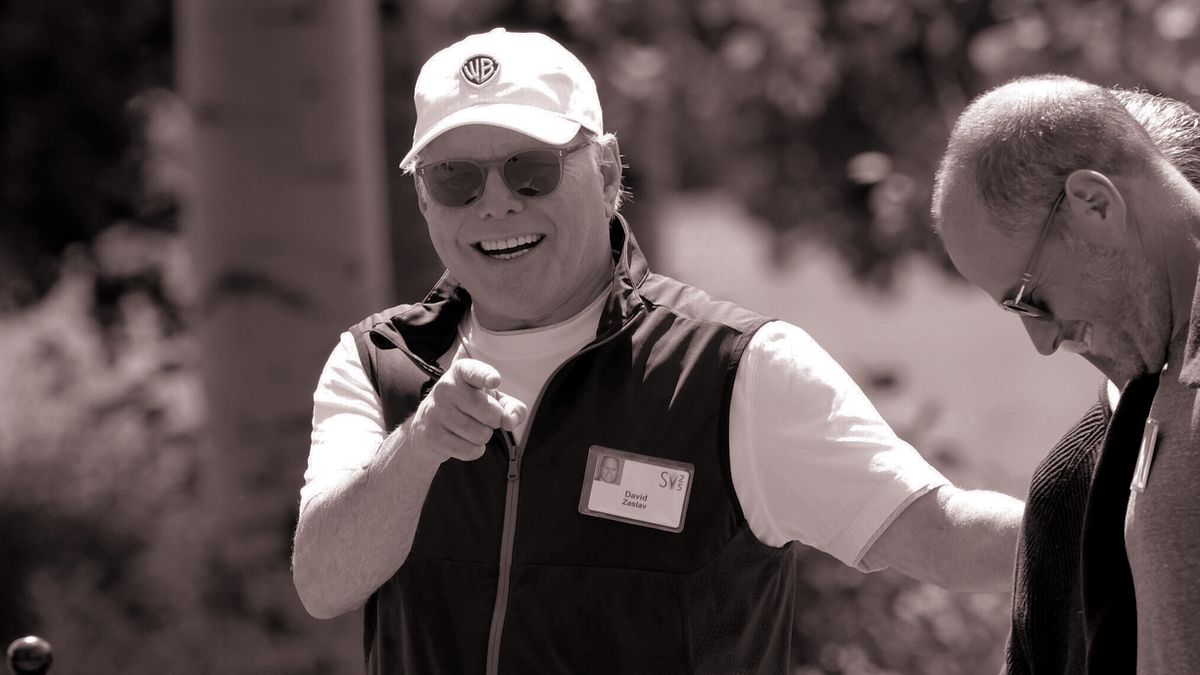
While we wait to see whether Paramount increases its bid to something like $34 and somehow assures David Zaslav’s board that Larry’s money is green, thereby blowing Netflix out of the water, tonight I thought I’d bring you my recent, informative conversation with my partner Matt Belloni, the leader of Puck’s flagship What
I’m Hearing newsletter. Below, we get into the details of the competing bids and why the implications are so seismic.
On Sunday, I’ll look into some of the more interesting tidbits in the WBD filing, which sides with Netflix over Paramount. For instance, who knew that Zaz’s unvested stock and options, based on PSKY’s $30-a-share, all-cash bid, are now worth $538 million, with his vested awards worth another $75 million? As for Gunnar Wiedenfels, his unvested stock and
options are now worth $139 million. Needless to say, all of it vests immediately upon a change of control. Good tidings indeed.
Mentioned in this issue: David Zaslav, David Ellison, Larry Ellison, Mike Bloomberg, Michael Douglas, Cynthia Erivo, David Faber, Elon Musk, Gunnar Wiedenfels, Greg Peters, Ted
Sarandos, Robert Fishman, Reed Hastings, Barry Diller, Sumner Redstone, Donald Trump, and more…
But first… |
- Bloomberg’s big toast: Mike Bloomberg received the annual Peter G. Peterson Leadership Excellence Award at a lunch last week, where the Oscar-winning Wall Street actor Michael Douglas gave a pretaped encomium as part of the honors. “I love my friend Mike,” Douglas declared. “He’s like a brother. His life journey is truly legendary. He got fired from Salomon Brothers, took his severance, and built a $100 billion
global empire. So what do you get for a man who has everything? A rare wine? The man drinks the same green juice every day. I racked my brains for weeks. Then it suddenly came to me. I thought, ‘Maybe Mike needs a big Broadway show tune in his honor.’ So I proudly present what might be the hit song from Bloomberg! The Musical.”
What followed was a song about Mike Bloomberg sung by a Cynthia Erivo-in-Wicked-inspired A.I. voice:
There’s
a mogul named Mike Bloomberg, and he built a mighty biz.
A patron, a politician, too—this man is such a wiz.
He’s Boston-raised and data-crazed, and made his fortune gleam
By selling the whole nation on a glorious, glowing screen.
And to conclude…
The man’s a great philanthropist who gives his cash away
To climate change and culture and 1,000 things a day.
From Hopkins to the ocean depths, his dollars spread
around,
The kindest benefactor the world has ever found.
So here’s to Michael Bloomberg. He’s a titan of our age,
A mayor, mogul, moneyman who’s always center stage.
Opinionated, dedicated, never one to shirk,
A force of nature dynamo who still gets up for work!
Needless to say, that brought the house down, causing a slightly humbled Bloomberg to say, “Well, that was embarrassing, but I loved it.”
|
Now, here’s Matt, in conversation with yours truly, about the latest twists in the WBD
war… |
|
|
Battle lines have been drawn over David Zaslav’s Warner Bros. Discovery, and both
Netflix and Paramount think they have the winning formula. Will the Ellisons get to $34 a share? Can Netflix counter? Is Larry really “backstopping” all the equity? Or is the game already rigged? |
|
|
As the worlds of Hollywood, media, and politics all await word on whether the
Ellison family will succeed in its attempt to claw Warner Bros. Discovery from Netflix, many complicated questions remain. To attempt to answer them, I asked Puck’s corporate finance expert, Bill Cohan, a former M&A banker and the author of Dry Powder, to open a Google Doc with me and go back and forth…
Matt: Let’s get right into it. David Ellison seemed annoyed in a real Don’t you know who my father is? way when
CNBC’s David Faber dared suggest that the Warner Discovery board maybe had reason to question the backing for the Paramount bid. As you laid out yesterday, Larry Ellison was only agreeing to put up $12 billion, about half of the contribution from the three Middle East sovereign funds. And that Larry money was coming from his revocable
trust, not the man himself, which may or may not have mattered legally—but at least the WBD board thought it mattered because there wasn’t direct accountability. (Or at least they’re saying they thought it mattered; it’s tough to parse out all the agendas here.) Seems like the Ellisons may have gotten too cute with an offer that was supposedly “fully backstopped” by the world’s second-richest man. |
|
|
A MESSAGE FROM OUR SPONSOR |
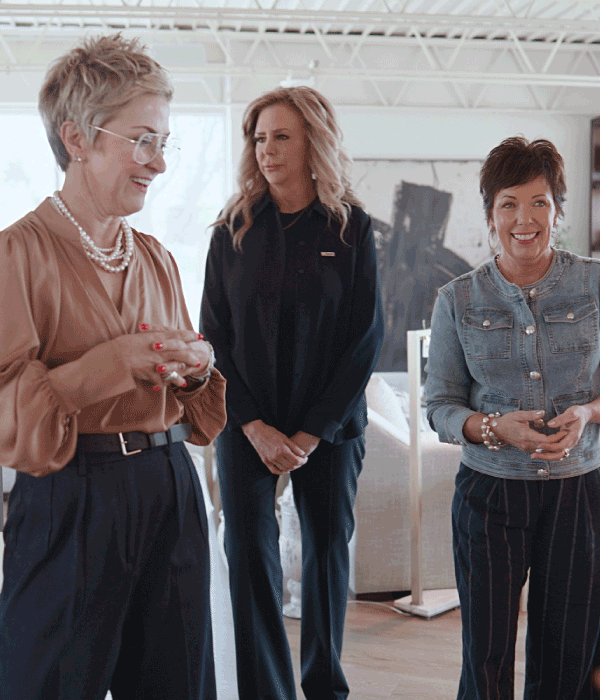
Houndstooth House started as a shared vision between two friends – now it’s been named a Small Business of the
Year. Over the past 20 years, founders Denise Cotter and Michelle Marino have grown their two-woman design firm into a thriving business with a 10,000-square-foot showroom and eight employees.
At U.S. Bank, we know that bold growth starts with meaningful support. That’s why we support over 1.1 million small businesses with personalized resources and expert guidance. For visionaries like Denise and Michelle, we’re more than a bank –
we’re a partner in progress.
|
|
|
Bill: There really is a communication problem, which seems to me could
be fixed quickly. The Larry J. Ellison Revocable Trust is the entity that owns his 1.16 billion shares of Oracle. It’s the same entity that he used to invest $1 billion in Elon’s $44 billion Twitter deal. The confusion, understandably, comes from the fact that the Oracle proxy statement from this year lists Larry Ellison as the owner of the shares, not his revocable trust. So I can see why WBD might be wondering what the heck is going on. But that can be clarified pretty
quickly, I would think, through a call or a letter. WBD’s other concern is that Larry is putting up $12 billion and also guaranteeing the full $40 billion, just like Elon did in Twitter. But the PSKY side, for whatever reason, hasn’t been able to convince the WBD crowd that Larry is really on the hook for the full $40 billion.
Matt: Unless they don’t want to be convinced. Maybe the “concerns” about the financing are just an excuse to reject Paramount in favor of
the preferred bidder, Netflix.
Bill: Yes, that remains a possibility for sure (although a bit on the conspiracy side of things). I would think the lawyers or the bankers should be able to quickly clarify these concerns, and then begin work on the other ones, like how the business is operated between signing and closing. After all, either Larry is on the hook for the $40 billion or he’s not, and either his trust owns those Oracle shares or it doesn’t.
Matt:
Well, there’s another concern with the financing: the Middle East sovereign wealth funds. The Ellisons only agreed to remove the voting power from the sovereigns after WBD’s David Zaslav and his board complained about potential regulatory and optics issues of giving even a tiny bit of control to investors from Saudi Arabia, Qatar, and the U.A.E. Did Ellison really think regulators and politicians would be cool with CNN being steered in part by
Saudi, whose government somewhat famously has murdered and dismembered journalists?
Bill: Maybe that was a misjudgment. But that was fixed by the time of the $30-a-share bid on December 4. Not that some politicians will be able to resist objecting to the involvement of the sovereign funds to try to score some political points.
Matt: Also, now that the sovereigns have agreed to give up their board seats and voting rights, what exactly did
they get for providing the majority of the equity financing? Sophisticated people tend not to want to part with billions of dollars without receiving something major in return.
Bill: The short answer is they believe in the deal, and in the Ellisons and RedBird, and now they get to share in the ownership of the PSKY common stock and the upside, if there is any. That is, if PSKY is the winner here.
Matt: I’m talking about the soft power.
There are tons of better businesses for Mideast funds to invest in. You put money in American media to influence American media… and to benefit from its influence around the world… and to influence the powerful people who care about American media. Namely, Donald Trump.
Bill: Yes, Matt, there is some of that too. And obviously, a goal of the Saudi regime has been to diversify its economy away from oil and petroleum. So maybe this is a twofer: a
way to buy influence and a way to diversify into a growing media business, the linear TV side of it aside. (Disclosure: Through our recent acquisition of Air Mail, Zaslav is now a de minimis investor in Puck.) |
Matt: The key question—really the only question that matters to this
deal—is: How high will the Ellisons go in their bid? Right now, they’re losers at $30 per share, all cash, and Netflix is a winner with $27.75 per share for the studio and HBO Max only, with $4.50 of that in stock, plus the value of the linear TV “stub.” The board will almost certainly reject Ellison’s request to reconsider whether the Paramount bid is better, so the Ellisons will need to up their offer and/or go direct to shareholders, as they are doing.
But at what price? We’re left in
this limbo, speculating about the value of cable channels that Netflix isn’t buying, like CNN and TNT. David Ellison says those are worth $1 a share because they’re in secular decline and loaded up with $15 billion in debt, but analysts say they’re likely worth anywhere between $3 and $5 a share. A big difference, so how do we resolve this discrepancy?
Will the actual number be based on the value of Versant when those NBCUniversal networks debut on the market? What about other
comp companies like AMC Networks or even the Paramount cable networks? I’m not a corporate finance expert, but it seems like there should be independent valuation services that could land on which bid is actually better.
Bill: This will be resolved relatively quickly by the Ellisons raising their all-cash bid after WBD responds to the $30 offer by December 22. A higher all-cash bid would moot the conversation about the value of Gunnar Wiedenfels’s stub
equity, unless of course a higher PSKY bid prompts Netflix to raise its bid. |
|
|
A MESSAGE FROM OUR SPONSOR |
Behind every thriving local business is a story worth telling. For Houndstooth House, that story begins with
Sioux Falls entrepreneurs Denise Cotter and Michelle Marino – and a partnership with U.S. Bank.
What started as a shared vision for a flexible, family-first design studio has grown into an award-winning business with a 10,000-square-foot retail space, an eight-person team. Now named a Small Business of the Year, their journey is proof that heart and hard work go hand in hand.
U.S. Bank is proud to be a part of their story – and over 1.1 million others like it.
|
|
|
Matt: Netflix is already indicating that’s gonna happen, and the
shareholders seem spooked by the prospect of co-C.E.O.s Greg Peters and Ted Sarandos escalating a bidding war with Larry Ellison.
Bill: Well, then we’re back in the same place arguing about the value of CNN and the other linear assets. That is a judgment call and will be until Gunnar’s stub starts trading as Discovery Global in the third quarter of next year, well after all this should be resolved. So if the Ellisons really want
this deal, then $34 is the way to go, as I suggested last week. At that point, I think Netflix can collect the $2.8 billion breakup fee, take the small victory, and get a long-term content-supply agreement from PSKY/WBD for programming up the wazoo—rather than engage in a bidding war with the world’s second-richest person.
Matt: Movie theater owners
would certainly cheer that result, and there’s a lot of evidence that allowing Netflix to add Warners would create a powerhouse with enough leverage to end Hollywood as we know it. It’s funny: Sarandos and Peters sent an email to employees today with some FAQs, and one of the Qs was, “Some feel this is the end of Hollywood. What’s our response to that?” I felt like saying, If you have to ask…
Spoiler: Netflix says it isn’t the end of Hollywood. It’s about “growth” and
“strengthening” Warner Bros. and “saving jobs,” yada yada. I’ve argued that Netflix might actually be better for the industry overall, at least in the short term, but there’s no guarantee that either side will follow through on the pledges they’re making now. So it’s impossible to know which is ultimately better.
Bill: WBD is in
Revlon mode and has to sell to the highest bidder, so PSKY has to be unambiguously the highest bidder here; otherwise there is no reason for the WBD board to change its recommendation. It’s a little like overturning the call on the field in the NFL; there has to be clear, incontrovertible evidence that the WBD board fumbled and the decision should be changed.
Matt: What about the Oracle question? The stock is down about 16 percent over the past month, as Netflix
likes to point out, and its debt load is flashing warning signs. But Larry’s still got plenty of money, and as we noted, he’s only putting up $12 billion of it. Oracle went after PeopleSoft back in 2003 and ultimately succeeded, but only after multiple hostile bids and lawsuits.
Bill: Larry still has $250
billion of Oracle stock and a $350 billion net worth. He’s got more than enough dough to pull this off if he really wants to. The question is: Does he want to contribute $40 billion or $50 billion into what might be his son’s folly? That’s a lot to ask for under any circumstances, but I sense the PSKY side really wants to win this.
Matt: I’ll say. David is really putting himself out there, to the point where people in town are making fun of his
thirsty-ness.
Bill: Well, if so, Larry is going to have to keep stepping up here, big time. |
Matt: The Netflix share price is also an issue now. It’s down
nearly 20 percent since this Warners journey began. The shareholders don’t seem to want this deal, and they certainly don’t want a bidding war with Larry Ellison. Robert Fishman, the analyst at MoffettNathanson, urged Netflix today to “bow out of the bidding war, put their heads down, and continue to execute upon the strong hand they already have.” At what point will Sarandos and Peters have to throw in the towel?
Bill: I think if PSKY ups its bid to $34,
all cash, plus makes clear to WBD that Larry is guaranteeing all the equity, it’s over, and Ted and Greg and board chair Reed Hastings can still declare victory despite losing the deal. They shouldn’t break their company trying to compete with Larry Ellison and his fortune. Take a page from Barry Diller in the fight with Sumner Redstone for Paramount back when I was a banker in the ’90s: “They won. We lost.
Next.”
Matt: But given the, uh, complexities with the PSKY bid, doesn’t the board need to take factors into consideration beyond just price? For instance, Ellison keeps talking about how his bid offers more cash. But with the stub valuation issue, and the historic trajectory of the Netflix stock, plus the relative inexperience of the Paramount management, what if the Netflix bid is better even though it isn’t as valuable at close? How much leeway does the board
have for that kind of a judgment call?
Bill: If it’s close, as it is now, the board can use its business judgment and decide the stub is worth $3, not $1. No one will question that decision. But if PSKY raises its bid, then the ambiguity is gone and it’s a question of who has the better certainty of closing. I don’t know the answer to that. I know both sides think they have the best path.
Matt: Well, Trump would like you to think he will choose the
bidder that can close, but in reality it will be a judge if the D.O.J. decides to bring a challenge. And it could be a foreign judge or regulatory body if a challenge is brought overseas.
Bill: The consensus seems to be that PSKY has the better chance of getting through the regulatory process faster and easier than Netflix. What do you think about that?
Matt: That’s probably right, but not necessarily because of the Ellisons’ Trump relationship.
Paramount just seems like a less problematic buyer than Netflix. Combining the top streamer with the fourth-ranked platform would give the combined Netflix/HBO Max more than 450 million subscribers worldwide. Putting together Paramount+ and HBO Max is about 220 million subs. Simple as that, no matter how many antitrust lawyers Netflix hires to tell us that their real competition is TikTok and YouTube and any video service. Those platforms aren’t subscription-based, and no top showrunner
wants to sell the next Stranger Things to Instagram.
Bill: I think you’re right about that, Matt, but of course Netflix will make that very argument. But if Netflix, sadly, gets with the program and offers to give Trump $100 million for his documentary, or makes a $100 million donation to build his ballroom even bigger, then Trump might just moot what are sensible and traditional antitrust arguments. Trump clearly wants to tip the scales to whichever company
lines his pocket with the most silver. Time for Netflix to get creative on that front if they decide they want to influence Trump. Matt: So, who do you ultimately believe here? Ellison claims, “What Netflix is buying is unprecedented market power that will kill competition in the industry. What we are doing will create another scaled, healthy buyer for the creative community and for talent.” He doesn’t talk
about the $6 billion in “synergies” of combining two studios.
Bill: Well Matt, all bets are off with Trump putting his thumb on the scale, here. Which is a real shame. We’d all be better off if he butted out, if you know what I mean. Won’t Trump get more of what he wants from the Ellisons than from Netflix? It’s a shame it comes down to this, but it might. |
|
|
Need help? Review our FAQ page or contact us for assistance. For brand partnerships, email ads@puck.news. You received this email because you
signed up to receive emails from Puck, or as part of your Puck account associated with {{customer.email}}. To stop receiving this newsletter and/or manage all your email preferences, click here. |
Puck is published by Heat Media LLC. 107 Greenwich St., New York, NY 10006 |
|
|
|