 |
|
Welcome back to Dry Powder.
|
|
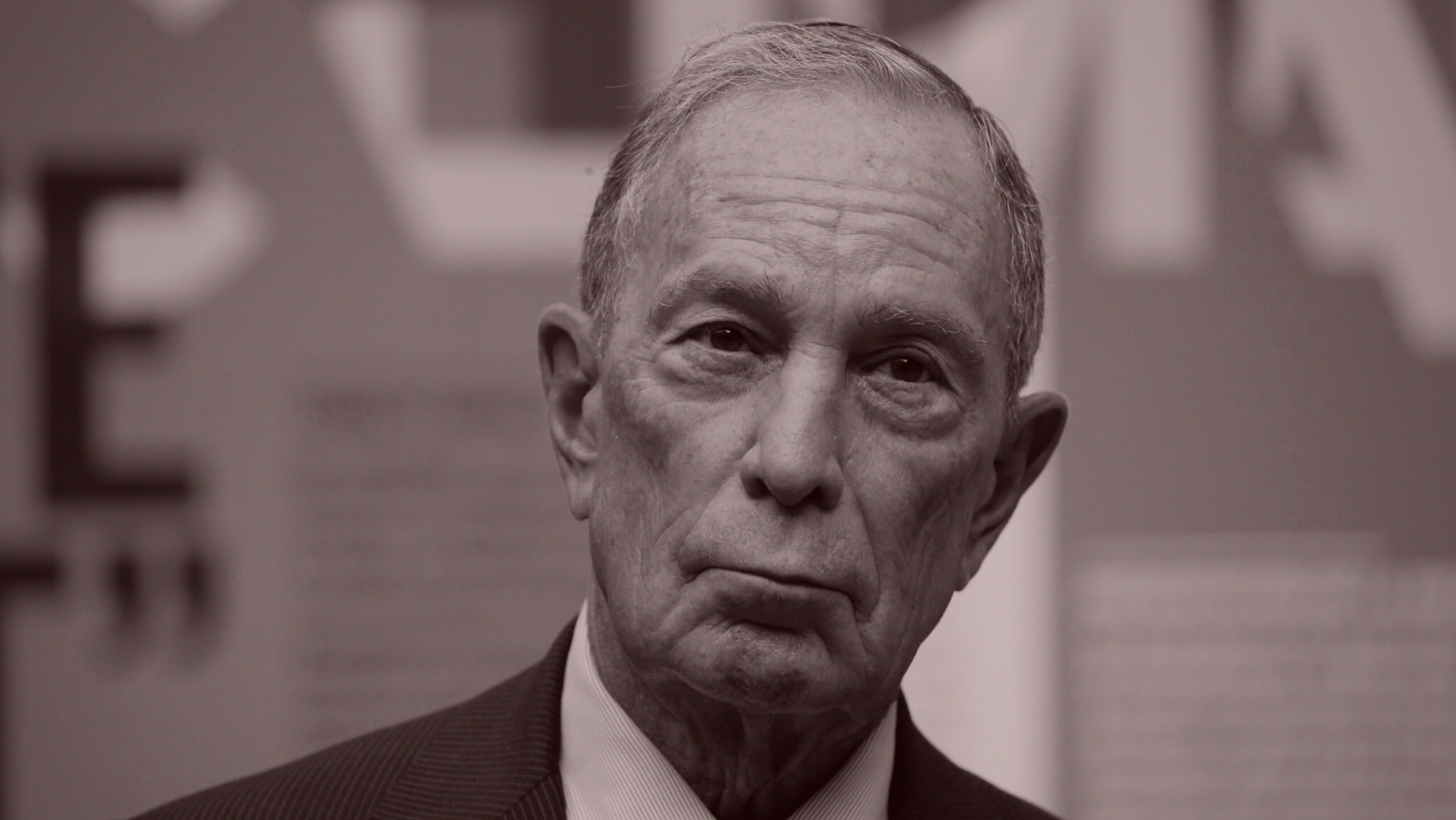
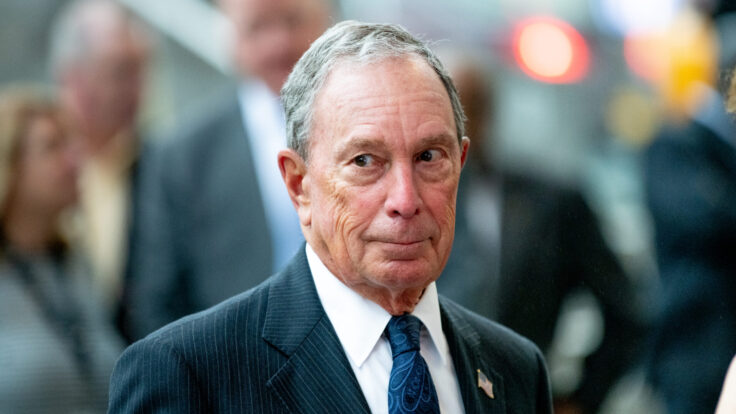
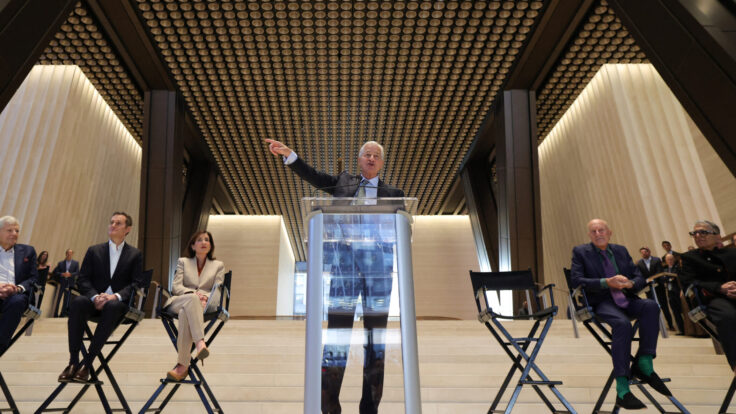
Mike Bloomberg appears to be stepping aside at his eponymous, supremely successful private company. So what happens now? This afternoon, some notes on Mike’s next chapter, updates on the turbulent UBS-Credit Suisse combination, and a call to action for the Goldman board.
|
|
|
| What will become of Bloomberg LP, one of the most successful and valuable private companies in history, without its eponymous founder as its C.E.O.? Well, as the internal memorandum from Mike Bloomberg made clear, he’s “not going anywhere.” And it’s not the first time that Bloomberg has stepped aside, as he did during his 12 years as New York City’s mayor, when Dan Doctoroff took a turn at the wheel. This is likely just recognition that, at 81, he’s not as young as he used to be, a point that his fellow billionaire Steve Schwarzman made on CNBC the other day when talking about Joe Biden.
As the largest shareholder in Bloomberg, Mike can be taken at his word that he’s not going anywhere, and that despite installing product chief Vlad Kliatchko as C.E.O., he’ll still be the one making all the big decisions, for as long as he wants to make them. But the question remains: What is to be done with Bloomberg LP? It’s a conundrum that bankers on Wall Street have been grappling with for years, especially since Bloomberg seems to have steadfastly resisted the obvious solution of taking the company public through an I.P.O., and then slowly but surely selling down his stake. I suspect the tax implications of that would be difficult for Mike, making that an inelegant solution. More important, though, I suspect Mike does not want Bloomberg to be a publicly traded company. He obviously likes his privacy, doesn’t need the money, doesn’t feel the need to keep score by seeing how wealthy he is on a daily basis, and probably doesn’t want people to see how profitable his company is.
Another solution, of course, would be to sell the company for stock, allowing him to defer taxes on his considerable gains, potentially forever. But what’s Bloomberg LP worth? Or more to the point, what would it take for it to be bought in a M&A deal? I have not seen the company’s financial statements, but I’ve got to believe it would take upwards of $100 billion these days to get Mike to part with the company. Not many companies can afford to buy a $100 billion company, especially for stock. But I can think of a few that would potentially want, and pay up for, Bloomberg LP. There are quasi-competitors, like S&P Global Inc (market value $120 billion) or Thomson Reuters Corp. (market value $58 billion), that would love to get their hands on Bloomberg, but it’s simply too big for either of those two, and there’s no way Mike would do those deals. Would Microsoft (market value $2.4 trillion) or Amazon (market value $1.4 trillion) want Bloomberg? I could certainly see that. But, again, not sure Mike would sell to Amazon.
Warren Buffett’s Berkshire Hathaway is another possibility, although Buffett has never made an acquisition using his stock, as far as I know. Could Buffett make an exception for Bloomberg LP? It’s sui generis—private, immensely profitable, and has few viable competitors. But Buffett is 92 years old, and while buying Bloomberg would be a crowning achievement, I’m not sure I see it, even though I think it would be a good deal for both sides at the right valuation. Whether Bloomberg would take Buffett’s stock is another question. The stock has performed incredibly well. (I’m a shareholder.) But will it continue to perform with the next generation of leadership? That’s the bet that Bloomberg would have to make.
My advice to Mike, not that he’s asking for it, is to do what Amar Bose did with his 90 percent-owned Bose Corporation, the privately-held, profitable, high-end audio manufacturing company. When he died, 10 years ago, at age 83, Amar donated his stock in the Bose Corporation, then worth around $10 billion, to his alma mater, MIT, with a few non-violatable stipulations. Among them: MIT had to agree it would never sell the stock, it would never do an I.P.O., and it would never sell Bose to another company. (That’s got to be a tough one for MIT. Can you imagine getting a $10 billion gift, but never being able to turn it into cash, or into stock that can be sold? Ooof.) But the genius of the gift was that the Bose stock had annual dividends of roughly $25 million a year, paid year-in and year-out, at the discretion of the Bose board.
Given the company’s superb and steady management, that annual dividend has been pretty secure. MIT can use that $25 million to fund research projects, through the Bose Research Grant Program, over a three-year period, to MIT faculty who explore “original, risky, controversial” projects that “other researchers ignore.” In other words, the Bose gift acts like a venture capital fund for MIT, to reward its professors for exploring projects that others won’t, or can’t, and who are willing to push the envelope. Where once upon a time the Department of Defense, or another branch of the U.S. government, might have funded such risky research at places like MIT, now that funding comes on an annual basis from the Bose gift.
I think Mike should do something similar with Bloomberg LP. He has already given generously to his alma mater, Johns Hopkins, in the billions. I am sure the university would appreciate the gift of his 88 percent stake, or thereabouts, in Bloomberg LP. Plus, the tax implications of the gift would be plenty favorable to Mike, as they were for Amar Bose. He could even make the donation after taking out a big dividend, as the private-equity crowd likes to do. And of course the dividends on the donated stock could support whatever research Mike and his advisers feel is timely or necessary.
The same stipulations that applied to Bose could apply to Bloomberg: nothing would change at the company level, and it would continue operating as it always has, with the new leadership team. There could never be an I.P.O. or a sale of the stock or the company, but the annual dividends would be sweet. What about the minority holders of the Bloomberg stock? Just like the minority holders of the Bose stock, they still get dividends. That wouldn’t change under the provisions of the gift. Something to think about, Mike. And probably not something you are hearing from your Wall Street advisers, since the fee potential (for them) is nearly infinitely lower. |
| Memoirs of a (Briefly) Failed Merger |
|
| Make no mistake, bank mergers are tough, and especially so in the case of the merger of domestic rivals, like the $3.6 billion Swiss government-assisted acquisition of Credit Suisse by UBS, in March. The two banks once thought of themselves as peers, both in terms of prestige and market share. Naturally, the shotgun wedding hasn’t sat well with the bondholders who were wiped out, or the 35,000 employees UBS plans to lay off. The latest reporting suggests it isn’t sitting well with the Swiss, either.
I experienced the same thing myself more than 20 years ago, in the wake of the September 2000 combination of Chase and J.P Morgan. After a decade or so at Lazard, and then Merrill Lynch, I joined Chase in 1997 and then decamped to J.P. Morgan in 1999. During the summer of 2000, the rumors were rife around the bank that the firm would be sold.
Believe it or not, the focus of many of the rumors was that Goldman would be buying J.P. Morgan. This seemed especially dangerous to me and my fellow J.P. Morgan investment bankers. How could we survive the brutal purge that would have to happen when combining Goldman’s world-leading investment bank with J.P. Morgan’s world-aspiring investment bank? Few at 60 Wall Street, then J.P. Morgan’s elegant headquarters, thought that our bankers would fare well in the inevitable culling. We might all end up with a nice payday from the merger consideration, and have Goldman Sachs, briefly, on our resumes, but then we’d literally be out on the street. So a bittersweet rumor, to be sure.
But that’s not what happened, as you know. Instead Chase made the deal for J.P. Morgan, and the behemoth JPMorgan Chase was born. But it’s important to remember that for the three years between when the deal closed—January 2001—and when Jamie Dimon arrived at the bank, in July 2004, after JPMorgan Chase bought Bank One (the old First Chicago), which Jamie was then running, it was flat-out chaos inside JPMorgan Chase. In fact, it was a frigging disaster (and not only because I got fired in January 2004, as part of the endless waves of layoffs and restructuring in the wake of the September 11 attacks). Sure, Bill Harrison, the JPMorgan Chase C.E.O. before Jamie, may have been halfway decent at making deals—for J.P. Morgan, for First Chicago, for Hambrecht & Quist, for the Beacon Group—but he was clueless about how to integrate what he bought, let alone how to manage the disparate and warring factions inside the various banks.
The absolute low point came with Harrison’s $500 million acquisition of The Beacon Group, a boutique M&A and merchant bank established by a group of ex-Goldman bankers, run by Geoff Boisi, a former head of investment banking at Goldman. The Beacon guys were talented and good folks, but it was a real head-scratcher why either Harrison or Boisi thought they would fit inside the flailing JPMorgan Chase behemoth. And the answer was that, of course, they couldn’t and didn’t. There was an extremely ill-fated idea of trying to create a Goldman-style investment banking structure, with so-called “relationship managers,” who were in charge of the “relationship” with clients, and then with teams of product specialists, like M&A, debt and equity underwriting, etcetera. It was a disaster, and another, third group of bankers were put in limbo, prior to their executions.
At one point, prior to my personal exile, I went from being head of the telecom and media M&A group to being kicked out of M&A and then put into the killing fields group, where I was assigned to work for GM, the car company, on how to solve its problems with its pension and long-term health-care liabilities. I spent months flying back and forth to Detroit. (The only positive of the whole dreadful experience was that I got to work with Sarah Nash, one of the top bankers on Wall Street.) Needless to say, by the time Jamie got control of the operation and righted the ship—in fantastic fashion, it goes without saying—I was long gone, back to the salt mines of journalism and writing.
So, I can not only relate to what must be going on at UBS and Credit Suisse, I also have empathy for the people going through what must be, for sure, a dreadful integration process. But with a little bit of luck, the departed will find new jobs, if they want them, and those that remain under the banner of the bigger and badder UBS, led by Colm Kelleher, the former Morgan Stanley banker who is chairman of the UBS board, and Sergio Ermotti, the UBS C.E.O., will find a modicum of happiness and stability. Whether that dynamic duo has the leadership skills of a Jamie Dimon remains to be seen. But if they even come close, UBS could become the dominant force in European banking and a potential rival to U.S. banks. |
|
|
| An unsigned editorial in The Economist, published over the weekend, seems to have created the bookends for this phase of the David Solomon saga. Arguably, it was an Economist cover story, in January, that kicked off the current wave of speculation about David, and his five-year tenure atop Goldman. (The story, titled The Humbling of GoldmanSachs, featured a picture of the firm’s logo melting down to spell out “Goldman Sags.”) The latest editorial summed up the various accusations made against David in recent months, with more than a hint of a suggestion that maybe the time has come for him to go. “The situation is evidence of a deep rot within the firm, one which it is hard to see being improved without either Mr Solomon or many of those who loathe him leaving their positions,” the magazine editorialized. “The question for the board, then, is whether to push him out.”
After admitting that the Goldman stock has done well enough under David’s reign, and that the worst of the failed effort into consumer banking might have been put behind the firm, the magazine continued, aggressively: “Cold analysis of the figures might not be enough to save Mr Solomon in the long term, however. Although it always seems trite when bankers proclaim that the most valuable part of their firm is the employees, it is probably true for Goldman. The firm does not make money by, say, investing in machinery to make computer chips for which it owns the designs. It does so, in large part, by hiring smart, competitive people and getting them to work insanely hard to bring in deals, trade assets and come up with investment strategies. If these employees dislike the boss, they will leave. That is exactly what is happening at Goldman.”
It then urged the Goldman board not to dither around for too much longer, as it has been doing, with so many partners leaving the firm. “The problem with waiting to see how things develop is that there might be even fewer options by the time the knife is wielded,” the magazine concluded.
The Goldman board is meeting next month. As chairman of the board, Solomon can pretty much set the agenda. But the board, led by its lead independent director, Adebayo Ogunlesi, a graduate of Oxford, Harvard Business School and Harvard Law School, and a successful private-equity mogul, can convene the board in an executive session without David to assess his performance. There are enough other bankers on the Goldman board—David Viniar, the former longtime Goldman C.F.O., and the newest member, Tom Montag, a former banker at both Goldman and Merrill Lynch—that David’s performance can be judged fairly, I would think. The relentless drip, drip, drip of press accounts detailing David’s foibles needs to stop. The latest salvo from the Economist doesn’t help. The Goldman board of directors is the only group empowered to put an end to the torture.
At its next meeting, in September, the board should meet in “executive session”—without David in the room—and should, if it can, come out in full-throated support of the Goldman C.E.O. For better or for worse, David has become the story. That’s not where you want to be if you are the C.E.O. of Goldman Sachs, or any company for that matter. As I’ve written before, the situation is not that much different from what happened at Disney last year. For months, there was the endless and public sniping about Bob Chapek, the hand-picked successor to Bob Iger. Iger may have been the source of much of the sniping—not unlike the reporting that Lloyd Blankfein, David’s predecessor at Goldman, may be the source of some of the public criticism focused on David.
At Disney, it all came to a head last June when the Disney board, led by the independent director and board chairman, Susan Arnold, stepped up and endorsed Chapek and gave him a new three-year contract. By all accounts, that should have been the end of the drama at Disney, but it wasn’t. Just like many thought the collapse of Bear Stearns into the arms of JPMorgan Chase, in March 2008, was the end of the Great Financial Crisis, only to find out that it was only the end of the beginning of the crisis, the Disney leadership crisis continued into last fall, months after Chapek was given the board’s endorsement. Then, in November, came Iger’s shocking return for what was supposed to be a two-year stint. That has since been extended by another two years, primafacie evidence that solving Disney’s myriad of problems—the decline of linear TV, streaming, succession—is proving more difficult than anyone anticipated.
Goldman’s problems are different from Disney’s, obviously, except that the personal stories aimed at their C.E.O.s are similar. I sort of get why the Goldman board may be reluctant to give David a full-throated endorsement in September if it isn’t sure he’s the right guy to lead the firm. But the silence is deafening, and the board’s inaction is unfair to him and unfair to the 40,000 Goldman employees and unfair to Goldman’s creditors, vendors and shareholders.
Let’s face it, boards of directors don’t usually do a whole lot to earn their pay—in the annual vicinity of $500,000 each, at Goldman—but the time has come for the Goldman board to earn its keep and to do its job. It’s time for the Goldman board to show some spine, to have the tough internal debate and to decide whether the time has come for David to go, or to stay. If I were on the Goldman board, I’d push for keeping David, and saying so out loud, with the caveat that he’s on notice that the final six months of 2023 had better be decent ones at Goldman. Otherwise, I’d be prepared to call John Waldron. |
|
|
|
| FOUR STORIES WE’RE TALKING ABOUT |
|
|
|
|
|
 |
|
|
|
Need help? Review our FAQs
page or contact
us for assistance. For brand partnerships, email ads@puck.news.
|
|
You received this email because you signed up to receive emails from Puck, or as part of your Puck account associated with . To stop receiving this newsletter and/or manage all your email preferences, click here.
|
|
Puck is published by Heat Media LLC. 227 W 17th St New York, NY 10011.
|
|
|
|