Welcome to Dry Powder. I’m Bill Cohan.
Back in June, when the still
largely unknown Zohran Mamdani defeated Andrew Cuomo in the Democratic primary for mayor of New York City, a number of Wall Street worthies began raising the alarm—mostly off the record, of course, since they might soon need things from the insurgent socialist. One emailed me at the time, “If you struggled with what might trigger a fiscal crisis like ’75, struggle no more: Mamdani will drive the tax base out of NYC. Ratings agencies will downgrade NYC. Municipal
bond markets will rebel. Tighten your chinstrap.”
Well, last night, New Yorkers decisively chose Mamdani as the city’s 111th mayor and its youngest since Hugh J. Grant in 1889. And at least some of the business leaders who crusaded against him are extending olive branches. Bill Ackman, who did everything he could to keep the 34-year-old assemblyman from becoming mayor, including donating some $1.75 million to two anti-Mamdani super PACs, wrote on
X that he was willing to help the young politician. “Congrats on the win,” he posted to his 1.8 million followers. “Now you have a big responsibility. If I can help NYC, just let me know what I can do.”
Shameless? Yes. Smart politics? That, too. But it also prompted Dan Loeb, another hedge fund billionaire and an off-and-on Ackman nemesis (who also did all he could to defeat Mamdani) to post, “Ladies, find a man who loves you the way @BillAckman loves himself.”
That’s pretty funny, although I’m not sure it’s sound dating advice.
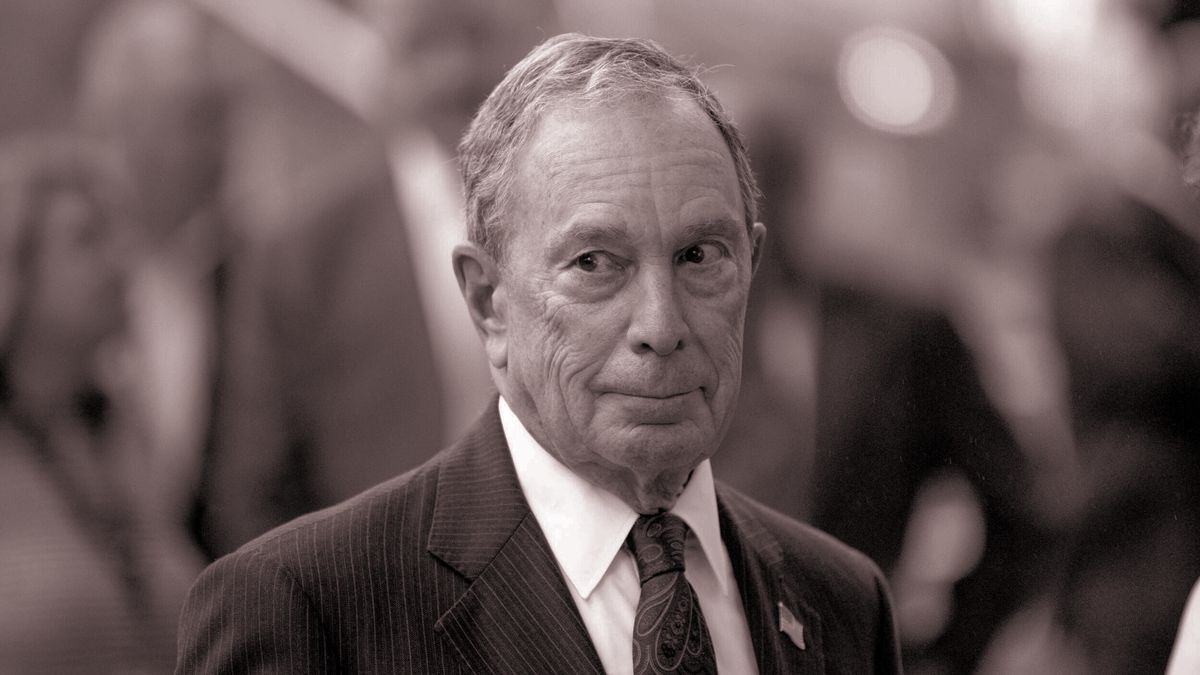
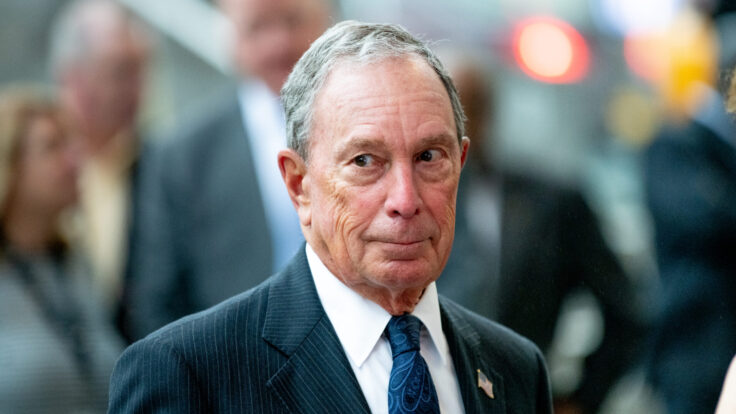
In tonight’s issue, I’m looking into the legacy of another New York mayor, Mike Bloomberg—specifically, what plans the 83-year-old may have for his $120 billion-plus Bloomberg L.P. It’s a favorite parlor game on Wall Street, and I take my own turn here.
But first…
|
- DJT drops on Dow: The
equity markets are acting quite schizophrenic these days, with the Mag 7-10 (not to be confused with Mag 6-7) reaching all sorts of ridiculous new highs while most of the rest of the S&P 500 stumbles along. One of the stocks that’s had a rough year, despite the endless boosterism and unmatched global platform of its largest shareholder, is Trump Media &
Technology Group. In fact, this week, Trump Media’s stock hit a 52-week low. DJT is trading around $14 a share, down nearly 60 percent since Trump’s second inauguration some 41 weeks ago. The company now has a market capitalization of around $4 billion, valuing the 115 million DJT shares beneficially owned by the president at around $1.7 billion.You will recall Trump Media’s self-described mission is “to end Big Tech’s assault on free speech by opening
up the Internet and giving people their voices back.” The company’s primary business is the Truth Social platform, which will soon open a prediction betting marketplace, but it has also launched Truth+ (a TV streaming platform in partnership with Newsmax) and Truth.Fi (a crypto and financial services platform). None of those initiatives, however, is yet doing much of anything for the company’s top or bottom line.
For the first six months of 2025, Trump Media reported revenue of
$1.7 million and a loss from operations of $83 million—not the most robust income statement, to put it mildly. Still, C.E.O. Devin Nunes was able to rake in total compensation last year of nearly $47 million, including a $1 million salary, a $600,000 bonus, $44 million in stock awards, plus another $1 million or so in other compensation. Not bad for a former congressman. But perhaps investors in DJT are finally facing the… truth about the company’s
prospects? (This is not investment advice.)
|
|
|
 |
Eriq Gardner |
|
- S.B.F.’s not-so-great day in
court: I don’t often make predictions about legal outcomes, but let me go out on a limb here: I’d be shocked if the Second Circuit overturns Sam Bankman-Fried’s conviction. I tuned into yesterday’s oral arguments, and the three-judge panel didn’t exactly hide their skepticism.S.B.F.’s lawyer Alexandra Shapiro came armed with two core arguments. First, she noted that her client should have been allowed to rebut the government’s narrative of
billions in customer losses by explaining during the 2023 trial that he was actually just borrowing on margin to invest. (One of his better investments, of course, was Anthropic.) Second, she argued that the court erred in blocking him from presenting evidence that he’d relied, in good faith, on the advice of counsel.
The response? Let’s just say it was not warm. Judge Barrington Parker Jr. practically laughed Shapiro out of the room: “Are you seriously suggesting to us
that if your client had been able to testify about the role that attorneys play in creating these documents, that the ‘not guilties’ would have rolled in on this record?”
When the government’s turn came, the tone was different. Polite. Curious. The judges jumped into procedural weeds around forfeiture obligations—technical, yes, but not the sort of issue that’s going to spring S.B.F. from decades in federal prison. If the FTX founder has a plan B—say, betting on a Trump pardon—now might be the time to shift whatever assets he hasn’t lost toward that strategy.
|
|
|
And now, for the main event…
|
|
|
A modest proposal for how New York’s $100 billion man could bequeath his namesake, and its
monumental profits in perpetuity.
|
|
|
One of the more interesting parlor games on Wall Street these days is predicting what billionaire
Michael Bloomberg, now 83 years old, is going to one day do with Bloomberg L.P., his invaluable financial data and news service. Yes, Bloomberg is in great shape, and his mother famously lived to be 102. But for octogenarians, estate planning is always a relevant topic, especially when your net worth is estimated at more than $109 billion, according to Forbes.
That
estimate may be a bit light, but who knows? Bloomberg L.P. is privately held and has no public debt or public filings. And Bloomberg, who owns some 88 percent of his namesake firm, is not listed on the Bloomberg Billionaires Index. (Apparently, reporting on the boss is a conflict of interest.) If he were, he’d be nestled comfortably somewhere among the top 20 wealthiest people in the world, perhaps between Mukesh Ambani and Carlos Slim.
Anyway, Bloomberg
L.P. is a significant entity—with some 26,000 employees and an implied valuation of around $120 billion—that hasn’t had much to say about succession. As best as I can tell, Mike last commented on his plans at a climate summit in September 2023, where he revealed that Bloomberg Philanthropies would inherit his 88 percent stake in the company. But, he added, “because of tax laws,” the foundation will “have to get rid of it” and “sell it some place or other over the first five years.”
That
was a pretty interesting statement, indicating for the first time that an M&A deal could be in the offing for Bloomberg L.P. one day. Mike further noted that he gives “all of the company’s profits to the foundation.” Last year, Bloomberg Philanthropies distributed a staggering $3.7 billion to charity, according to its latest annual report. The same report said that Mike, himself, had given away $21.1 billion during his lifetime.
Obviously, if the foundation were ever to
sell Bloomberg L.P., buyers would be lining up around the block. Could competitor Thomson Reuters, with a market cap of $73 billion, make an offer? Or S&P Global, with a market cap of almost $150 billion? Would any members of the trillion-dollar club—Microsoft, Apple, Amazon, Meta, Alphabet—be interested? Nothing would surprise me, especially since Bloomberg L.P. is truly sui generis. Back in October 2020, the omnipresent billionaire hedge fund manager Bill Ackman
suggested that his (now defunct) SPAC, Tontine Holdings, could buy a minority stake in Bloomberg L.P., probably as a prelude to an Ackman-sponsored liquidity event down the road. But Bloomberg L.P. quickly doused Ackman’s ambitions. “The company is not for sale in any form,” it said at the time.
Patti Harris, Mike’s longtime colleague and former deputy mayor, is the C.E.O. of Bloomberg Philanthropies. Presumably it will be her job, in consultation with its blue-chip board
of trustees—which includes Hank Paulson, Dan Doctoroff, Walter Isaacson, Maya Lin, Ken Chenault, and Ruth Porat, plus Mike’s two daughters, Emma and Georgina—to figure out how to sell Bloomberg L.P. when the time comes.
|
Obviously, a “sale” could take several forms: an I.P.O., which would be a blockbuster; taking on another
minority shareholder; or a merger with, or sale to, a company that can afford to buy the whole thing. But allow me to offer another, more modest proposal—one that might keep Bloomberg L.P. private in perpetuity, while continuing to fulfill the charitable mission of Bloomberg Philanthropies. Why not structure something similar to what Amar Bose contrived two years before his death in July 2013, at age 83?
Bose, the founder of the eponymous Bose Corporation, was also a
self-made entrepreneur. And he was utterly unconventional. “I would have been fired a hundred times at a company run by MBAs,” he told Popular Science in a rare 2004 interview. “But I never went into business to make money. I went into business so that I could do interesting things that hadn’t been done before.” Bose was anxious that his hugely successful Massachusetts company—which manufactures all sorts of audio devices, from loudspeakers to soundbars to noise-cancelling
headphones—remain private in perpetuity. So he made the unusual decision of bequeathing his roughly 90 percent stake in the business to M.I.T., his alma mater, with the stipulation that the university could never monetize the stock in any way, ever. No I.P.O. No M&A deals. No merger with an Ackman SPAC. Nothing.
At the time, Bose Corporation was probably worth around $10 billion, making Amar’s gift one of the single largest donations ever to a university. Of course, M.I.T.'s
fiduciaries might have been inclined to monetize the stock and create some sort of multiplier effect on value, as only an I.P.O. or a sale to a third party could provide. But that option, as Amar decreed, was off the table. M.I.T. can’t even add the value of the Bose stock into its endowment calculations.
The good news for M.I.T.: Bose Corporation pays annual dividends of roughly $25 million. The university has no role in operating or managing the company, and does not have a seat
on Bose’s board of directors, but the annual dividend has supported all sorts of potentially groundbreaking research under the aegis of the Bose Fellows program. Recent projects funded include bringing magnetic resonance imaging to primary care; searching for dark matter in the form of primordial black holes; and using light to rejuvenate the brain and restore vision.
Just last month, along with Brown, Penn, Dartmouth, the University of Virginia, and others, M.I.T. refused to sign the
Trump administration’s “Compact for Academic Excellence in Higher Education,” which called for universities to commit to “using lawful force if necessary” to quell campus protests, among other Trumpian measures, in exchange for privileged access to federal funds. Meanwhile, those Bose dividends have helped M.I.T. fund its out-of-the-box projects despite this White House’s coast-to-coast crackdown on pretty much anything that increases America’s storehouse of scientific knowledge.
Could
Mike do the same thing at his alma mater, Johns Hopkins, whose research programs have been cut to the bone by the Trump onslaught? (If not Johns Hopkins, Mike is welcome to give the stock in Bloomberg, plus any dividends, to my alma mater, Duke.) Mike is already the largest single donor to the school. His first gift—$5—came in 1965, the year
after he graduated. Since then, by my count, his gifts to the university have totaled $4.55 billion, including $1 billion just last year. If Bloomberg Philanthropies decided to go the Bose-to-M.I.T. route, the gift would be, by far, the single largest gift ever to a university. If, say, the stock paid dividends equal to $50 million a year, in perpetuity, you can only imagine how far that money would go to further research projects.
In the end, I suppose it depends on what Mike’s
priorities are. He may not mind if Bloomberg L.P. goes public or gets sold after he’s gone. In that case, a lump sum in excess of $100 billion given to Bloomberg Philanthropies, under Patti Harris’s leadership, could have a massive impact around the world. After all, if Bloomberg Philanthropies is required to give away 5 percent of its corpus every year—as most private foundations are—then 5 percent of $100 billion, or $5 billion annually, could go very far indeed. But it would require a
monetization event to realize that kind of valuation. If Mike prefers keeping his company private, in perpetuity, the Bose model might be just the solution.
|
|
|
Join Puck’s chief political columnist, John Heilemann, as he roams the corridors of power and influence in America on this
twice-weekly interview show, taking you beyond the headlines with the people who shape our culture: icons and up-and-comers, incumbents and insurgents, moguls and machers in the overlapping worlds of politics, entertainment, tech, business, sports, media, and beyond. The conversations are rich and revealing, unrehearsed and unexpected… and reliably impolitic. A Puck-Audacy joint, new episodes drop every Wednesday and Friday.
|
|
|
Puck’s daily political newsletter from Washington on what’s really happening in this town, from the White House to the Pentagon
to Capitol Hill, K Street, and the campaign trail.
|
|
|
Need help? Review our
FAQ page or contact us for assistance. For brand partnerships, email ads@puck.news.
You received this email because you signed up to receive emails from Puck, or as part of your Puck account associated with {{customer.email}}. To stop receiving this newsletter and/or manage all your email preferences, click here.
|
Puck is published by Heat Media LLC. 107 Greenwich St., New York, NY 10006
|
|
|
|