 |
|
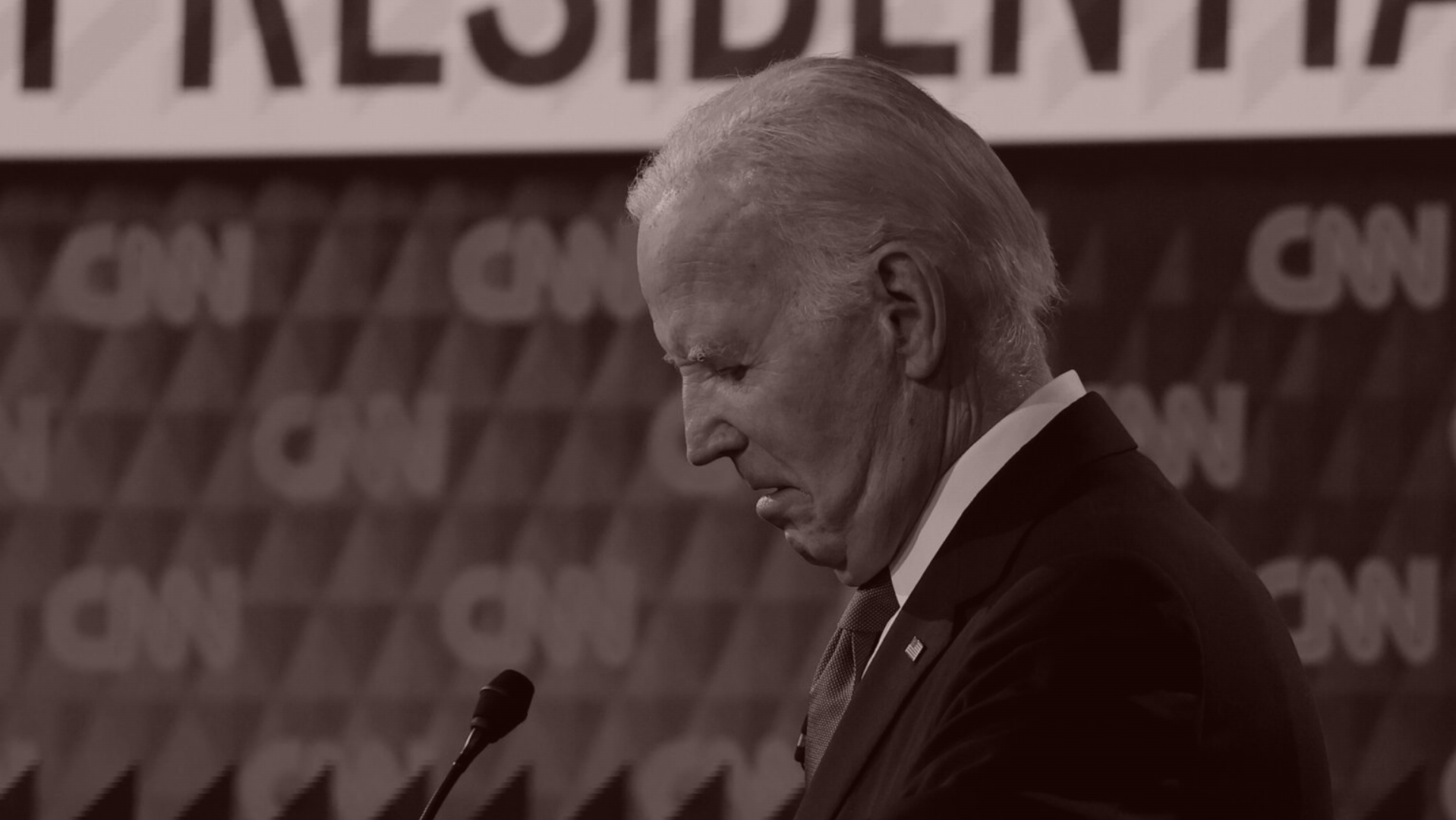
Aloha, bella ghjurnata, and welcome back to The Best & The Brightest: Impolitic, coming at you on Monday rather than Sunday due to the unusually frantic and fluid weekend following the debate in The City Too Busy to Hate—a weekend dominated by the comprehensive freak-out within The Party Too Panicked to Do Much Besides Palpitate, and the multifaceted machinations inside Bidenworld to calm the horses.
For yours truly, it was a weekend consumed by a nonstop series of colloquies with Democrats of every stripe and at every level—federal, state, and local elected officials, current and former; strategists, operatives, data gurus, and ad makers; super-rich donors, only-very-rich donors, ultra-committed activists and online agitators, and ordinary voters; and, not least, Biden campaign staffers, Biden White House aides, and Bidenworld insiders without portfolio—via text, email, and phone, all of which revolved around the same two core questions arising from the historic and unprecedented debacle in Atlanta:
- Are we fucked?
- What happens next?
|
| The answer to the first question is far from clear, but according to Joe Biden, his family, his campaign, and close allies such as Senator Chris Coons, the second has been resolved: The president has decided to resist the calls for him to bow out of the presidential race and release his delegates to the Democratic National Convention, thus freeing them to choose a new nominee to face Donald Trump this fall. Instead, Biden is going to stick it out.
That, at least, is the public stance of the president and his people, and, however things play out, it’s bound to be among the most consequential decisions of the 2024 election. But there’s a great deal more than meets the eye to what went down this weekend, and due to an array of factors and dynamics beyond Team Biden’s control, the situation remains less certain and more volatile than anyone in his orbit is inclined to admit—all of which is the subject of today’s dispatch.
But first…
🎙Combing through the wreckage: Immediately following the debate, I hopped on the horn with my sharp, savvy, and impossibly handsome Puck partners Dylan Byers and Peter Hamby for a real-time postmortem of the calamity we’d just witnessed and an insta-assessment of the potential implications for the campaign. If you haven’t heard the resulting podcast yet, make a beeline here or here or here and check it out; despite how much has happened since that night, the episode holds up damn well.
Then, once you’ve finished, be sure to come back again tomorrow, when the next installment of Impolitic With John Heilemann will feature two of the wisest and most storied political savants of this or any age: David Axelrod and Mike Murphy—both old pals as well as co-hosts of their own political podcast, Hacks on Tap.
📄 Programming note: We’re always trying to make Puck better, which sometimes involves asking you, our beloved readers, for your feedback. To wit: We’ve got a brand-new survey up now about how we package all of our great journalism. Want more, or less, or a new kind of bundle? Click here to tell us what you really think. |
 |
| Bidenworld’s Darkest Hour |
| Biden may find the next 10 days to two weeks even more challenging than even the past 72 hours. As the polling numbers stream in, Democratic elected officials and fundraisers are inclined not to give the president or his team the slightest margin for error or benefit of the doubt. To say they have lost faith would be putting it far too mildly. |
|
|
|
| At the end of a weekend in which the question of whether Joe Biden should stand down as his party’s de facto presidential nominee was the singular, all-consuming topic of conversation among members of the Democratic political class, the president and his family were gathered at Camp David for a Vogue photo shoot with Annie Leibovitz. But at the same time, and more significantly, Bidenworld was working the phones, endeavoring mightily to shut down the chatter du jour, tout de suite.
The results of those calls were apparent soon enough. In quick succession on Sunday night, The New York Times and AP posted stories with nearly identical headlines, ledes, and gists: The president’s wife, children, and grandchildren were of one mind that, in the face of pressure from his party to quit the race, Biden should, in effect, steal a page from Winston Churchill—never yield, never give in, never, never, never. Both stories also included details (confirmed by my own reporting) that caused eyebrows to arch or eyes to roll up and down the Acela corridor: that Jill and Hunter Biden were the most adamant voices urging the patriarch to stand tall and plow forward, full-speed ahead.
The carefully choreographed reports from Camp David were part and parcel of a larger Bidenworld strategy, crafted and executed on the fly in the 72 hours after the disaster in Dogwood City, to quell doubts, quiet dissent, and keep Joe Biden atop the Democratic ticket. And that strategy appears, at this hour and at least on the surface, to be working about as well as any survival strategy could in the aftermath of a public performance as cataclysmic as any in the history of presidential politics.
Sure, the punditocracy, including some scribes Biden has known forever and not just respected but revered, has been all but unanimous (and lethally so) in its collective judgment that the time has come for Joe to go. But not a single national or statewide Democratic elected official has echoed that call. The grandest of Democratic Party grandees—Barack Obama, Bill and Hillary Clinton, Nancy Pelosi—almost immediately declared their continued support. While a few thunderstruck donors have opened the door to “conversations” concerning Biden’s viability, most of the party’s biggest buck-rakers have remained on mute. And even among many of those arguing most ardently, if sotto voce, that Biden should be (gently) shown the door, the prevailing mood shifted over the weekend from hair-on-fire agita to deep-sigh resignation.
All of which might suggest—and was, in fact, orchestrated by Bidenworld precisely to suggest—that the president is out of the woods. That although mounting a comeback from his massive debate misfire will be a Herculean task, the worst days of this crisis are behind him. That the chatter about him exiting the race, stage left, will now gradually but inexorably subside.
And, hey, who knows, I suppose it could be true. But there are compelling reasons to believe that Biden’s position atop the Democratic ticket is more precarious than it appears—even though the only way for him to lose that position is if he relinquishes it voluntarily. Although Biden has survived the initial post-debate media maelstrom, the greater threat to his viability has less to do with press coverage or perceptions than with cold, hard data: The impact of the debate on his poll numbers nationally and (more important) in the battleground states, which will start to pour in from the campaign’s own analytics team and public sources by the middle of this week. For Team Biden, this is the next shoe to drop, but given the intense interest in this data, there will be a lot of it—a veritable hailstorm of footwear. |
|
|
| What will the fresh numbers show? Team Biden has been pumping out a steady stream of data that suggests the debate has had no appreciable effect on the race. But the first trickle of surveys from independent sources has been ominous: a CBS News-YouGov survey found that the percentage of registered voters who believe that Biden does not have “the mental and cognitive health to serve as president” rose from 65 to 72 percent after the debate, and that 45 percent of registered Democrats don’t want him to be their nominee; a Harvard CAPS/Harris poll out today revealed that the percentage of voters who think Biden is too old to be president or have doubts about his mental fitness rose 11 and l2 points, respectively, after the debate; and a Saint Anselm College poll showed Biden trailing Trump by 2 points in New Hampshire, a state he won by 7 points in 2020.
Which brings us to the second reason why Biden may find the next 10 days to two weeks more challenging than even the past 72 hours. As the digits stream in, the people likely to consume them most avidly—Democratic elected officials and fundraisers—also happen to be the forces most likely to exert real pressure on Biden to withdraw. And, generally speaking, they are, at least at this moment, deeply and strikingly inclined not to give the president or his team the slightest margin for error or benefit of the doubt. To say they have lost faith would be putting it far too mildly.
The negativity toward Team Biden among Democratic electeds and donors is starkly at variance with what they’ve projected the past few days on TV and social media, where they’ve dutifully sung the campaign’s songbook (it was just “one bad debate,” Biden had a cold, he was overprepared, yada yada yada). In politics, of course, there’s always some disparity between the public and private postures of players with skin in the game. But here the gap between public and private is positively chasmic. And unlike the many and predictable past episodes of Democratic bed-wetting I’ve covered in my career, this one is laced with anger, resentment, and a sense of betrayal, fueled by the newly minted view that Biden, his family, his White House, and his campaign concealed the reality of his decline so vividly on display onstage in ATL. “They lied to us—systematically, over years,” one megadonor told me. “Given the stakes, it’s unforgivable. Unconscionable.”
These are not people, in other words, who are hoping and praying that Biden’s polling holds up, allowing him to soldier on. Quite the contrary. “Everyone wants numbers,” said another big donor, who believes that Biden should step aside. “Just telling him that we want him to leave won’t do it. So we need real numbers to come in that allow everyone to hide behind them. ‘Mr. President, these numbers are tough to get past.’ Then no one has to own the brutal truth, which is he’s not up to this. No one wants to say that.”
If Biden’s poll numbers do crater—or, given the tightness of the race, simply dip in a uniform, meaningful way that would make beating Trump next to impossible—it won’t likely just be donors banding together and traipsing to the White House. Senior Democrats on Capitol Hill believe that both Chuck Schumer and Hakeem Jeffries, and perhaps even Nancy Pelosi, would be predisposed to make the grim pilgrimage and try to persuade Biden to step aside for the sake of giving Democrats a fighting chance to take back control of the House and hold the Senate. Biden, with his decades-long service in the upper chamber still at the center of his political self-conception and his emotional core, might actually be more swayed by such a message from this contingent than any other. It would certainly mean more than hearing it from Obama or the Clintons, whose awareness of the resentments Biden harbors for them is part of the reason, people close to them say, that their statements of support came so quickly; they knew that silence would get Biden’s hackles up and make him less open to entreaties from others.
It’s conceivable that Biden’s numbers won’t crater. (The signal rule of this political era is that whatever logic and sanity dictate to be inevitable reliably fails to occur.) But the road ahead for the president is filled with all manner of sinkholes he could easily tumble into, thus triggering the same outcome. With the second debate scheduled for September—and, let’s be honest, since Trump has no political incentive to do it, he all but certainly won’t—Team Biden understands that putting its candidate into unscripted settings to prove to voters that the debate was a one-off glitch is essential. And yet, they seem to be in no hurry whatsoever to do so. Which, under normal circumstances, with a normal candidate who had earned the normal level of confidence from his or her team, would be really fucking strange.
Imagine any other presidential campaign suffering the kind of setback Team Biden suffered at the debate. You’d bet dollars to doughnuts it would have its guy sitting across from Lesley or Anderson on 60 Minutes (or across from Savannah on Today, or from some influencer I’ve never heard of on TikTok) within 48 hours to clean up the mess. That Biden’s people didn’t follow this playbook—and, to the contrary, told Axios for its piece on the Biden comeback plan to “look for a town hall or big one-on-one interview this month [emphasis added]”—indicates to every seasoned strategist I know that Bidenworld believes the risks of rolling those bones are just too high. But at some point, it will have to roll them, and the whole world will be watching.
And that, in the end, points to one of the most corrosive consequences of Biden’s self-immolation in Atlanta. It’s an iron rule of presidential politics that an unpopular incumbent, which Biden plainly is, must turn his reelection from a referendum on his performance to a choice between himself and a more deeply flawed opponent. Trump is so stuffed with egregious, profound, and disqualifying flaws that debating him should be the political equivalent of taking a baseball bat to a piñata. And that was Team Biden’s plan for the Atlanta face-off: remind voters of the choice they’re facing and whack away at the technicolor jackass.
But not only did Biden fail to do that, he accomplished the diametric opposite of his bedrock strategic aim: He made the debate, and, most likely, the rest of the campaign, about himself—an inescapable rolling referendum on his own cognitive fitness, in which every move he makes from here on out is destined to be scrutinized endlessly, remorselessly, pitilessly, and, as of last Thursday, justifiably.
Electeds, donors, and the rest of the Democratic political class know this is coming; they see the writing on the wall. “Joe has put himself, and us, in a situation that’s just not sustainable,” a veteran congressman lamented to me. Which is why, in the end, Churchill’s mantra of never yield, never give in, etcetera, is the wrong British Bulldog reference for the predicament that Biden now finds himself in—the right one, it seems to me, is the Darkest Hour. |
|
|
|
| FOUR STORIES WE’RE TALKING ABOUT |
 |
| Advanced Zazonomics |
| Diving into Wall Street’s biggest stories with Puck’s Jon Kelly. |
| WILLIAM D. COHAN |
|
 |
|
 |
|
 |
| ‘Titanic Level Disaster’ |
| An emergency analysis of Biden’s grim debate performance. |
| JOHN HEILEMANN, PETER HAMBY & DYLAN BYERS |
|
|
|

|
 |
|
|
|
Need help? Review our FAQs
page or contact
us for assistance. For brand partnerships, email ads@puck.news.
|
|
You received this email because you signed up to receive emails from Puck, or as part of your Puck account associated with . To stop receiving this newsletter and/or manage all your email preferences, click here.
|
|
Puck is published by Heat Media LLC. 227 W 17th St New York, NY 10011.
|
|
|
|