 |

|
|
Hello, and welcome to The Best & The Brightest, your Tuesday foreign policy edition. I’m Julia Ioffe.
As you know, we have a new colleague at Puck, the fantastic political journalist and commentator John Heilemann. If you like TBTB, be sure to check out his new podcast, Impolitic, which premieres today! Andrew Weissmann, the former Mueller lieutenant, is his first guest. I promise you’ll like it.
Also, if you missed last week’s screening in D.C. of For Love & Life: No Ordinary Campaign, a moving documentary about Brian Wallach’s inspiring fight against ALS, you can find my Q&A with Brian, his wife Sandra Abrevaya, and filmmakers Christopher Burke and Tim Rummell by clicking here.
Tonight, congressional notes from Abby and my take on the N.S.C. staffer’s burden. But first, let’s check in on the Blob…
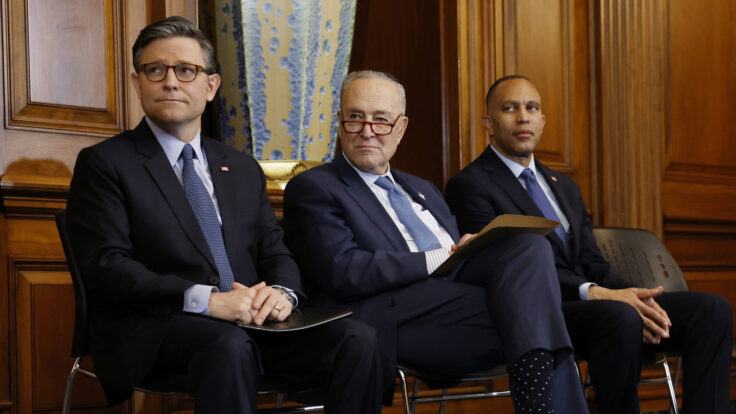
- Bibi’s coming to town?: Lost amid the glee and the rage over Trump’s hush money verdict on Thursday, and Biden’s ceasefire proposal announcement on Friday, was Speaker Mike Johnson finally getting his invitation out to Benjamin Netanyahu to address a joint session of Congress. The letter inviting Bibi to Washington “to share the Israeli government’s vision for defending democracy, combating terror, and establishing a just and lasting peace in the region,” was signed by all four congressional leaders: Johnson, Mitch McConnell, Hakeem Jeffries, and Chuck Schumer. The Republicans aren’t a surprise, nor is Jeffries. “There’s not a world where he wouldn’t sign off,” a source close to Jeffries told me, citing the Jewish donors in New York who have been “instrumental” in his fundraising efforts over the years. “Honestly, he’ll rubber-stamp Bibi until the end.”
What was surprising, however, was Schumer’s signature—especially after the Senate majority leader called for Bibi’s ouster and new elections in Israel. Schumer’s people wouldn’t comment on the record, but a Senate source familiar with Schumer’s thinking told me the majority leader wasn’t ever not going to sign the invitation, especially once the other three “corners” of congressional leadership had committed. It would have looked far too strange for everyone but Schumer to sign on, and, the source added, “For everyone who signed, it was not about Bibi but about Israel. It was about letting an ally speak.” (Except, of course, it very much is about Bibi. Schumer has essentially said as much himself.)
One wrinkle: Over the weekend, Hill insiders told me that Bibi wasn’t expected here until late July, but our friends at Punchbowl broke the news on Monday that the Israeli P.M. would speak on June 13—much, much sooner than anyone expected, and notably before the first presidential debate. But before that news had time to sink in, Bibi, as has become his wont, poured cold water on the idea. June 13 is the second day of Shavuot, an important Jewish holiday, so that’s now out. Johnson told reporters this afternoon that he hopes the speech will happen before July, but others wonder if there will be time to squeeze Bibi in before the August recess. To be continued…
- Zelensky’s revenge: Ukrainian President Volodymyr Zelensky is Jewish, though he doesn’t advertise it. Jake Tapper once told me that when he interviewed Zelensky on the first night of Passover, in 2022, the Ukrainian president rebuffed the CNN anchor’s attempt to give him a box of matzah. (When the cameras were off, Tapper said, Zelensky reluctantly accepted.) A lot of us Soviet Jews were outraged when Netanyahu shut down the idea of Israel sending military aid to Ukraine, seemingly siding with Moscow in the conflict. Vladimir Putin and Bibi are old autocratic pals, and the Russian leader had looked the other way when Israelis bombed Iranian targets in Syria.
But when Hamas attacked Israel on October 7, it was Zelensky, not Putin, who stood up for the Jewish state. Zelensky and members of his government condemned the attack and said Israel had the right to defend itself. Putin, on the other hand, sided with Hamas. He has hosted leaders of the terrorist organization in Moscow repeatedly and has done nothing to rein in its ally Iran and its proxies, like Hezbollah. Bibi may have counted on Putin’s friendship, but Putin was clearly more interested in siding against his archenemy, the U.S., and supporting his new arms supplier, Tehran.
Speaking on Sunday at the Shangri-La security conference in Singapore, Zelensky twisted the knife a bit by declaring Ukraine’s support for a two-state solution (i.e., the stance of Zelensky’s chief backer, the Biden administration), and that Ukraine would recognize Palestine as a state. “We must respect international law,” the Ukrainian president said, after offering to send humanitarian assistance to Gaza. “Ukraine recognizes two states, both Israel and Palestine, and will do everything it can to convince Israel to stop, to end this conflict and prevent the suffering of civilians.” This, Zelensky said, is in line with Ukraine’s stance that international law and the U.N. charter must be respected. It’s also a nice way to repay Bibi, who has basically said he’d accept a Palestinian state over his dead body, for his stance on Ukraine.
- Happy birthday, Alyosha: And lastly, today is Alexey Navalny’s birthday. Had he not been killed in a Russian penal colony earlier this year, he would have been 48. As his widow Yulia wrote on her Instagram, “Now you are forever 47.”
|
| Now, here’s Abby Livingston from the Hill… |
|
A MESSAGE FROM OUR SPONSOR
|

|
WORKING-CLASS AMERICANS DEPEND ON CREDIT CARD REWARDS: A new study finds credit card rewards like cashback empower low-income families to pay for the rising price of everyday essentials—like groceries and gas. So why are DC politicians partnering with corporate mega-stores to end those hard-earned rewards programs that Americans rely on? The Durbin-Marshall Credit Card Bill takes billions from American families, lining corporate pockets instead. Tell DC politicians to OPPOSE the Durbin-Marshall Credit Card Bill.
|
|
|
| McConnell’s Hogan Boost & More G.O.P. Ad Wars |
|
The Hill is back in the full swing of things after the Memorial Day recess—and given the flaring tensions between House Republicans and Democrats, it seems we’ve crossed the Rubicon after last week’s Trump verdict. The rhetoric at hearings is raging, and it’s worth remembering that the sweltering Washington summer does nothing to calm tempers on the Hill. Here’s what else is going on…
- Hogan gets his hero: At his weekly Ohio Clock newser, Mitch McConnell offered words of support for Maryland Republican Senate candidate Larry Hogan, who’s spent the last several days taking incoming fire from the Trump campaign for merely suggesting that Americans respect the Manhattan jury’s verdict. Lara Trump, Trump’s daughter-in-law and the R.N.C. co-chair, noted that Hogan “doesn’t deserve the respect of anyone in the Republican Party at this point, and, quite frankly, anybody in America.”
When asked to respond to her comments, McConnell affirmed that Hogan is part of the Senate’s battle plan for the fall. “We need more Republican members of the Senate. And whether you’re Mike Lee or whether you’re Susan Collins, we need more Republicans in order to set the agenda,” he said. “So obviously, I support all the Republican candidates, and certainly Larry Hogan would be among them.”
- G.O.P. ad wars: The tried-and-true anti-carpetbagger campaign ad is everywhere these days, with both Democrats and Republicans running them. But either way, all of the targeted candidates are wealthy Republicans. The creative generally takes one of two forms. First, it can overtly accuse an opponent of parachuting into the race—e.g., the D.S.C.C.’s digital ads against Wisconsin Republican Senate candidate Eric Hovde and also against Pennsylvania Republican David McCormick, or House Approps Chair Tom Cole’s ad accusing Paul Bondar of crossing the Red River from Texas to run for an Oklahoma seat. Then there’s the more subtle attack, like Montana’s Denny Rehberg labeling opponent Troy Downing a “California transplant” (he moved to the state in 2009 and is currently the state auditor) or the new pro-Jon Tester ad accusing his Republican challenger, Tim Sheehy of ending protections for public lands. In the ad, the pickup driving narrator says, “more of these places could get sold off to rich out-of-staters like him.” (Sheehy grew up in Minnesota and moved with his wife to Montana in 2014.) Indeed, the G.O.P. has made a habit of running very wealthy “out-of-staters” for the Senate in recent years, the most famous of which was New Jersey resident Dr. Oz in Pennsylvania.
|
 |
| Mission Impossible |
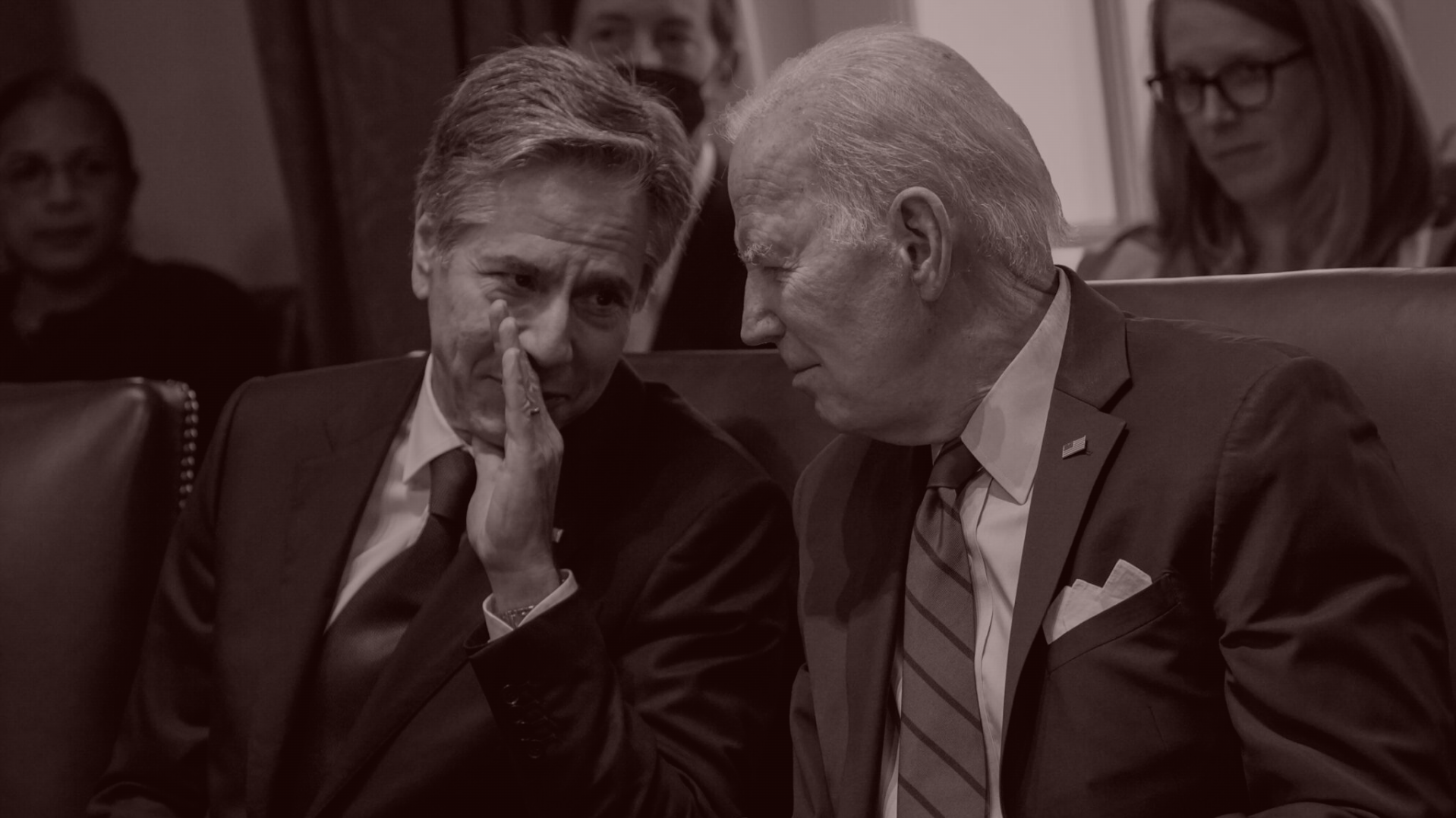
| Biden’s national security team has been unusually loyal, with all the key players sticking around and working through one grueling cataclysmic geopolitical challenge after another—Afghanistan, Ukraine, Israel, Taiwan, etcetera. Why aren’t they turning over or cashing out? “There’s a sense that we’re standing at the precipice right now,” said one senior administration official. |
|
|
|
| When National Security Advisor Jake Sullivan and his wife, former Deputy Assistant Attorney General Maggie Goodlander, arrived in Provence last year, it was their first vacation in a very long time. Since entering the White House, Sullivan and the president’s foreign policy team had been dealing with crisis after crisis after crisis: the bloody and chaotic withdrawal from Afghanistan; the Russian invasion of Ukraine; and the campaign to surge American weapons and allied support to Kyiv, and later to help train Ukrainian troops for a counteroffensive, all while trying to gauge whether Putin might actually make good on his threat of nuclear retaliation.
In the meantime, there was China, which sent a spy balloon over the U.S. mainland, took an ever more militaristic posture toward Taiwan, and threatened then-Speaker Nancy Pelosi over her trip to Taipei. If that weren’t enough, the White House had to warn Beijing not to send weapons to Moscow while also encouraging Xi Jinping and Narendra Modi to make clear to Putin how they would feel if he actually pulled the nuclear trigger. Oh, and then there was the Global South blaming Washington for the spike in grain and oil prices while Russia boasted about blockading Ukraine’s agricultural exports and starving the world into submission.
It had been a relentless march of world-historical cataclysms. And, notably, there has been far less turnover on the president’s national security team than in previous administrations. Biden’s national security brain trust—Antony Blinken, Jon Finer, Brett McGurk, Amos Hochstein, Bill Burns, and Sullivan—have all been there since the beginning. The people one or two levels below them on the org chart have been equally loyal. Staffers who came in with Biden on day one are mostly still there, trying to plug the multiplying leaks of a world coming apart at the seams.
In the midst of all that, Sullivan and Goodlander had suffered a personal tragedy. On Easter 2023, Goodlander, who was about 20 weeks pregnant, went in for a check-up only to learn that the fetal heartbeat had stopped. Despite her concerns, she was sent home, to a Boston hotel. That night, she went into labor and delivered the stillborn fetus in the hotel room, alone. (It’s an experience she spoke about searingly when she announced her campaign last month for a House seat in New Hampshire.)
When the couple arrived in Provence, they were ready for a break. The Ukrainian counteroffensive had sputtered out and things on the front had settled into a slow war of attrition. The world’s chaos and violence seemed to have eased into a grinding but manageable predictability. And there was a long weekend coming up. It was October 5, 2023. |
|
A MESSAGE FROM OUR SPONSOR
|
|
WORKING-CLASS AMERICANS DEPEND ON CREDIT CARD REWARDS: A new study finds credit card rewards like cashback empower low-income families to pay for the rising price of everyday essentials—like groceries and gas. So why are DC politicians partnering with corporate mega-stores to end those hard-earned rewards programs that Americans rely on? The Durbin-Marshall Credit Card Bill takes billions from American families, lining corporate pockets instead. Tell DC politicians to OPPOSE the Durbin-Marshall Credit Card Bill.
|
|
|
|
|
| Needless to say, Sullivan and Goodlander did not get their vacation. Nor did other weary Biden N.S.C. staffers who had tried to take advantage of the relative lull and the federal holiday. Curtis Ried, the N.S.C. chief of staff, was called back from a boat in the Mediterranean. Adrienne Watson, a spokesperson for the N.S.C., had driven through the night to be home with her family in Indiana for her birthday on October 8. Her mother told her at 5:30 in the morning of October 7 that something had happened in Israel. “That’s what happens when people try to get away,” a senior administration source sighed.
For Biden’s national security team, the last three and a half years have been both a marathon and a sprint, one that began when Donald Trump left them a gutted State Department, an increasingly politicized Pentagon, a bruised and battered intelligence community, and a world full of snickering enemies and shell-shocked allies. “When we came in, we were looking under carpets and behind doors to see what the last administration had left us,” the official told me. On top of which, the official continued, “We’ve gone from one crisis to the next, and many of them are compounding crises. Most senior people have been in place since day one and there’s absolutely a sense of burnout and exhaustion and people feeling stressed out.”
It’s not just the vacations ruined or not taken. One former senior administration official told me that, since October 7, they couldn’t recall a time when there wasn’t a principals’ committee meeting or some other pressing emergency that ate up everyone’s weekends. Another source told me the pullout from Afghanistan and the breakneck hours they worked to manage that crisis resulted directly in a break-up. “People are on the road a lot. When they’re not on the road, they’re in the office,” the senior administration source explained. “When they’re not in the office, they’re on their phones. When they’re not on their phones, they’re in a SCIF,” referring to the secure facilities specially built for handling classified information. The at-home SCIF was once the realm of the most senior of the senior, a D.C. status symbol of sorts, but their proliferation has made it both easier for administration officials to work outside the office—and harder to get away.
“Usually, you have periods where your stuff is a little less front and center. We’ve had a lot less of that,” said a second administration official. “We’ve kind of been the main event for a long time.” |
|
|
|
|
| And yet, in a town full of complainers, there’s not a lot of complaining coming from this N.S.C. or State Department. “You don’t hear a lot of chatter about fatigue,” said one source close to the administration. “It’s more just, they’re in the bunker, doing the work.”
Given the unrelenting intensity of the past three and a half years, why don’t people turn over, leave, cash out? Some have, but most haven’t. In part, it’s everything they saw under those rugs and behind those doors in January 2021—and what Donald Trump has promised to do should he win in November. There’s a sense among the administration officials I spoke with that, now that they’ve helped undo the damage of the first Trump term, they’re working against the clock to Trump-proof the country (and the world) in case their nightmare should recur in November.
Call it a sense of mission—and cringey or not, these people really are driven by one—or lingering trauma from 2016, when so many of these Obama vets thought a President Clinton and her familiar foreign policy were inevitable. “There’s something about the moment that’s keeping people together,” said the first senior administration source. “There’s a sense that we’re standing at the precipice right now,” this person added, referring to the November presidential election. “The stakes of the moment, the fact that we’re very much facing a fork in the road, is a big source of motivation. This is going to be a toss-up, and issues that may have been marginal in past elections may be decisive this year.”
But the lack of turnover is also because the people who are drawn to this work, who have spent their entire adult lives grooming their résumés and their networks for these jobs, are doing the thing they’ve always wanted to do. Whatever the discomforts and headaches, these are their dream jobs, and they have them at one of the most challenging and, for lack of a better term, interesting junctures in the history of American foreign policy. Who wants to give that up? “There’s the usual fatigue, yes,” said the source close to the administration. “But they’re in the middle of it, and it’s a very powerful N.S.C.—and that’s an elixir for a lot.”
“The stakes are high for all of these issues,” echoed the second administration source. “But on the other hand, you don’t come to do these jobs to move paper around and tend to the garden of relationships. You want to work on things that are consequential.”
A third senior administration source explained it to me this way: If you’re a lawyer and you go into government service—working on, say, the Hill or the D.O.J. or in one of the federal government’s many bureaus—you will get to do very interesting work. It may be more interesting than the work you would get to do outside the government, in the private sector—or it may not. “But if you’re a national security person, that’s really only inside the government,” the official said. “There’s nothing outside the government that’s in any way similar.”
In other words, there’s no intellectual substitute or alternate adrenaline fix for what you get to see (intelligence, people, situations) and do (tackle the world’s hardest problems) in one of these national security jobs. Exhausted Biden NatSec staffers could make a break for academia or think tanks or private equity, but they’d be giving up their front-row seat to history being written, and even helping to write it themselves.
Besides, said one source who is close to Biden’s national security team, what’s the rush? “They’re in their 40s and they’ll have plenty of time to cash out,” the source said. “That’s boring compared to this.” |
|
|
| That’s all from me this week, friends. I’ll see you back here next Tuesday, rain or shine. In the meantime, good night. Tomorrow will be worse.
Julia |
|
|
|
| FOUR STORIES WE’RE TALKING ABOUT |
|
|
|

|
 |
|
|
|
Need help? Review our FAQs
page or contact
us for assistance. For brand partnerships, email ads@puck.news.
|
|
You received this email because you signed up to receive emails from Puck, or as part of your Puck account associated with . To stop receiving this newsletter and/or manage all your email preferences, click here.
|
|
Puck is published by Heat Media LLC. 227 W 17th St New York, NY 10011.
|
|
|
|