|
Hello and welcome back to The Best & The Brightest. I’m Leigh Ann Caldwell—rejuvenated, if a bit jet-lagged, from my travel back to the U.S. yesterday. It turned out to be quite a news moment to return to: the leaked Biden audio, the former president’s sad cancer diagnosis, and the latest developments surrounding Mike Johnson’s “big, beautiful bill”—the last piece of which forms the basis of my partner Abby Livingston’s dispatch this evening.
But first…
|
- Biden time: Democrats are contorting themselves to avoid falling into the orbit of Jake Tapper and Alex Thompson’s new book, Original Sin, which accuses Biden aides of covering up the former president’s declining health—and which arrives just as America is learning about his unfortunate prostate cancer diagnosis. The plot thickened with the leaked audio from Biden’s occasionally faltering, five-hour interview with special counsel Robert Hur. Taking what now passes for the high road, Vice President J.D. Vance suggested that Biden’s aides and doctors were responsible. “I blame him less than I blame the people around him,” Vance said.Republicans on Capitol Hill tell me Biden’s cancer diagnosis raises new questions about the former president’s health, and his ability to do the job while he was in office. Many seem largely supportive of Oversight Committee Chair James Comer’s expanded investigation into “the cover-up of President Biden’s mental decline and use of autopen.” Some are even pointing to a clip of a speech that Biden gave in July 2022 during which he said coal plants are “why I and so damn many other people I grew up [with] have cancer.” On its face, it seems like a typical Biden malapropism, and one exacerbated by his decline. Nevertheless, it’s being weaponized as proof that Biden has had cancer for years.
Democrats on the Hill, meanwhile, are trying desperately but struggling to move on. While some have been tortuously trying to answer for, or deny, any association with Biden’s mental decline when asked about it in media interviews, the topic hasn’t come up in the Senate’s caucus-wide meetings, I’m told. It’s the last thing they want to talk about—even as they stash copies of Original Sin in the bottom of their weekend tote bags.
|
|
|
Disney has been bringing happiness to families and communities for over a century, and continues to be a powerful economic contributor.
Here’s how: With more than $30 billion in investments in U.S. parks, Disney is creating nearly ten thousand jobs.
Explore Disney’s Impact
|
|
|
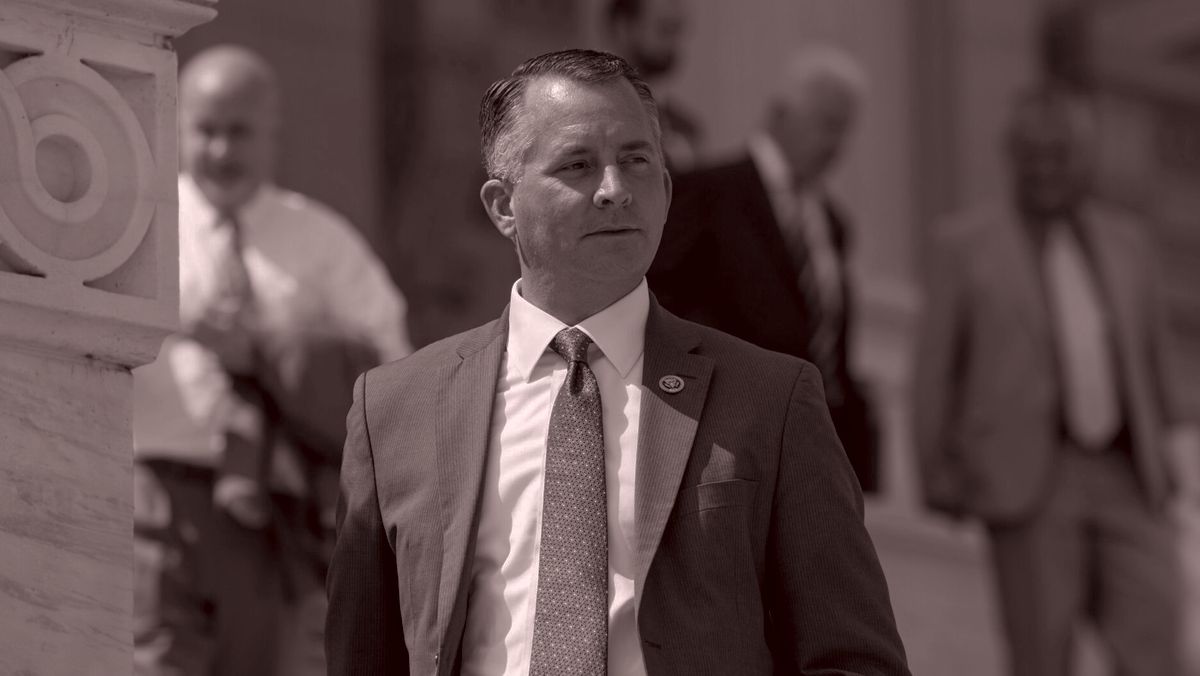
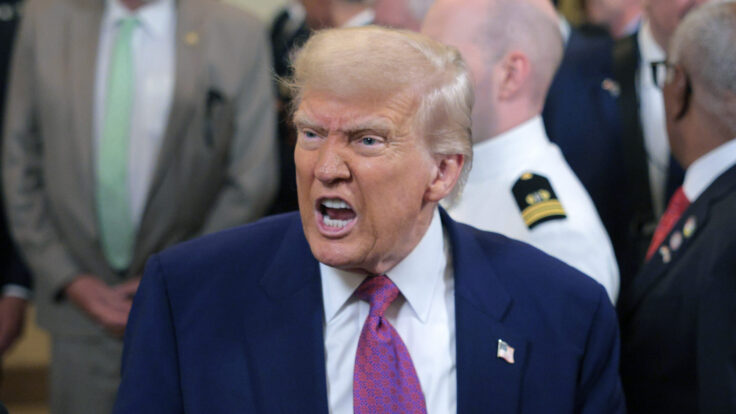
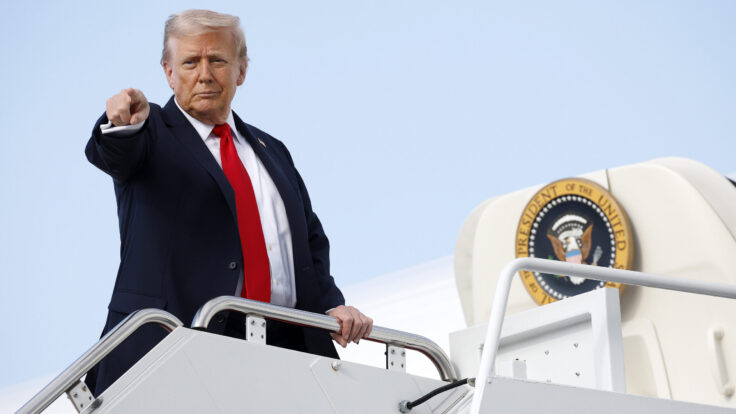
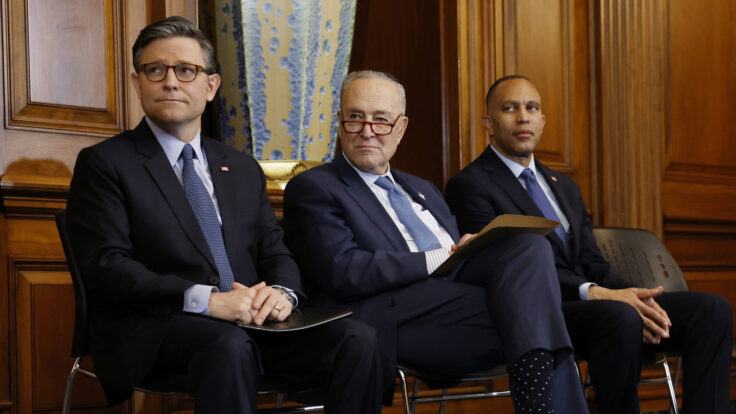
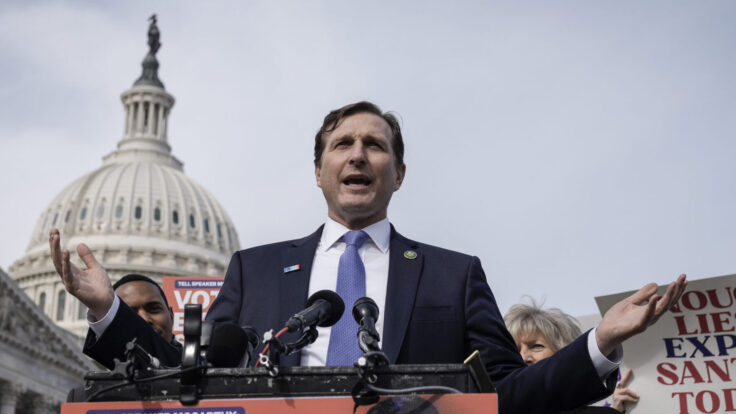
- SALT in the wounds: House Speaker Mike Johnson has just more than 24 hours left on his self-imposed timeline for the Rules Committee to resolve serious disagreements in their “big, beautiful bill” of tax extenders and spending cuts. As one senior Republican aide told me today, the task feels so daunting because it is: all the major fault lines over Medicaid cuts, renewable energy tax credit repeals, and state and local tax deduction caps. Some issues, including states’ share of Medicaid costs, which had been settled, are being opened back up again, at the behest of conservatives. Johnson insists the bill must pass the House before Memorial Day—just six days from now.But several Republican aides I spoke to said this is Johnson’s go-to strategy: “delay, delay, delay” progress on negotiations, and then jam Republicans at the last minute, and call on 47 to seal the deal—an insanely frustrating process for some members. (Trump will be attending the Republicans’ morning conference meeting tomorrow.)
Meanwhile, blue-state Republican members from New York, New Jersey, and California are insisting they have the upper hand—even after rejecting an increase to the state and local tax deduction from $10,000 to $30,000. For these members, there’s little incentive to accept a bad deal, since an expiration of the current tax bill at year’s end will remove all SALT caps—a huge boost for high-tax states. For Rep. Mike Lawler, who’s considering a run for governor of New York, a sizable win on SALT would be a considerable boon. (Lawler’s New York colleague, Rep. Elise Stefanik, who is also part of the negotiations, is contemplating a run for governor, too.)
|
|
|
|
A growing contingent of Republicans point to Trump’s decision to unleash tariffs before tax cuts as a tactical error—and wonder if they still have the political momentum to pass his megabill with all its components intact.
|
|
|
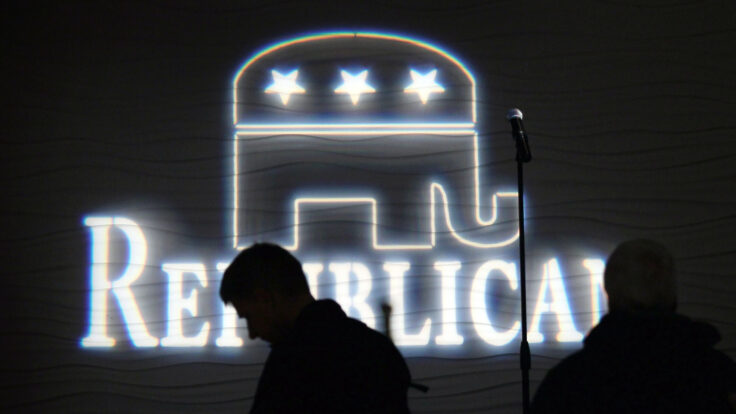
Something a little strange happened on Capitol Hill during the first few weeks of May. After a winter blitz of confirmation hearings overwhelmed Republican senators and DOGE trampled congressional prerogatives, G.O.P. members in both chambers are finally starting to push back (to varying degrees) against Donald Trump. Of course, this often-gentle resistance has mounted while the president attempts to persuade Republican members to vote against their own interests on his sweeping “big, beautiful bill.”
Yes, there was some early criticism of the Trump administration over the Signal leak debacle and the post-Liberation Day confusion. But the vexation emanating from the Hill this month, and from Republican members in particular, has felt stronger and sharper. On May 2, Senators Lisa Murkowski and Cynthia Lummis raised their eyebrows at Trump’s memecoin dinner. A few days later, endangered North Carolina Republican Sen. Thom Tillis ruled out supporting Ed Martin’s nomination as the U.S. attorney for D.C., dooming the appointment. By May 12, Sens. John Thune, Rand Paul, Ted Cruz, and Deb Fischer and Virginia Rep. Rob Wittman had all raised questions about Trump’s decision to accept a $400 million luxury 747 “palace in the sky” from Qatar, noting ethical, financial, and even national security concerns.
|
|
|
Disney has been bringing happiness to families and communities for over a century, and continues to be a powerful economic contributor.
Here’s how: Since 2017, Disney has nearly doubled spending on film and television content, and is spending $23B in FY25.
Explore Disney’s Impact
|
|
|
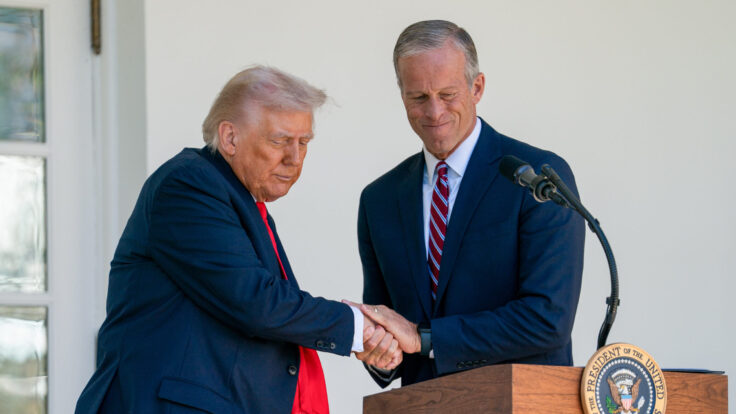
Meanwhile, the staff at two agencies under the congressional umbrella—the Government Accountability Office and the Office of Congressional Workplace Rights—successfully fended off DOGE takeovers. And when Trump tried to take over the Library of Congress last week, Thune, the Senate majority leader, pushed back forcefully. “We want to make sure congressional equities are respected and protected,” he told Politico.
So what changed? Hill insiders pointed me to one crucial factor: the polls. A crush of them, released in late April, around the 100th day of Trump’s second term, showed the president’s approval rating in free fall while economic uncertainty bloomed in the wake of his global trade war. “The timing seemed a little too coincidental,” a Republican consultant told me.
I’ve heard this theme reflected across multiple conversations with Republicans over the past month: that Trump’s decision to unleash tariffs before tax cuts was a tactical mistake that disrupted the party’s political momentum. “He’s rebounding a little bit, but if you’ll notice, the bounce happened when he retreated on tariffs,” the consultant said.
|
Countdown to Memorial Day
|
|
The emerging disunity has very real implications for the “big, beautiful bill” that is slated to be the cornerstone, and perhaps only, major legislative accomplishment for this Republican-controlled Congress. Of course, it was always going to be difficult for the party to square the agendas of competing factions with very different opinions on balancing tax levels and spending. Among the most intransigent factions is the Freedom Caucus, which has been fighting a two-front war against the SALT Republicans and G.O.P. members worried about cuts to Medicaid. Any concession that Speaker Mike Johnson makes to one of these groups will be sure to alienate the other two. Even if House Republicans secure passage, things will only get more complicated in the Senate, where the bill will likely be torn to shreds.
All of this is coming to a head this week, as Johnson stares down his own Memorial Day deadline to get the first pass of the bill through the House. While Trump spent his Middle East trip being feted as a monarch and griping about Bruce Springsteen and Taylor Swift, Republicans continued to fight among themselves. Several members have drawn lines in the sand against policies that are likely to be included in the bill; over the weekend, hard-liners successfully raised the work requirements for Medicaid.
|
|
|
Meanwhile, the SALT members aren’t backing down, which isn’t surprising, given how many of them spent millions of campaign dollars on TV ads in swing districts last fall promising to protect the high-income tax deduction. Then there’s Senate-side hard-line conservative Josh Hawley, who published a stunner of an op-ed (in The New York Times!) warning against Medicaid cuts. “Not even the whiff of jet fumes, or threat of weekend cancellations, will see this bill through the House by Friday,” a Republican lobbyist predicted.
Still, the conventional wisdom is that Johnson has already faced impossible whips this term—his own speakership election in early January, the original budget vote in February, and the government funding resolution in March—and each time, he pulled a rabbit out of a hat (albeit after Trump got involved). “The number of times people say that this is an impossible task for the speaker… and what do you know? He always gets there,” said Doug Heye, a former Republican leadership staffer. He argued that members have to worry about their primaries before their general election campaigns, which means placating Trump before any other constituent. If the president tweets at members, Heye said, “they have a very real political problem in their district.”
At this morning’s press briefing, White House Press Secretary Karoline Leavitt gently goaded members toward an affirmative vote. “Passing this bill is what voters sent Republicans to Washington to accomplish,” she said. “And that’s why it’s essential that every Republican in the House and the Senate unites behind President Trump and passes this popular and essential legislative package.” But of course, everyone is waiting for Trump to reach for the stick—a task he embraced during the past few difficult whips. As my partner Leigh Ann Caldwell reported, Trump literally screamed at Victoria Spartz in February during the budget framework vote. (Spartz has denied this occurred.)
Insiders I’ve spoken with anticipate that Trump will spend the week trying to persuade the Freedom Caucus to bend, while leadership and the committee chairs deal with the pragmatic members who worry about more parochial issues within the bill. “If he starts attacking one of those members, for the first time it really solidifies everyone’s spine," a House aide told me.
A former Democratic staffer, who had a front-row seat on the Hill during Obama’s first term, compared the Republican rank-and-file’s current circumstances to those of the House Democrats in 2009, when they passed cap-and-trade only to see it die in the Senate. Republicans crushed Dems with TV ads over their votes all the same. In any case, some version of the current bill is expected to pass into law, even if unpopular provisions get stripped out in the Senate. But that means House Republican members may wind up voting for locally unpopular measures that become fodder for Democratic attack ads, even if they never become law. As the Republican consultant told me, “They’re going to spend all this political capital on something that’s going to get gutted in the Senate anyway.”
|
|
|
|
Join Emmy Award-winning journalist Peter Hamby, along with the team of expert journalists at Puck, as they let you in on the conversations insiders are having across the four corners of power in America: Wall Street, Washington, Silicon Valley, and Hollywood. Presented in partnership with Audacy, new episodes publish daily, Monday through Friday.
|
|
|
|
Unique and privileged insight into the private conversations taking place inside boardrooms and corner offices up and down Wall Street, relayed by best-selling author, journalist, and former M&A senior banker William D. Cohan.
|
|
|
Need help? Review our FAQ page or contact us for assistance. For brand partnerships, email ads@puck.news.
You received this email because you signed up to receive emails from Puck, or as part of your Puck account associated with . To stop receiving this newsletter and/or manage all your email preferences,
click here.
|
|
Puck is published by Heat Media LLC. 107 Greenwich St, New York, NY 10006
|
|
|
|


_01JV4Z37KEHNPJCDB06MZXJWTA.png "Disney")
_01JV4Z34W72BJER4GXC7PHH9RY.png "Disney")


_01JV4YY3YKK5JG7YZT23W7S98M.png "Disney")
_01JV4YY63TFMRNXWFFY3PBNV6R.png "Disney")

_01JVN115KW6ZGM52B6TWRNGAMC.png "Disney")