|
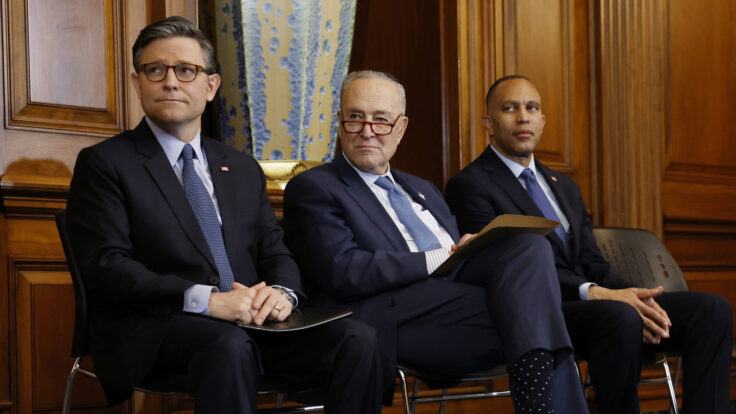
Welcome back to The Best & The Brightest, I’m Tara Palmeri. I hope you all had a wonderful New Year’s Day and are easing back into real life—which is coming at us fast. Tomorrow at noon, the House will vote on whether to keep Speaker Mike Johnson or go into another tailspin à la January 2023. Hang on.
In tonight’s edition, my conversation with presidential historian Douglas Brinkley on Joe Biden’s uncertain legacy, the plans Trump may have to undo some of that legacy in his first 100 days, and whether Biden should have handed Kamala the keys to the White House right after that disastrous debate. We also ponder whether some distance and another Trump term might give his reputation a boost…
But first, here’s Abby Livingston with a preview of tomorrow’s nail-biter vote for House speaker...
|
|
|
 |
Abby Livingston |
|
On the eve of tomorrow’s House speaker vote, all eyes are on Texas
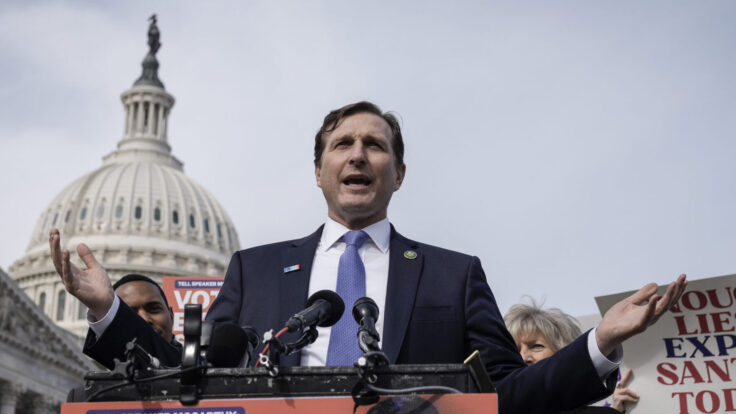
Rep. Chip Roy, an inveterate budget hawk and occasional iconoclast, as the canary in the coalmine for any effort to depose Mike Johnson. With a razor-thin margin, and Kentucky Rep. Thomas Massie already saying he’s voting against him, Johnson can afford to lose only one other House Republican if he wants to hold on to the gavel.
There are other potential nays, of course, but the conventional wisdom on the Hill is that if Roy votes against Johnson, the dam probably breaks. It’s a pickle for Johnson because, while Roy is about as conservative as it gets in the House—and Johnson, himself, was long viewed as a fellow ideologue—he is not a reliable vote for leadership. And it doesn’t help that Johnson has pushed a number of hard votes over the past year, occasionally leaning on Democrats (and pissing off the likes of Marjorie Taylor Greene, Andy Biggs, Paul Gosar, Massie, and others) to keep the government funded and send aid to Ukraine. Like a growing bloc of House Republicans, Roy is a contrarian—but not purely one of the attention-seeking variety. When he takes a position, he’s usually uncompromisingly sincere about it, and that makes him potentially more difficult to talk back into the fold. (While Democrats may loathe his views, privately they admire his consistency.)
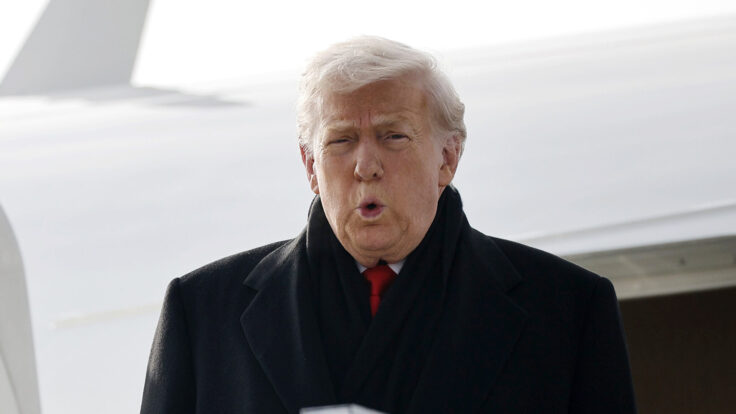
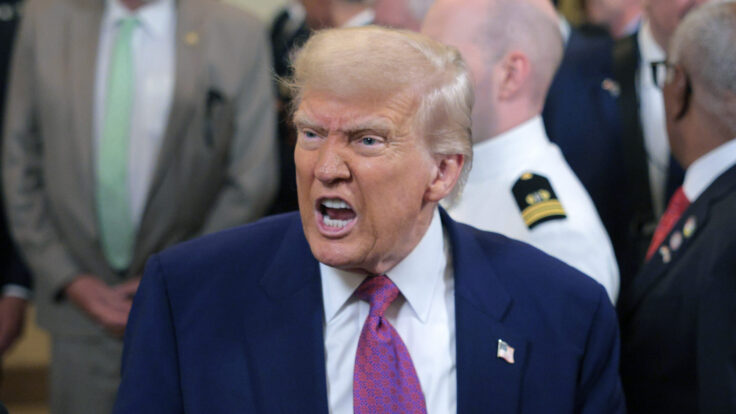
Of course, Trump has been calling around to help shore up support for Johnson, and has implied that he would back primary challenges against members who don’t fall in line. But Trump has already called for somebody to primary Roy, and he can’t play the same card twice. Roy’s district is super Trumpy—a rare patch of deep red near Austin, where the Texas Republican political class of operatives and Hill Country state representatives are concentrated. As such, there’s an ample supply of potential opponents—every wannabe Republican congressmember in the greater Austin metropolitan region ran for the seat when Roy first did in 2018.
But Roy defeated 17 other Republicans in that race. He’s got a killer team on speed dial that includes several of the Austin-based strategists who plotted Ted Cruz’s upset victory over the establishment in 2012. And again, he already incurred Trump’s wrath for loudly voting against the Trump- and Johnson-backed bill to keep the government open in December. Indeed, Roy has cited that very legislation, and its $300 billion in additional deficit spending, as a reason he’s skeptical of Johnson.
Sure, the political world could look entirely different in 2026, but for now, Roy is in as strong shape as any other incumbent to survive a primary—and thus, among the least swayable by a Trump endorsement or threat. Which is bad news for Johnson as Friday’s vote looms.
|
|
|
|
And now to the main event…
|
|
|
|
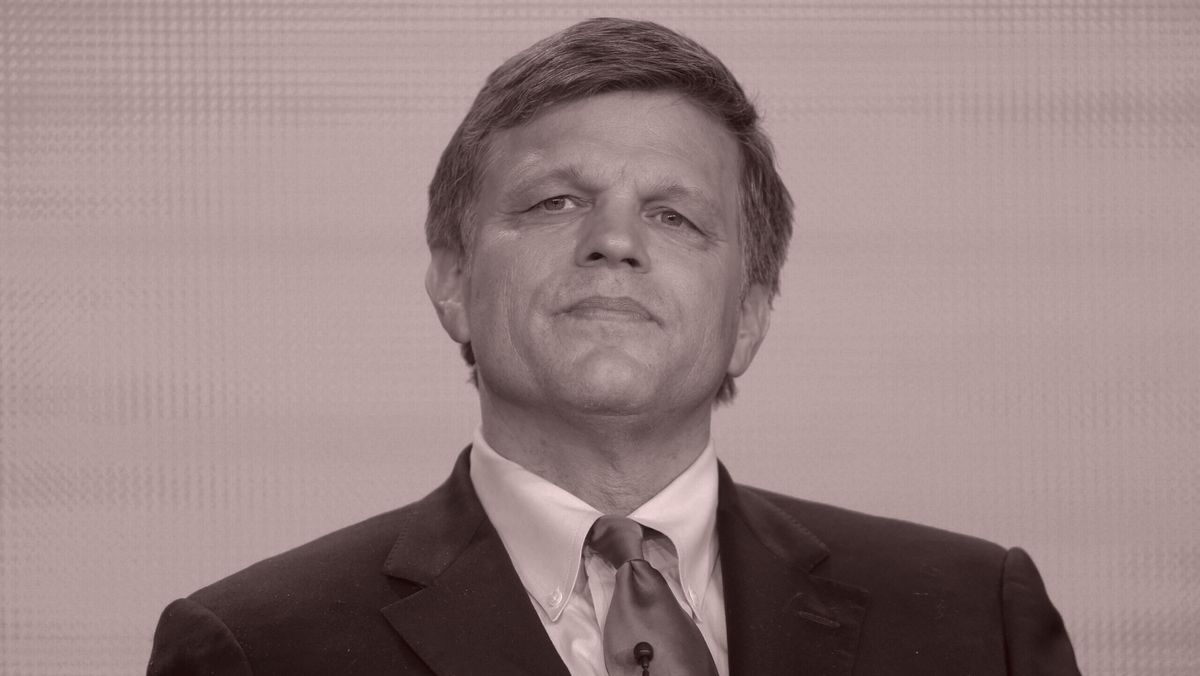
A hard and honest conversation with presidential historian Douglas Brinkley about the strange end of the Biden era, how his legacy will be measured against his successor’s, and whether history will redeem him.
|
|
|
In Washington, emotions are still raw over outgoing President Joe Biden: Democrats are angry that he opted to run for reelection after implying he’d be a “bridge” president; frustrated he took so long to drop out after the debate; rageful over down-ballot losses they attribute to his ego; and disillusioned by his decision to pardon Hunter after insisting he wouldn’t. This was the guy who promised to defend democracy from Donald Trump, and yet he shares no small part of the blame for Trump’s return to the White House.
Biden, who was elected in part because voters were sick of chaos and wanted to think less about politics, is leaving office quietly, at 82 years old, with a 37 percent approval rating, while his successor is already negotiating with foreign leaders over tariffs and immigration. Meanwhile, some of Biden’s team are struggling to find donors for his presidential library, and others are leaking to the press about the administration’s depressing final days.
Still, Biden has had a remarkable 50-year career, despite its anticlimactic end, which makes for a long story to tell. Will Biden be remembered for helping pass a major infrastructure package, restoring normalcy after the pandemic, his investments in semiconductor manufacturing, and combating climate change? Or will history remember the botched Afghanistan withdrawal, high inflation, and the border crisis? I spoke to the presidential historian Douglas Brinkley on my podcast, Somebody’s Gotta Win, about these and other stimulating questions. The following is a lightly edited excerpt from our conversation.
|
|
Tara Palmeri: The presidency has been a strange capstone to Biden’s 50-year legacy in Washington. The fact that he was pushed by his own party to abandon his reelection campaign is obviously something that will be remembered by history, as will his decision to pardon Hunter. Do you think those black marks will overshadow his accomplishments?
Douglas Brinkley: The good news for Joe Biden is we tend to do an upward revision when somebody leaves office. So when you’re looking at Joe Biden’s large career, people will find some nuggets of legislative success and his knowledge on international affairs. Of course, Biden has a different view of what’s happened this past year than historians, journalists, and other commentators. This is the Biden view of it: He was doing swimmingly well; he knew how to beat Trump; yes, he screwed up in the debate, but he should have hung in there and could have won, because he was the secret key to the white working class of Pennsylvania, Michigan, Wisconsin, and those key states. And alas, there was a revolt in his own party. And that challenge came from Nancy Pelosi and Chuck Schumer, with a nod of support from the Obama team, in a way.
As soon as that happened, Biden’s legacy was going to be determined on whether Kamala Harris won. One scenario would have been, Biden blew the debate, but he’s such a nice man and he had all the electoral delegates, but he gave them to Kamala Harris and she becomes the first woman president in U.S. history. In this case, we would be looking at an inaugural where Biden is lionized. The other scenario was what happened—Donald Trump wins, and with Trump winning, the big loser becomes Biden. Trumpism is alive and well, MAGA world is alive and well, and Biden is being talked about alongside “cognitive decline” and screwing up the Democratic Party and causing a leadership void. His legacy was tied to the election, and it didn’t turn out well.
Pelosi and Schumer pushed him out, but he was severely lagging behind Trump after the debate. He had a 36 percent approval rating, about where he’s hovering now. Arguably, Biden stepping down was the only way to save the party. But many Democrats say he waited too long—that’s what dragged them down.
After the debate debacle between Trump and Biden, I was on MSNBC the next morning, and I said Biden’s gotta step down from office now, and hand over the presidency to Kamala Harris. He would have been in better shape, because he would have then allowed Harris to be running as the sitting president of the United States, would have allowed her to go on European trips, and do things as the sitting president. In the worst-case scenario, Biden would be remembered for giving America our first woman president. That would have been a big plus to his legacy. Biden was just flat in 2024, and he’s leaving office as a flat tire.
|
|
Do you think his legacy will be that we had a non-functional president for the final year, and that Jill Biden was the one running the show, like Nancy Reagan?
In Biden’s case, after year two, there was no there there, it seemed. Anybody meeting Joe Biden knew that this was an issue. We really need to know who was in the inner circle in the White House, who was trying to protect him like that. You started seeing the Biden circle trying to beat up on the press like CNN, MSNBC, The New York Times, The Washington Post—which, by and large, offered fairly positive coverage—and demonizing them, as if they’re the problem. Biden had a career where he talked to the press—the press liked him—and suddenly his aides started going after every reporter they’d see on TV saying Biden might be too old.
As for what Biden will be remembered for… I think the Inflation Reduction Act was epic, but because they buried climate in it, it didn’t satisfy climate activists. Climate change may be a key issue 100 years from now, where people are asking, Who did what, when? And we could say Biden did more for climate change than anybody else, by the money he put into that Inflation Reduction Act, yet he gets no credit for it.
But the central problem of Biden’s presidency, and why he didn’t get reelected, is they only had one view of it. Which was, You may not like everything I do, but the alternative is Donald Trump. That was their strategy. It’s smarter, in my view, to always be optimistic in America. Trump is an aberration from that; he marketeers division and fear. Biden’s not going to beat Trump on that ground. Sometimes, Biden reminded me of L.B.J.; he did great legislation, but there was no visual component, there was no feel.
How much can Trump unwind of Biden’s legacy?
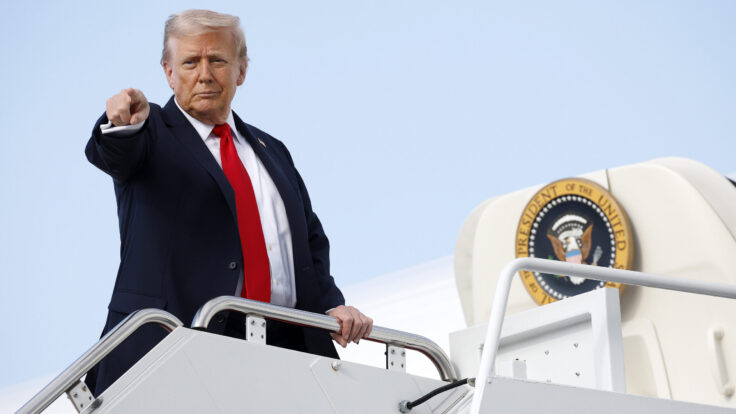
Right after the inauguration, you’ll see Donald Trump sign 100 executive orders. That doesn’t mean they’re all going to stick. Some will get booted to the courts, and there will be a lot that’s going to get through… I think Trump better tune out the Bannons of the world; get off a revenge tour; don’t target the press; sue organizations, like he did with ABC, but don’t target individuals. Trump’s going to have to watch that his cabinet nominees, if they get confirmed, aren’t exceeding their legal mandate and losing public support.
Could Biden be seen more favorably if Trump’s second term is considered disastrous?
I don’t wish for that in any way, shape, or form. We don’t want to see the president fail. But if Trump does fail, or the country starts going into a recession, or worse things happen, there may be people saying, God, we miss Biden. That could happen. But only time will tell. Trump isn’t just trying to roll back Bidenism and undo all that climate money and undo his executive orders; Trump would like to go all the way back through Nixon. What brings Elon Musk, Trump, and many others together is money, and the federal government regulating everything. They want to create a deregulatory federal government wherever they can.
|
|
|
|
Join Emmy Award-winning journalist Peter Hamby, along with the team of expert journalists at Puck, as they let you in on the conversations insiders are having across the four corners of power in America: Wall Street, Washington, Silicon Valley, and Hollywood. Presented in partnership with Audacy, new episodes publish daily, Monday through Friday.
|
|
|
|
Unique and privileged insight into the private conversation going on inside Wall Street, as told by the best-selling journalist and former M&A banker.
|
|
|
Need help? Review our FAQ page or contact us for assistance. For brand partnerships, email ads@puck.news.
You received this email because you signed up to receive emails from Puck, or as part of your Puck account associated with . To stop receiving this newsletter and/or manage all your email preferences, click here.
|
|
Puck is published by Heat Media LLC. 107 Greenwich St, New York, NY 10006
|
|
|
|