 |
|
Hello, and welcome back to The Best & The Brightest, your Tuesday foreign policy dispatch.
Before we get to the main story—Ukraine and Russian nuclear escalation—I wanted to talk about the deal the Biden administration reached last week to free five Americans imprisoned in Iran. The Americans will first be moved from Evin prison to a hotel, where they will be held until they get on a plane to the U.S. In exchange, about $6 billion of frozen Iranian funds will be released, as will, apparently, a few Iranians currently behind bars in America for violating sanctions.
|
|
|
| The night before the deal was announced, not realizing what was afoot, I happened to be having dinner with my friend Jason Rezaian, who was himself a hostage in Iran for nearly 18 months until he was freed in January 2016. Jason was periodically checking his phone because, he explained, a deal was imminent. Towards the end of the evening, he got the good news. It was happening.
Yesterday, I spoke to Jason about the deal for The Best & The Brightest, especially since it’s come under withering attack from Mike Pompeo, other Republicans, and some hardliners in the Iranian diaspora. Honestly, as soon as the news dropped, it was obvious what their objections would be: Iran is being paid to release hostages, thereby incentivizing them to take hostages in the first place. It’s hardly a surprising critique, given Pompeo’s policy while he was Trump’s Secretary of State. He, like other Iran hawks, took a baby-and-the-bathwater approach, tearing up the Iran nuclear deal because there wasn’t enough in it to deter Iran’s other violent, destabilizing activities across the Middle East. This, of course, has led to Iran both engaging in those activities and becoming much closer to developing a nuclear weapon.
Given his personal history, Jason was supportive of the deal to release these five hostages, even if it entailed thawing Iran’s assets, and he was eager to defend it. “I believe in it to the extent it’s our only option,” he told me when we spoke on Monday. “Otherwise, you leave people to languish in prison for years and years, or to die. It’s that simple a choice. You either bring them home or leave them to die.”
Moreover, Jason pointed out that it’s not like Iran is getting suitcases of crisp, stacked Benjamins. The money that Iran will have access to—if the hostages make it to the U.S. safely—is held in the kind of account created by other countries, all of them U.S. allies like South Korea, Japan and Italy, who don’t have sanctions in place against Iran, but don’t want to piss us off either. Under something called the significant reduction exemption, these countries were, for a time, not penalized for buying Iranian oil if they started buying less Iranian oil and put the money into these frozen accounts. This exception, Jason points out, existed under Trump, too—until his administration put an end to the practice in the spring of 2019. “Those accounts had billions in them and they were spent down, without any kind of oversight, on Trump’s watch,” Jason argued.
In the case of this deal, South Korea will release the money in its account and Qatar will administer the funds, making sure—at least in theory—that they are used only for making payments for food and medicine, for which there is already a preexisting humanitarian exemption in the Iran sanctions. “This is money exchanged between Iran and South Korea, held in banks that are in South Korea,” Jason emphasized. “Literally, it has nothing to do with the U.S. except that we put limitations on them, and South Korea said we won’t release the funds unless we get written permission from the U.S.”
In essence, the argument was that the Biden administration, like the Obama administration before it, was great at devising clever, elaborate solutions to tangled problems—and then was terrible at explaining what they did, in part because it was all too nuanced for an American attention span.
As for the idea that these kinds of deals—whether they involve an exchange of financial assets or, as in Russia’s case, human ones—encourage future hostage taking, Jason was dismissive. “In the Iranian context, they’ve been doing it since 1979,” he said. “They don’t need any incentive to do it because they’ve never stopped! There are thousands of American citizens of Iranian origin that have registered with the Swiss embassy in Tehran right now. There’s a limitless supply. We just have to figure out how to disincentivize them. And we haven’t figured out how to do it yet.”
And now, on to nukes! But first… |
| The Capitol Hill Cafeteria Report |
|
| An utterly indispensable, high-minded, and, yes, occasionally dishy readout of what our lawmakers are really legislating behind closed doors.
By Abby Livingston
- R.I.’s Battle Royale: In Rhode Island, Democrats are preparing to battle it out in a special election to succeed the recently-resigned David Cicilline. Notable national Democrats are picking sides by way of campaign donations: While top fundraiser Don Carlson benefited a great deal from a $600,000 self-loan, he also received a hand from ex-Massachusetts Gov. Deval Patrick and Rep. Jim Himes’ leadership PAC, raising $913,000 overall. Aaron Regunberg had the second-highest fundraising haul, totalling $471,000, with the support of many local officials, according to F.E.C. reports, plus a notable donation from Jane Fonda’s Climate PAC.
Gabe Amo, a former Obama and Biden White House staffer, saw alumni from both administrations and campaigns line up to donate. Contributors to his $463,000 haul included Obama reelection campaign manager Jim Messina, Obama chief of staff Peter Rouse, Biden ’24 campaign manager Julie Rodriguez, Obama ’08 and ’12 campaign fixture Mitch Stewart, and Senate Democratic political guru Paul Tencher. Amo also picked up support from San Antonio Mayor Ron Nirenberg and former Philadelphia Mayor Michael Nutter. Sabina Matos trailed with $338,000, but still saw a great deal of support from the Hill—the Congressional Hispanic Caucus’ campaign arm donated to her, along with EMILY’s List, the Latino Victory Fund, and members Nanette Barragán and Norma Torres.
Given the number of Democrats in this primary field, picking a winner ahead of the Sept. 5 election is essentially a fool’s errand. But however it shakes out, this is probably a safe Democratic seat.
- Utah’s Self-Funding Showdown: Across the country, another special election primary is taking shape to replace Utah’s Chris Stewart. In this case, the top two fundraisers are self-funders: Republican Becky Edwards chucked in $100,000 toward her own campaign, but her top G.O.P. rival, Bruce Hough, upped the ante with more than $200,000 of his own money. (Intriguingly, he also picked up a donation from his son, Derek Hough, of Dancing with the Stars.) Hough also received support from two well-known out-of-state Republican consultants, Sean Noble of Arizona and Henry Barbour of Mississippi. This primary, too, is set for Sept. 5. It’s hard to see any scenario at this point where this race will be competitive in its November special election.
|
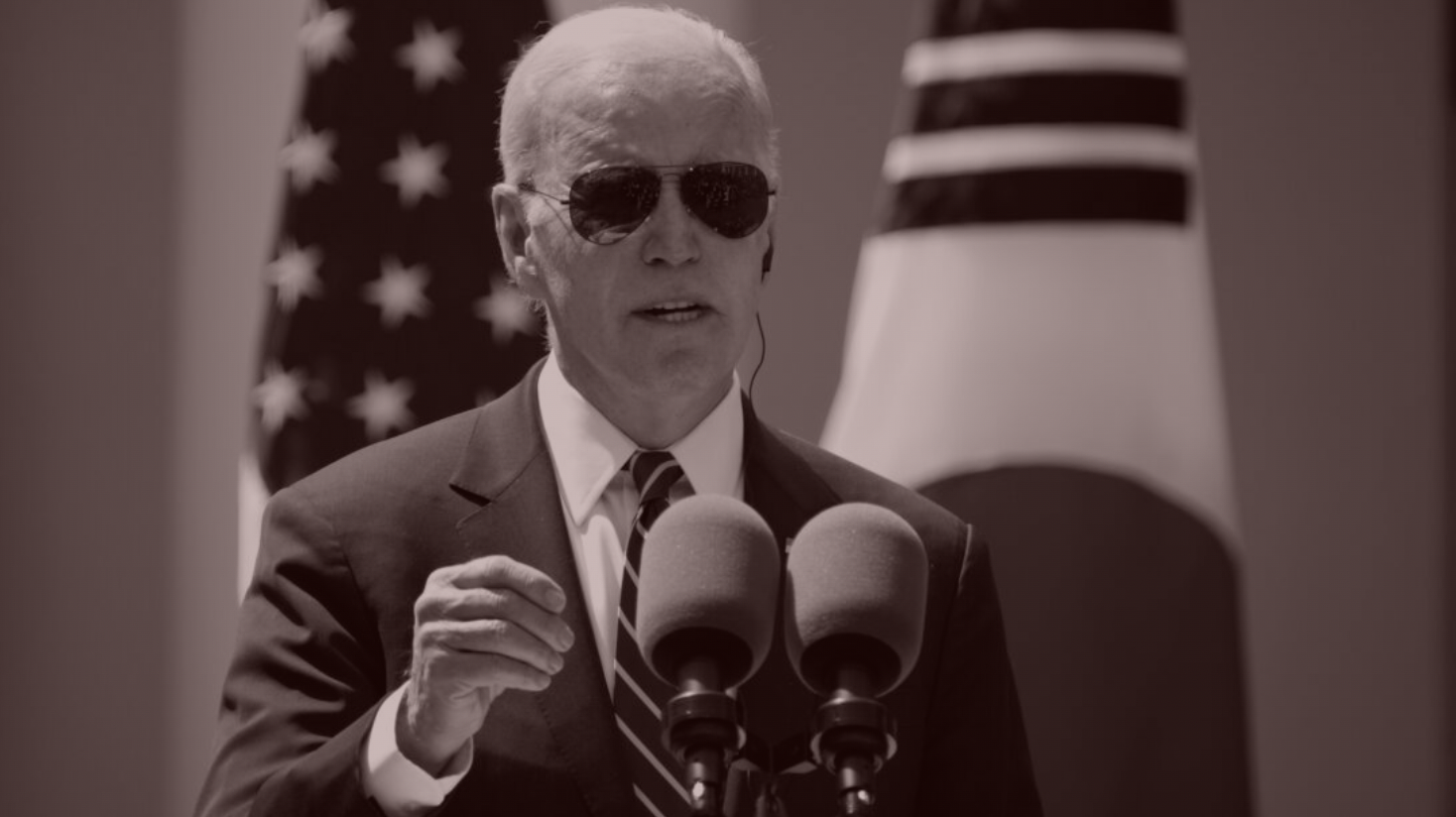 |
| Biden & Putin’s Nuclear Red Lines |
| There is now a clear consensus that the White House sees the risk of Putin going nuclear as lower today than even a few months ago, encouraging Biden officials to tacitly approve Ukrainian tactics that they once feared would trigger a counterattack on NATO, or worse. |
|
|
|
| Ukraine’s quest to bring the war back to Russia has been going well, perhaps even a little too well. In the last few weeks, drones have hit targets across Russia, including its capital. Mysterious explosions keep rocking Russian cities, including a deadly one at a military optics plant just outside Moscow. The border regions are under constant bombardment, and Kyiv keeps attacking the various bridges connecting the Russian mainland to illegally occupied Crimea. Ukrainian president Volodymyr Zelensky boasted on Sunday that the latest such attack—“an eloquent smoke” on the Crimean bridge—was Ukraine’s riposte to “Russia’s crimes,” none of which, he said, would be left without a forceful response.
If you have been even distantly following this war, you’ll likely recall that going after Crimea and striking the Russian heartland were both things that the Biden administration considered to be no-goes, given the risk of greater potential reprisals. Fear of escalation was—and continues to be—one reason that the White House has refused to supply Kyiv with ATACMS, long-range missiles that could strike Russian territory. Indeed, from the earliest days of Russia’s full-scale invasion, the White House strategy has been to prevent Vladimir Putin from doing something drastic, like attacking a NATO neighbor and thereby dragging the U.S. into a direct war with Russia, or, worst of all, a nuclear confrontation. “The threat of escalation” became a mantra in Washington, both as an expression of real fear and as a rationale for tempering and calibrating military support for Ukraine.
And yet, if you talk to administration members in private, neither the repeated drone strikes on Moscow nor the constant hits on Russian bridges to Crimea have caused much alarm. Recently, I spoke to a senior State Department official who seemed positively unperturbed. “Reasonable people can disagree about whether this is a productive strategy,” the official said. “You can certainly understand it as a rational response. Ukraine has said that it wants to make sure Russians feel pain on their territory. And if you survey the targets, you see the actor behind it going after legitimate military targets. They’re not striking schools, hospitals, grain or civilian infrastructure. On the flip side, if you’re a Ukrainian citizen who’s worried about your own security, if you see a drone strike in Moscow and it’s followed by a barrage of missiles across Ukraine, you think that, in the cost-benefit analysis, maybe it doesn’t make sense.”
It wasn’t approval exactly, but it wasn’t a scolding either. It was also indicative of Washington’s diminished concern that Putin might actually press the nuclear button, which peaked last fall when Kherson fell back into Ukrainian hands. Yet back then, the Ukrainians hadn’t attacked Moscow or killed high-ranking Russian commanders deep behind the front line. But they had just hit Putin’s precious Crimean bridge over the Kerch Strait, which sent him into a rage and triggered a punishing assault on Ukraine’s power grid. In retrospect, that attack on the sacred bridge was just the first of many, and Ukraine has publicly sworn to keep hitting it until it is no longer functional. And still, no nukes.
It’s a fine line the Biden administration has learned how to walk, while constantly recalibrating its steps: letting the Ukrainians fight the way they see fit, while trying to make sure not to trip into thermonuclear armageddon. “We’ve been very clear that this isn’t something we encourage,” the senior State official told me about the drone strikes, which, everyone assumes, were directed by Ukraine. For the same reason, the Biden administration does not want Kyiv using American-made systems to launch strikes inside Russia; they have been very clear on that. “The longer range systems we provide don’t have the range to go into Russia,” the official said. “This is not something we’ve encouraged in any way. We want the Russians to know where we stand on this.” The Moscow-bound drones, according to an administration official, were Ukrainian-made.
As for that escalation mantra that was all the rage in 2022, well, said the State Department official, “We’re always mindful of escalation risks, but perhaps they’ve been overblown, at least so far.” |
|
|
| The administration’s newly relaxed posture is hardly a secret. Last month, at the Aspen Security Forum, Ed Luce asked national security advisor Jake Sullivan about the fact that the Biden administration inevitably gives the Ukrainians whatever weapons system they’ve been publically pleading for, and why Putin doesn’t respond the way Washington feared when this happens. (“Whoever was drawing Putin’s red lines is clearly running out of red ink,” Luce quipped, “because that line keeps retreating.”)
Sullivan responded with a point that I’ve started to hear a lot from other members of the administration. “There are two caricatures that I think are just wrong,” Sullivan said. “One caricature is that the Biden administration is just sitting around, unwilling to provide things, because we’re worried about the Russians…On the other hand, there is the caricature that says, don’t worry at all, don’t even ask the question about what Russia might do, because that just betokens weakness.”
Both were flat-out wrong, Sullivan insisted. The Biden administration has provided military aid of enormous sophistication, scope and quantity, he said, but, just like every member of NATO, it must assess a variety of risks when adjusting their support for Ukraine. It is, he said, the responsible thing to do. Just, you know, don’t go overboard. “Don’t be paralyzed by it, consider it, and make decisions accordingly,” Sullivan said.
Once again, it seems the administration is fighting a war on two fronts, against enemies both foreign and domestic. The latter foe is none other than the Blob, that conventional-wisdom peddling, armchair-generaling Washington foreign-policy establishment. In August of 2021, the White House had fought the Blob’s reductive moralizing about the bloody mess that was the withdrawal from Afghanistan as it dealt with the Taliban swallowing up the country. Now, as Biden fights Russia in a proxy war in Ukraine, his administration has once again been battling the Blob.
One one hand, the White House wants to show that President Biden and his team are not cowering in fear of Putin, that they are boldly helping Ukraine fight back. But they don’t want to be seen as reckless, heedless of the risk of going up against a man made crazy by thoughts of his legacy while wielding the largest nuclear arsenal on earth. “This is a touchy subject and not something we want to be seen as spiking the football on,” one administration official told me. “But there’s been an overblown caricature in the Blob that we think about escalation risks more than we probably do.”
And, of course, in true Washington fashion, that very touchiness is also the subject of discussion, though no one wants to go on the record to note just how sensitive the administration is to these critiques because they read all their press and will absolutely follow up with you. |
|
|
| Beneath the fight over the administration’s image, however, is something far more substantive: a real feeling that the risk of escalation—especially in terms of Russia using nuclear weapons—has abated, even if it hasn’t completely vanished. “We’re mindful of escalation, as we should be,” the administration official said. “It is an ever-present factor. Thankfully we don’t have any indications that Russia is currently contemplating using nuclear weapons on the battlefield.”
A lot has happened since the last time the White House had reason to think Putin was edging toward nuclear retaliation. In the fall, Biden sent C.I.A. director Bill Burns to deliver the message to Russian spy chief Sergey Naryshkin that the consequences of such a step would be catastrophic. (Theories bandied about Washington at the time ranged from a massive conventional strike inside Russia to the U.S. taking out the entire Russian Black Sea Fleet, as well as every Russian military installation in Ukraine.) Then, in November, Chinese premier Xi Jinping followed up his private warnings to Putin with public ones. Xi was opposed to “the use of, or threats to use, nuclear weapons,” and was adamant that “nuclear weapons cannot be used, a nuclear war cannot be waged.” Moreover, all the red lines the Biden administration thought Putin had, as Ed Luce pointed out, seemed to melt away with each step the White House took. And then there was Yevgeny Prigozhin’s mutiny, which now has the entire Washington establishment convinced that Putin is very weak, if not mortally wounded.
Just as important is what hasn’t happened, namely Putin’s follow-through on his big nuclear threats, despite all kinds of Ukrainian breakthroughs and ever more sophisticated American weapons provisions. “They never analyze the situation without that implicitly or explicitly in the background,” said one source familiar with discussions in the White House. “I think they have taken note of what Russia has and hasn’t done in response to certain things, and that has allowed them to realize, okay, we can go a bit further.”
“Russian officials love to mock Obama for not enforcing his redline in Syria but this one is, arguably, much more of a doozy,” said Andrew Weiss, who runs the Russia program at the Carnegie Endowment. “It also laid the seeds for the Biden team’s approach of boiling the frog. The gradual delivery of different weapons systems allowed Western leaders to test whether Russian red lines were going to be enforced or if they were just hot air. As was the case with so much of what the Russians have said about Ukraine, Putin was simply making stuff up on the fly and hoping we would internalize it.”
There’s also the fact that Russia has, in fact, retaliated, just not in a way that the Biden administration considers “strategic.” Putin and his people have been very explicit in tying their vicious bombing campaigns against civilian targets in Ukraine to events like attacks on the Kerch Bridge. Putin’s spokesman confirmed that the Russian missile strikes on Odesa’s port and grain shipping infrastructure were “revenge” for one such bridge strike. But, again, that’s not attacking a NATO member or using a nuclear weapon. Everything short of that is not the escalation the White House was so worried about. “The Ukrainians have done a lot that has elicited a degree of escalation,” said the senior State Department official, “but it’s been tactical rather than strategic escalation.” |
|
|
| There is now a clear consensus that the White House sees the threat of Putin going nuclear as lower today than it did a few months ago, but there is no agreement as to why. “I haven’t heard that rhetoric for some time,” said Alina Polyakova, the head of the Center for European Policy Analysis in Washington. “To my mind, there was never a huge risk of nuclear escalation. Now the administration has come to full terms with it, but it also has to do with them managing it quite well.”
That, according to Polyakova, is the result of the U.S. recovering some of its old, Cold War policy mojo. “When the full-scale invasion first took place, a lot of the panic and fear had a lot to do with the fact that we had forgotten how to do nuclear escalation, that there is a way to do it,” Polyakova told me. “During the Cold War, we used to have people at State, D.O.D., the intelligence community that were dedicated just to this because it was seen as so vitally important. A lot of people retired, so there wasn’t that bench, there wasn’t that muscle memory. I don’t know if they’ve brought people back but it does seem that they’ve regained some of this muscle memory from the Cold War era.”
“It’s less than it was last fall, definitely,” said Angela Stent, a National Intelligence Officer for Russia during the Bush years and now a professor at Georgetown. “Prigozhin’s mutiny raises a lot of questions about who’s calling the shots on all these things. The fact that the Chinese have said publicly that it’s unacceptable to talk about using nuclear weapons, and India said so as well, is important too. And then China showed up in Jeddah. It was a sign to Russia that China has its own equities and would not look kindly on the use of nuclear weapons.”
The White House, of course, wants to take credit for the fact that that particular bell has not rung—“We did have very strong deterrence messaging,” the administration official said—and they definitely have done a lot to make sure it stays silent. But others point to just one x-factor: Xi. “It’s been a year and a half and it hasn’t happened, but people don’t really know why it hasn’t happened,” said Frank Gavin, a scholar of nuclear proliferation at S.A.I.S. “It could be that Putin was never going to do anything. It could be that there was something domestic going on. It could be Xi said you shouldn’t do this and that was it. If you ask me, with a gun to my head, what was the most important factor, I’d say it was Xi’s intervention. But in the city you and I live in, nobody wants to admit it.” |
|
|
| That’s all from me, friends. I’ll see you back here next week, rain, shine, or swampy humidity. Until then, good night, tomorrow will be worse.
Julia |
|
|
|
| FOUR STORIES WE’RE TALKING ABOUT |
|
|
|

|
 |
|
|
|
Need help? Review our FAQs
page or contact
us for assistance. For brand partnerships, email ads@puck.news.
|
|
You received this email because you signed up to receive emails from Puck, or as part of your Puck account associated with . To stop receiving this newsletter and/or manage all your email preferences, click here.
|
|
Puck is published by Heat Media LLC. 227 W 17th St New York, NY 10011.
|
|
|
|