 |
|
Hello, and welcome back to The Best & The Brightest. I’m Julia Ioffe, coming to you a day early as the Middle East teeters somewhere between returning to a post-October 7 status quo and World War III. Peter Hamby will be with you tomorrow.
In tonight’s dispatch, my reporting on how Benjamin Netanyahu has alienated not just the Biden White House, perhaps Israel’s last true friend, but the Israeli national security establishment, too.
But first, here’s the wonderful Abby Livingston from the Hill…
|
| Allred vs. Cruz & Johnson’s Ukraine Showdown |
|
Even before members flew into DCA on Monday, Capitol Hill insiders were openly referring to the days ahead as “the week from hell.” At the very least, it’ll be hellaciously busy, now that Speaker Johnson is poised to unveil a stand-alone bill to fund Ukraine. Also at issue: fallout from Iran’s attack on Israel over the weekend, Tuesday’s walking of the Mayorkas impeachment articles over to the Senate, FISA reauthorization, and Marjorie Taylor Greene’s looming motion-to-vacate threat (which could accelerate after Johnson’s decision to move on Ukraine). It’s a fool’s errand to make predictions beyond this evening’s House G.O.P. conference meeting, but for now, here’s what insiders are chewing over…
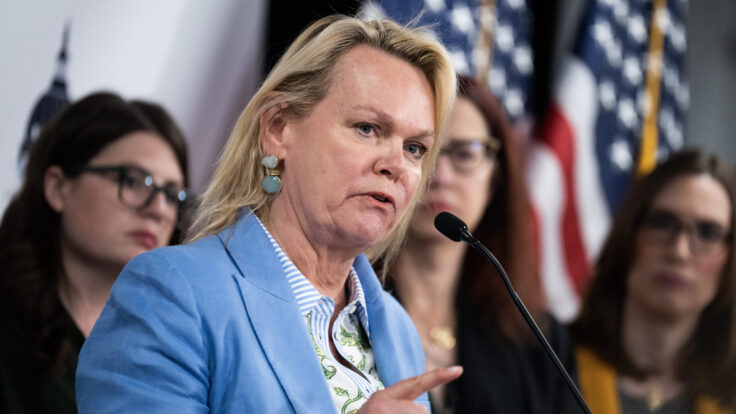
- The Ukraine showdown: My partner Julia Ioffe recently spoke with the House Foreign Relations Chairman Michael McCaul, one of the key figures in the debate over Ukraine funding. McCaul belongs to a trifecta of powerhouse Republican committee chairmen—along with Mike Rogers at Armed Services and Mike Turner at Intel—leading the charge to finance the war effort. But these hawks are at odds with M.T.G., whose tweet over the weekend lambasted “Ukrainian Nazis” and suggested that tying Ukrainian aid to Israel funding was “antisemitic.”
Nota bene: In the scope of congressional history, it’s no small thing that a sophomore, serving on the Oversight and Homeland Security committees, may be in a position to overrule not one but three chairmen overseeing nearly all aspects of America’s engagement with the outside world.
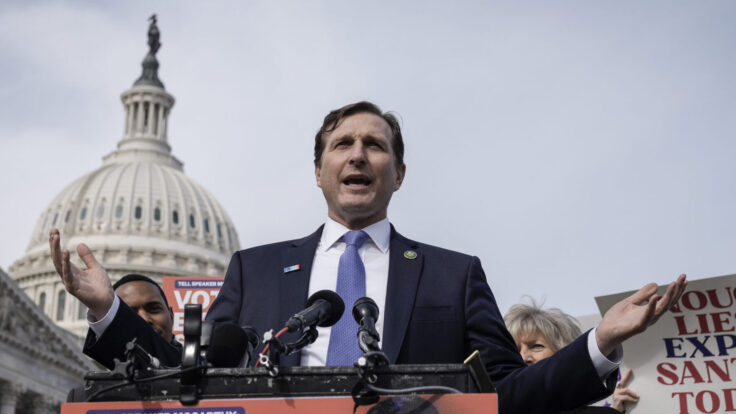
- Allred vs. Cruz: The most overlooked figure (so far) in the latest campaign fundraising reports was Dallas congressman Colin Allred’s $9.5 million haul, adding to the $28 million war chest he’s deploying in his Senate bid against Ted Cruz. Allred’s race has mostly flown under the radar—Texas remains an incredibly hard lift for Democrats—but this kind of fundraising is approaching holy shit money. We don’t yet know what Cruz raised, but an intriguing parallel with Beto O’Rourke’s 2018 campaign is already emerging.
In the same quarter in 2018, O’Rourke raised $6.7 million, and it wasn’t until the third quarter of 2018, during peak Beto fever, that he brought in $38 million en route to his eventual $80 million total. Can Allred build that same level of momentum? He is in a strong position to run a robust advertising campaign in a state with no fewer than 20 television markets—but likely without the help of Democratic outside groups, who will almost certainly prioritize the eight seats they’re defending elsewhere in the country. Allred’s direct fundraising, however, will go much further than outside groups’ since candidates secure a lower television advertising rate.
More poignantly: Will Allred turn Texas into a Republican money pit if they have to spend to protect Cruz? And will this race actually prove competitive? It’s too early to say. Both the Cook Political Report and Inside Elections rate Texas as Likely Republican.
|
 |
| Bibi Stings |
| Biden, Blinken, and Sullivan aren’t the only ones losing patience with the Israeli prime minister. The Israeli national security establishment has its own profound gripes and concerns, too. |
|
|
|
| On Saturday night, as hundreds of Iranian drones and rockets sped toward Israel, the country once again faced a dilemma that has become all too familiar: What was good for Prime Minister Benjamin Netanyahu wasn’t necessarily good for Israel, and vice versa. While the country braced for attack, Bibi’s political demise was, once again, delayed, deus ex cruise missile. The U.S., Britain, and France pitched in to help Israel shoot down nearly all the rockets and drones, while Jordan, whose population is heavily Palestinian, shot down some 20 percent of the incoming fire. Meanwhile, U.S. Secretary of State Antony Blinken was declaring America’s full-throated support for Israel, calling it “ironclad.” News networks interrupted coverage to report that Joe Biden and Bibi were due to speak shortly after the attacks commenced; Biden reassured the P.M. that the U.S., once again, stood with Israel.
This show of international solidarity was a stunning development given the recent trajectory of U.S.-Israeli relations. Before Saturday, the biggest story out of the region was the Israeli attack on a World Central Kitchen aid convoy that killed seven people, including one American. In its wake, Biden had what sounded like a rather tense phone call with Netanyahu, wherein the American president warned that he was this close to conditioning further aid to Israel. This idea had been anathema in Washington for generations, which is why Biden had held off for months on floating it, despite growing calls from inside his party. But the W.C.K. deaths seemed to leave him little choice.
That phone call, of course, came after the U.S. declined to veto a U.N. Security Council resolution that Israel opposed, and Bibi retaliated by torpedoing a trip to Washington to discuss Israel’s potential invasion of Rafah, in southern Gaza. Instead, the parties met virtually. It did not go well. Blinken and National Security Advisor Jake Sullivan voiced their concerns about Israeli nonchalance toward the suffering of Palestinian civilians. “You’re going to be responsible for the third famine crisis of the 21st century,” Sullivan reportedly said in the meeting. “That is not something we can accept as partners.” According to one report, the U.S. team told the Israelis that they were the only ones in the world who didn’t believe there was a famine in Gaza.
Meanwhile, Senate Majority Leader Chuck Schumer, America’s most senior elected Jewish official, had been calling for new elections in Israel, and Netanyahu attempted to schedule himself as the keynote speaker at a Republican Party retreat in retaliation. By the time Iran fired its barrage toward Israel, the relationship between Israel and its most important ally and protector had never been worse.
The Israeli security establishment—its defense and intelligence professionals, both active and retired—have been growing increasingly alarmed as relations have deteriorated. “From my perspective, the alliance with the U.S. is probably one of the very few things that Israel cannot live without,” said one retired senior Israeli government official, who is also a reserve officer in the I.D.F. “The way the schism has been deepened by Netanyahu and his coalition is unacceptable to whoever understands the realistic situation which we are in.”
Eran Etzion, a former Israeli deputy national security advisor, told me last week that the U.S.-Israel relationship had truly hit rock bottom. “There is a great deal of concern and there is an understanding that we’ve reached an all-time low, at least in everyone’s memory,” he said. “For all practical purposes, this is unprecedented in terms of the breadth of the gap between the American and the Israeli government, and the overall strategic significance of this deep crisis of trust, personally and professionally, between Biden and Netanyahu. And I don’t think it’s recoverable, under any circumstances.” |
|
|
| The schism between the U.S. and Israel is mirrored within the country’s national security establishment, which has long had a fraught relationship with Netanyahu, whom they see as a cynical opportunist willing to put his short-term political interests—namely, avoiding his legal challenges and staying in power—over the country’s national security needs. Time and again, Bibi has ignored his own generals’ and spies’ warnings in order to do what is expedient for him personally—and all while positioning himself as the only one who can protect Israel from myriad and multiplying threats.
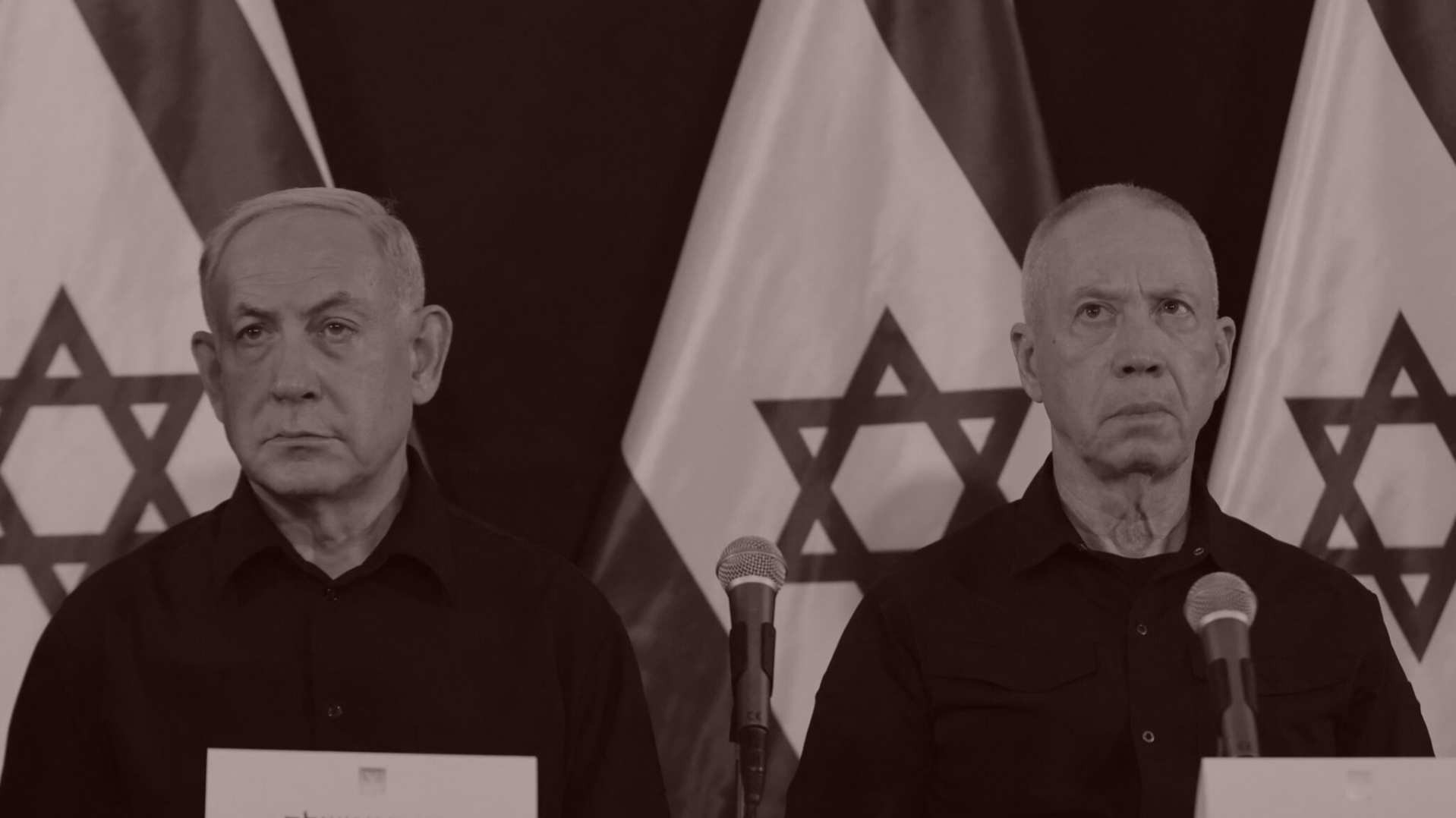
The most striking recent example occurred in the first nine months of 2023, when dozens of security heavyweights publicly warned that Netanyahu’s judicial coup was putting the country’s national security at risk—and Bibi just barreled on. “They simply don’t trust him,” said Etzion, summarizing the views of the Israeli security establishment. “They think he’s dishonest, that he is deceiving them and not being sincere even in most discreet cabinet rooms, that he’s manipulating them and politicizing the process.” For months, Netanyahu has appeared at odds with his defense minister, Yoav Gallant. Now, according to the retired official, they are no longer on speaking terms—in the middle of a war. “You can never be sure that Netanyahu’s decisions are taken in light of national security, not in the short or the long term,” said the retired senior Israeli official. “He’s motivated by his own interests as a criminal defendant [in a corruption trial].”
Much of the defense establishment, this official said, understands that Israel has to have a real, strategic plan for the day after the Gaza war ends, that Israel cannot govern Gaza—and it certainly cannot allow for renewed Jewish settlements and the ethnic cleansing of Palestinians there, as many in Netanyahu’s government have called for. Most of the security establishment believes, this official said, “that the only way to keep itself a democratic state for the Jewish people is to disengage from the Palestinians and move toward two states for two people.” The official added, “Most of the security establishment cannot talk because they are under [active] duty obligations and they cannot speak in public, but I can tell you that what they think is quite close to what I just described.”
Bibi, of course, has been steadfastly opposed to a two-state solution, and the more Biden insists on one, the more Bibi digs in and publicly denounces the idea. For the most part, though, the Israeli defense and intelligence establishment fingers their prime minister for the rift. “Most of them blame Netanyahu more than they blame Biden,” said Etzion. “Yes, perhaps they see that Biden is also motivated by political considerations, but I think, if we compare the degrees of criticism, probably Netanyahu is considered much more to be blamed than Biden for where we are right now.”
Now, observers and insiders say, the alarm has reached a fever pitch.
“The people in the security establishment and people serving [in the military] say it’s very dangerous,” explained Noga Tarnopolsky, an Israeli journalist. “They’re concerned that Israel is losing its allies and its diplomatic standing day by day. There is a lot of black humor and real alarm, but these days, you can’t have a conversation with anyone without them expressing real concern about Israel’s increasing isolation internationally, but specifically [its schism with] Joe Biden.”
“People on the inside realize that this is Netanyahu’s doing—and they’re exposed to raw information; they don’t get it through filters and Bibi’s spin,” said Amir Tibon, an Israeli journalist who survived the attack on October 7 on his kibbutz, Nahal Oz. “The Mossad, the military, Shin Bet, they are all extremely worried. It’s affecting the war effort. Biden is really our only friend in the world today.”
Tibon pointed out that, just three days after October 7, Biden touched down in Israel, the first U.S. president to visit Israel in wartime, and one whose empathy for the shock and agony of the Israeli public won them over that day. “Fighting with him is insane,” Tibon continued. “It’s not like we have any alternative. Russia and China are on Iran’s side. The E.U. has lost patience with us long ago, and in the U.K., a conservative government is discussing an arms embargo. What are we doing, fighting with our only friend?” |
|
|
| The answer lies with Bibi’s coalition of radicals and misfits. After he spent years alienating potential allies and accumulating a long train of corruption charges, no one else wanted to help him rule except for the ultra-right-wing zealots, people like Bezalel Smotrich and Itamar Ben-Gvir. (The latter was disqualified from serving in the I.D.F. for his extremist views but is now the interior minister, in charge of the Israeli police.) These radical, ultranationalist coalition partners—like the ministers who attended a January conference about resettling Gaza—have found common cause with some of the hardest-line Likudniks. “These people don’t care about Biden,” explained Barak Ravid, an Israeli reporter with Axios. “Half of the people in the Knesset today share Ben-Gvir’s worldview. And they don’t care what Biden says. They don’t care. And this whole group is in a fight with what was the old elite”—that is, the Israeli defense establishment, the Israeli “deep state.” (Sound familiar?)
Their priority isn’t ensuring that Israel doesn’t become a pariah state; it isn’t even focused on countering Iran, which is surrounding Israel with a web of increasingly sophisticated proxies. Rather, it’s annexing the West Bank and perhaps Gaza, lands that they believe were promised to the Jewish people by God. “Their sole focus is on first, reoccupying Gaza, annexing the West Bank, and kicking out the Palestinians,” explained Ravid. “For them, Israel’s relationship with the U.S. doesn’t play a role in any way. They don’t care if the I.C.C. decides something against Israel, or if the U.N. Security Council votes against us, because it only reinforces their ethnocentric view.”
For Ben-Gvir, Smotrich, and their ilk, America’s sudden hostility is further proof that everyone really is antisemitic and out to get Israel, that Jews can only count on each other to protect themselves—the very point of having created a Jewish state to begin with. This is a minority view in Israel, says Dr. Tehilla Shwartz Altshuler, a senior fellow with the Israel Democracy Institute, one she says is held by only 15 percent of the population. “The problem is that this 15 percent controls the government,” Shwartz Altshuler told me. “The rest of the population thinks we can’t do without America.” |
|
|
| Iran’s retaliation for Israel’s strike on its consular facility in Damascus gave Netanyahu an opportunity to reset his relations with the U.S., with Western Europe, and even with some of Israel’s Arab neighbors. For a moment, Bibi succeeded in recasting the narrative of this war as one about the increasing threat of Iran, and therefore one that more countries could get behind. He could have used the days following Iran’s attack to rebuild his relationship with Biden, but in the past 48 hours, it’s become clear that no such reset will occur. The Biden administration continues to publicly and privately warn Israel to “take the win”—the interception operation was a major success, there was very little damage, and only one person in Israel was injured—and not escalate. Iran, for its part, has said it is done retaliating unless Israel strikes again.
And yet, Ben-Gvir and Smotrich, on whom Bibi’s government depends, are urging Netanyahu to hit back—and hit back harder. Ben-Gvir is saying Israel must “go berserk,” and Smotrich has said that Israel’s response must “echo” throughout “the Middle East for generations to come.” Netanyahu seems to be listening to them, not Biden. Gallant has already told Defense Secretary Lloyd Austin that Israel has no choice but to retaliate. On Monday, I.D.F. chief Herzi Halevi also promised a response.
“It’s not even momentary; Netanyahu is already looking for a new confrontation,” said Alon Pinkas, Israel’s former consul general in New York, when I asked him about the “momentary” opportunity that the Iranian retaliation created. “Objectively, it’s a huge opportunity, but he can’t bring himself to do that. He wants to escalate. He wants to drag the U.S. into this war.”
It doesn’t seem to matter that Biden has explicitly warned Netanyahu that Israel should not count on American aid if it pursues further action against Iran. “It’s very clear that the soured trust and the conflict of interests between the Biden and Netanyahu governments are very much still there,” said Etzion when I spoke to him again today. “Americans are trying to impress on Israel not to react, but Israelis are not listening or adhering to that advice. Now this conflict, which the Americans have been trying to avoid from day one, looks closer than ever.” He paused, then added: “[The Netanyahu government] could have opted to go in a very different direction. They could have utilized what happened [with Iran] in a very constructive way. It’s all so obvious, and any sensible government would use it in this way, but this government is absolutely deranged.” |
|
|
| That’s all from me this week, friends. I’ll see you back here next Tuesday, when we will be back to our regularly scheduled programming. Until then, good night. Tomorrow will be worse.
Julia |
|
|
|
| FOUR STORIES WE’RE TALKING ABOUT |
 |
| Art Market Shocks |
| Introducing Wall Power, Puck’s private email covering the art market. |
| MARION MANEKER |
|
 |
|
 |
| CNN Mysteries |
| Notes on three trending media micro-sagas. |
| DYLAN BYERS |
|
 |
|
|
|

|
 |
|
|
|
Need help? Review our FAQs
page or contact
us for assistance. For brand partnerships, email ads@puck.news.
|
|
You received this email because you signed up to receive emails from Puck, or as part of your Puck account associated with . To stop receiving this newsletter and/or manage all your email preferences, click here.
|
|
Puck is published by Heat Media LLC. 227 W 17th St New York, NY 10011.
|
|
|
|