|
Hello, happy Sunday, and welcome back to The Best & The Brightest. I’m Leigh Ann Caldwell, coming to you from D.C. as the city starts to clear out for July Fourth. The town may feel empty (if you avoid the tourists), and the heat may be stifling, but it won’t be a slow week in Washington.
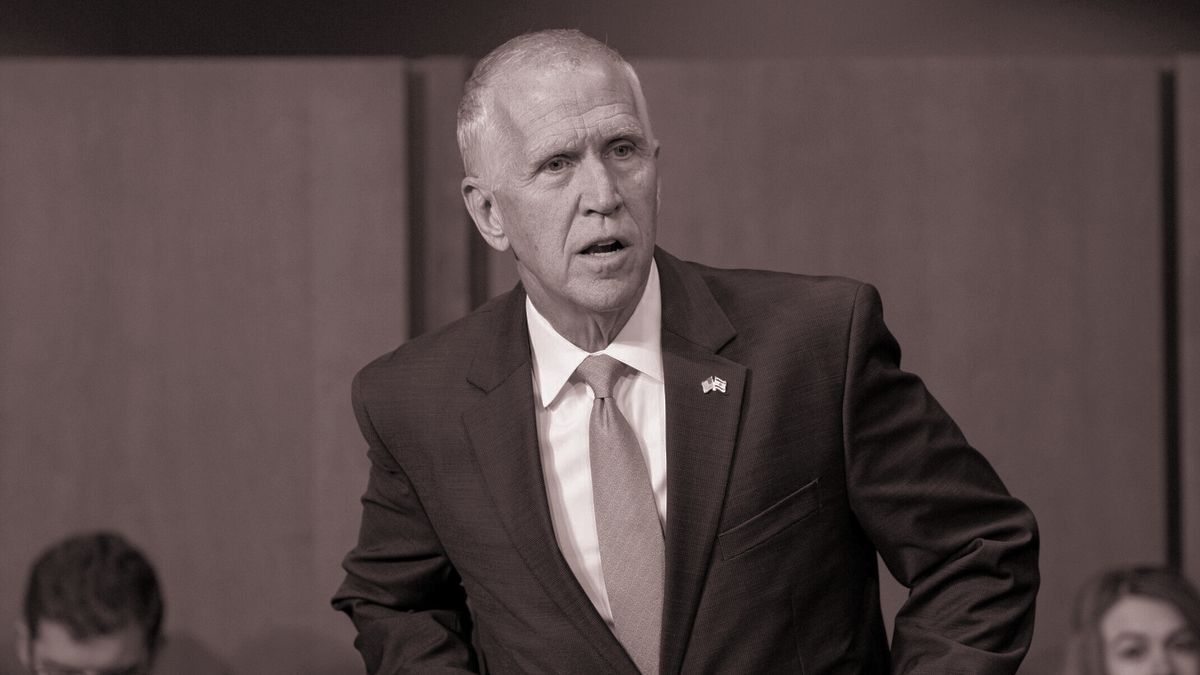
Earlier this afternoon, Republican Senator Thom Tillis suddenly announced that he won’t run for reelection in North Carolina, after his opposition to the Medicaid cuts in the Big Beautiful Bill put him on the wrong side of Donald Trump. There had been rumors since 2020 that Tillis might not run again, but he made the call today. I went to college in North Carolina (go Wolfpack) and have covered the state’s political scene and Tillis for years. I’ll have a lot more about this below.
Meanwhile, the Senate has been in session all weekend as Republicans scramble to advance the BBB before the Trump-imposed Independence Day deadline. The bill, of course, is a greatest-hits package of Republican priorities: freeze current individual and business tax rates; slash Medicaid and food programs; pour money into defense, border security, and immigration enforcement. But it’s also larded up with even more controversial provisions—including steep cuts to wind and solar energy and it will add more than $3.3 trillion in new debt, per the nonpartisan but highly politicized C.B.O.
Today, I’ll look at how the bill is likely to play with voters down the road, specifically in next year’s crucial midterm elections. It’s already making some Republicans very nervous, and more than a few Democrats practically giddy.
But first…
|
- Dems see daylight in Nebraska: It’s not just Tillis who is calling it quits. Rep. Don Bacon of Nebraska is planning to announce as early as Monday, Bacon told me, that he won’t seek reelection either. Bacon, of course, is one of the handful of Republicans—along with Tillis—who have been willing to publicly criticize Trump and the MAGA-fication of the Republican party. Bacon told The New York Times in a recent profile, “I’d like to fight for the soul of our party. I don’t want to be the guy who follows the flute player off the cliff.” But there just isn’t much of a lane for anti-Trump conservatives these days, and Kamala Harris won Bacon’s district by six points.Democrats can probably flip the seat with the right candidate. The bigger story, however, is how Republicans like Bacon and Tillis have become endangered species. Both would have struggled to win primaries against Trump-backed challengers—Tillis, in particular, was facing pushback from the base. Also, members like this just aren’t having much fun doing the job anymore.
- The Tillis succession shortlist: I’ll have more on Tillis’s decision not to run for reelection below, but I am already hearing from Republicans on who might run to replace him. Names that have been bandied about include Rep. Richard Hudson, the current chair of the National Republican Congressional Committee; Lara Trump, the president’s daughter-in-law; R.N.C. chairman Michael Whatley (a person close to Whatley said he’s not “actively considering” a Senate run at this time); former Rep. Patrick McHenry (who didn’t respond to a text asking if he’s thinking about it); and current Reps. Pat Harrigan and Addison McDowell. There’s a ton of great talent in North Carolina, one Republican strategist told me, confident that they’ll keep the state. Meanwhile, some Republican operatives have expressed hope that Sen. John Cornyn, the Texas Republican who is trailing Texas Attorney General Ken Paxton in what is sure to be a nasty and expensive primary, will be the next one to announce his retirement.
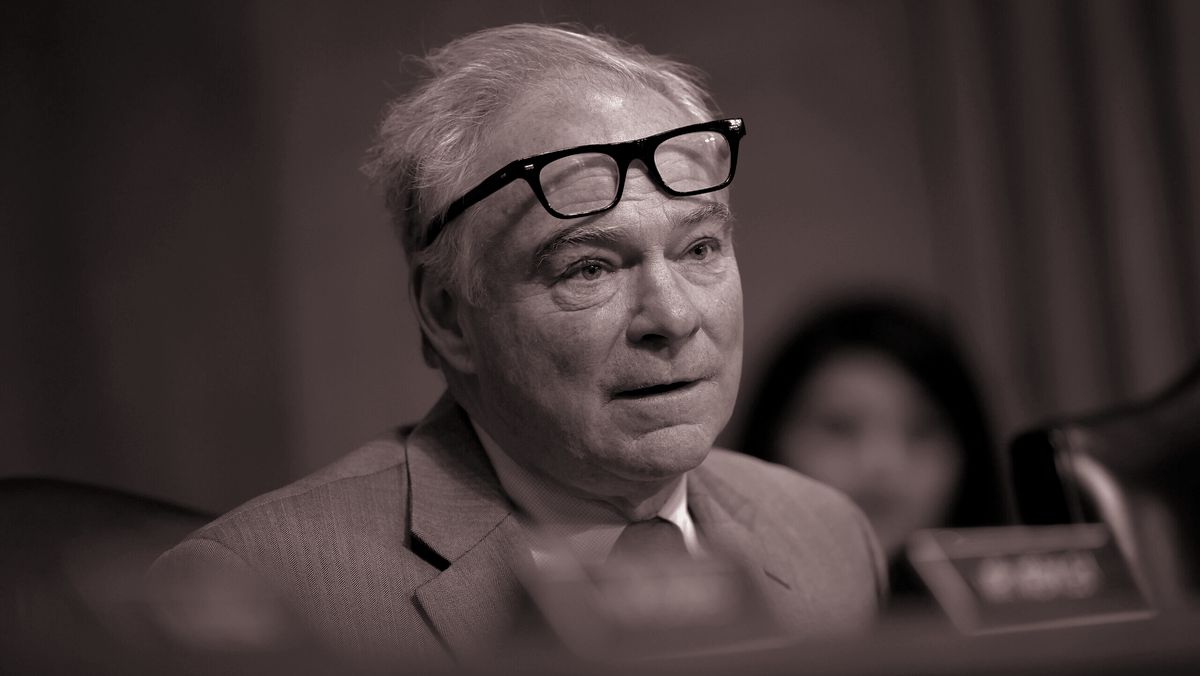
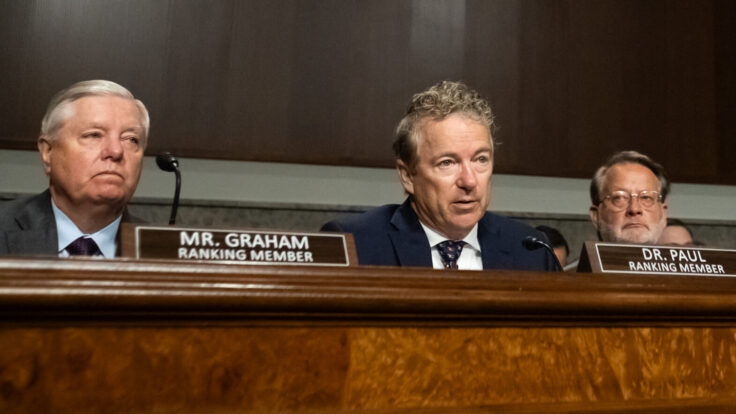
- The Kaine mutiny, continued…: Speaking of profiles in courage, Sen. Tim Kaine has consistently challenged presidents of both parties on the extent of their war powers, introducing resolutions that would require Congress to approve military action before the president can act. Last week, I sat down with the Virginia Democrat, who told me he expected at least two Republicans to join his current resolution to curb Trump’s military actions in Iran. After all, the last time Kaine introduced a war power resolution regarding Iran, back in 2020, he received the support of eight Republicans. This time, however, only one of those Republicans who are still in the Senate, Rand Paul, has signed on. Kaine’s former allies Susan Collins, Bill Cassidy, Mike Lee, Todd Young, Jerry Moran, and Lisa Murkowski have all abandoned ship.
- Keeping the West wild: One particularly controversial provision in the Big Beautiful Bill has been dropped: Sen. Mike Lee’s proposal to sell off millions of acres of public land, predominantly in Western states, which is currently managed by the U.S. Forest Service and the Bureau of Land Management. The provision would have raised billions of dollars by auctioning off government lands. But it proved massively unpopular with Democrats, of course, as well as multiple MAGA factions and conservationist-adjacent interest groups, such as Hunter Nation, a pro-hunting organization. (Donald Trump Jr. serves on its board.) In a statement, Lee said he backed down because, “I was unable to secure clear, enforceable safeguards to guarantee that these lands would be sold only to American families—not to China, not to BlackRock, and not to any foreign interests.” Lee’s retreat got him a public thank you from Don Jr.
- Zohran doubles down: Zohran Mamdani, the upstart generational change candidate and viral campaigner who barnstormed his way to victory in New York’s mayoral Democratic primary last week, appeared this morning on Meet the Press, where he denied Trump’s claim that he’s a “communist” (he’s a democratic socialist), and defended several positions that Republicans have villainized him for and that have made some establishment Democrats uncomfortable. The 33-year-old candidate
said that there “shouldn’t” be billionaires, as an issue of economic justice; that he’d be “proud” to defend New York as a sanctuary city; and suggested that Trump’s attacks on his religion and ideology were a distraction from his focus on making New York more affordable. As for the criticism of his views on Israel, he declined an opportunity to “condemn” the phrase “global intifada,” which he said would be tantamount to policing speech. But he did say that he would increase “anti-hate programming” in the city by 800 percent.My Puck partner Abby Livingston will have more tomorrow on the lessons Democrats are taking (or not) from Mamdani’s upset win over former governor Andrew Cuomo. One Democrat I spoke with noted that Mamdani, the ostensible resistance candidate, never actually talked about Trump on the campaign trail. Instead, he focused relentlessly on his agenda of lowering prices (a theme of Trump’s campaign, too…) and supporting working people—a playbook, perhaps, for Democrats nationwide.
|
|
|
|
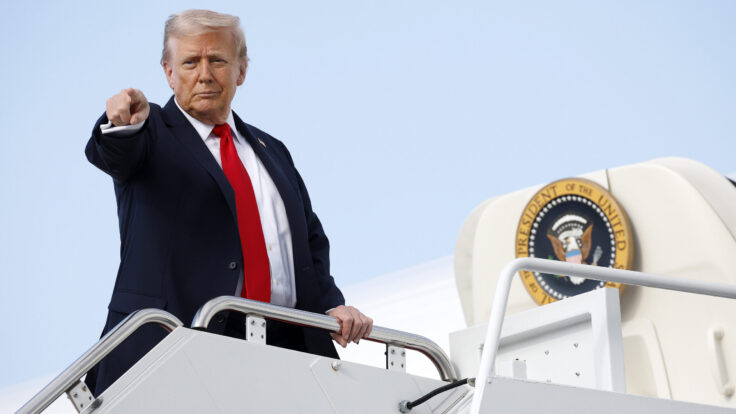
As Trump’s self-imposed July Fourth deadline approaches and the horse-trading continues, Republicans are starting to worry about the political ramifications of slashing Medicaid and running up the national debt as they rush to get the Big Beautiful Bill across the finish line—regardless of whether they support everything that’s in it.
|
|
|
I was somewhat taken aback, the other day, when I asked a Republican operative—a man who has spent years working for G.O.P. leaders on Capitol Hill—what was on his mind. Right away, he said the 2026 midterms. More specifically, he was worried that Republicans in Congress would have little to show voters next fall. The president’s One Big Beautiful Bill Act would pass, few doubt, in one form or another. But he worried that the main selling point of the party’s signature megabill—maintaining most people’s tax rates at the same level they’ve been for the past eight years—wasn’t exactly the most inspiring, or even compelling, political agenda.
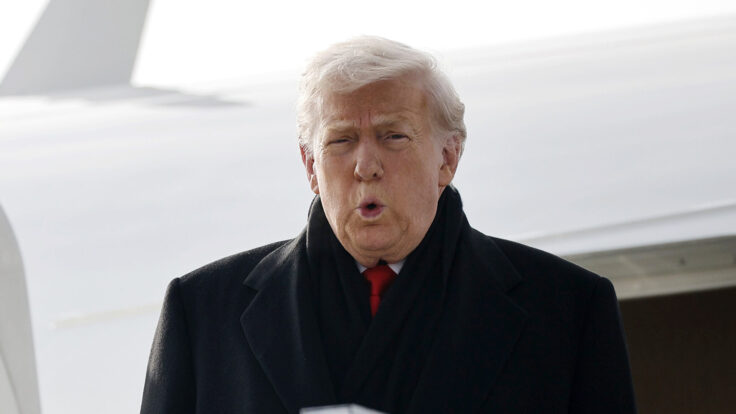
The operative was expressing a concern that is being echoed across Capitol Hill as Republicans chose between adding $3.3 trillion to the deficit over the next decade (although Republicans argue that it doesn’t add to the deficit because the tax cuts are an extension of current law and will reduce the debt because of economic growth) while cutting Medicaid, food stamps, and Obamacare by more than $1.1 trillion, or pissing off Donald Trump and likely drawing a primary challenger if they vote nay. The potential consequences of their decision were thrown into sharp relief today when Sen. Thom Tillis, who has been on the wrong side of Trump on several issues (including his Big Beautiful Bill), suddenly announced he was calling it quits. “It’s become increasingly evident that leaders who are willing to embrace bipartisanship, compromise, and demonstrate independent thinking are becoming an endangered species,” the North Carolina Republican said in a statement announcing that he won’t run for reelection in 2026.
Tillis had determined that the impacts on Medicaid recipients in his state would be too devastating for him to support the bill in its current form. According to a person close to him, although he had been leaning against running for reelection, he wasn’t expected to make an announcement until late summer or early fall. But this weekend, it became crystal clear that he was not going to get the freedom from Trump to make the decisions and take the votes he thought were best for his constituents. Tillis also realized that he wasn’t going to get support from Senate Republican leadership to craft legislation that would help him ahead of a tough reelection campaign.
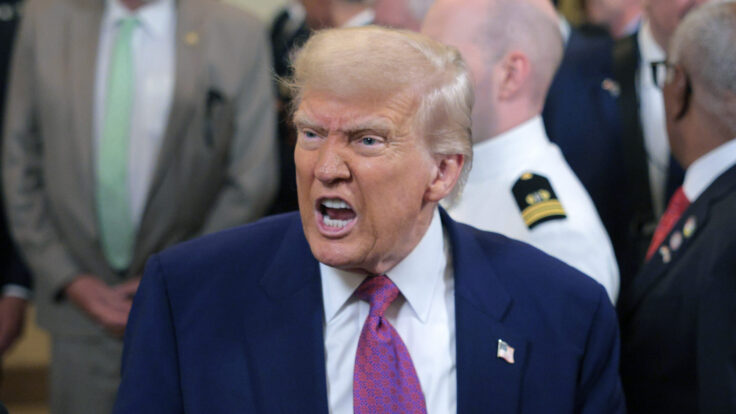
It was a moment of clarity for Tillis, this person said. After the senator voted against advancing the bill on Saturday night, Trump unleashed Truth Social posts branding Tillis as a “talker” not a “doer,” and vowing to start “looking for someone to properly represent” North Carolina. He made the decision not to run shortly thereafter, and made it so suddenly that he hadn’t even told his top campaign advisor before he hit send on the press release.
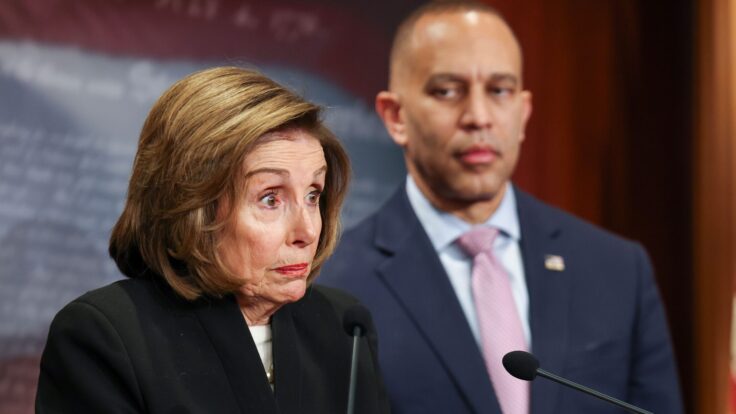
Meanwhile, House Republicans have also looked on with trepidation as the Senate has sharpened the bill to include even steeper cuts to Medicaid. Purple district Republicans like Juan Ciscomani of Arizona and David Valadao of California are, of course, particularly angsty. That likely won’t stop them from voting for it, fearful that any break with MAGA orthodoxy will summon forth a primary challenger from the ether. Rep. Don Bacon of Nebraska is planning to announce his retirement on Monday—before he has to vote on the bill again.
|
Here Comes the Vote-a-Rama…
|
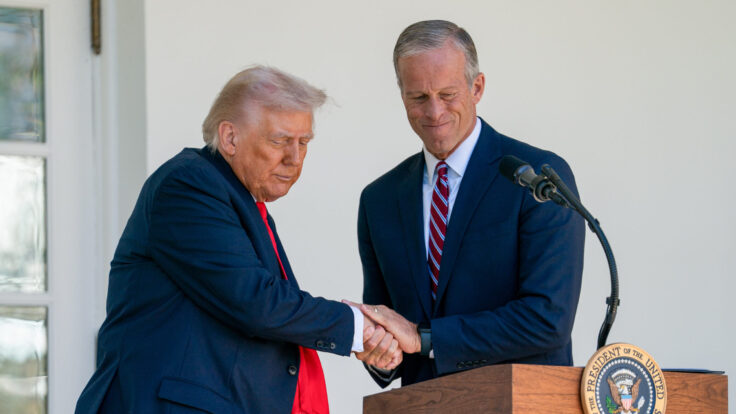
Of course, the bill is not yet in its final form. The Senate is continuing to revise the legislation after days of intense negotiations between Senate Majority Leader John Thune and administration officials, including Vice President J.D. Vance and Treasury Secretary Scott Bessent—as well as President Trump, who rang up individual senators and had some over to the White House. Among the most pertinent issues under discussion were a provision that would have sold off millions of acres of public lands (since removed from the text), the steep price tag of the bill (which concerned Sens. Ron Johnson and Rick Scott, both of whom were given a commitment by the president that he will work to reduce the deficit) and the creation of a fund to help hospitals set to lose Medicaid funds (a fig leaf for multiple senators, including Josh Hawley).
At some point tonight, the Senate will begin an all-night “vote-a-rama,” in which Republicans will try to change the bill even more. Senator Susan Collins, worried about Medicaid cuts in her state, could try to increase the size of that hospital fund beyond $25 billion, for example. Senate Republicans are rushing this through to send it back to the House, where lawmakers are dutifully expected to fall in line and pass the bill before the purely symbolic, self-imposed deadline of July Fourth, despite their very real concerns about how it will impact their states and their constituents.
The severe cuts to Medicaid, in particular, are expected to become a wedge issue on the campaign trail. As many as 16 million people could lose their health insurance thanks to the BBB. And many of them are Republicans. Trump beat Kamala Harris by two points among Medicaid recipients, leading some Democrats to call it “MAGA-caid.” As one Democratic operative told me: “MAGA-caid is Medicaid’s new reality: Red-state voters rely on it while red-state politicians try to get rid of it.” Budget estimates suggest that about 11 million people will lose healthcare via Medicaid cuts, while another 5 million will lose healthcare because of a reduction in subsidies for the Affordable Care Act, making the national insurance plan too costly for lower-income Americans.
In an attempt to appease G.O.P. senators worried about steep cuts to Medicaid—Sens. Tillis, Hawley, Collins, and Lisa Murkowski—the Senate pushed back the implementation of the cut to the provider tax to 2027, after the midterms, insidiously making it a campaign issue for the next presidential cycle. (It seems to be enough to placate Hawley, but Tillis, now unshackled, won’t vote for it in its current form. Collins will see how the amendment process plays out, and Murkowski is a wild card. She has won a slew of Alaska-specific carve-outs, including a food aid provision that only applies to “noncontiguous states” and a special tax break for whaling captains.) Democrats insist that the implementation date doesn’t matter. The cuts are coming, they say.
|
Since House Republicans passed their version of the bill on May 22, Democrat-aligned groups, including Unrig Our Economy and Save My Care, have spent about $5 million on television and radio ads alone, according to a Democratic ad tracking firm, attacking Republicans for cutting Medicaid—a hefty sum so early in a nonelection year. The ads are targeted in swing districts, where Reps. Mariannette Miller-Meeks of Iowa and Nick LaLota of New York are seeking reelection, and in swing states like North Carolina and Maine. They all include some version of a voter who could lose their Medicaid “to give tax breaks to billionaires.”
Republicans admit that the ads, and Democrats’ messaging, is working. Thune, the Senate majority leader, told Axios that the attacks have been effective, causing problems for Republicans. But Republican leadership insists that doing nothing is even worse politically for Republicans. They’d be blamed for a massive tax hike when the current tax rates expire at the end of the year. Plus, Republicans and their aides argue that there’s plenty in the bill to please taxpayers, such as the expansion of the Child Tax Credit from $2,000 to $2,500, and the elimination of taxes on tips and overtime wages (for three years anyway). Plus it funds border security and defense. Speaker Mike Johnson has been telling reporters that the bill will be “jet fuel” for the economy and that Republicans will reap the rewards.
But as the nervous Republican strategist said, “Voters don’t say thanks.” They didn’t reward Democrats for passing the Affordable Care Act in 2010, this person noted, nor Republicans for passing the first round of tax cuts in 2017. Both parties saw major losses in the next election. And our political memories are only getting shorter. Voters in 2024 clearly weren’t overflowing with gratitude toward Democrats for passing the Inflation Reduction Act two years prior, and Trump’s stimulus checks didn’t win him reelection in 2020.
Democrats know it’s way too early to exhale. Yes, polling says that the bill is unpopular, with an average of 55 percent of those polled opposing it, according to a CNN average of polls, compared to 31 percent who support it. But a new survey by Priorities USA, a Democratic super PAC, found that 48 percent of respondents not only had no idea what’s in the bill, such as cuts to Medicaid and food assistance programs, they hadn’t even heard of the bill. Voters who had heard of the bill tended to be those Democrats who backed both Biden in 2020 and Harris in 2024. But overall, among voters who supported Biden in 2020, and those who supported Trump in 2024—the ones that Democrats need to win back—more than half of them were clueless that the bill even exists.
Which might be why this political moment feels a bit like 2024 all over again—when Harris avoided media interviews, and the imprecations of podcasters, and Trump plunked himself down in front of pretty much anyone who asked. Simply put, Republicans continue to dominate the media landscape where most of us live these days, and the Priorities USA poll indicates that while Democrats may be winning the messaging war on the bill, the people they actually need to persuade are outside the Democrats’ echo chamber.
|
|
|
|
Join Emmy Award-winning journalist Peter Hamby, along with the team of expert journalists at Puck, as they let you in on the conversations insiders are having across the four corners of power in America: Wall Street, Washington, Silicon Valley, and Hollywood. Presented in partnership with Audacy, new episodes publish daily, Monday through Friday.
|
|
|
|
Unique and privileged insight into the private conversations taking place inside boardrooms and corner offices up and down Wall Street, relayed by best-selling author, journalist, and former M&A senior banker William D. Cohan.
|
|
|
Need help? Review our FAQ page or contact us for assistance. For brand partnerships, email ads@puck.news.
You received this email because you signed up to receive emails from Puck, or as part of your Puck account associated with . To stop receiving this newsletter and/or manage all your email preferences,
click here.
|
|
Puck is published by Heat Media LLC. 107 Greenwich St, New York, NY 10006
|
|
|
|