|
Welcome back to Wall Power, Inner Circle edition. I’m Marion Maneker.
Tonight, I’ve got some deep thoughts on the role that Asian collectors have played in the art market’s failure to reach escape velocity following the sharp rise in sales in 2021-22. I’ll get to all of that in a moment.
But first…
|
- Bernd Runge returns to Phillips: Bernd Runge, the former Condé Nast executive (and, famously, onetime Stasi informant) who was C.E.O. of Phillips from 2009 to 2013, has returned to the auction house as chief operating officer. The appointment has been announced only internally, though Runge has had the job on his LinkedIn profile since last month. (On the platform, he also lists himself as a strategic advisor to the executive chairman and the C.E.O. since 2023). Runge, per the person who flagged his appointment to me, is “looking carefully at each department to make cuts.” Apparently, the owners, who previously had not put pressure on executives to turn a profit, are now looking to lower the cost basis of ownership.
- A crypto collector v. David Geffen: One danger of the art world chasing crypto zillionaires as clients and collectors is the excess baggage those people bring. Exhibit A is cryptocurrency entrepreneur Justin Sun, who threw a tantrum in the press four years ago when he wasn’t able to buy Beeple’s Everydays at auction, claiming he’d bid $60 million for the work but had been unable to close the transaction online. Sun did, however, manage to acquire several very expensive works, including Linda and Harry Macklowe’s version of Alberto Giacometti’s Le Nez, for which he paid $78 million in November 2021. After that purchase, Sun was quiet in the market, until he made the grandstanding play to buy Maurizio Cattelan’s Comedian last November, and then reprised someone else’s stunt of eating part of the renewable sculpture. At the time, I was told that Sun had sold the Giacometti to David Geffen. Last night, The New York Times confirmed that Geffen did acquire the piece—but that Sun got a lesson in the art world’s sharp trading practices in the process.
According to the lawsuit Sun filed against Geffen on Tuesday, Sun claims he was duped when his Giacometti was traded to Geffen for two paintings (not named) and $10.5 million in cash. Sun alleges that
David and Cole Tunkl, who conducted the deal as intermediaries, with the advice of art lawyer Ralph Lerner, arranged a fraudulent sale through an art advisor, Xiong Zihan Sydney.
In the complaint, Sun claims Xiong has confessed to stealing the artwork. Le Nez had been on loan to the Giacometti Foundation in Paris, and instead of returning the work to Sun’s storage facility in Singapore, Xiong allegedly sent it to Geffen in New York. To further her deception, Sun claims, Xiong tried to present Sun with $10 million in cryptocurrency that she had received from the Tunkls. (Of course, that causes one to imagine that Geffen has crypto holdings.) Xiong then represented the $10 million in crypto to Sun as a down payment, supposedly from the investor and art collector David Martinez.In the Times, Geffen’s lawyer called the issue a matter of seller’s remorse. In that version of events, Sun wasn’t able to sell the two paintings and is suing Geffen in a fit of pique—and claiming his art advisor defrauded him. Neither version of events really makes sense. Sun says he didn’t want to sell Le Nez for anything less than a profit. The fact that Geffen was trading paintings, along with a small amount of cash, would suggest a more sophisticated art transaction than Sun seems likely to have engaged in. That’s my way of telling you that I think we’re going to uncover much more about this saga as the case progresses.
- In Blum: Sadamasa Motonaga, who died in 2011 at the age of 89, was an integral 1950s member of the Gutai group of abstract artists in Japan; his wife, Etsuko Nakatsuji, was a painter and graphic designer. Now Blum has announced it will represent Motonaga’s estate and Nakatsuji directly, and a two-person show will open at Blum Tokyo on February 14. Solo shows for each of the artists will follow later in the year in Los Angeles and Blum’s soon-to-open New York space in Tribeca. Meanwhile, in Los Angeles, Yoshitomo Nara just opened a show of sculptural heads that marks 30 years of showing with Blum.
- Irene Kim’s disappearance from Art Basel, explained: I got a note last Saturday telling me that Irene Kim, head of the Art Basel V.I.P. program, was leaving the fair. The person who forwarded it along speculated that “considering her ambition and the extensive network” she built at Art Basel, Kim might be going to a large gallery or auction house. Well, on Monday evening, we found out that neither was the case: On LinkedIn, Kim revealed her new role as head of U.S. arts and culture at Chanel—the first person to hold the position.That division at Chanel, run by former banker Yana Peel out of London, is the independent fashion company’s attempt to maintain a presence in the art world without establishing a collection or its own museum. Its main vehicle is the Chanel Culture Fund, whose initiatives are too varied to explain here. (WWD did a good job recently.) My question: What does Kim’s new job entail, and why would it require someone with extensive experience at two art fairs, a museum, and an auction house, catering to their best clients and donors?
- The Louise Nevelson road show: The Columbus Museum of Art announced that Louise Nevelson: Dawn to Dusk would make its next stop in Columbus on March 7. Originating at the Farnsworth Art Museum in Rockland, Maine, and featuring a trove of 40 works that Nevelson donated there, supplemented by six works from the Columbus Museum’s permanent collection, the show will mark one of the most comprehensive surveys of this once toweringly famous artist. (See Julie’s recent conversation with Arne Glimcher here.)
- Lowery to Wexner: The Wexner Center for the Arts at The Ohio State University has appointed Rebecca Lowery as curator of exhibitions. She joins the Wexner on February 24 from L.A. MoCA, where she worked for seven years as a curator on shows like Josh Kline: Climate Change and Olafur Eliasson: OPEN, plus surveys of the careers of Simone Forti and Tala Madani.
|
|
|
|
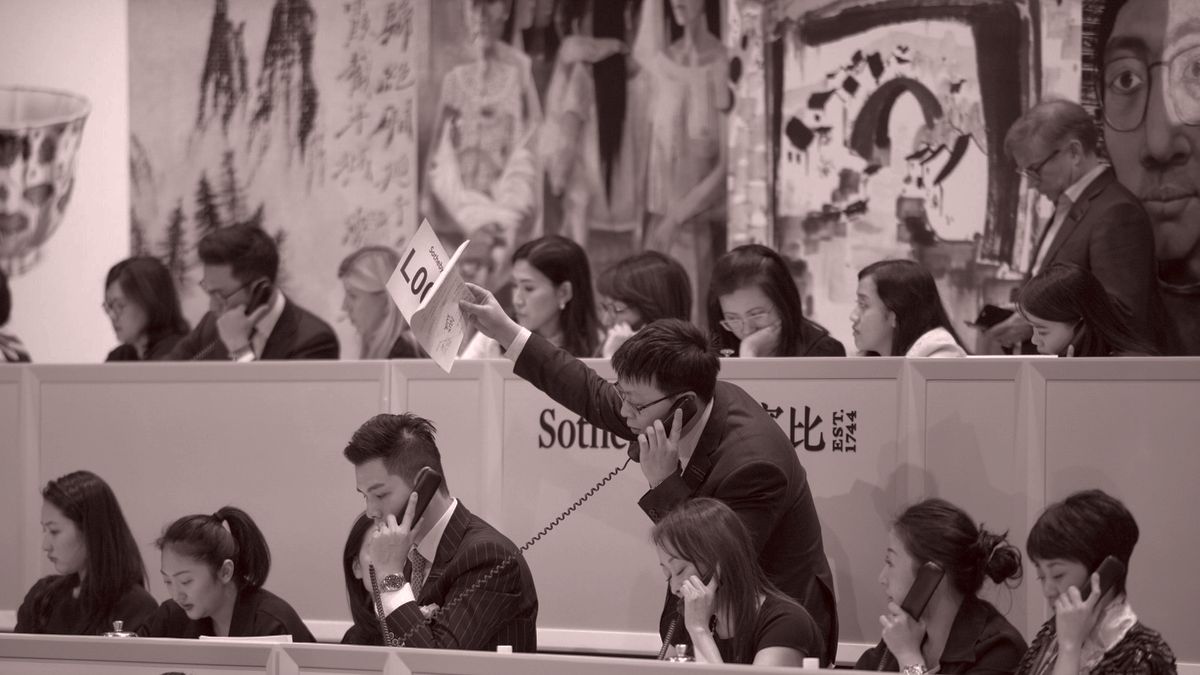
Just when the art market seemed like it was entering a new stratosphere in late 2022, the trend reversed abruptly. Yes, interest rates went up and supply dwindled. But the Asian market also contracted substantially. Have Chinese bidders dropped out? Or are they simply more hesitant to buy the dip?
|
|
|
Noodling through the auction house data over the past few months, I noticed something curious: Even though there was a dramatic run-up in volume during the pandemic—from the latter half of 2020 through the $1.6 billion Paul Allen sale at the end of 2022—auction prices came to a screeching halt in early 2023, and there’s been little movement since. Such strong sales could have brought more high-value property to market, and more bidders into the arena, attracted by all the attention—and money—being paid to art. But that didn’t happen.
The conventional explanation leans on two concurrent factors: Interest rates rose steeply starting in the spring of 2022, choking off the top end of the market; and primary galleries raised prices, thereby throwing cold water on the raging secondary market for emerging artists. A few weeks ago, when I discussed this, among other broader patterns in the art market, with ARTDAI founder Jamie LaFleur, he proposed another theory. What if the reason for the post-2022 failure to launch was that the crucial extra bidders, who can significantly increase a sale price just by being there, had gone missing? In other words, the Asian bidders had disappeared. And since they had often played a crucial role in the previous success of certain lots and artists, their absence had been determinative.
To bolster his point, LaFleur cited data showing that buying in Asia—or at least in Hong Kong—had risen along with the rest of the market from 2020 to 2021, but tapered off earlier, falling from 2021 to 2022 as art buying rose further in the rest of the world. Unfortunately, only the auction houses have bidder data, so the rest of us have to look at geographical sales to see this pattern. So while we can’t determine Asian bidders’ level of participation on the highest-value lots—which are sold in either the U.S. or the U.K.— several recent auction successes in New York can reliably be attributed to the presence of Asian bidders (or buyers), based both on my conversations and what’s been visible in the auction room.
Sydell Miller’s Monet at Sotheby’s went to a buyer from the region, and the house also had success with works by Gustav Klimt due to Asian participation. We all saw two very different Magritte paintings make record prices because Xin Li-Cohen was bidding on them. (Cohen’s bidder was most likely a Chinese national residing in Europe, but that doesn’t really change the story.)
Indeed, when I picked up the phone to speak to some frontline dealmakers in Asia, I was admonished to remember that Asia is a big place. Korea, Taiwan, Japan, the Philippines, and now Thailand all have significant
collectors. Also, as many of the business-getters reminded me, the art market’s fascination with wealth from mainland China, which consumed more than a decade, may have been a transitory phenomenon. Since the pandemic, China has not recovered in the same way as other economies, either in Asia or the West.
Indeed, mainland Chinese buyers are behaving very differently these days. The first rush of collecting and museum-building has now petered out as many discover how expensive it is to maintain an art collection or, especially, a private museum. Then there is the Chinese property market, which weighs heavily on the country’s economy as a whole. But perhaps most notable is the state-imposed sobriety that has descended on Chinese collectors amid the government crackdown on ostentatious displays of wealth.
|
Inconspicuous Consumption
|
|
Xi Jinping’s warnings against lavish spending have had a real impact, one art market specialist told me, creating downstream effects across several luxury markets, also including cars, watches, and jewelry. Some Chinese elites have been moving their assets abroad to countries including Singapore, Australia, Canada, the U.S., and the U.K.—but are still lying low to avoid attracting attention. Meanwhile, more lucrative investment opportunities have sprung up in the past few years, making it potentially less attractive to devote too much capital to art.
The final issue seems to be more about time than anything else. It’s important to remember that although there are some huge and well-established collectors in Asia (Pierre Chen comes to mind), many have not lived through a market downturn until now, and thus, they may see it as a deterrent rather than a buying opportunity. But curiously, there’s still a strong appetite for young artists. “The emerging market [in Asia] is still ticking along nicely,” one person told me, before pointing out that the ceiling for that kind of work was about $200,000 to $300,000 on either the primary or secondary market.
So Chinese buyers—and Asian buyers more broadly—definitely are not turned off from art. As we’ve seen in the global numbers, volume at lower price points is quite healthy, with plenty of supply and demand. As the works get more valuable, that’s where the problems arise. You might chalk some of this up to the age difference between Asian collectors and their peers in the West: Older collectors who have seen a market rise dramatically—and who have pulled back their spending when they’ve felt they couldn’t compete, or who didn’t want to pay prices they considered inflated—are usually the first to return in a down cycle. (Eli Broad famously referred to the “half-off” sales that took place at the onset of the global financial crisis in the fall of 2008.) But Asian buyers aren’t playing that game—at least not for the works above $5 million, which have the greatest impact on the overall strength and visibility of the market.
Is Asian collectors’ reluctance to buy counter-cyclically enough to have kept the art market from recovering more fully? Probably not. As one dealmaker told me, the same behavior seems to be taking place in Europe, too. More to the point, Asian bidders from countries all over the region continue to participate on selective lots; and, as the dealperson said, when they do, they can still be transformational to the success of the work at auction.
|
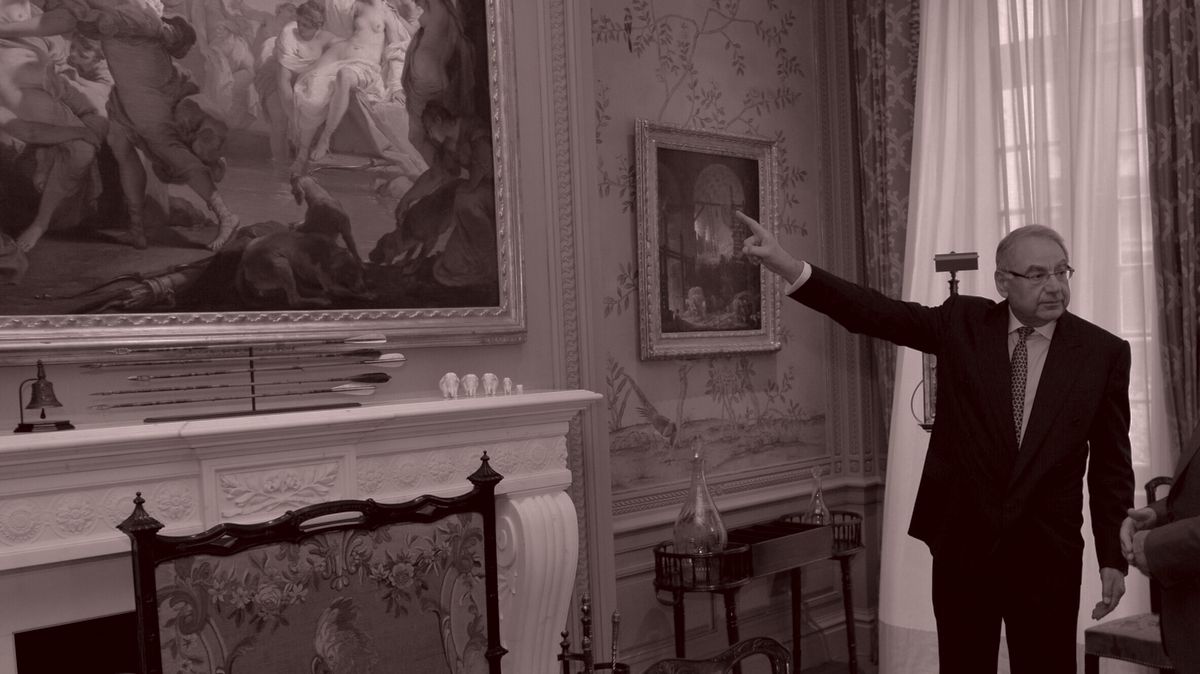
I didn’t expect Ian Parker’s profile of Lord Norman Foster, loosely pegged to the forthcoming completion of the new JPMorgan headquarters on Park Avenue in Manhattan, to be so very long and have energy use and carbon tradeoffs as such a sustained theme. Nevertheless, the profile is well worth reading. I enjoyed it particularly for the special interest one top executive took in the art for his offices:
|
Just a reminder, ARTDAI is providing access to their data for individuals and small organizations though Puck. If you want more information on the service and pricing, click here. (We do receive an affiliate fee for any customers who come through us.)
That’s enough for today. Let’s talk again on Friday, when I hope to have some news on the first big deal of the year.
M
|
|
|
|
Puck founding partner Matt Belloni takes you inside the business of Hollywood, using exclusive reporting and insight to explain the backstories on everything from Marvel movies to the streaming wars.
|
|
|
|
The ultimate fashion industry bible, offering incisive reportage on all aspects of the business and its biggest players. Anchored by preeminent fashion journalist Lauren Sherman, Line Sheet also features veteran reporter Rachel Strugatz, who delivers unparalleled intel on what’s happening in the beauty industry, and Sarah Shapiro, a longtime retail strategist who writes about e-commerce, brick-and-mortar, D.T.C., and more.
|
|
|
Need help? Review our FAQ page or contact us for assistance. For brand partnerships, email ads@puck.news.
You received this email because you signed up to receive emails from Puck, or as part of your Puck account associated with . To stop receiving this newsletter and/or manage all your email preferences, click here.
|
|
Puck is published by Heat Media LLC. 107 Greenwich St, New York, NY 10006
|
|
|
|