 |
 |
|
Welcome back to Dry Powder. I’m Bill Cohan.
|
|
By publicly announcing his wish to take Endeavor private, did Ari Emanuel put the company’s majority shareholder and potential buyer, the private equity behemoth Silver Lake, in a bind? In today’s issue, why it’s been crickets from Ari and Silver Lake in the month since the idea was floated, plus fresh reporting around Jeff Zucker’s bid to buy The Telegraph.
|
 |
| Ari’s Deal & Zucker’s Next Steps |
| News and notes from the biggest deals in the media M&A landscape: Ari Emanuel’s purported take-private and Jeff Zucker’s Telegraph/Spectator play. |
|
|
|
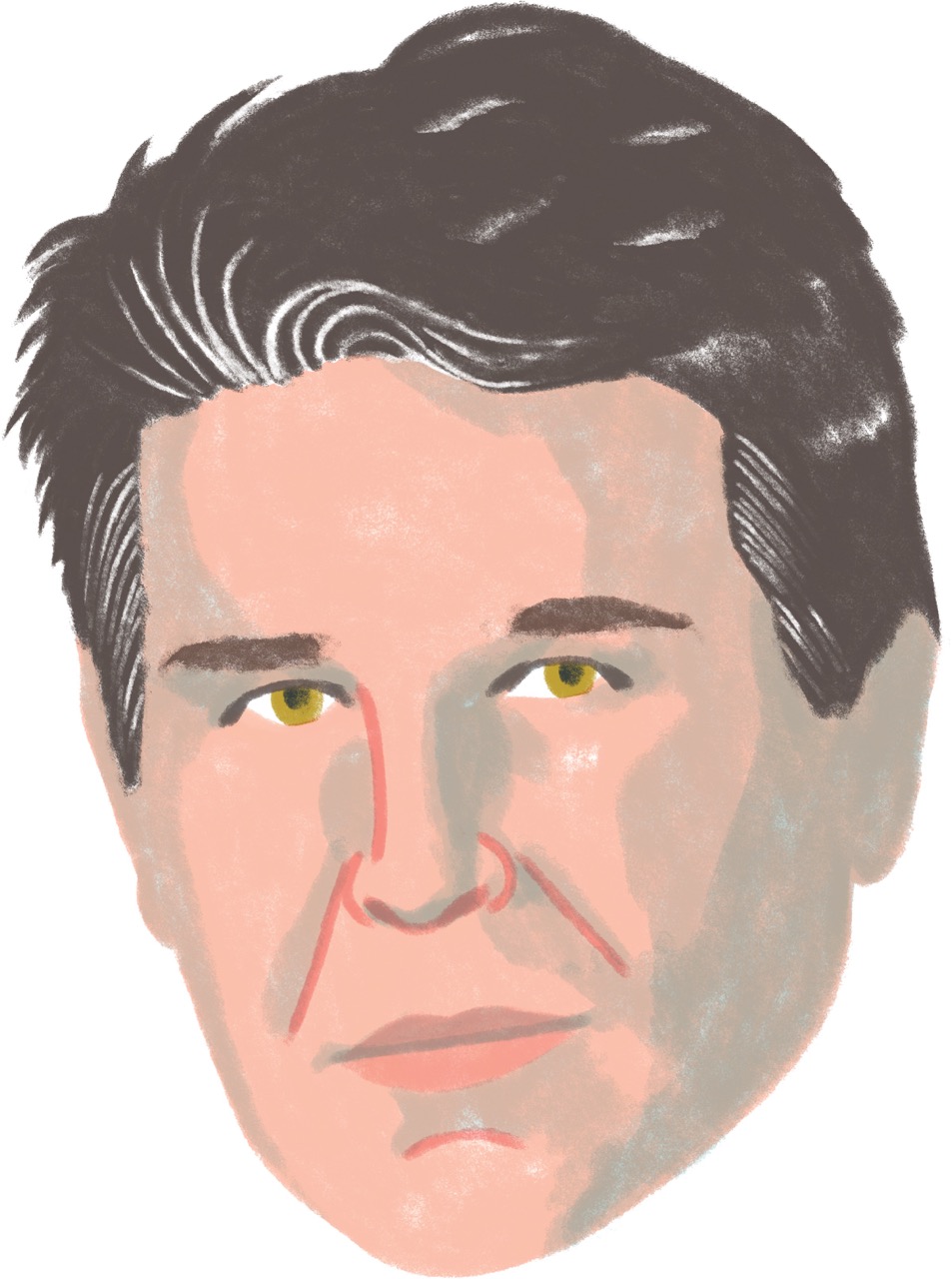
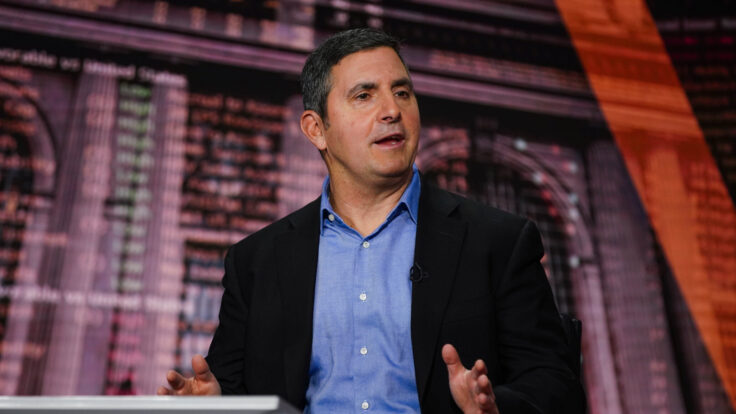
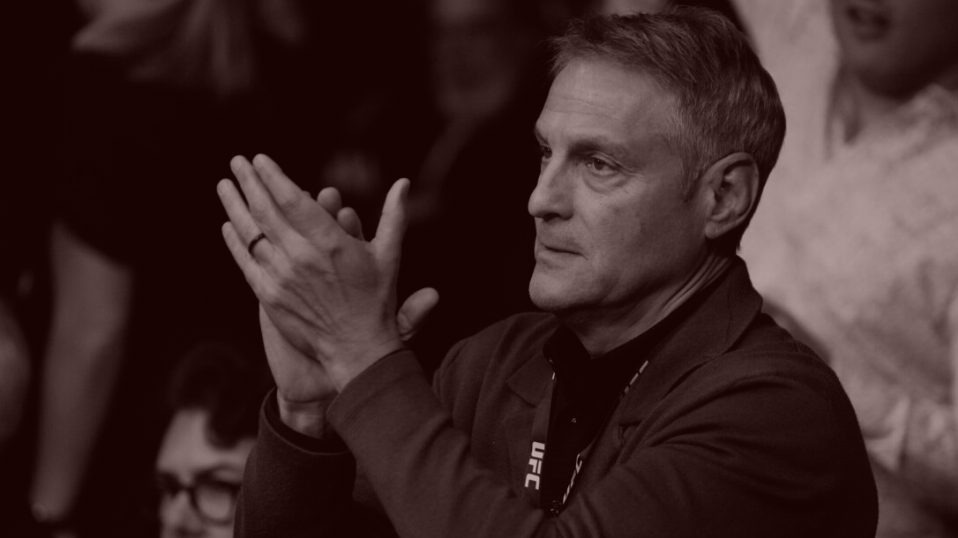
| It’s been more than a month since Ari Emanuel announced that his public company, Endeavor Group Holdings, was looking at its strategic alternatives. And only a little less time has passed since Endeavor’s largest shareholder, the private equity behemoth Silver Lake, announced hours later that it was considering buying the rest of the company it didn’t already own—about a third—and taking Endeavor private. This double-barreled act of public relations gave Endeavor’s stock the kind of one-day boost that investors dream about: It moved up some 25 percent.
In fact, since just before Ari’s announcement, at the end of October, the Endeavor stock is up more than 36 percent after languishing for much of the year. That’s all well and good, and a sign that the market is expecting the deal, which could provide a small liquidity event for both Emanuel and his partner Patrick Whitesell—they’ll likely retain a majority of their stock ownership and re-up their lucrative contracts—and also (to a much smaller extent) their employees and shareholders.
Most C.E.O.s keep quiet about a sale process for this very reason: they don’t want to provoke investors into a feeding frenzy for a deal. Ari and Silver Lake abandoned that traditional practice at the outset, and now appear to be managing the consequences of their decisions by trying to keep everything buttoned up tight as the market waits and salivates. Five weeks later, everyone has gone to ground. Silver Lake has not made an offer, and Ari has clammed up. He demurred when asked about the status of the deal on Endeavor’s third-quarter earnings call, on November 8, by Stephen Glagola, a research analyst at TD Cowen “Since my lawyers are around and you know the answer that I’m going to have, I’m not commenting on anything as it relates to the go-private or the review or anything that you’ve just mentioned, but I appreciate the question,” he said.
Interestingly, Ari has put his partners at Silver Lake in a bit of a delicate situation here. On the one hand, as the biggest shareholder in a company whose stock has been drifting for most of the year, Silver Lake can’t complain about the stock’s value having increased 36 percent in six weeks. On the other hand, if the firm intends to buy the rest of Endeavor, then it will have to grapple with the fact that the shares it wants to buy, or intends to buy, are now 36 percent more costly than they were before the announcement.
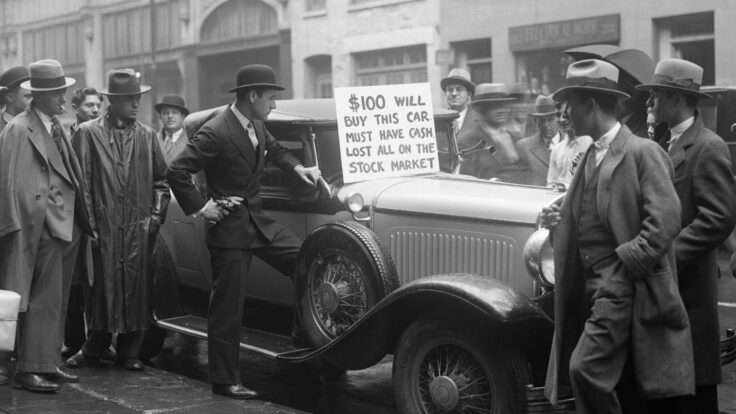
Indeed, Silver Lake’s conundrum is that if it does the deal for Endeavor, it will have to pay up for the stock it doesn’t own; if it walks away from the deal, the stock will likely collapse to where it was trading before the deal talk, dragging the value of Silver Lake’s ownership stake along with it. That’s why such possible deal machinations are rarely announced in advance. This is not a position smart buyout guys usually find themselves in. What to do? |
|
A MESSAGE FROM OUR SPONSOR
|
| |
 |
| Enjoy the comfort of flying private at a fraction of the cost, with Aero’s nonstop flights to Aspen, Cabo and Sun Valley. No need to rush - arrive just 20 minutes before departure from Aero’s private terminal at Van Nuys. Once the flight is airborne, elevated dining from Erewhon, a wine list curated by Wally's, and top-tier amenities await.
Puck subscribers, take $300 off your first flight with code PUCKxAERO. Book your flight online at Aero.com.
Terms: Travel must be booked by Jan 31, 2023. This limited time offer is for new guests to use on their first flight and cannot be combined with other promotions or used on previously booked flights. Unless otherwise advised: All flights within North America are operated by USAC Airways 695 LLC dba Aero. We will notify you as soon as possible if the air carrier operating your flight changes or is not one of the above companies. Aero Technologies Inc. acts as an indirect air carrier under US-DOT Part 380. All passengers are required to accept the applicable Operator Participant Agreement and/or Conditions of Carriage at the time of booking. © 2023 Aero Technologies, Inc. |
|
|
|
|
| Silver Lake will now have to negotiate the matter of a “fair” price for Endeavor stock with a special committee of Endeavor’s board of directors, chaired by former Xerox C.E.O. Ursula Burns. Silver Lake will presumably try to make the case that a “fair” price for the balance of the Endeavor shares does not include an additional premium, given the post-announcement run-up in the stock price. On Wall Street, bankers like to refer to the price of a stock before any deal chatter begins as the “normalized” price.
This argument, while not without its logic, could cause the special committee some agita, I suspect. No surprise, Silver Lake will want to pay less per share than where the Endeavor stock is trading today; the special committee, with the job of representing non-Silver Lake shareholders, should want to get Silver Lake to pay more. And there’s the dilemma. No one likes the look of a takeunder, where the ultimate purchase price of a deal is less than where the stock has traded. And, of course, if that were to happen, then the arbs and the retail investors would get burned.
But Silver Lake is too clever to pay up more, beyond the 36 percent increase. Thanks to the deal talk, Endeavor’s hodgepodge of businesses now trades at an equity valuation of $11.4 billion. Add in Endeavor’s net debt of $3.6 billion and we’re talking about a company worth $15 billion. Thanks to the deal chatter from October, Endeavor’s stock trades at $24.34 per share, just above its I.P.O. price of $24 a share.
I am told the deal is still likely to happen, even if it won’t be particularly lucrative for the investors who bought the Endeavor stock on the I.P.O. or after the stock ran up in October. After all, most everyone else will be rewarded for getting a deal done. No one wants an implied deal to fall through. That’s the kind of behavior that results in shareholder lawsuits, as Elon Musk experienced firsthand when he raised investor hopes back on August 7, 2018, with this little tweet: “Am considering taking Tesla private at $420. Funding secured.” I reached out for a comment on the sale progress, but representatives from Endeavor did not respond. (Endeavor’s talent representation arm, WME, represents Puck.) |
|
|
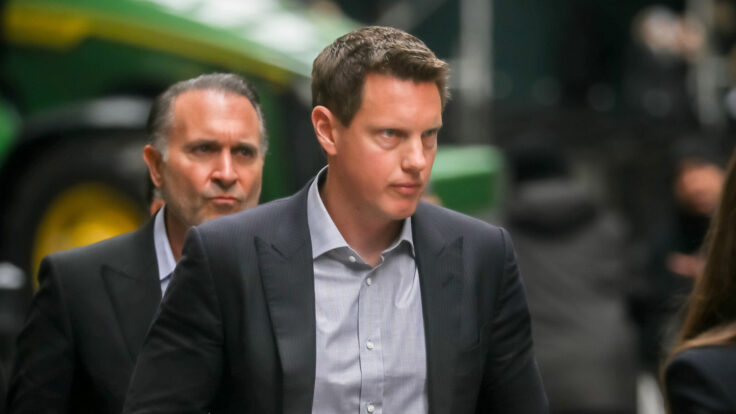
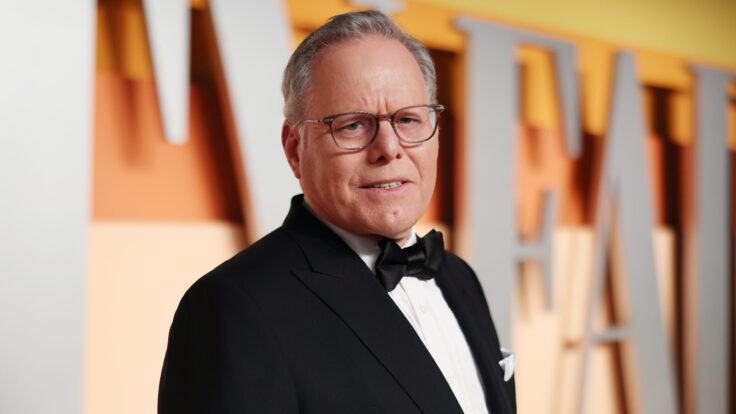
| On Friday, Jeff Zucker’s new buyout firm, RedBird IMI—a joint venture between Gerry Cardinale’s RedBird Capital Partners and International Media Investments, a fund managed by Abu Dhabi’s Sheikh Mansour bin Zayed Al Nahyan—exercised its option to acquire The Telegraph and The Guardian from the Barclay family for roughly $750 million, valuing the business at about 10x its 2023 expected EBITDA of $75 million. Mansour also provided to the Barclays a separate $650 million loan secured by other assets that the family owns via The Very Group, their private holding company. The Barclays then paid the combined $1.4 billion they got from Zucker & Co. over to Lloyds Bank, curing a payment default, and allowing the Barclays to sell the publications to RedBird IMI, pending U.K. regulatory approval.
One of the issues that British regulators are grappling with is the source of RedBird IMI’s capital. The majority of Zucker’s $1 billion fund comes from the Emiratis, with the balance coming from Cardinale’s RedBird Capital. (Zucker got to know the Emirati sheikhs from his days at CNN; the Abu Dhabi bureau was the network’s third-largest outside of the United States, after London and Hong Kong.) Although he has no cash in the RedBird IMI fund, Zucker, the C.E.O. of the firm, is getting sweat equity in RedBird IMI, which shares its office with RedBird Capital, on Madison Avenue, alongside Cardinale and his team of former Goldman bankers. (Zucker is also an operating partner at RedBird Capital.)
U.K. regulators have now commenced an extensive review process, perhaps up to five months long, surrounding the potential consequences of Zucker’s foreign capital partners. Not surprisingly, many of Zucker’s auction competitors have been griping about the dangers of Gulf money, or murmuring that Zucker is overpaying. Typical stuff from those who still buy ink by the barrel and would have loved to have done the clever deal that Zucker did. (For the record, he’s paying a full price but probably not overpaying.) |
|
|
| What is remarkable, at least to me, is that the $750 million sale price represents some 75 percent of the RedBird IMI fund. That’s an astonishing gamble, one that must require an overwhelming conviction from a first-time investor, even one with access to more capital, if it’s needed. (RedBird IMI also has made three smaller investments: one in a burgeoning TV and film studio run by Ian Orefice; one in a digital media company, Front Office Sports, that covers the intersection of sports and business; and one in Hidden Pigeon Company, a kid-focused entertainment company founded by Mo Willems.)
Why would Zucker, a guy deeply steeped in the world of television and new media, want to buy these two publications, which both date to the mid-19th century? I reached out to Zucker to hear what is motivating him to make this deal, with other people’s money. But according to his partner Allison Gollust, a former CNN executive who now has her own strategic advisory firm that is working with RedBird IMI on this deal, he’s lying low during the pendency of the regulatory review.
But my sources close to RedBird IMI offered some perspective. Zucker has been involved in journalism, one way or another, pretty much his whole life, whether it was running The Harvard Crimson or the Today show or NBC News or NBCUniversal or CNN. True, he has not run print publications, let alone print publications in a foreign country, but his thinking is: Journalism is journalism; the rest is just a question of distribution.
My sense, also, is that from the beginning, the RedBird IMI triumvirate was looking for a major media asset but, in truth, they don’t become available all that often. After the Barclays defaulted in June on their $1.4 billion loan to Lloyds Bank, which was secured by the two publications, Lloyds hired Goldman Sachs to sell The Telegraph and The Spectator, with the hope of recouping some of what was owed. Et voila, instant, and unexpected, opportunity. Zucker decided to join the Goldman auction. When he and the team did the due diligence on the publications, they discovered a business that was doing pretty well, generating some $75 million in EBITDA a year. “I am not sure, other than The New York Times, any of those other outlets even make that much money,” explained a source close to RedBird IMI. (The Washington Post, for comparison’s sake, is reportedly on target to lose $100 million this year.)
Zucker also decided that the Barclays had underinvested in the two publications for the past decade and that there was an opportunity to bring The Telegraph to the U.S. First and foremost, Zucker and his partners believe this is a good business deal, that he is not overpaying at 10x EBITDA and that they won’t be on some sort of financial roller coaster. The publications have been around for a long time and will continue to be around and hopefully improve, on the margins, especially if the Telegraph can find an audience across the pond.
The RedBird IMI team then hit on the idea of paying off Lloyds in full, as occurred on Friday, so that there would no longer be an event of default and there would no longer be a need for the Goldman auction. Pretty smart, to be honest. |
|
|
| Zucker is a notorious micromanager. He loves getting into the details, and was famous for calling into the CNN control room from his office. (I shared some other amusing Zucker micromanaging stories from his days running NBCU in my GE book.) But the source close to RedBird IMI explained that, essentially, Zucker is an investor now, not an operator, and is focused on the larger picture. If the deal is approved, he intends to keep the current management of both publications in place and to oversee the investment as the fiduciary for his partners, Cardinale and Mansour and their investors.
In other words, he’s the C.E.O. of an investment firm now, not the C.E.O. of a media company. As such, he won’t be running The Telegraph and The Spectator on a day-to-day basis. Rather, he’ll be focused on making that $750 million equity investment more valuable and remaining on the lookout for other media assets to bring into the RedBird IMI fold. (He should also consider a debt financing to pay back some of the equity RedBird IMI put into the deal on Friday.)
When Zucker first found himself in the wilderness, and out of a job at CNN, I suggested that Shari Redstone should hire him to run Paramount Global. She didn’t, of course. But I wouldn’t be the slightest bit surprised if Zucker and RedBird IMI somehow ended up as a serious bidder for Paramount Global, when and if Shari makes the decision to put the company formally up for sale. (This is not investment advice.) And if the Telegraph/Spectator deal turns out to be a success for Zucker, I also wouldn’t be surprised to see him running Paramount Global one day, assuming he can figure out how to get around the problem of Mansour being in the ownership structure of CBS (which I assume would not be allowed). Zucker may be in a different phase of his life, but my sense is that he’s not done yet, not by a long shot. |
|
|
|
| FOUR STORIES WE’RE TALKING ABOUT |
|
|
|
|
|
 |
|
|
|
Need help? Review our FAQs
page or contact
us for assistance. For brand partnerships, email ads@puck.news.
|
|
You received this email because you signed up to receive emails from Puck, or as part of your Puck account associated with . To stop receiving this newsletter and/or manage all your email preferences, click here.
|
|
Puck is published by Heat Media LLC. 227 W 17th St New York, NY 10011.
|
|
|
|