Happy Sunday.
Welcome back to Dry Powder. Today, my thoughts the great questions of our time on Wall Street: What is Ari Emanuel really worth? Wouldn't we all be better off with Larry Summers running the Fed? And what is Warren Buffett secretly up to?
Thanks for reading, Bill
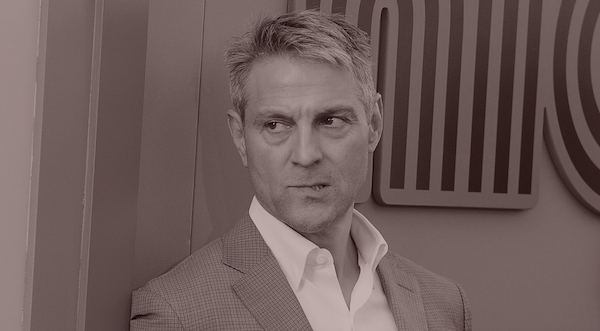
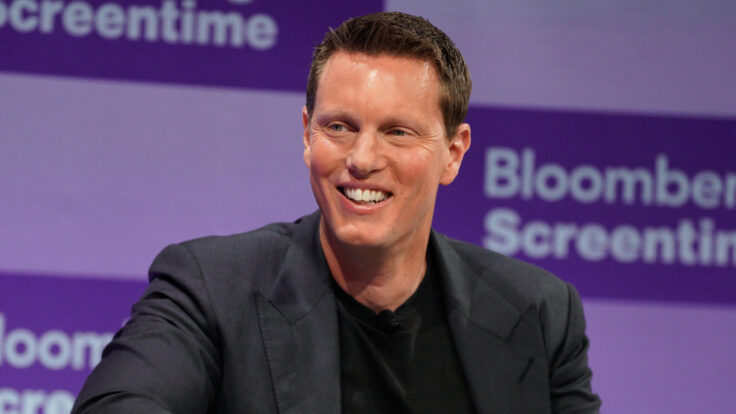
Musings on the questions of our time on Wall Street: What is Ari Emanuel really worth? Can the Fed protect us from a post-plague recession? And what is Warren Buffett secretly up to? Leave it to Ari Emanuel, the founder and head of the newly-public Endeavor Group Holdings, to get the headlines for being the highest-paid executive in Hollywood last year, with a total package clocking in at $308 million, most of which is a long-term equity grant that only has value if Emanuel supercharges the Endeavor stock price. That’s probably exactly what he wanted. But Ari is hardly the only mediaco C.E.O. making bank. David Zaslav made nearly $247 million last year, a figure that is also tied heavily to stock performance. Bobby Kotick made more than $150 million (and will make plenty more once the Microsoft acquisition of Activision goes through). 2021 will likely be remembered on Wall Street as the peak of a financial bubble that will take years to unwind.
Of course, ridiculous levels of compensation, however complex their structure, aren’t limited to Hollywood C.E.O.s. Loyal readers know that I’ve been appalled by Larry Culp’s $120 million stock award gambit at GE, perhaps the most egregious example of corporate greed to come down the pike in a long while. After all, Culp helped himself to the stock award by getting the GE board of directors to reset the bar lower for him when the getting was good in August 2020, in the middle of the pandemic, despite the fact that the GE stock price hasn’t budged during his more than three years at the helm of the company.
Executive compensation has always been a bit of a black box. Board of directors often rely on outside compensation consultants who “benchmark” pay across industries, slowly but surely raising the level of pay for executives and then claiming that the pay is in line with others in the same industry. It’s a virtuous cycle for everyone but shareholders. Companies with market capitalizations of $100 billion, or more, seem perfectly happy to promise exorbitant sums to anyone who can deliver more shareholder value. Patrick Gelsinger, who returned to Intel as C.E.O. in February 2021, after running VMWare for eight years, received a compensation package that could be worth nearly $180 million, but only if the Intel stock increases, which so far it has not done under his leadership. The Intel stock is down roughly 13 percent since he took over; for him to get $45 million of that $180 million, the Intel stock will have to triple in five years. In the interim, however, he will not suffer. According to the latest Intel proxy, Gelsinger will be paid $26.3 million in 2022, via a salary of $1.25 million with the balance in the form of a long-term equity.
Zaslav’s compensation picture is similarly contingent. In order for him to earn his potential $247 million package, the Warner Bros. Discovery stock will need to power much higher. In the last year, roughly since Zaz announced the merger between Discovery and WarnerMedia, the Discovery stock is down nearly 40 percent. I wouldn’t bet against Zaz making this all work out for himself and for his shareholders—the guy is a winner—but he’s got a lot of wood to chop before his 2021 pay package comes to fruition. In the meantime, his base salary is $3 million and he also received a discretionary cash bonus of another $4.4 million in 2021. The Discovery proxy also shared the unsurprising news that he also has access to the Discovery corporate jet. He’ll need it in order to restructure the firm’s entertainment assets and keep tabs on Warner Bros., HBO, and more.
Likewise, the bulk of Ari’s comp package is tied to stock awards he will unlock only if the Endeavor stock increases. His “recognized compensation,” according to the company’s wordsmithing in its 10-K, for 2021, was less: a mere $67.5 million. In other words, that’s what he actually got paid in cash, plus the value of the stock awards “earned and vested” in 2021, whatever that means. Ari’s 2021 salary, meanwhile, was $4 million and his cash bonus was another $10 million. So while he’s waiting for the Endeavor stock to skyrocket, he’ll have to make do with his $14 million in cash. Ari’s partner at Endeavor, Patrick Whitesell, also got headline compensation in 2021 of $123 million, assuming the stock increases, and “recognized compensation” of $11 million. His cash compensation for 2021 was $9 million, $5 million less than Ari’s. Go figure.
We’ll see what happens. 2021 was the year that Ari and Patrick managed to take public their hodgepodge of businesses, including UFC and Professional Bull Riders, as a pandemic reopening play. Many people, including me, didn’t think the market would go for it, especially after he pulled the plug on the I.P.O. roughly 18 months earlier. But the stock is up 7 percent over that time period. (It is down 15 percent so far in 2022.) WWE’s recent announcement that it will expand to also become a meaningful content creator suggests that Ari’s interest in red-state live sporting events may be prescient as their live streaming rights and I.P. accumulate value.
Ari has always wanted to be a billionaire and he might get there if he can find a way to reduce Endeavor’s nearly $6 billion debt load and generate some real, not adjusted, EBITDA. Even without this ridiculous stock award, Ari and Patrick appear to control roughly 32 million Endeavor shares worth around $944 million these days. (A March 2022 filing with the SEC makes it very difficult, if not impossible, to see what each man owns individually.) Either way, he’s not far off.
Larry Summers Called It
Larry Summers gave a fascinating and revealing interview to Ezra Klein this week, in which the latter capitulated to the view that expansionist policy—intended to benefit the most disadvantaged—has backfired in the current supply-constrained environment. Of course, one presumes Summers is taking no pleasure in his victory lap. But it is enough to make you wonder: is there any universe in which the Fed can still curtail inflation expectations without sharply impacting employment, or has a global recession now become a mathematical certainty? After all, the U.S. economy just added 430,000 jobs!
You have to give Larry credit for calling it early that the current wave of wage and price inflation in the U.S. economy was not “transitory,” as the Federal Reserve hoped it would be, and was probably brought on by too much federal stimulus. I find it fascinating that Larry thinks Biden gave us too much fiscal stimulus last year. When he was Obama’s national economic adviser, in the aftermath of the 2008 financial crisis, Summers thought Obama didn’t give us enough. We’ll never know for sure, of course, but it feels like he’s been right both times—not enough stimulus last time and too much now.
In any event, there’s no doubt he has been right about inflation. Summers has also been right about the excessiveness of the Fed’s dual policies of keeping short-term interest rates too low for too long (the so-called ZIRP policy), and about Quantitative Easing—buying up trillions of dollars of debt securities to drive down long-term interest rates to levels never before seen in human history. A decade of money printing gave the people who make money from money—Wall Street bankers and traders, hedge fund managers and private equity moguls—a windfall the likes of which they’ve never before seen. All sorts of other asset classes, in addition to stocks and bonds, have also found themselves in a serious bubble, including real-estate, N.F.T.s, meme stocks, cryptocurrencies and all sorts of commodities.
Now the Fed is changing course, and the financial markets are getting rocky, especially the bond market, given that bond prices move down as interest rates move up. Last September, the average yield on a junk bond was under 4 percent—an absurdity given the risk of owning such a bond. Since then, the average yield has slowly but surely risen, to 5.79 percent, an increase of 46 percent in seven months. Wow. The yield on the average junk bond is still not where it should be to reward investors for the risks they are taking in owning these things, but at least the pendulum has started swinging back in the right direction. All those investors who bought junk bonds last September are feeling pain right now, and it’s only going to get worse, especially if the Fed follows through on its indication that it will be raising short-term interest rates throughout 2022.
I know Larry Summers is plenty controversial, especially when he was the president of Harvard. But I’ve always liked and admired him. He may be among the smartest people I have ever met. My first assignment for Vanity Fair, back in 2009, was a profile of Larry when he was in the Obama administration. It was thrilling to visit with him at the White House and to get to know him a bit, all while he guzzled down one Diet Coke after another. In 2013, he was considered to serve as chairman of the Federal Reserve. I thought he would have made an excellent choice. Instead, Obama made a mistake by choosing Janet Yellen; Trump compounded that mistake by choosing Jerome Powell to succeed her.
I don’t know Yellen or Powell, and I have never met or spoken to either one. I am sure they are lovely company. But the Fed chairman we needed after Ben Bernanke (the architect of both ZIRP and Q.E.) was Summers. He would have pulled the plug on the Fed’s science experiments and been far more likely than either Yellen or Powell to let the market decide the price of money, rather than the Big Foot at the Fed.
Now, Biden probably had no choice in reappointing Powell, given the delicate position the Fed is in at the moment. As a result, we are all hoping there is enough foam on the runway to land this out-of-control economy safely. It’s probably 50-50 at the moment, at best.
Hollywood Diligence
These days, Hollywood seems to love its ripped-from-the-headlines tales of plucky, delusional tech founders and their falls from grace. There’s Elizabeth Holmes in The Dropout (Hulu), Adam Neumann in WeCrashed (Apple TV), Travis Kalanick in Super Pumped (Showtime). Obviously, since it’s Hollywood, liberties have been taken in the portrayal of characters and the reconstruction of events. Interestingly, the first two shows are based on podcast series, not the definitional books and reporting about what happened, and I am immensely enjoying them both.
But something else interests me, at least from an I.P. standpoint. It used to be that Hollywood had little interest in business stories. It was deemed too hard to convey the nuances of business interactions, and those that could be shared were deemed to be too boring. That’s why TV dramas centered mostly around cops, courtroom battles and the operating room—dramas that could be resolved in the context of a 30-minute or 60-minute show.
That all changed with the success, at first, of shows like The Sopranos, and eventually with the IP wars generated by the streamers. Suddenly, there was more time and money available to tell long and involved stories, including those about finance and business. Hence, the critical and financial success of Billions and Succession. Now, this sort of content is highly in-demand—partly because the news events had sufficiently generated enough buzz, themselves, that they had effectively done the marketers’ jobs for them. With more streamers than ever looking for content, it’s no surprise that the disasters that occurred at WeWork and Theranos, as well as the palace coup at Uber, became grist for the Hollywood mill. I, for one, ain’t complaining. I love these shows. If only I could find the time to watch them all, instead of writing about the latest Wall Street and corporate foibles.
The Buffett Mystery, Part II
You may recall that last week I wrote about the bizarre development in Warren Buffett’s proposed $11.6 billion, all-cash acquisition of Alleghany Corp. the large insurance company, wherein for some still unknown reason, Buffett decided to pay Alleghany shareholders $848.02 per share, rather than $850, in cash. The difference—$1.98 per share or $27 million—was minuscule in the scheme of things. But according to the Alleghany proxy statement, it turned out that Buffett didn’t want to pay the investment banking fee earned by Goldman Sachs for its work representing Alleghany. Despite the longstanding relationship between Buffett and Goldman—he invested $5 billion in a Goldman preferred stock at the height of the 2008 financial crisis and made a profit of more than $3 billion—he did not want to get saddled with that fee, as the buyer.
I get that—no buyer wants to pay the fee for the seller’s investment banker. But the convention is that he or she does. That’s just the way it is, since fees and expenses are all part of the deal. And even if the buyer lowers the purchase price to account for that fee, it’s rarely the case that such an explanation would be given publicly, as Buffett did in the Alleghany deal. So you know that is damn interesting, especially since Buffett, at more than 91 years old, knows exactly what he’s doing. He must also have known that the millions of Buffett watchers out there would take note.
Last week, in the final paragraph of my piece, I urged him to share with me why he had done what he had done. Shortly thereafter, he emailed me the following intriguing message: “Hi, Bill, The answer to your Alleghany question is almost certain to come up at the Berkshire annual meeting. Stay tuned.”
Stay tuned? I am riveted. April 30 can’t get here fast enough.
FOUR STORIES WE'RE TALKING ABOUT 
Inside the wild, emergency board of governors meeting in the aftermath of the slap fiasco—and who’s ultimately to blame. MATTHEW BELLONI 
Some Russians are now refusing to accept anything less than total victory. Has Putin become a prisoner of his own propaganda? JULIA IOFFE 
Is there life after the 45th president? Some companies are articulating a new path; others, not so much. DYLAN BYERS 
In our age of AMC apefests, social media influence is becoming the people’s leverage in the world of professional finance. WILLIAM D. COHAN 
You received this message because you signed up to receive emails from Puck.
Was this email forwarded to you?
Sent to {{customer.email}}
Puck is published by Heat Media LLC.
For support, just reply to this e-mail. For brand partnerships, email ads@puck.news |


SHARE