Happy Wednesday, and welcome back to Dry Powder. I’m back in Nantucket, shaking the dust from my
boots after attending The Summit, a three-day, (mostly) off-the-record conclave of business and political leaders at Brush Creek Ranch in Wyoming. Today, I’ve got some extraordinary insights and predictions from the wise and acerbic Niall Ferguson, including his observation that while America debates tariffs like it’s 1890, Swiss bankers are already deciding we’re “uninvestable.”
But first… |
- Saks
in stealth mode: Our friends at Saks Global appear to be facing yet another financial hurdle in their ongoing effort to avoid the “B” word—bankruptcy. You’ll recall that last month, the company executed a highly successful LME, or liability management exercise: Wall Street’s latest poker-faced euphemism for a badly needed financial restructuring. The LME bought Saks Global some time, while carving up its original $2.2 billion bond into different priorities, and generating up to
$600 million of new financing.
That left Saks Global to resolve an outstanding $599 million commercial mortgage-backed security, secured by a joint venture with the Simon Property Group, which owns 10 Saks stores and 20 defunct Lord & Taylor locations, by August. Saks Global owns 62.4 percent of the joint venture. But back in May, as I noted, Debtwire
reported that the real estate assets in the J.V. had been valued at $525 million, 53 percent below the 2019 appraised value. Assuming a lender would provide the J.V. with 60 percent of the appraised value, a new loan of $315 million would leave a hole of $284 million. Saks Global would have to cough up 62.4 percent of that sum, or some $177 million, in order to repay the outstanding $599 million—just when the company could least afford it.
Now that it’s September, I was curious
whether Saks had been able to refinance the $599 million CMBS. I got a fuzzy answer. Saks Global spokesperson Nicole Schoenberg sent a statement that HBS Global Properties, a development company, had “entered into a letter of understanding” to refinance the CMBS and “secured” an extension beyond the original August deadline. HBS, the statement read, was “seeking a new lender aligned with the current strategy” and, as a result of asset sales and debt amortization, the amount to
be refinanced is closer to $550 million, not $600 million. (That would make Saks’s true-up check closer to $150 million, rather than $177 million.)
Schoenberg wouldn’t disclose the name of the entity that HBS was soliciting for the new financing, but Bloomberg’s Eliza Ronalds-Hannon and Scott Carpenter reported last week that the CMBS loan was turned over to “a workout specialist” in July because it was “approaching an imminent maturity default.” The loan
servicer granted HBS a 60-day extension to refinance the loan, according to Bloomberg, after HBS provided the term sheet from the new, unnamed lending source to the old lending source.
A “workout specialist”? Hmmm. Why Saks Global is so cagey with information, I’ll never know. I’m sure the management team thinks less is more, but the lack of transparency with the market about the extent of its ongoing financial difficulties will not redound to its benefit in the end. But I guess
Marc Metrick, the Saks Global C.E.O., will need to discover that for himself. - Apollo’s $12 trillion campaign: The other day, my friend Marc Rowan, the C.E.O. and chairman of Apollo Global Management, sent me a curious little book with an Apollo green cover, embossed with the title “What if” in white letters. What if what, Marc?
As the book goes on to make clear, Apollo wants its clients, and would-be
clients, to wonder, What if the financial world doesn’t work the way I think it does? Changing perceptions on Wall Street plays to Apollo’s hand, of course, since the firm is in the process of disrupting the way Wall Street works, primarily through its private-credit financing juggernaut, now a $700 billion asset business. According to its little green book, “81 percent of U.S. loans made in 2024 were private,” while “public markets are becoming less representative of the
economy.”
Apollo is also presumably looking to capitalize on a new rule change, courtesy of a recent Trump executive order, that would open 401(k) plans to private equity and other alternative assets, like crypto and real estate. The slickly produced What if book is, among other things, a well-timed bit of marketing as Apollo contemplates how to bite off a meaningful chunk of the $12 trillion pool of assets in Americans’ defined contribution retirement
plans.
For now, the audience for this particular campaign appears to be small. Apollo comms chief Joanna Rose told me the book was being shared with a select group of clients and friends of the firm (although Puck subscribers can get a copy here). Meanwhile, as part of Apollo’s overall effort to keep the disruption going, Marc was on CNBC for more than 30 minutes on Tuesday
talking up the firm’s story—and making his pitch for why investors ought to reconsider the traditional 60-40 portfolio, and perhaps consider diversifying with private credit instead.
|
|
|
Even in remote Wyoming, at a private gathering of august business leaders, academics, and
political wisemen, Trump was inescapable. Yet as Niall Ferguson argued, the president’s shocks to the rules-based global order are merely… Nixonian. |
|
|
Last week, as the markets took a bit of a Labor Day breather, I flew out to southeastern Wyoming for the
first annual convocation of The Summit at Brush Creek Ranch, nestled between the Sierra Madre and Medicine Bow Mountains. Like a cross between the Allen & Co. mediafest in Sun Valley and the hyperexclusive Google Camp, The Summit was conceived as a forum for various business leaders, political wisemen, academics, and public intellectuals to discuss the issues of the day—artificial intelligence, debt and deficits, national defense, etcetera. Among the 80 distinguished attendees were former
Indiana Governor Mitch Daniels, former West Virginia Senator Joe Manchin, former Federal Reserve Bank of St. Louis president Jim Bullard (a candidate to replace Jay Powell as Fed chair), and Mung Chiang, the preternaturally young president of Purdue University.
The three-day conference operated under the so-called Chatham House Rule, established a century ago at the Royal Institute of International
Affairs in London, by which the substance of what was said can be shared publicly, but not who said it—unless the person saying it agreed to be quoted by name. The whole point of The Summit was to encourage open discussion of what might be considered controversial ideas, especially if the speaker were to be identified. But two of the conference attendees, Niall Ferguson and Paul Ryan, agreed to give me a waiver on the Rule and let me quote what they said on
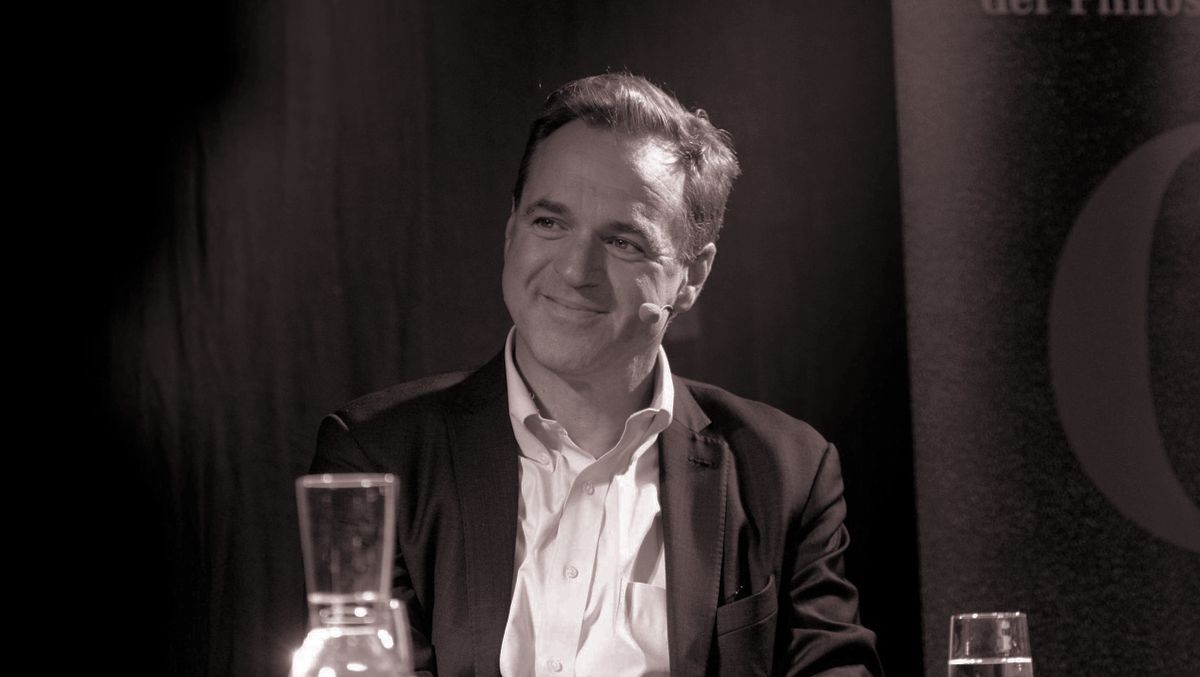
their respective panels. Niall, a man with a gold-plated résumé, is the senior fellow at the Belfer Center for Science and International Affairs at Harvard. He’s also taught at, you know, Oxford, Cambridge, Stanford, and NYU. He’s wicked smart, as we used to say in central Massachusetts. (I’ll have more on Ryan’s comments on Sunday.) |
Niall got things off to a rousing start on a panel titled “The Future Role of the U.S. on the Global Stage.”
Bullard, who served as the moderator, articulated a concern on the minds of many attendees—in short, whether the first seven months of Trump’s second presidency were historically “unprecedented.” Just a day earlier, after all, Trump had said he was firing Lisa Cook, a Fed governor, and signed an executive order aimed at expanding the deployment of military troops to U.S. cities. That very morning, Howard Lutnick, the Commerce Secretary, defended
the administration’s demand for an equity stake in Intel, and suggested that the partial nationalization of Lockheed Martin would soon be in the offing, too.
But Niall, who is a clever sort of contrarian—he recently became affiliated with The Free Press and the University of Austin, two Bari Weiss projects—pushed back. “The word ‘unprecedented’ is used a lot by journalists—a lower caste of journalists—and what it means is, ‘I have never studied history,’” he
replied.
For the past decade, Niall said, he’d “engaged in a debate about the significance of Donald Trump’s explosive entry into our politics.” But comparisons of Trump to Hitler or Mussolini, condemning his politics as fascism, were wrong, he argued. “It’s a huge category error,” Niall said. “If you are making that kind of argument, it’s because you haven’t really studied it.” If we suddenly found ourselves in Berlin in 1938, Niall went on, “the first thing we would notice is
that the men would all be in uniform, of one sort or another, and the whole society would be militarized and gearing up for war.” Instead, he said, “Donald Trump is the opposite of militant. He has no appetite to put on a uniform. He’s been critical of previous administrations’ involvement in war, and he wants the Nobel Peace Prize, something that Adolf Hitler and Mussolini were not vying for in their heyday. So let’s dismiss that as a wrong analogy.” (Trump contains multitudes, of course: The
U.S. military is currently massing Navy ships and thousands of troops near Venezuela, and recently executed a missile strike against a boat in the Caribbean that was allegedly carrying drugs.)
Are we Rome, then? Niall wondered. “Americans have been asking this question ever since the republic was founded,” he said. “It was something the Founding Fathers worried about, because republics historically had a tendency either to descend into anarchy, or to descend into monarchy and, ultimately,
tyranny.” The Roman empire, he noted, faded from the scene slowly, over time, and Augustus never referred to himself as “emperor” but rather as princeps civitatis, or “first citizen.” The Roman Senate continued to meet, if increasingly ineffectually. “Two days out of seven, I worry that we’re in the late Republic phase, that [Trump’s] not quite Augustus yet, but we could make him Augustus,” Niall said. “But only two days a week, because the other days of the week, I remind myself, this
is America, and it’s American history that is relevant here.”
On the contrary, Niall posited, Trump seems to want to return America to a 19th century idyll, with the president comparing himself to the tariff-obsessed William McKinley. “Our whole politics has turned 19th century,” Niall explained. “What did people vote for back in November? Immigration restriction. That was one of the huge issues of the late 19th century, producing a succession of legislative measures,
beginning in 1882 with the Exclusion Act, to restrict Chinese immigration into the United States. What are the other issues? Inflation, monetary policy—hugely political in the late 19th century, and the battle between gold standard and bimetallism. We have that same debate about the politics of monetary policy, as if we’d been transported back to the days of William Jennings Bryan.”
Niall also detected a whiff of the 1930s in Trump—who, like F.D.R., hit
the ground running. “Trump is the first president since 1933 to equal the number of executive orders that Roosevelt unleashed in that opening 100 days of his presidency,” Niall said. “This is like the New Deal in reverse… all of that activity and energy, but designed to reduce the federal government, not to increase its scope.” |
But the best analogy for Trump II, Niall said, was Richard Nixon. “Donald Trump is Richard
Nixon’s revenge,” he said. “Because they have the same enemies. It’s uncanny—Harvard, The New York Times, the Department of Justice. Nixon didn’t call it the Deep State; that phrase wasn’t used then. It was the Bureaucracy. They have the same chips on their shoulders, and they have the same techniques.”
Niall recalled how, in 1971, Nixon administered dual shocks to global politics and the global economy. First, he went to China, without telling almost anyone, including
his secretary of state. “He said, ‘I’m going to Beijing. I’m going to meet Mao Zedong,’ which was a huge shock to all of America’s allies—particularly to the Japanese, but also to the Taiwanese and Koreans,” said Niall. Then, a month later, Nixon announced that the U.S. was ditching the gold standard, and imposed 10 percent across-the-board tariffs. “These were bigger shocks to America’s allies than to its adversaries,” Niall continued. “This is what Trump has done this year. …
Nixon and Trump agree that America’s allies are free riders, and that it’s not fair, and we should adjust. So in many ways, what I think we’re seeing is quite Nixonian, with the obvious downside risk that, if you model yourself on Richard Nixon, you must not lose sight of his fate. Now, I don’t think that Trump will go down the way Nixon did, but he’s certainly giving his opponents plenty of material to work with.”
One thing that’s kept Trump from paralleling Nixon too closely has been
the economy, Niall said. During the second Nixon administration, he noted, there was an oil shock that sent the stock market diving some 45 percent. That hasn’t happened for Trump, at least not yet. There was no oil shock after the bombing of the Iran nuclear bomb facility—in fact, oil seems to be in oversupply these days—and America is experiencing a boom in A.I. that has nothing to do with Trump, of course. The stock markets are pretty much at all-time highs, for whatever absurd reasons. “The
resemblance to Nixon is there,” Niall concluded, “but his fate may not mirror Nixon, if economic luck stays on his side.” |
Still, Niall said he was particularly worried about the decline in the perception of America, under Trump,
especially by foreign investors. He’d just heard the C.E.O. of a Swiss financial institution complain that the U.S. has become “uninvestable” because of Trump’s antics, especially his steps to erode the credibility of the Federal Reserve, and the politicization of the Bureau of Labor Statistics, along with other information coming out of the federal government. “If the rest of the world starts to perceive that our institutions, our rule of law, our constitutional order, are eroded—that is going
to impact us at the most fundamental level,” Niall said.
He also referred to what he’s dubbed “Ferguson’s Law”: “If a great power spends more on interest payments than on defense, it will not be a great power much longer.” The United States, Niall said, crossed that threshold last year. “It’s only going to get worse,” he lamented. “And it will get worse in proportion to our debt servicing costs remaining high. This is the critical problem—the perception that there is an erosion of our
republican order, our constitutional order, is widespread abroad. And I think most Americans—especially when we sit here, far from the coast, far from the rest of the world, in this vast and beautiful landscape—we don’t understand. The rest of the world is watching all of this—particularly Europeans—with increasing horror. That is, I think, going to cost us, and it may cost us sooner than we expect.” |
That’s all for today. On Sunday, I’ll share Paul Ryan’s compelling take on Trump’s economic policies so far
in his second term.
Bill |
|
|
Join Puck’s chief political columnist, John Heilemann, as he roams the corridors of power and influence in America on this
twice-weekly interview show, taking you beyond the headlines with the people who shape our culture: icons and up-and-comers, incumbents and insurgents, moguls and machers in the overlapping worlds of politics, entertainment, tech, business, sports, media, and beyond. The conversations are rich and revealing, unrehearsed and unexpected… and reliably impolitic. A Puck-Audacy joint, new episodes drop every Wednesday and Friday. |
|
|
Puck’s daily political newsletter from Washington on what’s really happening in this town, from the White House to the Pentagon
to Capitol Hill, K Street, and the campaign trail. |
|
|
Need help? Review our FAQ page or contact us for assistance. For brand partnerships, email ads@puck.news. You received this email because you signed up to receive emails from Puck, or as part of your Puck account associated with {{customer.email}}. To stop receiving this newsletter and/or manage all your email preferences, click here. |
Puck is published by Heat Media LLC. 107 Greenwich St, New York, NY 10006 |
|
|
|