 |
|
Happy Wednesday, and welcome back to Dry Powder.
|
|
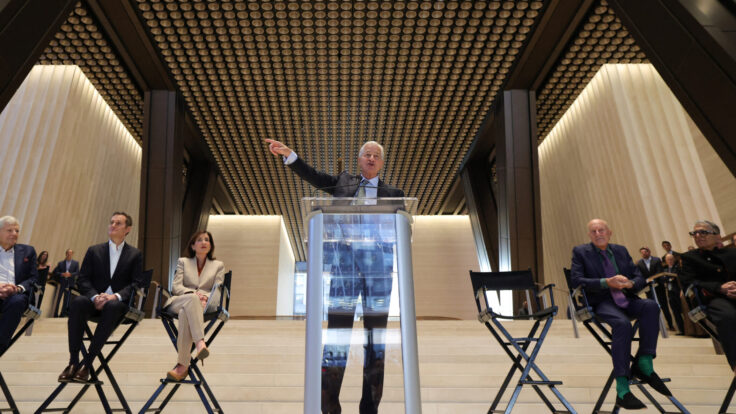
Before we get to today’s main event—more on the still-unfolding drama at Disney—a bit of news that should calm some nerves down at 200 West Street, in lower Manhattan: David Solomon’s job as C.E.O. of Goldman Sachs is safe.
A bit more on this…
|
|
|
| For months now, in fact since the beginning of the year, Goldman Sachs C.E.O. David Solomon has been under relentless fire in the financial press and the media, more broadly, springing from concerns by current and former Goldman executives who have not been shy about their criticisms of his style, interpersonal skills, and strategic initiatives—even as the Goldman stock has held up pretty well, all things considered. Throughout the barrage of media reports, the Goldman board has been silent, surprisingly so.
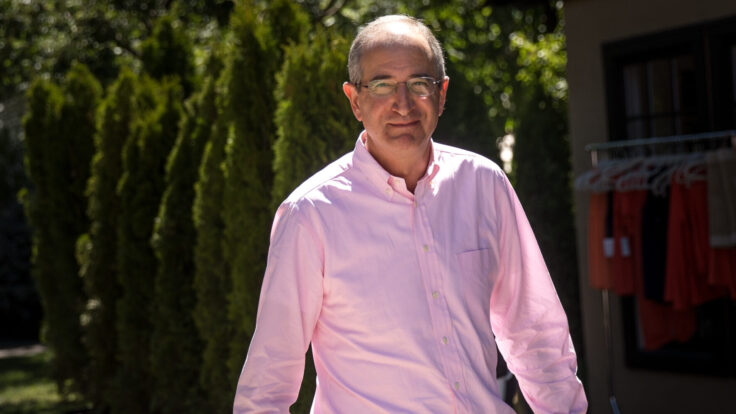
That changed on Monday, when Mike Mayo, the dean of financial services research analysts on Wall Street, now at Wells Fargo, had a sitdown meeting with Adebayo Ogunlesi, known as Bayo, the lead independent director of the Goldman Sachs board of directors. At that meeting—their first since 2016—Bayo gave a full-throated endorsement of Solomon and the job he’s been doing for the past five years as Goldman’s C.E.O.
“Bayo seemed very supportive of the C.E.O., making it clear that there is a disconnect between media reports and the board's conclusions from their oversight,” Mayo wrote in his September 18 report about the meeting. “Our conclusion is that the C.E.O. is not going anywhere anytime soon, the strategy is on an effective multi-year path, a turn in capital markets activity will make much of the media attention go away, and the board is in anything but caretaker mode, as reflected by the engagement of the lead director.”
In a separate chat with me, Mike was even more emphatic that Solomon is here to stay and that the full Goldman board is firmly and enthusiastically in his corner. “I left the meeting with zero doubt,” Mayo said. When he asked Bayo if Solomon’s job was at risk, Mike told me, Bayo’s reply was “Why do you even ask the question?” Mayo was surprised: “I didn’t expect him to say he was at risk, but I also didn’t expect that the degree of support for him to be as strong as it was,” he told me.
Bayo also told Mayo that more than 1 million people applied for jobs at Goldman Sachs last year—can that be true?—including more than 200,000 who applied for jobs as Goldman interns. In other words, as I like to say, it’s still harder to get a job at Goldman than it is to get into Harvard. “He’s saying,” Mayo continued, “the results, execution, strategy and reputation are strong, so you shouldn’t even be asking the question.” Bayo told Mayo that there is just this “huge disconnect” between what “he sees inside the firm and how they are performing” and the media stories about Solomon and Goldman.
Mayo said, in fact, that investors in Goldman didn’t care about the media narrative or itchy partners leaving the firm. They cared instead about the positive turn in the capital markets cycle (the I.P.O. pipeline, the impact of new regulatory rules, etcetera), as well as Goldman’s cost-cutting and reorganization.
Regardless, Bayo’s definitive statement of support for David should quiet the stories about his tenure, at least for now.
And now on to our regularly scheduled programming… |
 |
| More Notes on The Second Iger Age |
| Musings on the fate of the once-great Walt Disney Company and whether it would be great once again. Does that mean spinning off ABC and ESPN together? |
|
|
|
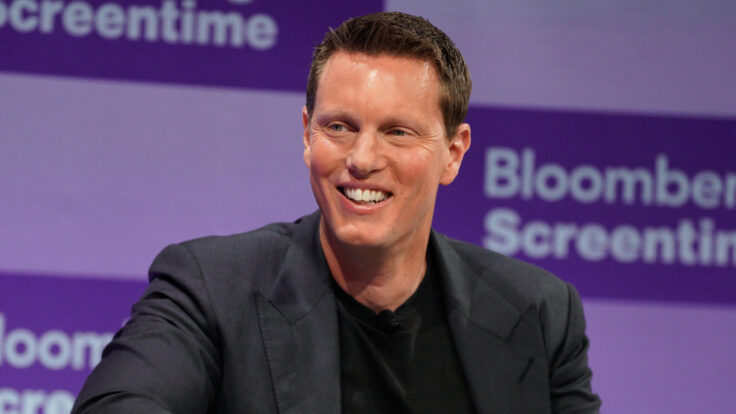
| On Monday, I caught up with Rich Greenfield, the Wall Street research analyst, as he was on a plane bound for Florida to attend a media industry meeting that Disney was hosting at its theme park in Orlando. Greenfield, a partner at LightShed, has been covering Disney for some 30 years: the Eisner vs. Ovitz drama, the purchase of ABC Family, Roy E. Disney’s sudden resignation, the Iger acquisition spree, the Fox debacle, etcetera.
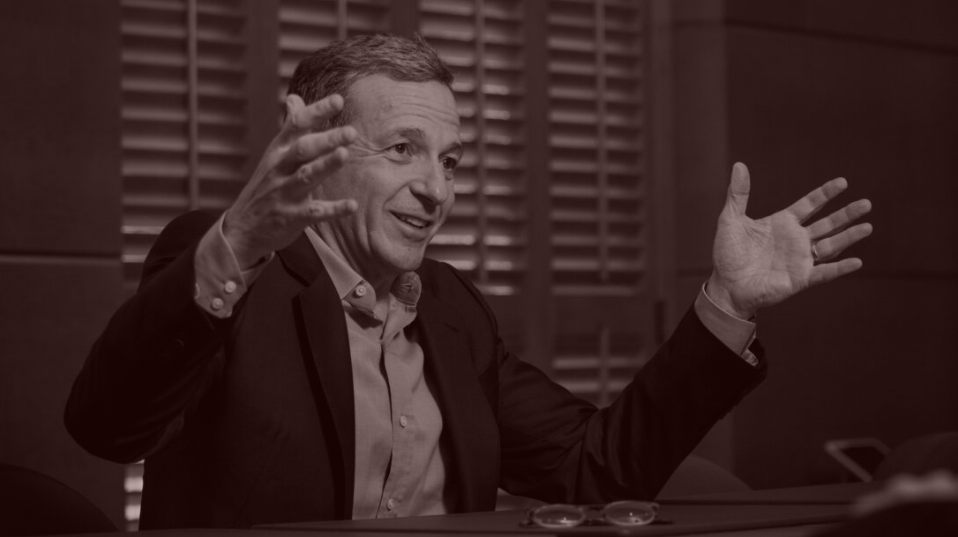
But, I think it’s safe to say, Greenfield has never seen the company (or the entertainment industry) more discombobulated than it is these days, in the second Iger era, when seemingly “everything is on the table,” from the future of Hulu and ESPN to a potential sale of Disney’s linear assets. It’s an open question that investors, employees and corporate executives, alike, are desperately busy trying to figure out.
“Iger 1.0 was all about making major acquisitions of I.P. to transform The Walt Disney Company,” Greenfield told me, as the door to his plane was closing. “If you think about Disney, the lifeblood of Disney is I.P. creation, more so than any other media company, because that I.P. flows through their broadcast and cable networks, flows through their theme parks, their consumer products, their video games. I think Iger, in round one, was very astute at recognizing that they were deficient in that arena. And he needed to bolster that with iconic I.P. which he did through three major acquisitions,” of Pixar, Fox, and Marvel, as well as a fourth acquisition, of Lucasfilm.
Iger 2.0 is obviously quite different, even though he was only away from the company between Jan 1., 2022 and Nov. 20, 2022, when he returned as C.E.O. after orchestrating the departure of Bob Chapek, his chosen successor. Greenfield noted that Disney’s stock has not been this low since back in August 2014, nearly 10 years ago. “Iger, the sequel, seems to be about deconstructing Disney and figuring out what are the pieces of Disney that have sustainability and I think that is the real change,” Greenfield said. “Do you want to be in the TV business? Do you want to be in the ESPN business? What are the pieces that are really sustainable?”
Moreover, Greenfield noted, “the I.P. engines seem to be sputtering… And unfortunately, there’s no obvious acquisitions like there were in round one” that can fix the problem, beyond “time and patience,” which “isn’t very exciting for investors.” Alas, he said, he is hearing that Disney’s Wish, an upcoming animated feature, is not very good. “You can’t fix it, right?” he said. “It took three years to make. You can’t just snap your fingers and make it better.” And fixing the content business at Disney is his biggest concern. “Marvel, Pixar, Lucas, they all seem tired,” he said. And “the streaming pot of gold at the end of the rainbow just doesn’t exist like it once did.” |
|
|
| Of course, what can’t be fixed creatively can sometimes be remedied by creative M&A, even if that means deconstructing. Greenfield pointed to what Jeff Bewkes pulled off at TimeWarner to make it a more digestible acquisition target, ultimately for AT&T, which screwed things up before spinning it off in April 2022 and merging it with ZazWorld to form Warner Bros. Discovery. He said he doesn’t think Iger’s ultimate endgame is to skinny down Disney to make it a sale prospect for, say, the likes of Apple—I completely agree—and he scratches his head in amazement that people in the media keep suggesting it.
Disney, after all, has never been a seller of major assets, let alone the whole company, and Apple has never been a major buyer. “I don’t think Iger the Sequel is to sell,” he said. “I think Iger the Sequel is to figure out linear TV [before] it just dies. I don’t think there’s anybody who will debate that. I think it’s to figure out what is the right group of assets that has sustainability.”
We chatted about the proposed sale of ABC, National Geographic, FX and the like, which Iger famously put up for auction while in Sun Valley. Greenfield has pooh-poohed, on Twitter/X, the likelihood of a sale to Byron Allen, who has reportedly offered $10 billion. And doesn’t think much of Nextstar’s prospects as a buyer, either. I asked him if he thought the ABC sale process would be painful for Disney, given that the network’s revenue and EBITDA are in decline and Allen’s offer, for one, was awfully light. “Keeping it is more painful,” Greenfield said.
We also discussed a variation of what the activist hedge fund manager Dan Loeb had proposed to Chapek last year: spinning off ESPN, with a bunch of Disney debt. That idea went nowhere back then. But both Greenfield and I think there might be something to the idea of spinning off ESPN and ABC together, as their own separate company, along with a bunch of Disney’s $35 billion in net debt.
There’s no question, after all, that the fates of ESPN and ABC are as intertwined as ever these days. They both are facing the decline of linear TV. ESPN, under Jimmy Pitaro, seems focused on how to transition ESPN from a linear product to a streaming product. It’s not clear that ABC is giving equal thought to that topic, or whether it will just have to accept its fate as a waning asset. On the other hand, Iger’s new deal with Charter, which got Monday Night Football back on the air before last week’s game, also calls for ABC to simulcast nearly all those night games. “Why does it have to [sell to] a buyer?” he wondered. “Why can’t it just be two companies?”
If ABC and ESPN were spun off together, perhaps with Pitaro at the helm, then the market could decide the value of the two declining businesses, each with plenty of free cash flow that could be used for debt payments and to help ease the transition to streaming. “My guess is that a buyer might emerge and, if not, let investors who want to own that sort of strong free cash flow, low growth asset own that and let people who want to invest in Disney’s iconic brands and I.P. own that,” Greenfield said.
He thought the big excitement in Orlando would be that Pitaro, at ESPN, would be speaking, perhaps even laying out his vision for how ESPN would “bridge the chasm” between the linear ESPN and the digital, fully direct-to-consumer streaming ESPN. Of course, there’s no question that Pitaro has been laser focused on how ESPN will make the jump to digital, but it doesn’t seem like it will be happening anytime soon, or in a way that will both appeal to consumers’ dwindling budgets for streaming while also replacing the EBITDA lost from cord-cutting.
Greenfield chuckled: “All media executives seem pretty optimistic today despite the headwinds ahead,” he said. “Which is a real disconnect from investor sentiment, which is at a multi-year low.” He recalled that the day Chapek started as C.E.O., he wrote a piece calling for Disney to get rid of ESPN. “Not because it’s a terrible business,” he said, “but just because it’s not long-term fixable. The challenge all of these companies have is the longer they wait, the harder it is.”
Nevertheless, he is starting to see “dramatic shifts” in the media landscape: Streaming is starting to be de-emphasized, and selling content to third parties is starting to be re-emphasized. He retweeted with three bullseye emojis a Joe Flint picture of the Band of Brothers movie that is now streaming on Netflix, when once upon a time it was exclusively on HBO. (“It’s not HBO. It’s Netflix,” Flint, the Wall Street Journal’s media reporter, posted.) “There’s a dramatic shift underway going to direct-to-consumer streaming,” Greenfield continued. “These companies are going back to what they do best: creating content and selling it to other people. That’s what they do best and they have for decades.”
I reached back out to Greenfield to see what, if anything, the Disney crew had to say in Orlando about how streaming would become more profitable, or how and when ESPN would bridge the chasm between its linear channel and its ideas for streaming, or what Iger had to say about the sale or spin off of ABC, or how and when the content in its filmed entertainment divisions would improve. Apparently, those topics did not come up. “Pretty high level,” Greenfield texted me. |
|
|
|
| FOUR STORIES WE’RE TALKING ABOUT |
 |
| The Kamala Swap Fantasy |
| Calls to drop Harris from the 2024 ticket are as predictable as they are pointless. |
| PETER HAMBY |
|
 |
|
 |
| Trump’s Imperfect Call |
| Dish on Trump’s furious fundraising request to Peter Thiel, an FTX legal bombshell, and more. |
| THEODORE SCHLEIFER |
|
 |
|
|
|
|
|
 |
|
|
|
Need help? Review our FAQs
page or contact
us for assistance. For brand partnerships, email ads@puck.news.
|
|
You received this email because you signed up to receive emails from Puck, or as part of your Puck account associated with . To stop receiving this newsletter and/or manage all your email preferences, click here.
|
|
Puck is published by Heat Media LLC. 227 W 17th St New York, NY 10011.
|
|
|
|