 |
 |
Welcome back to Dry Powder. I’m Bill Cohan. Good Juneteenth to all.
In tonight’s issue, a few revelations in the aftermath of the failed Skydance/RedBird bid for Paramount. Namely, what actually went down between Shari, NAI, and the special committee, the bad blood currently circulating, and whether the Sony/Apollo contingent is back in contention. Also, if you can’t get enough of this drama, listen to my conversation with Peter Hamby about the next act in the saga on The Powers That Be.
But first…
- S.B.F.’s “anomaly” appeal: As I wrote back in May, Sam Bankman-Fried’s upcoming appeal is likely to focus on Sullivan & Cromwell, the elite Wall Street law firm that represented FTX in its final days. On November 9, 2022, after all, representatives of the firm met with federal prosecutors—without disclosing that conversation to Bankman-Fried. The following day, Sullivan & Cromwell lawyers persuaded him to turn the company over to John Ray III, S&C’s handpicked C.E.O., who quickly filed for bankruptcy, depriving Sam—at least in his telling—of the chance to raise new capital to try to pull FTX out of its death spiral.Robert J. Cleary, the examiner in the FTX case, recently investigated that November 9 meeting to determine whether S&C might have “violated its duty of confidentiality, candor, and loyalty to” FTX “by disclosing to prosecutors, without proper authorization from the FTX Group, that a crime had occurred at the company.” But, Cleary wrote, he “has not seen any email or other document in which S&C expressly disclosed a crime to prosecutors or regulators prepetition.” He did see “communications disclosing to the government that FTX.US had discovered an anomaly on its balance sheet—that there were not enough assets to cover liabilities.” But “those disclosures do not conclude that the anomaly amounted to, or was the result of, a crime.”
Sam obviously does not agree with Cleary’s conclusion, so it will be interesting to see what argument he and his attorney, Alexandra A.E. Shapiro, will make against S&C when his appeal is filed this fall. (Sam is still in Brooklyn, in case you were interested.) In the meantime, however, Cleary wants to keep investigating S&C. On June 10, he filed a motion in bankruptcy court for permission to investigate S&C’s representation of S.B.F. in his purchase of shares in Robinhood, the online brokerage, and “what, if anything” as part of that representation S&C “should have known about the FTX Group’s misconduct and/or fraud” and whether the firm had a conflict as a result and should not have been retained as part of the FTX bankruptcy.
Of course, it’s a little late for all that now, as the bankruptcy process is in its final stages—a plan of reorganization has been filed, and S&C has pulled out more than $200 million in fees since November 2022. But these investigations could be relevant to S.B.F.’s appeal. Cleary is also interested in probing whether the “holes” in FTX.US’s balance sheet were the result of “commingling of customer or corporate assets,” as well as “the frequency and magnitude of the holes,” and “how they were resolved and by whom that got approved.” The result could be relevant to Sam’s argument that FTX.US did not need to file for bankruptcy, or whether it was truly insolvent, as Ray and S&C have claimed.
Cleary is asking the bankruptcy court to give him 10 weeks and an additional $3 million to conduct this investigation and then to write a report that would be filed under seal—although, like his initial report, it could be released publicly if the parties involved in the bankruptcy agree. The hearing to decide Cleary’s request will be held on July 17. Sam, for one, will no doubt be interested in Cleary’s findings if his investigation is allowed to proceed. But, really, another $3 million?
|
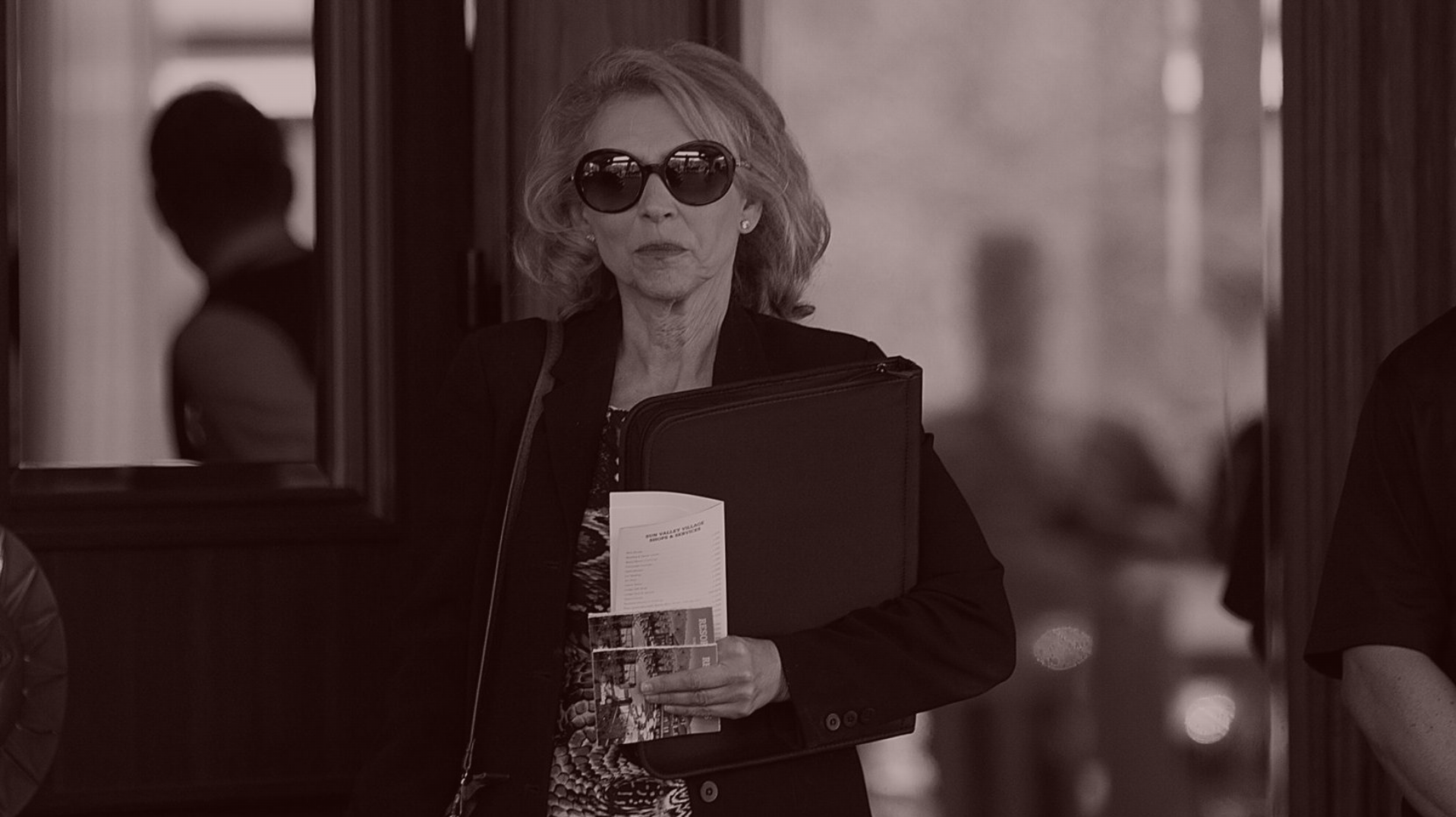 |
| A Paramount Post-Postmortem |
| Charting the mounting animosities among all the interested parties—Shari, Skydance and RedBird, the special committee, Gabelli—after the endless Paramount saga capsized in an instant. |
|
|
|
| Now that the Skydance/RedBird deal is officially dead—the bad blood between the two sides is plenty thick—the Sony/Apollo contingent may be getting back into contention as a possible acquirer of Paramount Global. To be clear, Shari Redstone is still licking her wounds after six months of failed negotiations with David Ellison and Gerry Cardinale, so she may be in no mood quite yet to re-engage with Sony and Apollo, especially since she was not that enamored of their offer to start. On the other hand, she is going to have to do something at some point and Sony/Apollo, which has been laying in wait for weeks now, surely has the wherewithal to see a deal through. I’m told that Paul Taubman, their M&A advisor, is engaged and ready to go; the teams are still doing due diligence and are just waiting for Shari to give a signal of some sort—white smoke?—that she might be ready to get back into deal mode, so don’t be surprised if, in a few weeks, Shari’s M&A saga is back to being front-page news.I’m told that the special committee of the Paramount Global board of directors—comprised of all directors but Shari—is prepared to try to sort through what are surely serious and legitimate regulatory concerns about a foreign company like Sony buying into Paramount Global, and about whether Apollo’s ownership of local television stations could block it from acquiring CBS’s own local television stations. But we’re not there yet.
As for what went down between Shari, NAI, the special committee, and Ellison/RedBird, additional reporting in the last few days has yielded perhaps a more nuanced understanding of the chaotic denouement. First and foremost, the decision to end the Ellison/RedBird deal rested with Shari Redstone and the other directors/trustees of NAI. (These include Shari, who controls 20 percent of NAI, and the trustees of the Sumner M. Redstone National Amusements Part B General Trust, which controls 80 percent of NAI.) Suffice it to say that Shari makes the decisions, but she can’t do it alone. It was, however, Shari who made the call to the special committee on June 11 calling off the deal with Ellison/RedBird.
Her reasoning comprised a bouillabaisse of all the things that make a drawn-out M&A process hazardous to actually reaching a deal. There was the five-month process itself with Ellison/RedBird, which is simply too long for a public company to endure being in play. Believe it or not, even though the sums of money can get into the billions of dollars, an M&A process for a big public company is often best handled over a weekend, after the markets close on Friday and before they open again on Monday. This is a bit of an exaggeration, of course, because conversations go on for months before things get serious. But once buyers and sellers start talking about real numbers, it’s best to take advantage of the deal heat and make things happen quickly when markets are closed and leaks are less likely (until the calculated Sunday night leak to The Wall Street Journal about the impending merger).
What happened here, of course, was the exact opposite, especially since not only did Ellison/RedBird have to do its due diligence to figure out what was going on at NAI—in order to make its $2.3 billion offer to Shari—but also to figure out what it was buying at Paramount Global. Then there was the due diligence that Paramount had to do on Skydance, since Paramount was going to buy Skydance for stock as part of the deal. Anyway, I’m told Shari got quite fed up with how long the deal discussions with Ellison/RedBird went on. It’s fair to say that after five months, the two sides can get dug into their positions and deal heat fades.
Resentment set in, especially as the pool of money originally promised to Shari kept getting whittled down and doled out to the non-voting B shareholders, whom the special committee was there to protect. “You’re better off getting the deal done earlier,” explained someone familiar with what happened, “when everybody is in the honeymoon period. As the deal goes on, people get set in their ways and start fighting. They should never let it go for five months.” |
| A MESSAGE FROM OUR SPONSOR |
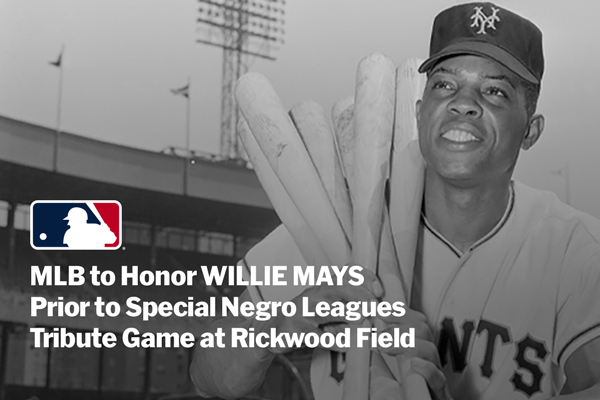 |
| Major League Baseball will honor the extraordinary life of Willie Mays during a special pregame ceremony prior to MLB at Rickwood Field: A Tribute to the Negro Leagues. The game will feature a match-up between the St. Louis Cardinals and Willie’s San Francisco Giants at the historic ballpark on Thursday, June 20 on FOX at 7 p.m. Eastern.An Alabama native, Mays began his professional baseball career at Birmingham’s Rickwood Field as a member of the Negro League’s Birmingham Black Barons. Mays was a Hall of Famer, two-time MVP, 24-time All-Star, 12-time Gold Glover, a veteran of the U.S. Army, and a recipient of the Presidential Medal of Freedom. The ceremony will also feature the largest collection of living Negro League players in nearly 30 years and a personally curated performance by Jon Batiste.
Opened in August 1910, Rickwood Field has welcomed many of baseball’s most legendary players into its hallowed grounds.
Learn more about this historic event.
|
|
|
|
|
| I am also told Shari did not like the leaking, and there was a lot of leaking to the media in the deal, including right from the outset, when my partner Matt Belloni broke the news that David Ellison and Skydance wanted to buy NAI and figure out a deal for Paramount. And the leaks to David Faber on CNBC were legendary. “Nobody knew what was going on,” this person continued, “but with all the leaks, nobody trusted it.” For instance, the special committee did not get the Skydance financials until May, and then there were only two Zoom calls about the Skydance financials because Ellison/RedBird was so worried about leaks. “The leaks were a big problem,” this person continued, “and we couldn’t share information.”Finally, there was all sorts of confusion about whether there actually was a deal or not between Ellison/RedBird and Paramount, and whether there actually was a deal or not with Shari and NAI. “She just got fatigued and didn’t trust anybody,” one person involved with the deal said of Shari. Yes, the special committee and its advisors did a good job of looking out for the B shareholders, who at first were getting nothing from Ellison/RedBird. And by the end, thanks to the special committee negotiations, Ellison/RedBird had agreed to put in $4.5 billion in cash, $1.5 billion of which was going to be used to pay down some of Paramount’s $12 billion in net debt with the hope of returning the debt to an investment-grade credit rating, while the rest was going to be used to give the non-Redstone shareholders some cash, on a pro-rata basis depending on how many of them wanted to sell. And some of that cash was coming out of Shari’s hide, a fact that she didn’t like since it represented a change, for the worse, from what she was first offered.
In the end, I’m told, the non-Redstone shareholders were going to end up with something like $7.50 in cash plus stock in the still-public Paramount Global, and the deal kept being refined, and improved, for the B shareholders. But all the moving parts ended up frustrating Shari, until finally she pulled the plug, leaving the special committee and its advisors shocked and scrambling, to the point that the special committee and NAI couldn’t even get their acts together sufficiently to put out one press release.
There were other terms that were still being negotiated at the last minute, too. Shari wanted Ellison/RedBird to grant her a bona fide indemnification from shareholder lawsuits, which of course the buyers were reluctant to offer, given the financial implications of such a guarantee. She was afraid that the inevitable lawsuits would chip away at her family’s consideration, which had already been chipped away at to give some consideration to the B shareholders.
Then there was the matter of a shareholder vote, even a nonbinding one, that had been floated, as well. It’s still not clear whether just the other A shareholders would have voted—giving Mario Gabelli, the largest non-Redstone Class A shareholder, veto power over the deal—or whether the B shareholders, who control some 645 million shares, would have been asked to weigh in as well, even as a merely symbolic gesture. Shari wanted their imprimatur in order to achieve some perceived absolution from shareholder lawsuits. Ellison/RedBird opposed the vote—why give a vote to all of these shareholders when it was in Shari's power, pretty much alone, to decide whether or not to the deal? That issue never got resolved, and just created more resentment and distrust. |
|
|
|
|
| Tensions were high, I’m told, after Shari informed some members of the special committee that she was washing her hands of the Ellison/RedBird deal. The small group of committee members then, correctly, decided to call the full committee together, along with Cravath senior partner Faiza Saeed, who had been the committee’s legal advisor. They discussed the Shari decision for a while. Then the committee brought Blair Effron, at Centerview Partners, into the loop and told him, much to his surprise and frustration, that Shari had kiboshed the deal.Blair, who had been working hard for months to make the deal happen, now had to grapple with the fact that he was about to lose a roughly $60 million fee if the deal fell through. He’s a seasoned professional (and a friend) but that had to hurt. I’m sure he was not happy with the turn of events, especially when the deal seemed on the verge of being approved by both Shari and by the special committee. In fact, I bet he was pissed. (He would say he wasn’t, I’m sure. But, human nature…) Many a slip between cup and lip. “I don't know who she listens to half the time, but she’s unpredictable,” one insider said of Shari.
Animosity quickly replaced the expected euphoria. The blame game began: Charles Phillips, the longtime board member and ex-Morgan Stanley banker and Oracle executive was said to have turned Shari against the deal because he wanted to be C.E.O. of Paramount Global himself. (The latter part isn’t true. He’s 65, is already the C.E.O. of Infor, his own enterprise software company, and is a tech guy, not a media guy. But the suggestion definitely muddied the waters.) Some blamed Joele Frank, the special committee’s P.R. firm, which many believed was responsible for the leaks to Faber at CNBC. (As Matt reported, Joele Frank got sacked and was then replaced by the Brunswick Group when it came time for the special committee’s statement about the deal’s end.) Others, of course, blamed the ever-changing terms that benefited the B shareholders and pissed off Shari. “If she had held on, we probably would have landed the plane,” said someone involved with the deal, “because we were about to hear the final few [deal points]. The only thing left was the vote, and we had to figure out something on that.”
But by then, the deal process had gone on too long. Nerves were frayed. David Ellison and Shari Redstone had stopped talking. Every twist and turn of the negotiation was getting into the media. The non-Redstone shareholders were getting increasingly irritated that Shari was making out like a bandit and they were getting a few crumbs, even as Shari was getting peeved that the crumbs were coming from her and her family’s bread. The New York Post reported that Gabelli was getting ready to file a $100 million lawsuit against Shari, which was supposedly another factor in her decision to pull the plug. “Like Teddy Roosevelt said, I speak softly and carry a big stick,” Gabelli told the Post. “We have established a relationship with an attorney and are looking at all of this under a microscope.”
In the end, Shari decided to go it alone, backing for the moment her three C.E.O.s, who have pledged to sell assets, including BET and potentially the depleted Showtime, and to reduce costs by an additional $500 million (as a start), which has the rank and file in the company very nervous indeed. In other words, a total mess, where Paramount Global shareholders are again taking it on the chin. Since the deal fell apart a week ago, the Paramount stock is down 17 percent. Shari’s stake in the company is now worth less than $700 million. She and her family could have likely netted around $2 billion had she said yes to Ellison/RedBird. Who knows what she’ll get if the Sony/Apollo deal ever comes to fruition, but it’s most certainly going to be less than that. |
|
|
|
| FOUR STORIES WE’RE TALKING ABOUT |
|
|
|
|
|
 |
|
|
| Need help? Review our FAQs
page or contact
us for assistance. For brand partnerships, email ads@puck.news. |
| You received this email because you signed up to receive emails from Puck, or as part of your Puck account associated with . To stop receiving this newsletter and/or manage all your email preferences, click here. |
| Puck is published by Heat Media LLC. 227 W 17th St New York, NY 10011. |
|
|
|