{{ 'now' | timezone: 'America/New_York' | date: '%b %d, %Y' }} |
|
|
Welcome back to The Varsity. I’m John Ourand, writing from the
Cotswolds, one of the most picturesque parts of England, where I’m swathed in tweed from the ankle bone northward and attending the IMG x RedBird Summit. My trusty valet, Marchand, has taken very good care of me.
No sooner did I check in for the confab than my phone lit up with reports of a Masters media deal. At first blush, the news seemed relatively benign: Amazon Prime will stream four hours of tournament coverage—two hours early Thursday afternoon, and two more early
Friday afternoon. At 3 p.m. ET, Amazon will hand over coverage to ESPN. But what makes this deal so interesting is that the Masters almost never brings in new partners. In fact, in the tournament’s 91 years, only three media companies have covered it: CBS, USA Network, and ESPN. Amazon Prime is now the fourth. So congrats to Jay Marine for getting this done.
During last week’s NBA media group confab, commissioner Adam Silver responded to a
question about the mounting costs of subscriptions required to watch live sports by referencing the trove of highlights and other shortform content that fans can access for free via social media. As Julia Alexander writes below, he finally said the quiet part out loud.
Take it away, Julia… |
|
|
A MESSAGE FROM OUR SPONSOR |
PERFORMANCE UNLEASHED
Agile, powerful, iconic. The Range Rover Sport is a dynamic SUV with a
distinct take on sporting luxury.
EXPLORE |
|
|
- Nielsen’s ratings creep: You may have noticed a couple of big, record-setting numbers coming out of the sports world lately. College football viewership is up 21 percent across all major networks compared to the same period last season, according to Nielsen, on track to beat last year’s record. The WNBA had its most watched season of all time, and that’s without supernova Caitlin Clark in the final few weeks. Roger Goodell
is celebrating the most watched first week in recorded NFL history, averaging 22.3 million viewers per game, up 5 percent over 2024 and 19 percent over 2023.
All impressive, but also a good reminder that viewership data is about to get more complicated. Nielsen’s “Big Data + Panel” methodology, and increased measurement for out-of-home games, means that many sports are going to seem much more popular when, in fact, the metrics are simply catching up to reality. Good luck to all
leagues who don’t have record-breaking weeks this season. - Fox’s sports betting victory: Lachlan Murdoch, free now to run Fox unencumbered, is leaning into sports betting. At a Goldman conference last week, the favored Murdoch boy reiterated to a group of analysts that he’s going to exercise an option for an 18.6 percent stake in FanDuel, one of the largest sportsbooks in the U.S.
Lachlan would be getting a piece of the business
for a below-market rate: Fox’s option is tied to FanDuel’s $20 billion valuation in 2020; the company is now valued at more than $31 billion. With sports betting expanding into other states, and Fox Sports maintaining a strong share of betting-heavy sports, like the NFL and Saratoga horse racing, it’s no surprise that Lachlan sees gambling as an increasingly valuable asset in Fox’s digital portfolio. - More Ellisonology: Last night, in
Matt Belloni’s What I’m Hearing newsletter, I argued that Paramount’s bid for Warner Bros. Discovery was a scale play that didn’t necessarily help to target younger demographics across the two companies’ streaming services. What could help David Ellison reach those highly coveted 18-to-39-year-old viewers in the U.S., however, is the UFC: Roughly 61 percent of its audience consists of Gen Z and Millennials, per new Luminate data.
Luminate turned up some
other good news for Ellison. Roughly half of UFC fans already use Paramount+. (The only two platforms with slightly higher adoption among UFC fans than in the general population were Peacock and Hulu, each used by 59 percent of UFC fans.) Considering that the largest percentage of Paramount+ viewers are in the 45-plus age demographic, having UFC fights and titles like South Park—and, soon, Call of Duty—seems like a data-driven way to bring in younger audiences.
|
Now here’s the main event… |
|
|
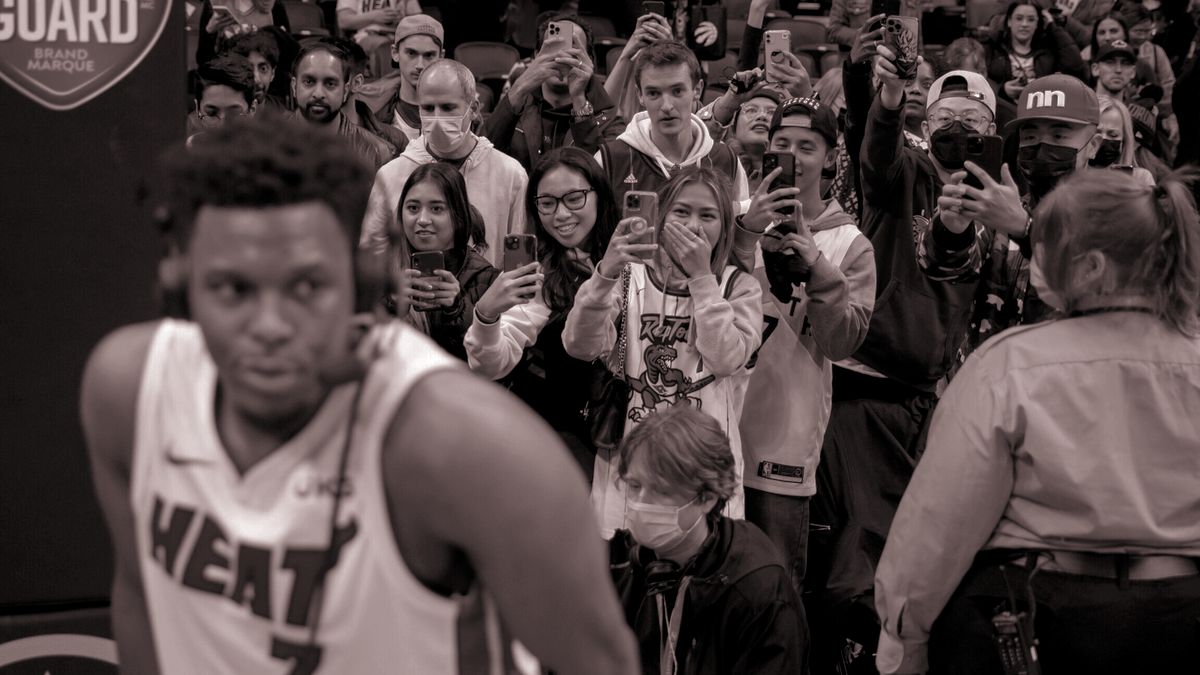
Adam Silver knows that young people are watching NBA content on free social platforms rather
than TV—not ideal when the league is trying to prove it’s actually worth the $77 billion that its partners just paid for games. So what’s he going to do about it? |
|
|
I admit I was a little taken aback when Adam Silver acknowledged last week that
the NBA has become a “highlights-based sport,” as younger fans with iPhone-poisoned attention spans increasingly follow players on Instagram and TikTok instead of, you know, actually watching a game. “There is a huge amount of our content that people can essentially consume for free,” the commissioner said at a press conference following an NBA board of governors event. “So, Instagram, TikTok, Twitter, you name it. … Your content is not behind a paid firewall.”
All true, of course, but
still a startling admission—and presumably one that Silver felt comfortable making only after securing a $77 billion, 11-year rights deal with NBCUniversal, Disney, and Amazon. After all, the league’s broadcast and streaming partners would obviously prefer that fans watch full games on their channels rather than clips on platforms they don’t control. NBA ratings are already down about 40 percent over the past 15 years, with last season averaging just 1.53 million viewers per game—a slight decline from 2023-24 and a far cry from the 2.5 million viewers-per-game average in 2010. Even more damning, the Finals are down roughly 41 percent over the last decade.
Many fans interpreted Silver’s remark as glib: According to one
analysis, NBA fans may have to pay more than $900 in subscription costs if they want to watch every game this season. But the bigger questions raised by highlight-gate are more existential: How many viewers is the league actually losing to social video? How much of that decline is attributable to larger behavioral changes? And can those fans be
recaptured by more availability on streaming? |
|
|
A MESSAGE FROM OUR SPONSOR |
PERFORMANCE UNLEASHED
Agile, powerful, iconic. The Range Rover Sport is a dynamic SUV with a
distinct take on sporting luxury.
EXPLORE |
|
|
On the surface, the NBA’s viewership data seems contradictory. During the 2022-23 season, which
averaged just 1.59 million viewers in the regular season and 11.6 million for the Finals, the league notched a record 32 billion views across league, team, and individual athlete social media accounts. That was a 10 percent year-over-year increase, even as regular-season TV viewership fell 1 percent and Finals ratings dropped 6.5 percent. The divergence is especially pronounced around marquee events. At February’s All-Star Weekend, for instance, the NBA drove more
than 1 billion views across its social channels on Friday and Saturday—before the actual game—up 17 percent year-over-year. And yet, viewership for the All-Star Game declined 13 percent.
You could make the argument that the NBA is more popular than ever. Certainly, Silver would contend that there’s a flywheel effect generated by all those clips, which keep fans engaged and ostensibly grow the sport. But TikTok impressions aren’t exactly what NBCU’s Brian
Roberts, ESPN’s Jimmy Pitaro, and Amazon’s Jay Marine thought they were buying for $77 billion. |
It’s not easy to quantify the economic value of the NBA’s social media presence, but we can draw
some inferences by comparing the NBA to other leagues. In 2024, the NBA generated roughly twice as many social impressions as MLB, 3.5x more than the NFL, and 8x more than the NHL, according to research published by Sports Value. In 2024, the NBA’s social media helped to drive about $731 million in
sponsor media value—Relo Census’s metric for the monetary value of brand exposure—just under three times what the NFL generated in the same year. But it’s less clear how the NBA, itself, can monetize all that media awareness. Silver will need answers before the league’s rights renewal a decade from now.
It helps that Silver has youth on his side. More than 60 percent of younger sports fans said they watched basketball games either in person or at home—making it the second-most-watched
sport, per a PwC study from earlier this year. So while Gen Z is watching less sports overall, compared to Millennials and Gen X, basketball is what they’re more likely to view. And a significant driver for their interest is social media exposure, discovery, and engagement. If streaming makes it easier for someone with even a passing interest to tune into a quarter using a service they already subscribe to—Prime Video, Disney+, Hulu, and Peacock reach a combined 240 million subscribers in the
U.S.—then the NBA’s highlight-clip culture could become a significant top-of-funnel marketing tool. As Gen Z becomes older, more affluent, and more homebound, their social media engagement should mature into regular game viewership. |
Silver’s comments about international expansion didn’t get as much pickup as his “highlights” quip,
but it’s impossible to understand the commissioner’s expansion plans without considering the league’s ambitions abroad: About 70 percent of those who engage with NBA social content live outside of the United States.
No one can deny that the NBA is having a global moment. A European expansion league is in the works and more games are being scheduled to specifically focus on those audiences. Dončić, Jokić, Giannis, and
Wembanyama are four of the most-watched players in the league. Although some experts have argued that a lack of American superpower in the league is to blame for declining viewership—LeBron James is close to retiring, Steph Curry is slowing down, and Kevin Durant is always a question mark these days—the new guard of talent may drive a true expansion business in Europe. As of this year, about one in every six players—or 16
percent of the league—is European.
The league’s global turn has been years in the making. It took various measures over the last decade to make games more accessible to European audiences, including shifting game times on Saturdays. And Silver is starting to see results. Between 2015 and 2024, NBA primetime game viewership on Saturdays and Sundays
grew by 139 percent in Portugal, 137 percent in France, 109 percent in Spain, and 27 percent in the U.K.
That growing audience—supported by a social media presence that transcends time zones and delivers a slew of daily highlights nine months a year—sets the NBA up to compete with other leagues abroad. Roger Goodell is
focused on Germany, the U.K., and Brazil; MLB’s Rob Manfred is hyperfocused on Japan and Mexico; and even the NHL’s Gary Bettman leaned into last year’s 4 Nations Face-Off tournament, which drove significant domestic viewership for the league. Part of Amazon’s interest in the NBA was its international audience, and part of proving the existence—and potential value—of that audience is in its social media presence. It’s what Silver repeatedly points to when talking about
the NBA’s enduring popularity in the face of decreasing ratings.
Meanwhile, don’t rule out a U.S. ratings rebound. In the early ’90s, Sports Illustrated declared the NBA all but dead, right before Michael Jordan and Scottie Pippen created one of the most-watched team dynasties with the Chicago Bulls. Sure, the internet broke legacy media into a thousand pieces. But live sports remain a last vestige of the monoculture, and other superstars and
rivalries will come along. In that context, Silver’s comments about the NBA being a highlights-driven game are less an admission of defeat than a call for league stakeholders to reconsider what constitutes success. If the NBA is going to get people to watch its games, it needs to capture their attention when the games aren’t on, when the league isn’t in session—and they need to do it in the U.S. and outside of it.
I don’t think we’re too far out from Goodell, Manfred, and Bettman saying
similar things. They just need to secure their version of the $77 billion that gave Silver the confidence to say the quiet part out loud. |
That was great. Thanks, Julia. See you all on Thursday.
John |
|
|
Finally, a media podcast about what’s actually happening in the media—not the oversanitized,
legal-and-standards-approved version you read online. Join Dylan Byers, Puck’s veteran media reporter, as he sits down with TV personalities, moguls, pundits, and industry executives for raw, honest, sometimes salacious conversations about the business of media and its biggest egos. New episodes publish every Tuesday and Friday. |
|
|
An essential, insider-friendly Hollywood tip sheet from Matthew Belloni, who spent 14 years in the trenches at
The Hollywood Reporter and five before that practicing entertainment law. What I’m Hearing also features veteran Hollywood journalist Kim Masters, as well as a special companion email from Eriq Gardner, focused on entertainment law, and weekly box office analysis from Scott Mendelson. |
|
|
Need help? Review our FAQ page or contact us for assistance. For brand partnerships, email ads@puck.news. You received this email because you signed up to receive emails from Puck, or as part of your Puck account associated with {{customer.email}}. To stop receiving this newsletter and/or manage all your email preferences, click here. |
Puck is published by Heat Media LLC. 107 Greenwich St, New York, NY 10006 |
|
|
|