Welcome back to Dry Powder, I’m Bill Cohan.
August is upon us, and I’m
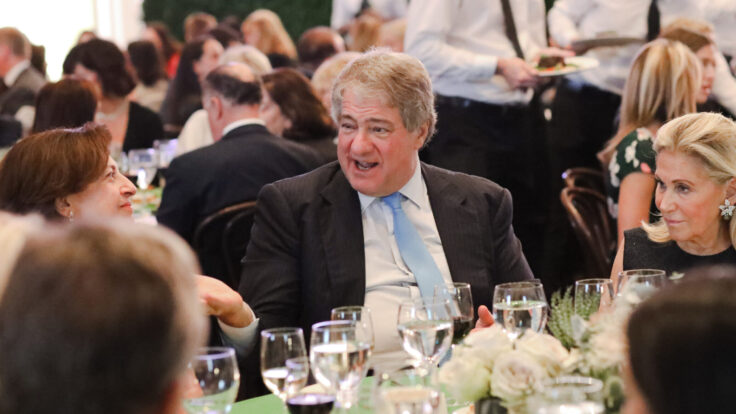
fortunate to be riding out the end of summer on Nantucket, even if I have to watch the population swell until Labor Day. In fact, I didn’t even have to leave the island last week to welcome my Puck partners Marion Maneker, Leigh Ann Caldwell, and Jon Kelly at a private event at the Westmoor Club—a lively discussion about art and power and money, of course. For once, Puck came to me.
In tonight’s issue, news and notes on the
latest bout of meme stock stupidity, a Jim Chanos vs. Michael Saylor update, and, most intriguing, the untold story of an audacious Freedom of Information Act request that could unlock the secrets in the Epstein files… if the Second Circuit allows.
Let’s get started…
|
- Meme
stock season returns: During the past week, for reasons that are hard to discern, shares in a number of down-on-their-luck or highly shorted companies were suddenly boosted by retail investors in a spasm of Reddit-fueled trading reminiscent of the meme stock mania of 2021. Some investors have short memories, I guess, and can’t resist the promise of a get-rich-quick scheme, however delusional. (If you want a primer on the short economy, recall my
conversation from a few years back with S3 founder Bob Sloan, the true master of the trade. Check out his podcast here and here.)Among the companies that briefly surged in value was Krispy Kreme, the donut maker that German investment firm JAB Holding took private in 2016, for $1.35 billion, and then public again in 2021, at a valuation of $2.8 billion. The stock, which once traded as high as $17 a share, was trading for as little as $2.57 earlier this summer, before the meme mania kicked off. On Tuesday, the stock briefly shot up to $5.70 a share, up some 75 percent in
one day. Of course, some investors who bought into the frenzy have already been burned: The stock closed on Friday at $4.42 a share, down 22 percent (although still up a whopping 41 percent for the week).
Then there’s GoPro, the action camera company, which has had its own problems over the years—collapsing from a high of $87 a share in October 2014 down to less than $1 a share as recently as Monday, a 98 percent drop since its peak. But on Tuesday, after the GoPro stock was also adopted
by the Reddit brigade, it closed around $2.30 a share, up a stunning 137 percent in one day. By Friday, it was back down around $1.50 a share. Why do investors get caught up in this silly stuff?
- Chanos’s big short, cont’d: Meanwhile, could MicroStrategy (now just Strategy, tout court)—the Michael Saylor–founded enterprise software company that has redirected its efforts toward buying and hoarding Bitcoin—be falling back to
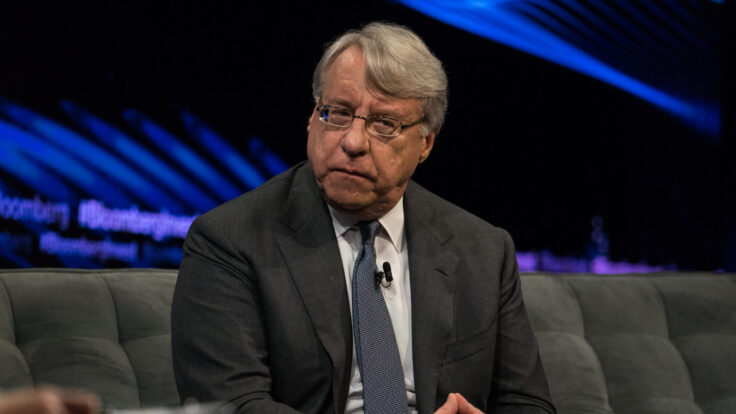
Earth? As I wrote last week, the renowned short seller Jim Chanos has been shorting the Strategy stock and buying Bitcoin as a hedge, betting that the price of the stock, which has traded at more than 2x the net asset value of the company’s more than 600,000 Bitcoins, will erode over time. Why should there be a premium at all?,
Chanos argues.Since then, things appear to be headed in Chanos’s direction. On Monday, Saylor plunked down another $740 million for 6,220 Bitcoins, at an average price of $119,000 per. He’s now spent $43.6 billion on his 607,770 Bitcoins, which are worth $71.8 billion, for a gain—on paper anyway—of $28.2 billion. The ratio of Strategy’s enterprise value to its Bitcoin holdings is now 1.77x.
In a text exchange with me this week, Chanos acknowledged that Wall Street seemed pleased
that the company’s enterprise value to Bitcoin ratio had fallen below 1.8x, despite all the Bitcoin hype. Was it on its way to 1x, I asked. “Theoretically, these treasury companies should trade at slight discounts!” he wrote back, noting that while Bitcoin was up 10 percent in July, MicroStrategy’s stock was only up 0.4 percent between June 30 and July 25.
|
|
|
While Republicans have fled Washington for the summer in the hopes that the Epstein scandal
goes away, attorney Dan Novack’s FOIA battle with the F.B.I. has been wending its way through the courts. This fall, we may finally get some answers.
|
|
|
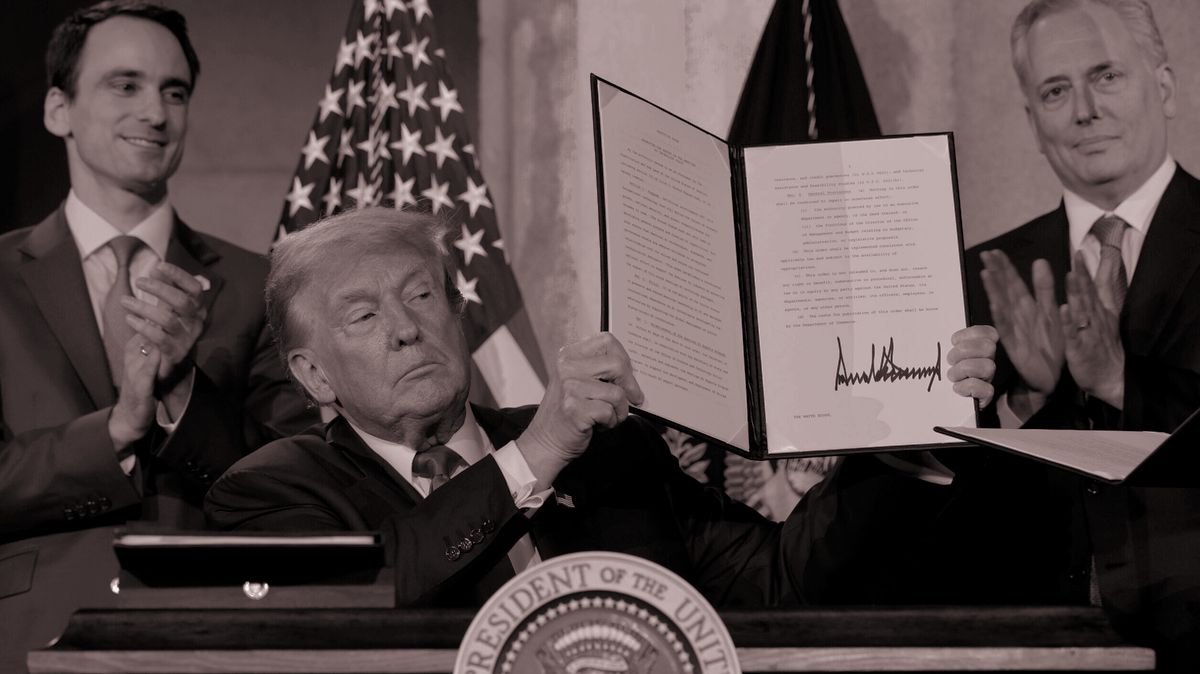
Tout Washington, and much of the media and MAGAworld, has become consumed with the status of the so-called Epstein files and the mystery of Trump’s broken pledge to release more information to the public. There are any number of unsatisfying explanations: The Justice Department claims that an “exhaustive review” of the files this spring didn’t uncover any “client list,” and other materials couldn’t be disclosed without violating agreements with witnesses and victims. There are also, of course, the reports that F.B.I. employees reviewing the files were told to flag any references to Trump—a not-insignificant sensitivity given the years-long friendship between the president and the sexual predator who died mysteriously in jail. (Trump was one of dozens of prominent people, along with Bill Clinton and Leon Black, who allegedly sent celebratory notes and poems that appear in a book put together by Ghislaine Maxwell for Epstein’s 50th birthday.)
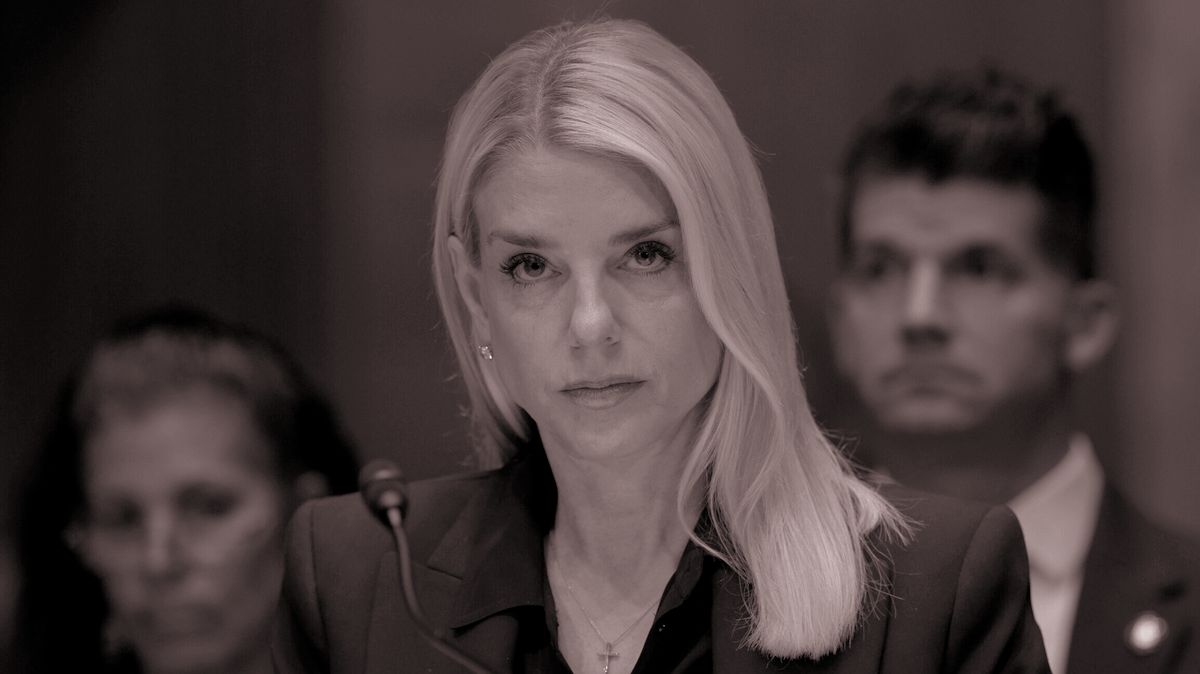
Such is the level of consternation among Capitol Hill Republicans these days that Speaker Mike Johnson shut down the House early and told his fellow congressmen to get the heck out of Dodge until after Labor Day to avoid taking any votes on the issue. Not so long ago, you will recall, Attorney General Pam Bondi said she had the Epstein client list on her desk and was reviewing it for release to the public. Suddenly, now, there is nothing to see here. And still the plot thickens: On Thursday and Friday, Deputy A.G. Todd Blanche, who previously served as Trump’s defense attorney, “interviewed” Ghislaine at her Florida prison, where she is serving a 20-year sentence for child sex trafficking. The Justice Department gave her limited immunity for the interviews. Could Trump grant her clemency in exchange for an exonerating statement? Asked about that scenario on Friday, he declined to rule it out.
And yet, despite all this, the Epstein files might still see the light of day. Loyal readers may recall that, in January 2022, I wrote about a Freedom of Information Act request filed by the enterprising First Amendment attorney Dan Novack. For years now, Novack, a pro bono FOIA attorney with his own eponymous firm, has been battling with the F.B.I. to unredact reams of documents in the Epstein case, to no avail. But his luck may be about to change.
|
Novack first filed his FOIA request in April 2017, during the first Trump administration, on behalf of clients RadarOnline and James Roberston, one of the three authors of the 2019 book Epstein: Dead Men Tell No Tales. A month later, with the F.B.I. having failed to respond, Novack filed a lawsuit in the Southern District of New York seeking to require the bureau to fulfill the request. In October 2017, the court ruled that the F.B.I. had to produce the Epstein material at the rate of 500 pages a month. And it did, for the next 21 months, although many of the released documents were heavily redacted.
Alas, events conspired to keep that information hidden. In July 2019, Epstein was arrested at Teterboro Airport, having just returned from Paris by private jet, and charged with sex trafficking. A month later, the F.B.I. gave Novack a justification for why it had redacted so much of the material it was handing over on a monthly basis: FOIA regulation 7A, which attempts to guard against the release of documents that might interfere with a legal proceeding.
Even after Epstein’s prison cell suicide in August 2019, the F.B.I. continued to cite the 7A exemption. Novack didn’t learn why until federal prosecutors announced they were building a case against Maxwell. Around that time, the F.B.I. began redacting almost all of the materials Novack received, and in January 2020, the bureau stopped producing documents altogether. That summer, Maxwell was arrested. In December 2021, she was convicted of recruiting and grooming teenage girls for Epstein to abuse. In June 2022, she was sentenced and transferred to FCI Tallahassee, a low-security women’s prison, where she and Blanche spoke this past week.
By that point, the F.B.I. had processed more than 11,500 pages of documents pursuant to Novack’s FOIA request. Of those, only 181 were released in full, with the rest being partially or fully blacked out.
|
Strangely, even after Ghislaine had been convicted and sentenced, the F.B.I. still continued to claim the 7A exemption, citing ongoing investigations related to Epstein and Maxwell and the need to protect confidential sources. They also cited the fact that Maxwell had appealed her conviction. Assistant U.S. Attorney Maurene Comey—yes, former F.B.I. Director James Comey’s daughter, who prosecuted Maxwell and whom the D.O.J. fired this month—argued that Maxwell might still get another trial, and therefore the Epstein documents should not be released. (Novack told me he believes the F.B.I. is desperate to protect information that might reflect poorly on its initial investigation into Epstein in the 2000s. The F.B.I.’s national press office declined to comment on Novack’s assertion about the F.B.I.’s initial investigation into Epstein.)
In 2023, after an earlier round of summary judgment motions that District Judge Paul Gardephe dismissed without prejudice, both the F.B.I. and Novack moved again for summary judgment in
the case, at Gardephe’s request. “The F.B.I. has resisted transparency every step of the way, baselessly withholding thousands of pages of material for years out of stated deference to Epstein,” Novack wrote in his brief. “The pretext offered: disclosing details of the F.B.I.’s investigation of Epstein for child sex trafficking would inflict a ‘clearly unwarranted invasion’ of his personal privacy.” But, he countered, “with Maxwell convicted after a month-long public trial, there is even less basis to credit the F.B.I.’s unsupported concerns of interference. What records has Ghislaine Maxwell not already seen? What potential jury member (or witness) could possibly be affected by the release of the requested records at this point?”
Given Epstein’s death, and Maxwell’s conviction, it seemed that Novack might finally get the unredacted documents he was seeking. In June 2024, however, Gardephe effectively tossed Novack’s case, ruling that his “public interest” argument did not
override the F.B.I.’s desire for enforcement protection exemptions. (Ghislaine has appealed her conviction to the Supreme Court, citing, in part, an allegedly biased juror in her criminal trial. The court is expected to hear her appeal in September. Her previous appeals were denied.)
|
Last summer, Novack and his clients appealed Gardephe’s decision to the Second Circuit Court of Appeals, arguing that there is significant public interest—you can say that again—in the Epstein documents and that the F.B.I.’s claims for an exemption based on an ongoing investigation were moot. The appeal is ongoing.
The F.B.I. must file its brief in the appeal by September 25, with a hearing scheduled for late fall. “Then we’ll see what happens,” Novack told me recently. “What I would like the public to understand is that there’s a secret case that Bondi and others are not acknowledging. So while they’re talking about working on transparency, they have continued the eight years of stonewalling.”
On July 6, of course, the D.O.J. and the F.B.I. issued their unsigned memorandum claiming there was no “client list” and no evidence that Epstein had blackmailed anyone. And on July 23—as the backlash to the original memo continued to mount—Bondi and Blanche issued a joint statement, again claiming that “nothing in the files warranted further investigation or prosecution, and a motion was filed in court to unseal the underlying grand jury transcripts.” That same day, no surprise, a Florida federal judge denied the D.O.J. request to release a portion of the grand jury transcripts related to the Epstein investigation.
If the Second Circuit rules for Novack, the vaunted Epstein files could finally be released, hopefully without redactions. “The Department of Justice and F.B.I. are required to respond to my case, and the response
is forthcoming, and you can expect it to be stupid, like it’s been in the past, and if people find that even more offensive than what’s already been out there, then that might influence the court or the F.B.I. to change their view on this,” Novack told me. “I hope the Second Circuit sides with me, because then I’ll be a hero.”
Yes, maybe, but given the increasingly high stakes here, and Trump’s ongoing politicization of the matter, you’ve got to believe the F.B.I. will appeal the Second
Circuit ruling—if it goes in Novack’s direction—to the Supreme Court. (Lately, of course, SCOTUS has repeatedly ruled in Trump’s favor, and there’s little reason to think it wouldn’t rule for Trump, and his F.B.I., in this case too.) Meanwhile, it looks like Maxwell’s appeal, Maxwell’s potential pardon, and Novack’s FOIA case are all headed on a legal collision course. This is all starting to get very interesting, indeed.
|
|
|
Join Puck’s chief political columnist, John Heilemann, as he roams the corridors of power and influence in America on this
twice-weekly interview show, taking you beyond the headlines with the people who shape our culture: icons and up-and-comers, incumbents and insurgents, moguls and machers in the overlapping worlds of politics, entertainment, tech, business, sports, media, and beyond. The conversations are rich and revealing, unrehearsed and unexpected… and reliably impolitic. A Puck-Audacy joint, new episodes drop every Wednesday and Friday.
|
|
|
The industry’s go-to source for unflinching reporting on the trillion-dollar business of artificial intelligence - perhaps the
single most important technology of our time. Ian Krietzberg, the powerhouse journalist behind The Deep View, delivers twice-weekly insights into the latest dealmaking and breakthroughs in A.I., and how the intersecting worlds of finance, entertainment, media, and politics are being transformed in its wake.
|
|
|
Need help? Review our FAQ page or contact us for assistance. For brand partnerships, email ads@puck.news.
You received this email because you signed up to receive emails from Puck, or as part of your Puck account associated with {{customer.email}}. To stop receiving this newsletter and/or manage all your email preferences, click here.
|
Puck is published by Heat Media LLC. 107 Greenwich St, New York, NY 10006
|
|
|
|