• Washington
  • Wall Street
  • A.I.
  • Hollywood
  • Media
  • Fashion
  • Sports
  • Art
  • Join Puck Newsletters What is puck? Authors Podcasts Gift Puck Careers Events
  • Join Puck

    Directly Supporting Authors

    A new economic model in which writers are also partners in the business.

    Personalized Subscriptions

    Customize your settings to receive the newsletters you want from the authors you follow.

    Stay in the Know

    Connect directly with Puck talent through email and exclusive events.

  • What is puck? Newsletters Authors Podcasts Events Gift Puck Careers
$(subject)
$(preheader)  ‌ ‌ ‌ ‌ ‌ ‌ ‌ ‌ ‌ ‌ ‌ ‌ ‌ ‌ ‌ ‌ ‌ ‌ ‌  ‌ ‌ ‌ ‌ ‌ ‌ ‌ ‌ ‌ ‌ ‌ ‌ ‌ ‌ ‌ ‌ ‌ ‌ ‌  ‌ ‌ ‌ ‌ ‌ ‌ ‌ ‌ ‌ ‌ ‌ ‌ ‌ ‌ ‌ ‌ ‌ ‌ ‌  ‌ ‌ ‌ ‌ ‌ ‌ ‌ ‌ ‌ ‌ ‌ ‌ ‌ ‌ ‌ ‌ ‌ ‌ ‌  ‌ ‌ ‌ ‌ ‌ ‌ ‌ ‌ ‌ ‌ ‌ ‌ ‌ ‌ ‌ ‌ ‌ ‌ ‌  ‌ ‌ ‌ ‌ ‌ ‌ ‌ ‌ ‌ ‌ ‌ ‌ ‌ ‌ ‌ ‌ ‌ ‌ ‌  ‌ ‌ ‌ ‌ ‌ ‌ ‌ ‌ ‌ ‌ ‌ ‌ ‌ ‌ ‌ ‌ ‌ ‌ ‌  ‌ ‌ ‌ ‌ ‌ ‌ ‌ ‌ ‌ ‌ ‌ ‌ ‌ ‌ ‌ ‌ ‌ ‌ ‌  ‌ ‌ ‌ ‌ ‌ ‌ ‌ ‌ ‌ ‌ ‌ ‌ ‌ ‌ ‌ ‌ ‌ ‌ ‌  ‌ ‌ ‌ ‌ ‌ ‌ ‌ ‌ ‌ ‌ ‌ ‌ ‌ ‌ ‌ ‌ ‌ ‌ ‌ 
Dry Powder

Happy Wednesday, and welcome back.

Thanks as always for reading Dry Powder, my biweekly private email about what’s really happening on Wall Street.

In today’s email, my thoughts on Elon Musk’s activist showdown with Twitter, his looming confrontation with the S.E.C., and whether there’s any defensive measures available to C.E.O. Parag Agrawal. (Hint: None of them are very good.)

Enjoy,
Bill

The Elon-Twitter Corporate Hostage Negotiation
Twitter has been at war with itself since its inception. But Elon Musk’s stock accumulation arms race is an existential crisis.
WILLIAM D. COHAN WILLIAM D. COHAN
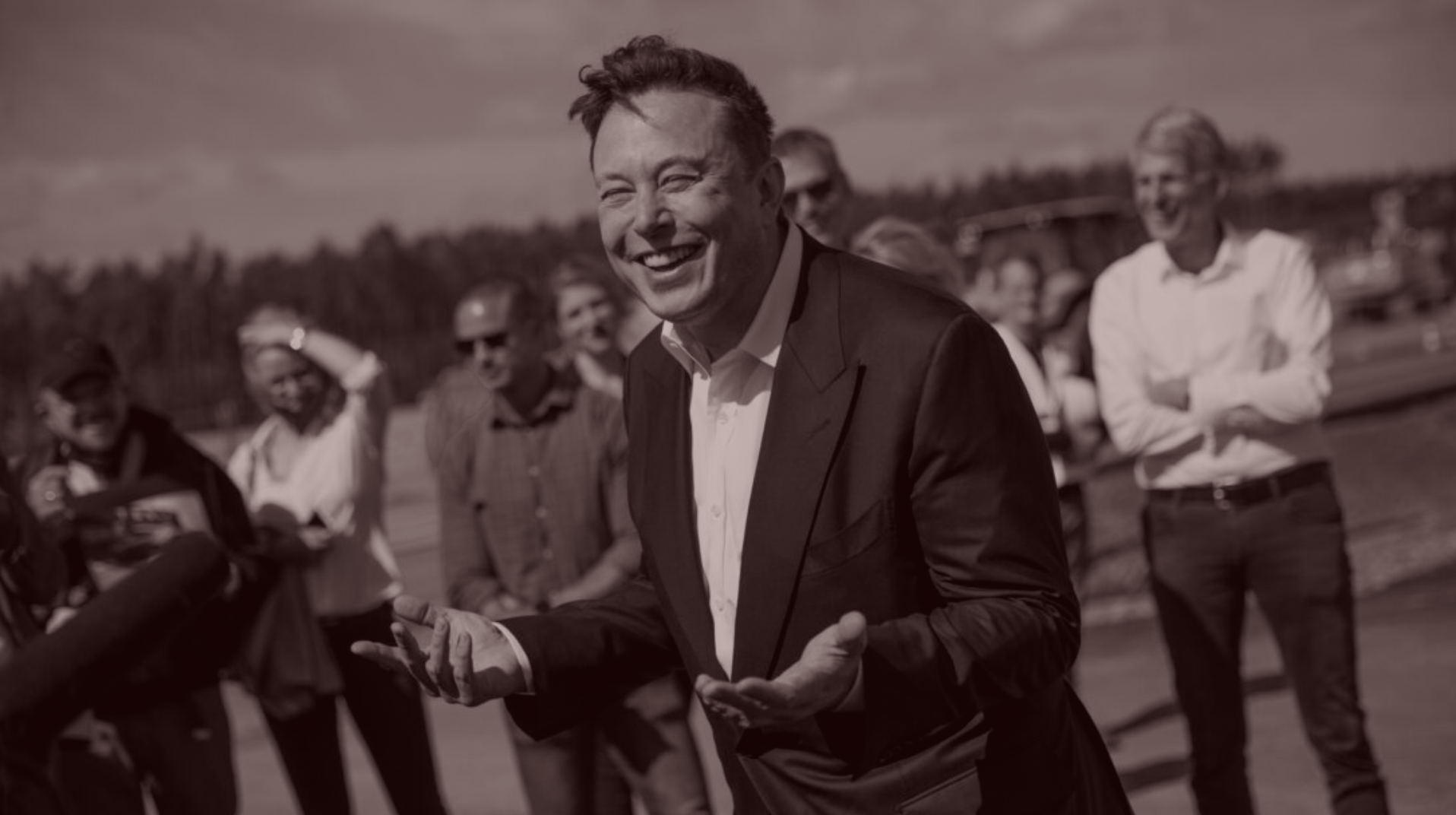
You’ve got to hand it to Elon Musk, the world’s richest man. He knows how to get attention, and he knows how to get what he wants. Since January 31st, Musk has spent around $2.6 billion in 43 separate open market purchases to obtain a 9.1 percent stake in Twitter. It’s larger than any other shareholder—with Vanguard and Morgan Stanley, as broker, a close second and third—but a mere 1 percent of his net worth, so pocket change. More notably, at least on Wall Street, is that Musk ignored the disclosure deadline and that he filed a Form 13G, implying that his investment was “passive” when he should have filed a Form 13D form, meaning that he was intending to be an “active” investor. The difference between a 13G filing and a 13D filing has always been pretty clear on Wall Street: 13G “good”; 13D “danger.” (He’s now being sued over his disclosure goof.)

Within days of announcing his stake, Twitter and Musk announced that he would be joining the Twitter board, with an initial term ending after the 2024 annual meeting in exchange for agreeing to cap his overall purchases of Twitter’s stock at 14.9 percent during his tenure, and for 90 days thereafter. This would have kept Musk inside the tent, which is better than the opposite, but either way that plan went kaput over the weekend when Musk informed Twitter that he declined the invitation after all. Instead, as he shared in a new 13D filing, he would be free to acquire as much Twitter stock as he wants, or to sell his stock whenever he wants.

The filing also pointed out that Musk “from time to time,” may “engage in discussions” with the Twitter board and the Twitter management concerning a wide range of topics, including mergers, acquisitions, the proper capital structure for the company, governance, strategy “and other matters concerning” Twitter. Musk informed Twitter that he would be expressing his views through “social media or other channels.” In other words, this looks like war. “This now goes from a Cinderella story with Musk joining the Twitter board to likely a Game of Thrones battle between Musk and Twitter,” according to Dan Ives, a Wedbush Securities research analyst who covers Tesla.
Of course, this is the worst possible outcome for Twitter. Now a guy who could easily mount a takeover bid for the whole company, even at $40 billion, is free to do whatever he wants, say whatever he wants, and materially suggest whatever he wants—such as when, as he offered last weekend, that perhaps Twitter should do away with its advertising, convert its corporate headquarters into a homeless shelter, and that maybe it should change its name by removing the “w.” He is not bound to act as a fiduciary for other shareholders, as he would have been had he taken up his seat on the Twitter board. He can buy more stock, or not. He can slap a tender offer in the paper and buy the whole company, using other people’s money or even his own, if he wants. He is now an unfettered nuclear missile aimed squarely at Market Street. “All bets they are off now,” Kara Swisher tweeted Sunday night.

Musk can do this, in part, because Twitter has pretty much forgotten how to make money. Its 2021 EBITDA was a scant $52 million, 92 percent below its 2020 EBITDA of $624 million, which itself was down 34 percent from the $945 million in EBITDA that Twitter made in 2019. (Of course, Twitter would have everyone add back to its 2021 EBITDA a one-time $766 million expense to settle a lawsuit, making its EBITDA for 2021 a more respectable $818 million, but it’s always something. Even with the add-back—groan—Twitter made less money in 2021 than it did in 2019.) Musk is already sitting on a profit on his Twitter stock of some $800 million for a few months' work, assuming you can call “work” authorizing someone to buy stock on your behalf. I suspect he could easily raise the capital he needs to buy more Twitter stock, or to launch a tender offer for the company by margining the Twitter stock he already owns, or margining his Tesla stock, or just by asking his friends on Wall Street to lend him a helping hand.

It’s worth recalling that Musk was not the founder of Tesla. He was an early investor in the company and then took control of it and appointed himself C.E.O. Except for the fact that he already has too much on his plate —between Tesla, SpaceX, and The Boring Company—I’m not sure he has enough bandwidth left to take over control of Twitter and its management. (That said, Twitter is long accustomed to having a C.E.O. with more than one C.E.O. job.) But he certainly could find a top executive to run the place at his direction.

If I were advising Twitter C.E.O. Parag Agrawal, I would get on the phone immediately to Marty Lipton, at Wachtel Lipton, and start a conversation about putting in a poison pill, unless for some reason it’s already too late to do that. He and Marty could also talk about other defenses to keep Musk at bay: levering up, buying back more stock to make it marginally more expensive for him (not that that will make a difference), or just trying to sell the company right now to a more friendly owner? He and Marty could also give some thought to whether Musk’s S.E.C. violations amount to a hill of beans. (“Should @SEC publish new set of rules for billionaires?” Scott Galloway wondered on, of course, Twitter.) Time is running out. I think I would choose to sell the company straight away, assuming I could find an entity more liquid and friendlier than Musk to buy it.
A Twitter Takeover
Hostile takeovers—or at least takeovers that start in an unfriendly way; they always end up “friendly” one way or another—have been around for a long time, from the Getty Oil battle royale that launched T. Boone Pickens into the public imagination, to Ronald Perelman’s Revlon play to some of Carl Icahn’s greatest hits, like the 2011 Clorox deal. Musk’s accumulation of Twitter shares, however, could trump them all. There probably isn’t much that Twitter can do here if Musk really wants a controlling stake or to buy the company outright. Other than a quick sale, the best strategy at this point might be one that has already begun: if enough people are pissed off at Musk and threaten to abandon the platform, then he just might end up being the king of nothing. Oooof.

And there is some evidence that this grassroots, meme-ish resistance is taking shape. Asked about Musk’s stake in Twitter by Joy Reid, on MSNBC, the often-brilliant Anand Giridharadas, the author of the bestseller Winners Take All, launched into an exquisite rant. “We live in this moment when arsonists are cosplaying as firefighters,” he said. “The people who cause our greatest social problems, our global problems, are trying to con us into thinking that not only are they okay, they are also the solution to the problem they’ve caused.” (Giridharadas hasn’t stopped tweeting though, despite his concerns about Musk’s stake.)

In a weird coincidence of timing, The New York Times chose this same moment to admonish its journalists, or some of them anyway, for their incredible devotion to the media platform. In a staff memo, Dean Baquet, the soon-to-be-outgoing executive editor, exhorted the newspaper’s reporters to spend less time on Twitter and to spend more time focused on doing their jobs, digging up facts, interviewing sources, and so on. “We can rely too much on Twitter as a reporting or feedback tool—which is especially harmful to our journalism when our feeds become echo chambers,” Baquet wrote to the staff. “We can be overly focused on how Twitter will react to our work, to the detriment of our mission and independence. We can make off-the-cuff responses that damage our journalistic reputations. And for too many of you, your experience of Twitter is shaped by harassment and attacks.” He decreed that tweeting is now voluntary and that he would support any reporter who decided he or she has had enough of the platform.

He wisely urged his crew to be journalistically skeptical of what it finds on Twitter and pledged to support anyone at the paper who experiences “online threats” or “harassment.” He said that “the Masthead” will also be monitoring reporters’ Twitter feeds to make sure they don’t violate the paper’s “social media guidelines” and that nobody at the Times uses Twitter to “attack, criticize or undermine the work of your colleagues.”

In a subsequent interview with Joshua Benton, at Nieman Lab, Baquet noted that a “high percentage” of the Times staff wanted a “reset” of the paper’s Twitter policy. “I started to worry that Twitter had become too big a part of our journalistic lives,” Baquet said. “Some journalists were, you know, looking to Twitter for validation of their coverage. And I think that gave Twitter more power than, frankly, it deserved.” If New York Times reporters stop tweeting, who’ll be left to tweet?

In the meantime, we are left to wonder whether Trump will be reinstated on the platform, as Musk would like, or whether the company will add an “edit” button, another one of Musk’s desires. Or whether Twitter will curtail its attempts at silencing users who abuse its rules. Or whether the whole thing will just shrivel up and die, as he also suggested could be happening since some of the people with the biggest Twitter followings rarely use the platform to communicate with those armies.

One thing is for sure, Musk aims to keep things lively, and himself and his considerable ego center stage. On Thursday he tweeted the famous picture of himself smoking a blunt on Joe Rogan’s show. “Twitter’s next board meeting is going to be lit,” he wrote. The tweet got one million likes. That was when he was still thinking of joining the Twitter board. Even Puck’s favorite economist, Larry Summers, the former Treasury Secretary and former President of Harvard, couldn’t resist a little bit of Musk cynicism. “Elon Musk and Twitter seem almost made for each other,” he said on Bloomberg TV. “It’s hard to imagine a less passive shareholder. I suspect that’s going to give the business press a lot of stuff to cover going forward.”
FOUR STORIES WE'RE TALKING ABOUT
Moritz's Hollywood Secrets
Long-time film producer Neal Moritz tells Puck's Matt Beloni about overcoming the fraught video-game-to-feature-film pipeline.
MATTHEW BELLONI
The Trump-Oz Ticklefest
Why did Trump turn his back on Dave McCormick, the former Bush-era appointee and Bridgewater C.E.O.?
TINA NGUYEN
Life and Death in Kyiv
The atrocities in Bucha sent the world reeling. For Zelensky’s inner circle, it's led to a powerful new conviction.
JULIA IOFFE
O'Donnell's CBS Deal
After plenty of rumors to the contrary, Norah O’Donnell is staying home, and set up to finally become the Peter Jennings of CBS.
DYLAN BYERS
swash divider
Facebook Twitter Instagram LinkedIn
You received this message because you signed up to receive emails from Puck.

Was this email forwarded to you?
Sign up for Puck here

Sent to {{customer.email}}
Unsubscribe

Interested in exploring our newsletter offerings?
Manage your preferences .

Puck is published by Heat Media LLC.
64 Bank Street
New York, NY 10014


For support, just reply to this e-mail.
For brand partnerships, email ads@puck.news

SEE THE ARCHIVES

SHARE
Try Puck for free

Sign up today to join the inside conversation at the nexus of Wall Street, Washington, A.I., Hollywood, and more.

Already a member? Log In


  • Daily articles and breaking news
  • Personal emails directly from our authors
  • Gift subscriber-only stories to friends & family
  • Unlimited access to archives

  • Exclusive bonus days of select newsletters
  • Exclusive access to Puck merch
  • Early bird access to new editorial and product features
  • Invitations to private conference calls with Puck authors

Exclusive to Inner Circle only


Latest Articles from Wall Street

Geoffroy van Raemdonck
William D. Cohan • April 13, 2022
The Saks Financial Colonoscopy
Amid a torrent of bankruptcy filings, a blunt declaration by Saks Global’s newly appointed chief restructuring officer lays out precisely what went wrong and when, and who got screwed hardest—plus which risk-hungry investors are likely to call the shots moving forward. As it turns out, the company’s capital structure became “unsustainable” almost immediately after its $2.7 billion acquisition of Neiman Marcus Group in December 2024.
David Ellison
William D. Cohan • April 13, 2022
The Ellison Way of Parenting
David Ellison’s latest schemes to wrest Warner Bros. from Netflix have proved insufficient after his previous negotiating tactics ran up the price. Meanwhile, he’s losing the respect of the WBD guys across the table. But will his dad come to the rescue with another, say, $10 billion to bail him out?
Patrick Drahi
William D. Cohan • April 13, 2022
A History of Creditor-on-Creditor Violence
Wall Street invented the coercive liability management exercise, which allows companies to play their creditors against one another as they extract beneficial terms for themselves—a now-routinized tradition referred to as “creditor-on-creditor violence.” But now Apollo, Oaktree, BlackRock, and JPMorgan Chase are teaming up to put an end to this mess.


Larry Ellison, David Ellison
William D. Cohan • April 13, 2022
The Zaz–Ellison Dagger Contest
Warner Bros. Discovery’s most recent S.E.C. filing reveals the latest battle lines between the company and its hostile suitor. In particular, the document evinces a deep distrust of Paramount Skydance’s proposed deal financing, recasting the $108 billion all-cash offer as an $87 billion L.B.O. that could fall apart before closing.
David Zaslav
William D. Cohan • April 13, 2022
What Is Zaz TV Really Worth?
The battle for Warner Bros. Discovery is increasingly coming down to how Netflix and Paramount Skydance value the declining TV assets (and CNN) that David Zaslav is determined to separate from the Warners mothership. Versant, which just started trading on Nasdaq this week, may provide the answer.
greg abel
William D. Cohan • April 13, 2022
Make Berkshire Hathaway Great Again?
Greg Abel, the handpicked successor to Warren Buffett, faces one of the most exalted and daunting jobs in finance: determining what to do with the staggering $358 billion bequeathed to him by the most legendary investor of his generation. Herewith, three proposals for what Abel should buy with all that cash.


David Ellison, Larry Ellison
William D. Cohan • April 13, 2022
Zaz Is From Mars, the Ellisons Are From Venus
Murmurs from sources close to the Warner Bros. Discovery deal illuminate the latest machinations surrounding the Paramount-Netflix showdown—and where this thing is headed.


Get access to this story

Enter your email for a free preview of Puck’s full offering, including exclusive articles, private emails from authors, and more.

Verify your email and sign in by clicking the link we just sent.

Already a member? Log In


Start 14 Day Free Trial for Unlimited Access Instead →


Latest Articles from Wall Street

Larry Ellison
William D. Cohan • April 13, 2022
“Larry Didn’t Show Up, and David Got Ahead of His Skis”
Everything you wanted to know about the Warner Bros. Discovery board’s doubts with the Ellisons’ bid (but were afraid to ask) is revealed in its 14D-9 filing—a mother lode of alleged Paramount missteps, from squabbles over consent provisions and breakup fee reimbursements to junior lien debt and the financial capacity of the world’s fifth-richest man.
larry ellison david ellison
William D. Cohan • April 13, 2022
Ellison Irrevocable Trust Issues
Despite their numerous bids for all of WBD, a rift has opened between the principals at Paramount Skydance and the board and advisors of their target company—at least for now. Can money heal all wounds?
larry ellison david ellison
William D. Cohan • April 13, 2022
The Ellisons at the Gates
Paramount has raised the stakes in its hostile bid for Warner Bros. Discovery, and may yet go higher. Now Netflix must decide how much it wants to venture into junk credit-rating territory, or play games with its stock, to secure the prize.


Larry Ellison, David Ellison
William D. Cohan • April 13, 2022
Netflix’s $83B Math & The Ellison Hostile Meter
A talmudic reading of the mishegas following the $83 billion Netflix-WBD deal: Zaz’s personal economics; the likelihood that this turns hostile; the unusual consortium of banks underwriting the deal; the value of the Gunnar stub; regulatory open questions; the $5.8 billion breakup fee; and more.
Leon Black
William D. Cohan • April 13, 2022
The Epstein Monologues
The recently released, one-sided correspondence between Jeffrey Epstein and Leon Black illustrates a discourse between a hustler and a billionaire with too much money and too little time on his hands. So why couldn’t Black get rid of him sooner?
Mike Mayo
William D. Cohan • April 13, 2022
Wall Street Enters the “Cockroach” Wars
The multitrillion-dollar growth of private credit is fueling an acrimonious debate on Wall Street over whether this surging shadow market is the future of finance or the seed corn of the next crisis. Is Rowan right? Or Dimon? Or Gundlach? As Mike Mayo put it, someone is wrong.


david zaslav
William D. Cohan • April 13, 2022
Zaz the World Turns
News, notes, and palace intrigues from all sides of what might become the largest M&A deal of the year: the three-way tussle for David Zaslav’s Warner Bros. Discovery.
Get access to this story

Enter your email to get access to one article and free previews of our private emails from Puck authors and editors.

OR

Already a Member? Sign in


Latest Articles from Wall Street

wall street 1929
William D. Cohan • April 13, 2022
The Spirit of ’29
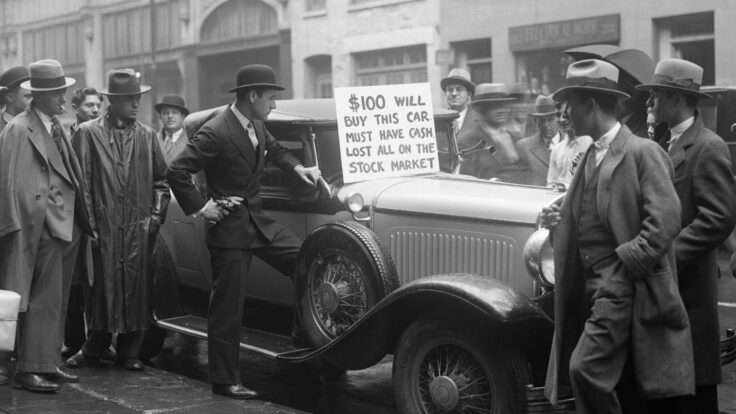
Financial history doesn’t repeat itself, but it does often rhyme. Amid a speculative frenzy, deregulation, trade wars, and a handful of megacaps propping up the markets, some of Wall Street’s brightest minds wonder whether 2026 might resemble 1929.
Marc Rowan
William D. Cohan • April 13, 2022
Street Credit
A recent string of bankruptcies and defaults suggests some challenges in the seemingly indomitable private credit market. And yet, according to some O.G.s, things have never been better. Apollo’s Marc Rowan lays bare the risks and rewards.
David Ellison
William D. Cohan • April 13, 2022
Ellisonology 101
In his first earnings call as C.E.O. of Paramount Skydance, David Ellison offered a masterclass in corporate optimism, promising “synergies” and artfully dodging questions about a possible Warner Bros. Discovery takeover. Alas, the time to act is here.


Michael Bloomberg
William D. Cohan • April 13, 2022
What Does Bloomberg Want for Bloomberg L.P.?
A modest proposal for how New York’s $100 billion man could bequeath his namesake, and its monumental profits in perpetuity.
Jim Chanos
William D. Cohan • April 13, 2022
The Mag Seven Itch
The market is notching record highs for the so-called Magnificent Seven—or should that be Mag 10?—but a subterranean counternarrative is forming as once-secure food and consumer staples crater, and cracks emerge in the $3 trillion private-credit boom.
Brian Roberts
William D. Cohan • April 13, 2022
The Brian Roberts–WBD Bull Case
A new analyst note highlights a heightened sense around Wall Street that Comcast co-C.E.O. Brian Roberts doesn’t merely want WBD, but also truly needs the company—and has a real shot at the asset.


Jamie Dimon
William D. Cohan • April 13, 2022
Jamie’s Castle in the Sky
Dimon’s $3 billion (or maybe as much as $5 billion, really) new headquarters is the physical embodiment of his fortress balance sheet and a metaphor for our fractional banking system. But the seeming permanence of its bronze facade shouldn’t fool old Wall Street hands, who know nothing is forever.


  • Terms
  • Privacy
  • Contact
  • FAQ
  • Careers
© 2026 Heat Media All rights reserved.
Create an account

Already a member? Log In

CREATE AN ACCOUNT with Google
OR YOUR EMAIL

OR

Use Email & Password Instead

USE EMAIL & PASSWORD
Password strength:

OR

Use Another Sign-Up Method

Become a member

All of the insider knowledge from our top tier authors, in your inbox.

Create an account

Already a member? Log In

Verify your email!

You should receive a link to log in at .

I DID NOT RECEIVE A LINK

Didn't get an email? Check your spam folder and confirm the spelling of your email, and try again. If you continue to have trouble, reach out to fritz@puck.news.

CREATE AN ACCOUNT with Google
CREATE AN ACCOUNT with Apple
OR USE EMAIL & PASSWORD
Password strength:

OR
Log In

Not a member yet? Sign up today

Log in with Google
Log in with Google
Log in with Apple
Log in with Apple
OR USE EMAIL & PASSWORD
Don't have a password or need to reset it?

OR
Verify Account

Verify your email!

You should receive a link to log in at .

I DID NOT RECEIVE A LINK

Didn't get an email? Check your spam folder and confirm the spelling of your email, and try again. If you continue to have trouble, reach out to fritz@puck.news.

YOUR EMAIL

Use a different sign in option instead

Member Exclusive

Get access to this story

Create a free account to preview Puck’s full offering, including exclusive articles, private emails from authors, and more.

Already a member? Sign in

Free article unlocked!

You are logged into a free account as unknown@example.com

ENJOY 1 FREE ARTICLE EACH MONTH

Subscribe today to join the inside conversation at the nexus of Wall Street, Washington, A.I., Hollywood, and more.

START 14-DAY FREE TRIAL

  • Daily articles and breaking news
  • Personal emails directly from our authors
  • Gift subscriber-only stories to friends & family
  • Unlimited access to archives
  • Bookmark articles to create a Reading List
  • Quarterly calls with industry experts from the power corners we cover