| Jon Kelly
|
|
Good morning,
I hope you’re having a great holiday season. Thanks, as always, for reading The
Backstory, your weekend review of the best new work from Puck.
It was another incredible week: Matt Belloni argued the case for how Sam Altman became Hollywood’s villain of the year; Bill Cohan found the $4.3 billion flaw in the Ellisons’ WBD proposal; Dylan Byers captured the latest Bari Weiss office gossip; Ian Krietzberg got to the bottom of
Xi’s real plan for A.I. domination; Lauren Sherman uncovered the insidious culprit in the luxury fashion recession; John Ourand determined the secret of Netflix’s live sports strategy; Marion Maneker caught up with Sotheby’s C.E.O. Charlie Stewart; Peter Hamby checked in with L.A.’s top cop about Trump’s ICE age; Leigh Ann Caldwell explained
Hakeem Jeffries’s watershed moment; and Abby Livingston shared the left’s anxiety about a scourge of mini-Mamdanis.
Check out these stories, and others, via the links below. And stick around for the backstory on how it all came together. |
|
|

| FASHION
|
|
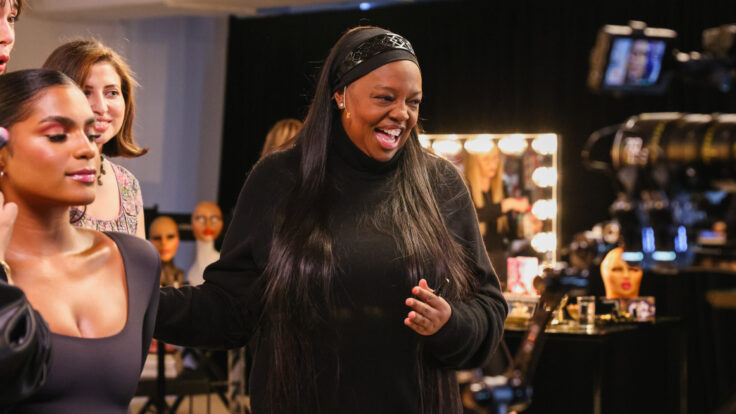
Lauren Sherman
details the latent challenge foiling the luxury industry, catalogues some Vogue personnel changes, and heralds the
Uniqlo age. |
|
|

| ART MARKET
|
|
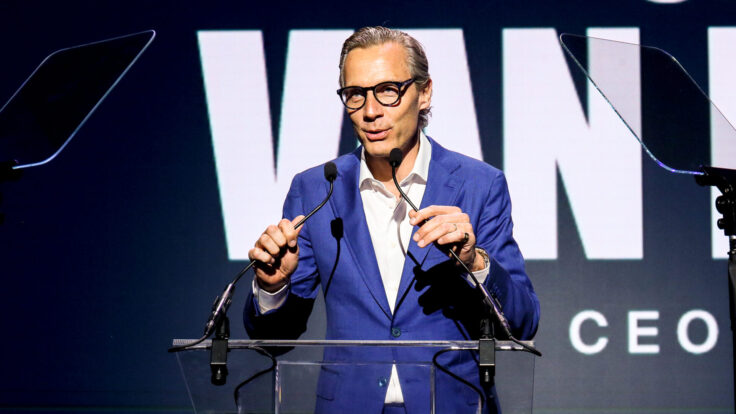
Marion Maneker
chats up Sotheby’s C.E.O. Charles Stewart and runs the final numbers on the auction market’s $14 billion year. |
|
|

| HOLLYWOOD
|
|
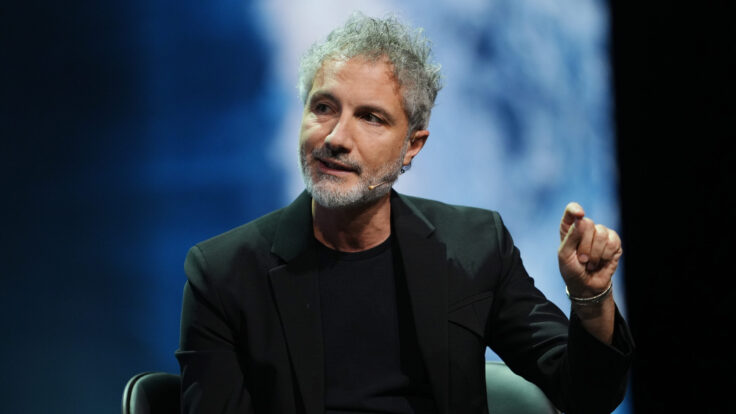
Matt Belloni
explains how Sam Altman, on the precipice of his own Social Network–style treatment, got Disney to play his game. |
|
|

| A.I.
|
|
|
|
Ash Carter
remembers the good old days of book publishing.
and…
Patricia Zohn plans the best house tour in Mexico City. |
|
|

| MEDIA
|
|
Dylan Byers captures the latest Bari–60 Minutes beef. |
|
|

| SPORTS
|
|
John Ourand
reveals why the actual games come second in Netflix’s live sports strategy. |
|
|

| WALL STREET
|
|
|
|

| WASHINGTON
|
|
Leigh Ann Caldwell
crystallizes the vibe shift on the Hill and Hakeem Jeffries’s major step forward.
and…
Peter Hamby penetrates L.A.’s National Guard politics.
and…
Abby
Livingston examines whether Democrats will face their own Mamdani-fied Tea Party primary. |
|
|

| PODCASTS
|
|
Katie Couric shares the many lessons from her brilliant career with Dylan
on The Grill Room.
and…
Ourand and NBC Sports’s Nicole Auerbach predict the next twists in the CFP’s structure on The Varsity.
and…
Lauren and superstylist Jamie Mizrahi
share their favorite looks on Fashion People.
and…
John Heilemann and the Pod Save guys review the year’s biggest political storylines on Impolitic.
and…
Matt
hands out his prestigious annual awards, The Townies, on The Town.
and…
Peter and I explored Bari Weiss’s actual content strategy on The Powers That Be.
As a
reminder, you can update your profile at any time to get more stories like these directly in your inbox. Click here to customize your email settings. |
At a Christmas party on Thursday evening, I found myself ensconced in a corner of my brother-in-law’s place
catching up with an old acquaintance—someone I hadn’t seen in the better part of a decade but had loosely kept tabs on through family members and social media. After some polite chitchat about our kids and shared laments over the atrocities of travel sports schedules, the conversation turned to professional goings-on. She was curious how Puck had started in the early winter of 2021 and grown to become a company approaching 100 employees.
I shared some of the memories, now remarkably five
years old, that I’ve occasionally dropped into this channel: After being laptop-bound for fundraising and recruiting Zooms for the better part of 2020 (starting, somewhat unbelievably, on the very day that Tom Hanks tested positive for Covid in Australia), I spent many of the early months of 2021 pacing around the tennis courts in our old neighborhood while rolling calls with partners, investors, attorneys, accountants, etcetera. I’m a kinetic person by nature, and the final
days of getting Puck into the world, at least as a legal entity, needed to be effectuated in motion. As I mentioned to my conversation partner, I found exquisite delight, one early January day, in filing the articles of incorporation in Delaware during one of the coldest spells in recent memory. When I came home to update my wife, she was legitimately worried that I’d contracted frostbite.
The entrepreneur’s journey is inevitably guided by enormous strokes of good luck. Some of them occur in plain
sight—like when our earliest partners joined the company, when Sarah Personette arrived after our Series B to help us mount new heights, or when our original Finnish design firm delivered a note-perfect graphics package with a logo that defines our company to this day. (Thankfully, they’d vetoed one of my requests… though I’ll never tell you what it was.)
Other examples of kismet are unapparent in real time, and only reveal themselves years later. As I mentioned to my old
pal on Christmas Eve, I was unaware back then that the startup funding ecosystem was beginning a slow and inexorable lurch toward a then-somewhat nebulous technology: artificial intelligence. In 2021, according to data from Crunchbase, about 13 percent of private startup funding was invested in A.I. firms. As the books close on 2025, it’s about 50 percent. We were in the right place at the right time.
Of course, the A.I. funding ecosystem is both mind-boggling and byzantine. More than
$200 billion was invested in A.I.-related startups this year, and the hyperscalers—the nifty term affixed to Microsoft, Amazon, Meta, and Google—are on target to spend nearly $400 billion in 2025. It’s a staggering, bewildering sum of money, and its magnitude has been partly justified by the technology’s ascent into the national security discourse. As any culturally fluent person knows well, A.I. is now at the center of the political agenda—a core tenet of Trump’s
economic and geopolitical orientation and, perhaps, the terra firma of a burgeoning cold war with China to control the operating system for the next age.
The A.I.-China conversation, naturally, is prone to all kinds of manipulation based on personal politics and persuasions, and yet it’s impossible to dismiss. Perhaps it’s less overtly menacing than the more literal arms race that defined the real Cold War, but the soft power proffered by superhuman intelligence
supremacy will undeniably reshape the economic and political accords of our future.
Frustratingly, however, this conversation is almost always myopically focused on our own regulatory policies, the latest micro-advancements among our L.L.M.s, and data storage facility measuring contests. Rarely do A.I. evangelists of any stripe pause to consider what our counterparts in China are actually doing. In He Said, Xi Said, my partner Ian Krietzberg offers a far more illuminating and nuanced perspective on China’s A.I. rollout—the country’s third cultural revolution in the past half-century.
Yes, Beijing’s state-supported ersatz capitalist infrastructure offers plenty of industrializing shortcuts, but there are still headwinds aplenty, ranging from secular challenges (the impact of national G.D.P. on the
investment ecosystem) to the nitty-gritty (it’s harder for Chinese A.I. firms to monetize their products in a business environment less reliant on subscription enterprise software). And that’s before even contemplating the fact that the vast majority of startups and hyperscalers charting the future are based here.
As you throw another log on the fire, I behoove you to curl up with Ian’s piece. I can’t guarantee that it will put your mind at ease about the brave new world we’re entering,
but it will add layers and dimensions to your understanding. I say this every week, but in this instance it’s really true: The A.I. industrial complex is the story of our age, and precisely what you can expect to read about in Puck. |
|
|
Need help? Review our
FAQ page or contact us for assistance. For brand partnerships, email ads@puck.news.
You received this email because you signed up to receive emails from Puck, or as part of your Puck account associated with {{customer.email}}. To stop receiving this newsletter and/or manage all your email preferences, click here. |
Puck is published by Heat Media LLC. 107 Greenwich St., New York, NY 10006 |
|
|
|