|
Welcome back to Dry Powder. I’m Bill Cohan.
If you’re bleary from trying to game out the economic repercussions of Trump’s erratic tariff proclamations, today I bring you an elixir in the form of a good, old-fashioned, swashbuckling proxy war. Our old activist friends at Elliott Investment Management have been kicking the tires on the $43 billion Big Oil stalwart Phillips 66, and things have gotten ugly between Phillips chief Mark Lashier and Paul Singer’s hedge fund gang. Elliott has strong opinions on why and how Phillips can spin off its core businesses to create value for shareholders. Not surprisingly, Lashier sees things differently. Compromise seems to be very much off the table, and the big guns have come out.
But first…
|
- Marc Rowan’s “hyper-exceptionalism”: Perhaps Marc Rowan is still hopeful that President Trump will, at some point, tap him to replace Scott Bessent as Treasury secretary—or perhaps he’s wisely playing it safe amid the current political climate—but the Apollo C.E.O. was notably diplomatic in a recent CNBC interview on Monday, live from Milken. At first, he seemed to praise the way the economy had been run under Joe Biden, but then apparently caught himself, and reoriented his praise toward Trump—before offering some convoluted criticism of White House policy, and the president’s attempt to change the terms of global trade.“We were in the single best position of any country in the world,” Rowan told Dave Faber, “low unemployment, massive capital investment, massive capital flows. And what the administration wants to do is actually the right thing: resetting our terms of trade with the world—long overdue. How we did it, and how we’re doing it in the short term, we’ve created uncertainty. Uncertainty slows down investment. Uncertainty slows down hiring. We have ground things to a halt. And we’ve also, in the longer term, just damaged the brand, because we’ve introduced so many unexpected outcomes for people.”Marc then coined one of the strangest turns of phrase I’ve heard in a long time; I can’t quite figure out whether it’s a criticism of Trump, but I guess that’s just further evidence of Marc’s genius. “We are exceptional,” he said. “We will continue to be exceptional for a very long time. We are now experiencing a loss of hyper-exceptionalism. People are adjusting to that.”
A loss of hyper-exceptionalism? I mean, I knew things were good under Biden, but I didn’t expect the likes of Marc Rowan to describe the former president’s economy in such glowing terms. I guess we’ll all have to make due with a dose of mere American exceptionalism these days.
- Ackman’s Buffettitis: We learned over the weekend that the legendary Warren Buffett will finally hang up his cleats at the end of the year. What an amazing run it has been for the 94-year-old and his fortunate shareholders (of which I am one). Buffett announced that his longtime deputy, Greg Abel, would take over as the C.E.O. of Berkshire Hathaway, with Buffett sticking around as executive chairman for the time being. But Abel may find himself in competition with—you guessed it—the billionaire hedge fund manager Bill Ackman.Ackman, as my longtime readers know, has always admired Buffett, and (not immodestly) fancied himself as Gen X’s own investing oracle. You’ll recall that Ackman recently proposed turning one of his portfolio companies, the Howard Hughes Corporation, into a Berkshire Hathaway–style holding company to begin his K2 base-camp assault on Buffett’s legacy. After a couple of months of negotiation and deal restructuring, Ackman announced on Monday—two days after Buffett proclaimed his retirement—that he had reached a deal with Howard Hughes to invest another $900 million into the company, and to increase his equity ownership to nearly 47 percent, from 38 percent.The deal is a bit odd—even for Bill. He agreed to pay $100 a share for his 9 million new shares of Howard Hughes, a 48 percent premium to where the stock closed on Friday. (The stock trades around $69 a share, giving Bill an immediate loss of $280 million on the new shares.) As a result, Bill and his team of hedge fund wise guys will create a new holding company at Howard Hughes, while leaving the company’s principal real estate development business to continue operating as is. Bill and his team will now turn their attention to buying controlling stakes in small businesses, much like how Buffett started building up Berkshire Hathaway more than 50 years ago. Make no mistake, Bill has a long way to go before turning Howard Hughes into the next Berkshire Hathaway. Howard Hughes has a market value these days of about $3.5 billion; Berkshire’s market value is $1.1 trillion. Good luck, Bill! Don’t look down!
|
|
And now, on to the main event…
|
|
|
|
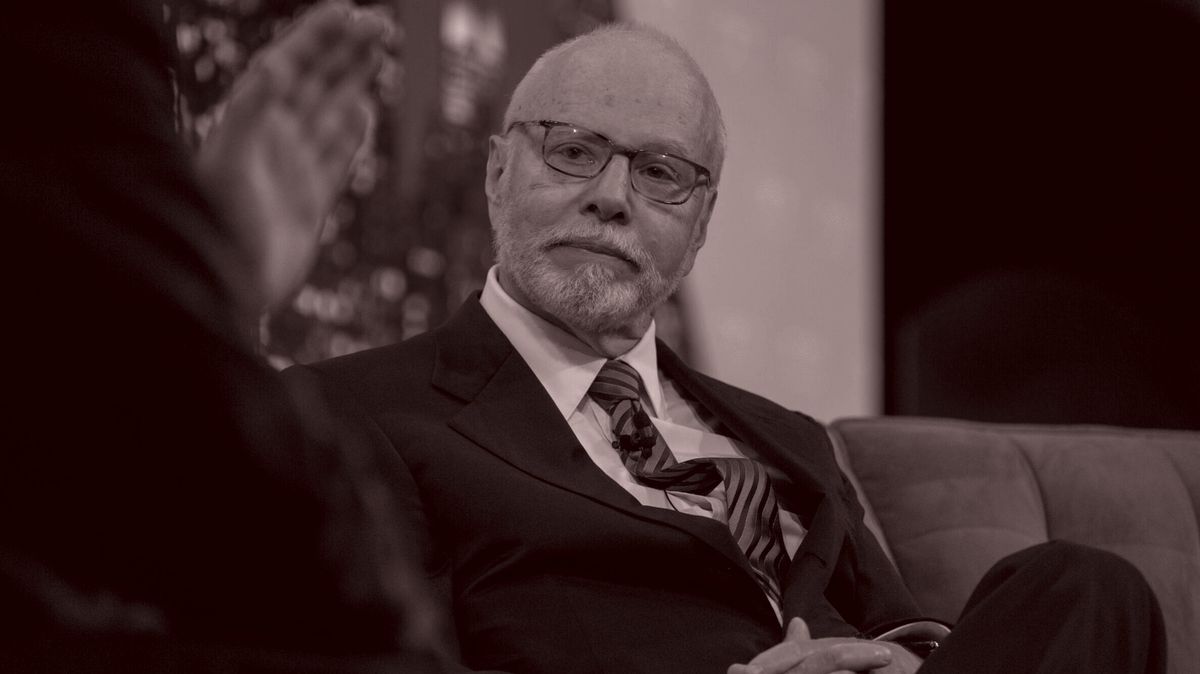
In an increasingly nasty proxy battle, Paul Singer’s hedge fund, Elliott Management, is agitating for board seats and what it claims is long-overdue change at Big Oil’s Phillips 66, whose C.E.O. and chairman has chosen to dig in and fight.
|
|
|
|
It’s been a relatively quiet proxy-contest season on Wall Street, with nothing even approaching last year’s conflagration between Disney’s Bob Iger and Nelson Peltz, the “Smiling Crocodile” who teamed up with fellow billionaire and Mar-a-Lago habitué Ike Perlmutter to agitate for changes and a few board seats in the Magic Kingdom. Peltz and Perlmutter lost resoundingly, as you’ll recall, and Iger got to celebrate maintaining the status quo.
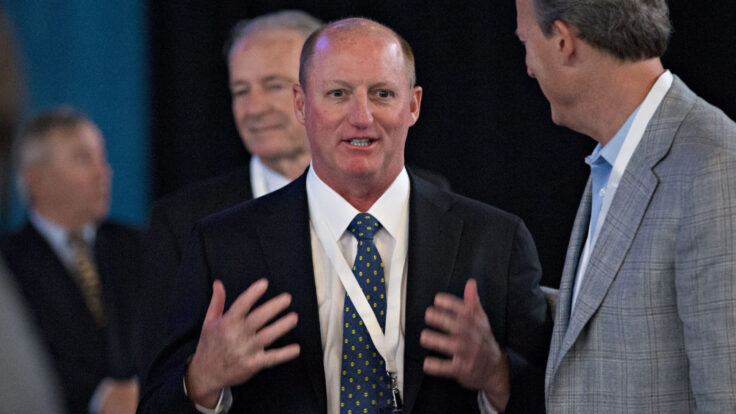
That said, there is one proxy fight that has caught my eye this year: the battle between Elliott Investment Management, the hedge fund behemoth founded by billionaire Paul Singer, and Phillips 66, the Big Oil giant with a $43 billion market cap. Elliott is one of Phillips 66’s largest shareholders, with beneficial ownership of nearly 20 million shares—a 5.7 percent economic interest in the company—worth around $2.1 billion these days. Alas, as best I can tell, the relationship has devolved into a very personal pissing contest between Team Singer, which is fighting for good governance and some key divestitures (and the right to make a lot of money), and Mark Lashier, the chairman and C.E.O. of Phillips 66, who seems intent on defiance rather than compromise.
In recent months, the accusations and counter-accusations seem to have both accelerated and intensified. In a May 2 letter to Phillips 66 shareholders, Elliott wrote, “[T]his impasse is the result of a deep-seated culture of complacency and blind deference to leadership that has taken root in the Company’s boardroom—and only worsened since the Board made C.E.O. Mark Lashier its Chairman in March of 2024. This proxy contest offers a window into how this Board operates: Instead of welcoming new ideas, it rejects them; instead of empowering independent directors, it allows the C.E.O. and Chairman to control the process; instead of being responsive to shareholders, it ignores them; and instead of embracing the support of respected experts, it acts as if it already has all the answers.” A nasty fight, indeed.
|
|
The saga began in September 2023, after Elliott started building a substantial position in Phillips. The exact size of the stake was undisclosed, but it was big enough to be taken seriously (and probably around $1 billion). Around that time, Elliott requested, by email, to have a phone conversation with Lashier, who was then Phillips’ C.E.O., but not yet its chairman. The conversations and meetings between Elliott executives and Lashier continued through the fall. Elliott said it was trying to be “supportive” while pushing Phillips to return cash to shareholders and improve EBITDA in parts of the company’s operations.
On November 29, 2023, Elliott issued a public letter to the Phillips board of directors urging the company to take steps necessary to improve its financial performance and increase its stock price, and requested that two new directors with oil refining expertise be added to Phillips’ board. Elliott kindly provided the names of several potential new board members.
Initially, it seemed like Lashier would accede to Elliott’s request. But on December 22, he told Elliott that Phillips would only add one new board member. When Elliott pushed back, presumably because one Elliott-aligned director would be too easy to isolate, Lashier reversed course and indicated a willingness to add a second board member. But over the next few weeks, the two sides couldn’t agree on candidates. Meanwhile, the deadline approached for Elliott to decide whether it would launch a full-scale proxy contest in the spring 2024.
In the end, the two sides agreed on one new director—Robert Pease, a veteran of the oil and gas industry—and Elliott extracted a promise from Lashier that the two sides would continue working to find a mutually agreeable second candidate. The proxy war was temporarily averted.
|
|
The decision to hold fire was consistent with Elliott’s general preference for avoiding expensive and time-consuming proxy battles. In fact, according to Elliott’s May 2, 2025, letter, during the past 15 years, Elliott has “collaborated” with more than 200 companies to find mutually beneficial solutions. The proxy fight with Phillips is only its fourth during that time, and the first since its battle with Arconic, an aluminum manufacturer, in 2017, “making Phillips 66 an extreme outlier,” Elliott asserted.
Still, Lashier delayed the appointment of the second director until October 2024, according to the proxy statement Elliott filed with the S.E.C. last month, and then appointed Grace Puma Whiteford, a former executive at companies such as PepsiCo, Kraft, Motorola, and United Airlines. She was not one of Elliott’s many suggested candidates, and lacked the oil and gas experience they desired.
The appointment seemed like a stick in the eye to Elliott, especially on the heels of Lashier’s ascent to chairman—which Elliott also opposed, believing it gave Lashier too much power at a time when the Phillips board should be pushing for changes—such as meaningful divestitures—to achieve a higher stock price, and not consolidating Lashier’s power. According to Elliott, Phillips stock has been languishing compared to its peers and the broader market. During the past 10 years, Elliott said, Phillips’ stock has underperformed competitors like Valero (by 138 percent) and Marathon (by 188 percent). Worse, according to Elliott, Pease had told the hedge fund that he wouldn’t support Lashier for chairman, but then, a month later, voted in favor. A proxy fight suddenly seemed increasingly inevitable.
This February, in a public letter to the Phillips board of directors, Elliott expressed its frustration with Lashier over what it perceived as his power grab, as well as the company’s operating failures. (Elliott released an accompanying PowerPoint presentation on a new website, Streamline66.com.) In the letter, Elliott criticized Phillips’ “conglomerate structure,” its poor operating performance, and its “damaged credibility.” The activist investor urged Lashier to sell or spin off Phillips’ “midstream” business, which it believed could fetch $40 billion alone. Elliott also advocated for a sale of its chemical joint venture with Chevron, the offloading of its retail operations in Germany and Austria, and the addition of new, independent directors to the Phillips board. “A transformation of Phillips is long overdue,” Elliott wrote, and requested an in-person meeting with Lashier to review the company’s latest thinking.
At that meeting, on March 3, Lashier stuck to his guns, saying that the company would keep its conglomerate structure and pursue its stated strategic initiatives—not the ones Elliott recommended. The next day, “given the large gap between Elliott’s and the Company’s expressed views,” Elliott filed its preliminary proxy statement, indicating the battle with Lashier was officially on, although Elliott also claimed it remained open to a compromise.
|
|
Since then, the two sides’ positions have only hardened. Elliott has reiterated that Phillips should sell assets and has nominated a slate of four new independent directors for shareholders to vote on at Phillips’ annual meeting on May 21. On March 26, Phillips filed its proxy statement with the S.E.C., indicating it would be nominating four directors, including two new ones, and opposing Elliott’s nominees, along with its proposals for reform.
Since Lashier’s ascent to C.E.O., in July 2022, the company claims to have returned nearly $14 billion to shareholders through dividends and share repurchases. Phillips also claims to have nearly doubled EBITDA at its midstream operations since 2021; sold $3.5 billion of assets; closed its Los Angeles refinery; and committed to reducing costs. Since Lashier’s appointment was announced, in April 2022, Phillips 66’s stock is up nearly 27 percent, while Valero’s stock is up 15 percent during the same time period. (The broader S&P 500 is up 32 percent in the past three years.)
As part of its defense, Phillips has hired a slew of big-gun advisors, including Wachtell Lipton on the legal front; Evercore and Goldman Sachs for M&A advisory; and FTI Consulting, plus the infamous Declan Kelly, one of the founders of Teneo, who was forced out of the firm for various (well-documented) misadventures, and has since founded The Consello Group, a corporate advisory and investment business. Kelly, you will recall, played a key role in the boardroom coup at GE that resulted in the ouster of then-C.E.O. John Flannery by Larry Culp, who proceeded to break up the conglomerate and appoint himself C.E.O. of GE Aerospace. Kelly knows how to play corporate hardball.
Meanwhile, the lengthy letters and PowerPoints have proliferated, with both sides continuing to launch fusillades against the other. Just in the last week or so, there was Elliott’s latest missive to Phillips shareholders, and a 98-page PowerPoint that Phillips filed with the S.E.C., seeking to counter many of Elliott’s arguments and claiming that its “views are intentionally deceptive.” Said one Elliott advisor, “Elliott just asked for two board seats, and these guys jerked them around on the second one. It’s like killing John Wick’s dog—you’ve antagonized the toughest people on Wall Street for the dumbest of all possible reasons.”
|
Making Phillips 66 Great Again
|
|
It’s anyone’s guess at this point how Phillips’ biggest shareholders—including The Vanguard Group, State Street, and BlackRock—will vote two weeks from today, which is what makes this particular fight so interesting. Unlike the Peltz-Disney imbroglio last year, in which it was obvious with two weeks to go that Iger would win, this could go either way. Both sides are awaiting the recommendations of Institutional Shareholder Services and Glass Lewis, the powerful proxy-voting services that often sway voting shareholders one way or the other in these contests.
The fact is, not much is at stake here, except for, you know, a whole lot of money and power. But according to an editorial by Michael McKenna published last week in the conservative Washington Times, apparently nothing less than the future of the republic rests on the outcome. “It is not an exaggeration to say Phillips 66 symbolizes American industrial might,” McKenna wrote. “Its efforts and innovation and those of its brethren oil and gas companies helped American soldiers, sailors and airmen win multiple wars. The products the company makes have sent generations rumbling across this land and helped farmers grow food for a hungry nation. Nowadays, through the export of liquefied natural gas, the company helps power the world.”
At this point, McKenna was truly fired up. “In a world of uncertainty, the United States should not weaken its industrial energy base, especially not for something as transitory as fleeting financial gain that is likely to be concentrated in a few bank accounts in New York,” he continued. “Keeping companies such as Phillips 66 intact and healthy is a matter of national interest.” We’ll know the outcome of this existential battle soon enough.
|
|
|
|
Join Puck’s chief political columnist, John Heilemann, as he roams the corridors of power and influence in America on this twice-weekly interview show, taking you beyond the headlines with the people who shape our culture: icons and up-and-comers, incumbents and insurgents, moguls and machers in the overlapping worlds of politics, entertainment, tech, business, sports, media, and beyond. The conversations are rich and revealing, unrehearsed and unexpected… and reliably impolitic. A Puck-Audacy joint, new episodes drop every Wednesday and Friday.
|
|
|
|
Puck’s daily political newsletter from Washington on what’s really happening in this town, from the White House to the Pentagon to Capitol Hill, K Street, and the campaign trail.
|
|
|
Need help? Review our FAQ page or contact us for assistance. For brand partnerships, email ads@puck.news.
You received this email because you signed up to receive emails from Puck, or as part of your Puck account associated with . To stop receiving this newsletter and/or manage all your email preferences, click here.
|
|
Puck is published by Heat Media LLC. 107 Greenwich St, New York, NY 10006
|
|
|
|