{{ 'now' | timezone: 'America/New_York' | date: '%b %d, %Y' }} |
|
|
Welcome back to The Hidden Layer. I’m Ian Krietzberg.
In today’s issue, my
wide-ranging conversation with Julia Alexander, Puck’s resident streaming industry guru, about Disney’s blockbuster deal with OpenAI—and why it’s more about Google than anything else. Plus, in keeping with today’s Hollywood theme, I’ve got an exclusive report on a new partnership between Adobe and A.I. video-generation giant Runway, and a look into how data center NIMBYism has put $100 billion of projects on ice.
Mentioned in this issue: Adobe,
Runway A.I., Bob Iger, Sam Altman, Mark Zuckerberg, Hannah Elsakr, Cristóbal Valenzuela, Bernie Sanders, Google, YouTube, OpenAI, Disney, and more…
Let’s get into it… |
Two Things You Should
Know…
|
- An
Adobe exclusive: Adobe is tripling down on artificial intelligence. Today, the software giant will announce a multiyear partnership with Runway, one of the biggest A.I. video-generation startups, that will give Adobe’s Firefly customers exclusive early access to Runway’s new Gen 4.5 model. “It’s about redefining the workflows of the future together,” said Hannah Elsakr, an Adobe executive overseeing A.I. initiatives. As part of the partnership, Runway’s model will be integrated
across Adobe’s suite of products, and the two will work to co-develop new A.I. offerings that will be available exclusively to Adobe customers.
Both companies are positioning the deal as a positive for the creative community, possibly in response to some of the flak Adobe has caught from segments of that community for pushing more A.I. tools with each new update. Adobe’s efforts to ensure its in-house models are “commercially safe”—i.e., they’re trained only on licensed or non-copyrighted data—have done little to blunt that criticism. Runway has also stirred controversy in Hollywood after reports
that Netflix and Disney have been experimenting with its software. But when it comes to the source of Runway’s training data, C.E.O. Cristóbal Valenzuela told me only that the growing adoption of A.I. tools by studios is “a clear sign that that issue has moved on.” Elsakr agreed, arguing that creatives have mostly moved past their initial anxiety about generative A.I. and are now trying to figure out where and how to use it. There’s a growing impression that A.I. “is not the
endgame,” she said. “It’s a tool in my toolkit.”
In the early phases of the Adobe–Runway deal, both parties said they’re excited to see how creatives will figure out the best ways to actually use the tech. For Elsakr, “pre-vis”—things like storyboarding and creating concept art—is low-hanging fruit. And while Runway A.I. probably isn’t a substitute for high-end VFX—“That takes real art, real thinking,” Elsakr said—generative video tools can massively speed up the “drudgery” of editing out
a boom or removing a copyrighted poster in the background of a shot. She said these applications could drastically change the economics of filmmaking and ultimately lead to more stories getting made, not fewer jobs.
Elsakr reminded me that people were “very angry with Adobe when we launched Photoshop in the ’90s.” Integrating more A.I. tools, she added, is a similar “tectonic shift.” And, in many ways, the revolution has already arrived. As Valenzuela put it, gen A.I. “went from this fringe community, to every studio, every filmmaker, everyone in Hollywood either thinking about it, strategizing, or using it in some way.” - The great data center slowdown: The global A.I. revolution may have met its match: local NIMBYs. Major A.I. developers, desperate to rapidly scale their compute, are racing to build more data
centers, loaded with more chips and using lots more electricity and water. But even in places where power is abundant and local governments are eager to play ball, some communities are resisting. On Tuesday, the city council in Lewiston, Maine, unanimously rejected a proposal to build a $300 million A.I. data center in an abandoned mill complex. The proposal, made public on December 11, sparked an intense wave of local organizing and public outcry. One councilmember
told the Portland Press Herald that it generated more feedback than he’d ever seen on any topic.
Similar situations have played out in Wisconsin, Virginia, Indiana, and Arizona over the past few months. Michigan’s Green Charter Township recently approved a one-year moratorium on data center construction—a move that was called for in a recent letter to Congress on behalf of hundreds of environmental groups. Just this week, Sen. Bernie Sanders called for a total moratorium on new data center construction.
The pushback is making a dent. All told, around $100 billion worth of data center projects were
shelved or delayed in the second quarter of 2025 alone. Suffice it to say, people don’t want data centers in their backyards. A few weeks back, a source in the electrical industry told me that, in the long run, power won’t be the limiting factor for data center operators. Instead, it will be the lack of positive engagement with local communities—a “big challenge,” as this person put it,
and something that could certainly act as a speed bump for the hyperscalers, neo-clouds, and, of course, OpenAI.
|
Hallucination of the
Week
|
In marketing the “fun” potential of OpenAI’s latest image-generation tool, Sam Altman
posted a picture of a holiday-themed calendar for the month of December. Amusingly, the calendar was inaccurate—starting the month on a Thursday and ending on a Saturday. I’ll forgive you, though, if you didn’t catch that hiccup, since the calendar also prominently featured an A.I.-generated image of Altman himself, shirtless and dressed as a firefighter. Hard to tell who was
hallucinating more, the A.I. model or Altman, who tweeted it out to his 4 million followers.
And now for the main event… |
|
|
Disney, one of the most copyright-protective companies in Hollywood, is bear-hugging OpenAI
and going to war with Google. But monetizing digital knockoffs of its most iconic characters (and getting on the cap table with Altman) is just the start. |
|
|
Even for media insiders, Disney’s recent decision to form a pact with OpenAI was somewhat astounding. For
one, of course, Disney has always been ultra-protective of its copyrights. And until last week, the company had been conspicuously quiet about its stance on artificial intelligence. Then, in one fell swoop, Disney invested a billion dollars in OpenAI; licensed all of its most beloved characters to Sora, tossing icons like Mickey, Darth Vader, and Iron Man into the ultimate A.I. slop-pool; and sent a cease-and-desist letter to Google, resulting in the
removal of dozens of A.I.-generated videos featuring Disney I.P. on YouTube.
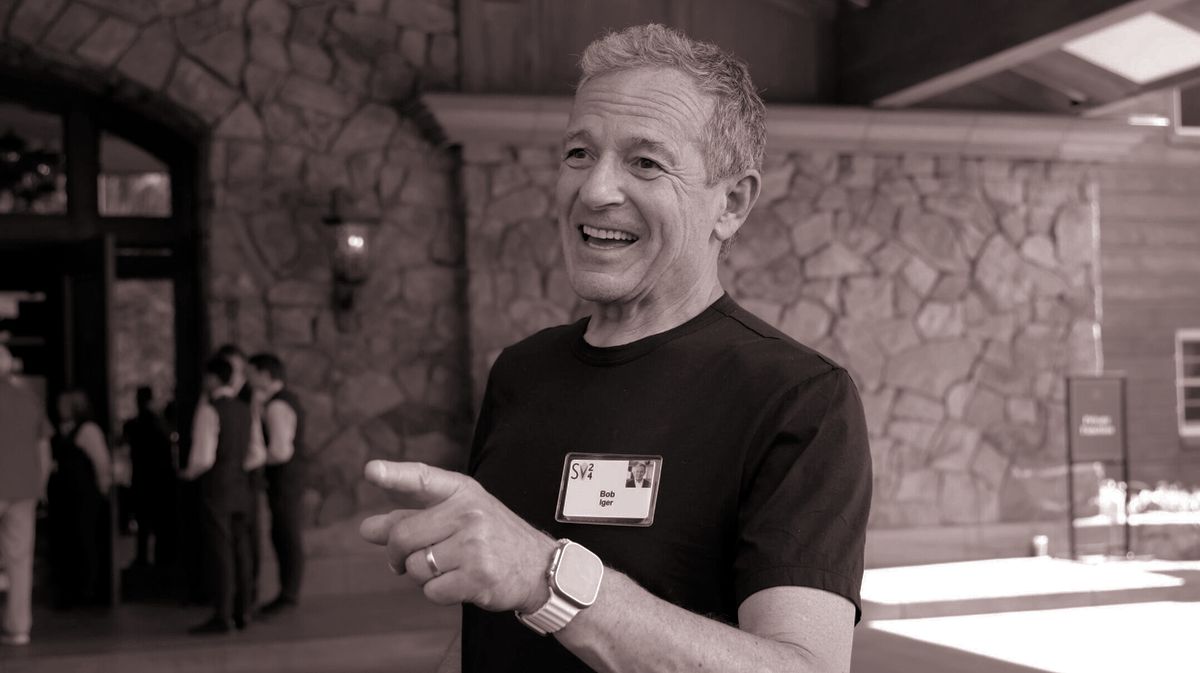
Clearly, Disney C.E.O. Bob Iger has decided that there’s more upside to partnering with Sam Altman than sitting on the sidelines. But the risks of allying with OpenAI don’t strike me as small, either. To break it all
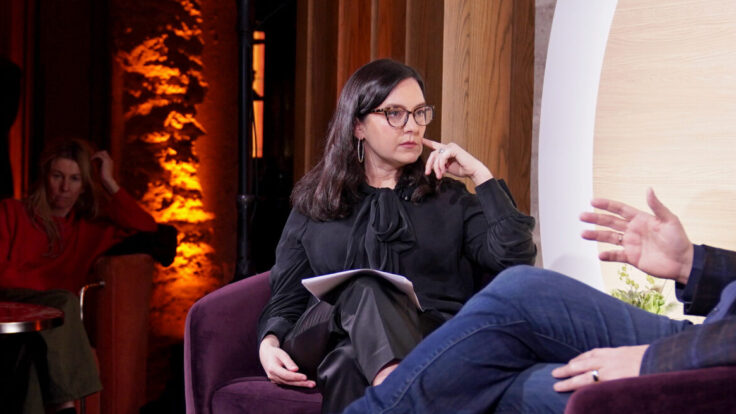
down, I called up Julia Alexander, Puck’s resident streaming industry analyst, to walk me through the various aspects of the deal, how Iger has been laying the groundwork for these particular moves, and what it portends for both companies. As always, the following has been edited for length and clarity. |
Ian Krietzberg: A lot of people
were shocked by the partnership. But what I found equally intriguing was Bob Iger essentially placing a huge, public bet on OpenAI while finally going after Google. If you’re Iger, what’s the calculus here?
Julia Alexander: To really understand Disney’s incentives, you have to go back to the mid-aughts, when Viacom fought a yearslong $1 billion battle with YouTube over concerns that the platform was a hotbed for piracy—a fight that prompted Disney to file an amicus brief
of support in 2010. At the time, Disney and Viacom basically said, “We don’t want any of our content here without getting paid substantially.” YouTube instituted its Content I.D. framework, but also needed to find other ways to encourage viewership and activity on its platform. The result was the creator economy. Iger, of course, became C.E.O. in 2005; it was one of his first YouTube battles as an executive.
Then, during the two years when Bob Chapek was C.E.O., Iger
spent a lot of time hobnobbing in the tech world. So I think he understands better than a lot of executives that generative A.I. is potentially going to become a massive disruptor in the entertainment space. He also, rightfully, sees YouTube as one of the biggest competitors to his business, and probably wonders whether he should have done things differently back in the mid-aughts, or even taken a stake in their business. In short, I think that’s what you’re seeing with this OpenAI deal—a chance
to not make the same mistake twice.
So far, Disney’s approach to A.I. has been a huge, open-ended question for the entertainment industry. In part, that’s because their I.P. is some of the most iconic out there, but also because many A.I. image generators have used their proprietary imagery from the very beginning. As lawsuits have stacked up, I think a lot of people have wondered why Disney has stayed so quiet.
It’s an interesting question, and one that also
requires dipping back into the company’s history. Remember, in 2015, Bob Iger and Disney were thinking about buying Twitter, but ended up passing because they decided, basically, that it was just a cesspool of negativity and explicit adult content. I think Iger realized they were never going to be able to fully control the output. But if there were a much more advanced version of Content I.D., and if they allow people to use their characters while increasing the guardrails around it, then they
can potentially control some of the output. I think that’s a fair bet.
And Disney famously takes copyright very seriously. They’ve sued cake makers and
forbidden a headstone etching of Spider-Man. But if you’ve spent any time on Sora, the risk of a generation showing Han Solo, say, making Hitler speeches, isn’t zero. Disney has to know this. Do they just not care?
They absolutely know that, and they absolutely care. I think the deal
is just a tacit acknowledgement that this is going to happen regardless, and that the business upsides outweigh those considerations. Think about how many times Mark Zuckerberg or Jack Dorsey or Sundar Pichai has appeared before Congress and said, We try to take down content as much as we can, but things get through. It’s a reality that many entertainment and tech executives have been dealing with for years.
In short,
the deal will allow Disney to protect the brand on their owned-and-operated terrain, and to have a say in how it’s showing up on Sora. And now that they have access to OpenAI’s tools, there might also be ways to bring generative A.I. into the parks. Can they make some of those experiences feel even more intimate, and build brand adoration in novel ways? Perhaps. Also, are there opportunities to use some of these enhancements on the production side for its studios division? That also
seems possible.
Meanwhile, if the technology doesn’t pan out in these ways, at least they’ve made a $1 billion bet that OpenAI is going to take off. After all, if it’s going to be the next Google, they might as well profit from their success. (Of course, that’s a huge “if,” depending on how this potential bubble plays out.) Iger realizes that we’re entering an era where the disruption isn’t centered around distribution but creation. And in order to be one of the
companies of tomorrow, they need to be able to ride this wave of disruption while protecting what is distributed on their own properties.
Sure, and it makes sense to align with the most iconic name in A.I. But I wonder if Iger could have been bolder. I was half expecting Disney to develop its own fan fiction-y gen A.I. experience—one that would drive users directly to their platforms. That’s not what this is. It seems more like a big bet on the
future of media and technology.
I think Disney didn’t build their own platform because, at least for now, they probably acknowledge that adding a generative A.I. tab within Disney+ might seem like a gimmick. Remember, Disney+ is still focused on driving viewers to shows like The Mandalorian and Dancing With the Stars. But infusing Sora with Disney content will be an experiment nonetheless. Will it increase engagement and downloads? Will it give e-commerce and
shopping a boost? I’m sure they’ll be watching closely.
Perhaps more importantly, though, proving the value of their copyrighted content on Sora will give them more ammunition in copyright disputes with other major players down the road. YouTube is a $36 billion-per-year ad business; Instagram Reels alone makes $50 billion annually in ad revenue; and TikTok will eventually get there. All of these platforms have deep coffers, are inevitably going to incorporate gen A.I.,
and want to use copyrighted content. If Disney can show that their content is valuable for the most dominant A.I. player, then the other potential A.I. players might also have to pay out for that content, either up front or in court.
Disney has been involved in virtually every period of technological disruption in the modern era, and it’s made many wrong decisions along the way. (Okay, perhaps not buying Twitter was a good decision.) Iger doesn’t want to miss the boat again, and
with this deal, he actually might be getting ahead of the curve. |
Thanks, Julia. This was as fascinating as it was fun. I’ll see you all next week.
Ian |
|
|
Puck fashion correspondent Lauren Sherman and a rotating cast of industry insiders take you deep behind the scenes of this
multitrillion-dollar biz, from creative director switcheroos to M&A drama, D.T.C. downfalls, and magazine mishaps. Fashion People is an extension of Line Sheet, Lauren’s private email for Puck, where she tracks what’s happening beyond the press releases in fashion, beauty, and media. New episodes publish every Tuesday and Friday. |
|
|
A professional-grade rundown on the business of sports from John Ourand, the industry’s preeminent journalist, covering the
leagues, players, agencies, media deals, and the egos fueling it all. |
|
|
Need help? Review our
FAQ page or contact us for assistance. For brand partnerships, email ads@puck.news.
You received this email because you signed up to receive emails from Puck, or as part of your Puck account associated with {{customer.email}}. To stop receiving this newsletter and/or manage all your email preferences, click here. |
Puck is published by Heat Media LLC. 107 Greenwich St., New York, NY 10006 |
|
|
|