{{ 'now' | timezone: 'America/New_York' | date: '%b %d, %Y' }} |
|
|
|
Welcome back to The Varsity. Like many of you, I’m focused on all the
off-court storylines emerging from last night’s WNBA Draft—the biggest of which is commissioner Cathy Engelbert’s contract status. Of course, Engelbert was noncommittal when asked about renewing her deal, which is up at the end of the year. And three weeks ago, Adam Silver was also noncommittal about whether Engelbert would return in 2027. The league still has plenty of growing pains, so it’s an issue Silver needs to
resolve soon.
Before jumping in, I want to share some big news in the cable business: Cablefax, the daily publication I used to edit decades ago, is changing its name to CFX. The problem, believe it or not, wasn’t so much the fax part of the name. Rather, the cable part had become too antiquated! Current editor Amy Maclean
explains.
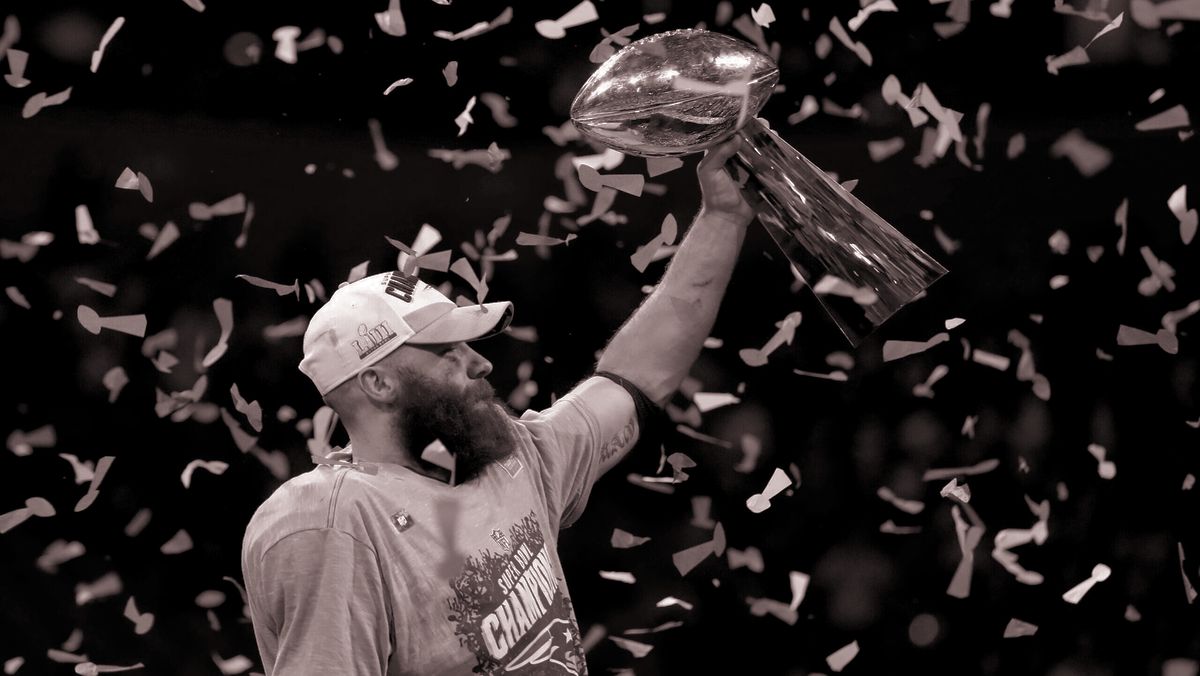
In today’s exclusive Inner Circle issue (upgrade here!), Julia Alexander explores the likelihood that the NFL awards a Super Bowl to Amazon Prime in the next decade or so. Given everything happening on Capitol Hill right now around
the league’s creep into streaming, it seems like a long shot. But Julia explains why it would make sense—and how the streamers could overcome any regulatory obstacles. (Also, make sure you’re signed up for What I’m Hearing to read legal eagle Eriq Gardner’s excellent story on the NFL’s antitrust exemption legal battle.)
Take
it away, Julia…
Mentioned in this issue: Alexander Ovechkin, Sidney Crosby, Kai Trump, Scottie Scheffler, iShowSpeed, Pat McAfee, Jay Marine, Ted Sarandos, Donald Trump, Neal Mohan, Rupert Murdoch, Brendan Carr, Andy Jassy,
MrBeast, and more…
|
There are some players that fans will pay anything to watch, especially if it might be their final
game: Kobe Bryant, David Beckham, Tom Brady, etcetera—and, if you’re a hockey fan, Alexander Ovechkin. Heading into the final Capitals home game of the season, average ticket prices hit $368—roughly 2.7 times higher than the team’s season average—given all the uncertainty around Ovechkin’s return next season. One of the most expensive tickets resold for more than $2,640, per the team, with the game itself ranking among the most
in-demand regular-season home games in franchise history. For what it’s worth, I’d fork it over in a heartbeat to see Ovechkin and Sidney Crosby, two of the NHL’s all-time greats, potentially face off one last time in the regular season. |
- The Masters’ “Feed” control: As a very casual golf fan, I’m always intrigued by the formal etiquette surrounding events like the Masters, where phones are now banned for most attendees. But this year, after Kai Trump seemingly captured Masters content for her socials, speculation started to circulate that some V.I.P.s may be able to curb the rules. Other inventive attendees seemingly wore Meta’s Ray-Ban glasses to record and upload content—an
increasingly common feature of live sports experiences.
Most golfers love the ban: Scottie Scheffler has said it makes the event feel “peaceful.” But there’s also never been more pressure for events to reconcile their long-standing traditions with clout-hungry, paying customers who want to experience them on their own terms—which, of course, has the added benefit of growing the online footprints of country clubs like Augusta. At this point, it seems inevitable
that we’ll see more phones appear on the course—or at least plenty of Meta Ray-Bans. Maybe Zuckerberg should sponsor the Masters. - YouTube’s latest TV bet: When it comes to negotiations with league partners, one of YouTube’s biggest advantages is its creator economy. Internet celebrities like iShowSpeed and Pat McAfee can turn passive viewers into active, monetizing fans while leveraging
the platform’s interactive features. Many of these products are focused on making viewing sessions feel even more communal, including the latest, called TV Companion, which can synchronize a user’s phone and TV so they can engage with content across multiple screens. The timing of this rollout—just ahead of FIFA’s upcoming World Cup—is no coincidence. Remember, nearly 45 percent of YouTube’s watch time in the U.S. happens on TV sets, up about three percentage points since 2022, per
eMarketer. If YouTube can make those watch sessions even longer, it will be a huge win for leagues, advertisers, creators, and the platform itself.
- NBC’s Nielsen validation: A few weeks ago, I wrote about the whole Nielsen Gauge drama. As you all know, the streamers were peeved over a methodology change that widened the Gauge’s measurement base, which led to an increase in linear TV viewership and a decrease in overall streaming share. Now
Nielsen’s controversial February Gauge report is here—and yes, it’s a big win for linear. NBCUniversal, which carried the Super Bowl, the Winter Olympics, and the NBA All-Star Game on its platforms last month, achieved the top position among all distributors. Meanwhile, viewership on NBC affiliate networks increased 60 percent and USA Network viewership rose more than 230 percent.
None of this suggests linear TV is staging a roaring comeback: Peacock also saw a 64 percent
increase, reaching a 3 percent share of all connected TV viewership, its best showing since Nielsen started tracking streaming audiences. But it proves, once again, that cable is nowhere near dead.
|
|
|
|
It’s virtually inevitable that a streamer will land the exclusive rights to
host the Super Bowl within the next decade. And Amazon Prime Video, which has already proven itself with Thursday Night Football and sits atop a geyser of e-commerce money, would be the natural successor to a six-decade tradition. |
|
|
|
I can’t imagine anyone was surprised when Amazon’s Jay Marine told
Ourand’s boy Andrew Marchand last week that Prime Video would inevitably land the rights to the Super Bowl. Amazon has by far the biggest portfolio of sports rights among the pure-play streamers—and it’s clearly the most ambitious. Sure, Netflix has invested millions in one-off events like boxing and its Christmas NFL games. But Amazon’s only real competitors among sports-first streamers are ESPN Unlimited, which is still subscale, and Peacock, which
lost another $550 million last quarter. Marine talks with the sort of swagger that’s only possible when you’ve got a $3 trillion company behind you.
Of course, Netflix’s Ted Sarandos and YouTube’s Neal Mohan would also love to nab exclusive rights to TV’s biggest event of the year—and both can make persuasive cases that Amazon isn’t the ideal partner for Goodell. Meanwhile, Rupert Murdoch and F.C.C. chair Brendan Carr
have been tossing out all kinds of curveballs, getting lawmakers and the D.O.J. all riled up about the possibility that the NFL’s relentless shift to streaming is driving up costs for consumers. But the league, for its part, has been very happy about its budding partnership with Amazon. Thursday Night Football’s viewership on Prime Video has grown steadily over the past three seasons, ultimately eclipsing what it used to get on Fox.
For a time, it was
unclear how much Amazon C.E.O. Andy Jassy was willing to commit to the multibillion-dollar sports rights wars. But he appears to have changed his tune amid Amazon’s shift to selling third-party streaming services through Prime Video Channels (including NBA League Pass, which is offered exclusively through Amazon) and the skyrocketing growth of its advertising-supported TV business. If Jassy gets on board and Carr stays out of the way, we could very well see our first Amazon
Super Bowl. |
The NFL has been testing these waters for some time, strategically partnering with
YouTube, Netflix, and Amazon to explore its streaming prospects. Last season, Goodell partnered with Mohan and several YouTubers, including iShowSpeed and MrBeast, on the platform’s first-ever football game. Netflix’s 2025 Christmas games averaged 23.7 million viewers domestically, slightly higher than the average viewership for a broadcast game. Amazon, however, is the only partner with an actual season buy-in via TNF.
For Goodell, that
might be the most persuasive selling point. Over the past three years, fans have already come to expect, and even embrace, NFL games on Prime Video every Thursday, whereas YouTube’s and Netflix’s marketing teams have to work overtime to guide audiences to their one-off broadcasts. It’s not easy: YouTube reaches more than 2 billion users globally each month, and the NFL’s presence on the platform has continued to grow as the league invests more in its channel. Netflix maintains the second-largest
share of all streaming TV time in the U.S., with just under 8.5 percent of time spent. But five years of sports streaming data suggest that while fans will definitely switch platforms for sufficiently big events, casual viewers are harder to capture. Would the Super Bowl be any different?
To make his case, Marine will also have to persuade Goodell that Amazon is the best partner for reaching both domestic and international audiences, which might pose a challenge. Amazon
does partner with plenty of international leagues and tournaments—the Premier League in the U.K., the NHL in Canada, and Roland Garros in France—which allows it to drive new subscribers and advertising opportunities. But Netflix, with the largest premium streaming video audience, and YouTube, the largest video platform, could deliver more viewers on both the international and domestic fronts. YouTube can also make the game available to everyone at no additional cost, which could help keep
Trump’s regulators at bay.
Indeed, the Trump administration may be the biggest complexifier of all. As everyone reading this knows, earlier this month, ahead of the NFL’s upcoming rights negotiations, the D.O.J. opened an antitrust investigation into whether the league’s practice of selling media rights across streaming, cable, and broadcast is driving up costs for consumers. At the same time, Carr has openly floated the
idea that broadcasters—who don’t have the deep pockets of the tech behemoths—should form a collective to negotiate with sports leagues.
This past weekend, Carr brought up Marine’s recent comments about the Super Bowl on X, asking his 192,000 followers what they thought about the game moving from “free broadcast” to Amazon. Carr has previously suggested that fans are spending more money than ever to watch their favorite teams—north of $1,600 a season, per some calculations, although my own
research suggests that’s a reach. Regardless, it’s true that removing sports from local broadcasters could affect news viewership, since sports (especially the NFL) are a strong lead-in for programming like 60 Minutes on Sundays—a genuine point of concern that Carr believes could warrant federal intervention.
However, there are a few ways Marine could potentially placate Carr—and one might involve a partnership with NBC Sports. After all, NBC has worked with Amazon on
Thursday Night Football, and for an event the size of the Super Bowl, Amazon may be willing to partner with a battle-tested broadcast partner. The math gets tricky in this hypothetical: If the game is available on NBC (but not Peacock), that could divert a significant portion of the Super Bowl audience to Roberts’s network or even a virtual cable distributor like YouTube TV. In that scenario, it’s hard to see the upside for Marine given the potential price
tag.
There are plenty of holes in Carr’s arguments, to be sure. The vast majority of games are still available on free-to-air channels, and most households already have a service like Netflix or regularly use YouTube. But if Marine and Jassy really want the Super Bowl, it’s a circle they’ll have to square—even if these conversations get punted into the next decade. |
Thanks, Julia. See you all back here on Thursday.
John |
|
|
|
Puck fashion correspondent Lauren Sherman and a rotating cast of industry insiders take you deep behind the scenes of
this multitrillion-dollar biz, from creative director switcheroos to M&A drama, D.T.C. downfalls, and magazine mishaps. Fashion People is an extension of Line Sheet, Lauren’s private email for Puck, where she tracks what’s happening beyond the press releases in fashion, beauty, and media. New episodes publish every Tuesday and Friday. |
|
|
|
Ace media reporter Dylan Byers brings readers into the C-suite as he chronicles the biggest stories in the industry:
the future of cable news in the streaming era, the transformation of legacy publishers, the tech giants remaking the market, and all the egos involved. |
|
|
|
Need help? Review our
FAQ page or contact us for assistance. For brand partnerships, email ads@puck.news.
You received this email because you signed up to receive emails from Puck, or as part of your Puck account associated with {{customer.email}}. To stop receiving this newsletter and/or manage all your email preferences, click here. |
Puck is published by Heat Media LLC. 107 Greenwich St., New York, NY 10006 |
|
|
|
|