| Jon Kelly
|
|
Good morning,
It was another fabulous week: Matt Belloni parsed Sora 2’s threat to
Hollywood; Eriq Gardner assessed a new Netflix lawsuit; Julia Alexander ran the numbers on Kimmel-gate’s impact on Disney+; Dylan Byers gathered the intel on Bari Weiss’s descent into Paramount; Bill Cohan offered a talmudic reading of the Ellisons’ three-dimensional WBD chess; Lauren Sherman measured the pressure on Dior’s Jonathan Anderson;
Rachel Strugatz captured the latest dish on Dr. Levine’s $300K facelifts; Sarah Shapiro scrutinized the U.K. retail scene; John Ourand observed the YouTube TV–NBCU reunion; Ian Krietzberg uncovered the details of the Robinhood C.E.O.’s new A.I. play; Marion Maneker chatted up Larry Gagosian; and Julie Brener Davich detailed a ripple in the surrealist
market.
Meanwhile, Leigh Ann Caldwell dissected the early days of the shutdown; Julia Ioffe got the readout on Pete Hegseth’s big day; Abby Livingston calculated some blue wave warning signs; and Peter Hamby revealed the latest rumblings in the Virginia governor’s race.
Check out these stories, and others, via the links below. And stick around for the backstory on how it all came together.
|
|
|

| FASHION
|
|
Lauren Sherman
explains what LVMH has riding on the new Dior.
and…
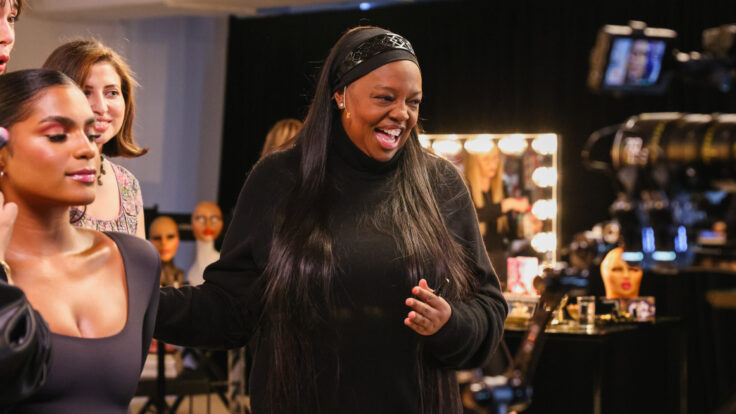
Rachel Strugatz reveals a new generation of facelift artists.
meanwhile…
Sarah Shapiro
examines the relative success of the U.K. retail business. |
|
|

| ART MARKET
|
|
Marion Maneker
probes Larry Gagosian’s selling instincts.
and…
Julie Davich delves into the market for female surrealists. |
|
|

| HOLLYWOOD
|
|
Matt Belloni
quantifies the Sora 2 threat.
meanwhile…
Eriq Gardner analyzes Netflix’s Inventing Anna exposure.
and…
Julia Alexander
calculates Disney’s post-Kimmel-crisis churn. |
|
|

| A.I.
|
|
Ian Krietzberg
previews the latest pair of well-capitalized A.I. startups. |
|
|

| MEDIA
|
|
|
|

| WALL STREET
|
|
Bill Cohan
inspects the eerie silence around the Ellisons’ WBD conquest. |
|
|

| WASHINGTON
|
|
Leigh Ann Caldwell
gathers all the shutdown gossip from the Hill.
and…
Abby Livingston considers the signs of a ’26 blue wave.
and…
Peter Hamby
spotlights Abigail Spanberger’s recent hiccup.
meanwhile…
Julia Ioffe captures the blob’s frustrations with Pete Hegseth. |
|
|

| PODCASTS
|
|
Dylan and Julia Alexander explain Mark Zuckerberg’s Vibes play on
The Grill Room.
and…
Ourand and star equities analyst Michael Nathanson discuss the NFL’s negotiating leverage on The Varsity.
and…
Lauren and the
Times’s Jacob Gallagher review the Milan runways on Fashion People.
and…
John Heilemann and former Obama comms director Jennifer Palmieri assess the Dems’ shutdown performance on
Impolitic.
and…
Matt and SAG-AFTRA national executive director Duncan Crabtree-Ireland review Hollywood’s options to combat Sora 2 on The
Town.
and…
Kim Masters presages the Bari Weiss era at CBS with Peter on The Powers that Be. |
As a reminder, you can update your profile at any time to get more stories like these directly in your
inbox. Click here to customize your email settings. |
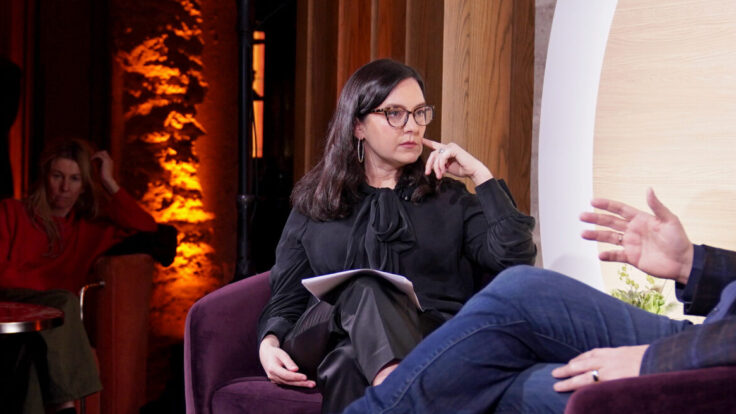
“I basically work on instinct, for better or worse,” the legendary art dealer Larry Gagosian
told my partner Marion Maneker the other day at Second, a chic event space in Chelsea. Larry, of course, was the headliner at Puck’s recent inaugural art world summit, The Art of Influence, presented in partnership with the FLAG Foundation. And he was as illuminating as expected—confident, brimming with ideas and recollections, and filled with earned wisdom on the past and future of the markets. And yet, I was most captivated by the natural, thoughtful way he described
how he’d turned his passion into a global business with nearly 20 galleries—an empire that had allowed him to accumulate more wealth than many of the collectors with whom he transacts.
Rather than drone on about systems thinking or paradigm shifts, Gagosian was plainspoken about his decision to follow his gut. “It doesn’t always work out, but I’m more comfortable doing things that I feel are right,” he told Marion. “I’m not into metrics of how many collectors are in a certain region, or
what their annual art budgets are. That’s something that auction houses are a lot better at than I am. But you get a feeling for what’s evolving in the city, how the culture is evolving, how the art scene is evolving. And I’ve kind of followed my nose.”
These insights, which are conveyed brilliantly in Marion’s The Gagosian Experience, resonated in part because the
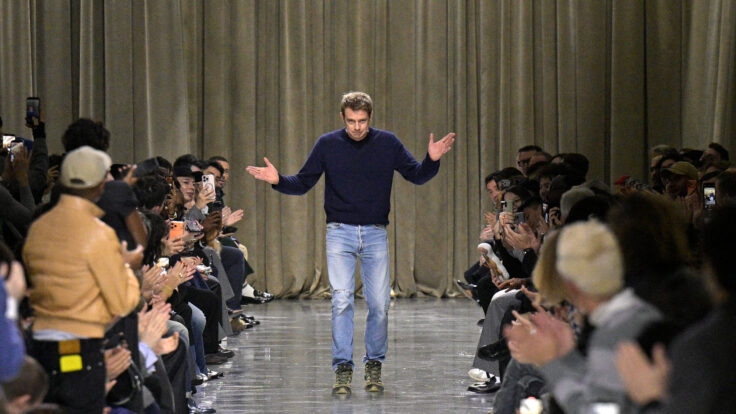
creative industries are under assault—a leitmotif that Puck captures on a near daily basis, but nevertheless seemed remarkably poignant this week. To wit: Earlier this week, the peerless Lauren Sherman reported on superstar designer Jonathan Anderson’s first act in his restoration of Dior, one of the most consequential brands in Bernard Arnault’s $325 billion LVMH empire.
Anderson, who cut his teeth at his own namesake brand before an
ascendant turn at Loewe, is managing an extraordinary burden—helming an $8 billion line of business with incredible latitude. Arnault famously built his maison conglomerate by affording control to his creatives—the paradigm set by Galliano and Marc Jacobs a generation ago—but will that playbook hold in a marketplace encumbered by tariffs, excessive consumer choice, and overall softness? Bernstein analyst Luca Solca has predicted that Dior’s
sales could drop by 10 percent this year. And, in an added wrinkle, Anderson’s partner in this endeavor is Dior C.E.O. Delphine Arnault, who is presumably motivated by her family’s succession politics to turn the ship around. In Dior Money, Mo Problems, Lauren details the subplots and intrigue, all overlaid with the macroeconomic reality—the
essence of a perfect Puck story.
Nowhere, however, is the dialectic between creativity and business playing out with more force than in Hollywood. The arrival of Sora 2, OpenAI’s transcendent new video generator, has resonated throughout the industry and will inevitably push show business into unprecedented copyright litigation. In his reliably excellent private email, What I’m
Hearing, Matt Belloni worked through the implications of the Sora age. “OpenAI is certainly not alone in pursuing a video-generation product that has been trained on hundreds of thousands of videos and actor performances it doesn’t own,” Matt wrote. “And Disney, Comcast, and Warner Discovery are already suing Midjourney, another A.I. company, among other efforts. But the new Sora is the most sophisticated version that I’ve seen, and a significant escalation in the legal
stakes from simply serving up copyrighted images or memes on ChatGPT and other A.I. platforms.”
Matt’s definitive story on the technology, A.I.’s ‘Lazy Sunday’ Moment, will send a shiver down the spine of any creative, lawyer, or dealmaker. Gagosian may still be able to operate on gut instinct, but machine intelligences and financial obligations are
mounting elsewhere. Can the masterful dealer continue to follow his nose when so many others are inclined to follow the money? It’s one of the great industrial narratives of our time, and precisely what you should expect to read about in Puck. |
|
|
Need help? Review our FAQ page or contact us for assistance. For brand partnerships, email ads@puck.news. You received this email because you signed up to receive emails from Puck, or as part of your Puck account associated with {{customer.email}}. To stop receiving this newsletter and/or manage all your email preferences, click here. |
Puck is published by Heat Media LLC. 107 Greenwich St, New York, NY 10006 |
|
|
|