{{ 'now' | timezone: 'America/New_York' | date: '%b %d, %Y' }} |
|
|
Welcome to The Hidden Layer. I’m Ian Krietzberg.
Today, I’m exploring a
theme I’ve been observing for some time: While the major labs and frontier model developers are almost universally pursuing some iteration of general artificial intelligence, a slew of smaller players are leveraging other advancements in A.I. to tackle some of today’s most pressing problems. In many ways, this divergence challenges the notion that success in the industry depends solely on relentless scale, endless investment cycles, and ceaseless capex.
Plus, news and notes on
the latest tranche of lawsuits to land on OpenAI’s doorstep, and an A.I. version of none other than the great Michael Caine.
Also discussed in this issue: Dario Amodei, Elon Musk, Joseph Krause, Karthik Duraisamy, Mika Newton, Sam Altman, Krishna Rangasayee, Matthew McConaughey, and many more…
Let’s get into it…
|
Two Things You Should
Know…
|
- OpenAI
faces seven more lawsuits: Last week, the Social Media Victims Law Center and Tech Justice Law Project filed seven fresh lawsuits against OpenAI and Sam Altman. Four of these were filed on behalf of people who committed suicide
after forming relationships with ChatGPT. While the remaining three plaintiffs survived, they suffered life-altering effects from the technology, according to the group, which claimed in a statement that GPT-4o’s design choices “fostered psychological dependency, displaced human relationships, and contributed to addiction, harmful delusions and, in several cases, death by suicide.”
Carrie Goldberg, the namesake of the boutique firm C.A. Goldberg, told me
that the lawsuits represent a “watershed moment” in the evolution of A.I. “These companies either don’t care or can’t control their product,” she said. “If they care, then that means they can’t control their product. Which is a really scary situation.” An OpenAI spokesperson, who noted the company was still reviewing the filings, explained that ChatGPT is trained “to recognize and respond to signs of mental or emotional distress, deescalate conversations, and guide people toward real-world
support.” This person also said that the company was working with mental health clinicians to “continue to strengthen ChatGPT’s responses in sensitive moments.” - And to that I say, A(I)men: ElevenLabs, a leader in A.I. audio generation, just announced that 92-year-old Michael Caine is joining its platform. Users can select his voice to narrate audiobooks and other documents, and it will appear alongside more than 25 others on the platform’s “Iconic
Voice Marketplace,” which also features the likes of Judy Garland and Babe Ruth. Brands can request Caine’s approval to use his voice in any number of projects.
The practice has raised concerns among ethicists, who contend that late icons could never have imagined their likeness being used in this way and so could not have consented to their estates’ licensing agreements with ElevenLabs. But Caine was all in, and received an upfront fee, an
executive from ElevenLabs told me. When I asked how much of the company’s business will come from selling voice services, this person said that it’s “too early to tell.”
Interestingly, ElevenLabs also revealed that Matthew McConaughey is both an investor and a customer. According to a statement, he’s been working with ElevenLabs since 2022, and is using the tech to bring a Spanish audio version of his newsletter to his readers. Alright, alright, alright.
(Sorry…)
|
CoreWeave, which built its business on renting out Nvidia G.P.U.s—mainly to infrastructure-constrained
hyperscalers—reported earnings last night that sent the stock plummeting some 16 percent. Though third-quarter revenue more than doubled year over year to $1.36 billion and net losses narrowed to $110 million (practically infinitesimal in A.I. terms…), the company’s operating income fell by more than half, to $51
million, and its operating margin plummeted from 20 percent to 4 percent. Meanwhile, its debt spiked to the tune of billions of dollars.
In the days leading up to the report, CoreWeave C.E.O. Michael Intrator, S.V.P. of engineering
Chen Goldberg, and chief strategy officer Brian Venturo dumped tens of thousands of shares of the stock, according to S.E.C. filings. Just the sort of
leadership you want to see from the management team!
Runner-up: SoftBank, meanwhile, reported record net income for the quarter, a substantial portion of which came from unrealized “fair value” gains from the company’s investment in
OpenAI—not the first time we’ve seen “fair value” factor into a corporate balance sheet. At the same time, SoftBank sold its entire position in Nvidia for $5.8 billion, partially sold its T-Mobile position for $9.2 billion, and secured an $8.5 billion bridge loan to help with its investment in OpenAI.
And now for the main
event…
|
|
|
While the Big Five blow through trillions in pursuit of a theoretical A.I. breakthrough,
smaller labs are using models that are far less energy-intensive to solve practical, real-world problems. Who needs giant L.L.M.s? |
|
|
Over the past few years, the astronomical, market-bending reallocation of capital into A.I. has been
predicated on a simple thesis: It will take trillions of dollars, thousands of data centers, and hundreds of new power plants to unleash a transformative superintelligence. “It’s hard to even imagine today what we will have discovered by 2035,” Sam Altman wrote in June. “Maybe we will go from solving high-energy physics one year to beginning space colonization the next year, or from a major materials science breakthrough one year to true
high-bandwidth brain-computer interfaces the next year.” Heavy cake.
The next month, Elon Musk said that while Grok 4 had not “yet invented new technologies or discovered new physics,” it was “just a matter of time.” Dario Amodei, the C.E.O. of Anthropic, has echoed that language, asserting (baselessly) that A.I. will soon surpass the smartest Ph.D.s, if it hasn’t already. Indeed, the entire sales pitch of the frontier
model companies—OpenAI, Anthropic, xAI, Meta, and Google DeepMind—rests on the notion that bigger is better.
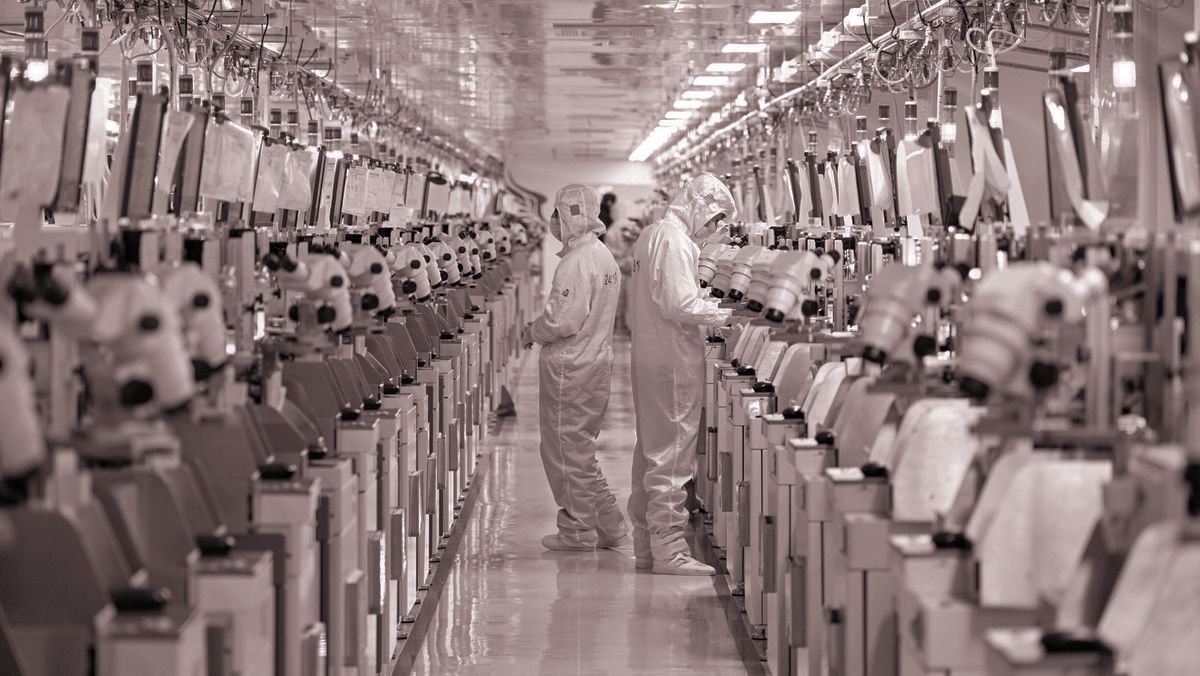
But while the Big Five pour money into the infrastructure required for a theoretical A.I. breakthrough and their valuations swell to unprecedented levels, a quieter revolution is taking place among smaller companies constructing intricate systems of lighter-weight models to solve highly specific, tangible, real-world problems—rather than devoting all their attention, time, and
money to the intangible dream of one model to rule them all. |
One realm in need of exactly this kind of practical advancement is materials science—think better battery
technology, more powerful solar panels, more efficient engines, faster planes, better semiconductors, etcetera. Progress in the field has been sluggish given the exorbitant costs and time required for breakthroughs. To speed up the process, Radical AI, which was founded in 2024, is working to create what C.E.O. Joseph Krause described to me as the “materials flywheel,” which uses different A.I. models, automation, and robotics technologies to predict and autonomously test new
materials. The prediction process takes advantage of a sizable system of diffusion models, neural networks, and generative models, in addition to advanced atomistic models, which essentially simulate materials at an atomic level. Large language models—basically, fine-tuned versions of some of the offerings from the major labs—are also part of the mix, but they’re
primarily an interface layer between the more specialized systems and the end user.
Radical, which secured a million-dollar contract with the U.S. Air Force in August, is currently focused on developing high-entropy alloys to help the military advance its hypersonic flight capabilities. Their A.I. system is designed to predict new structures for the
alloy, which it then sends to its “self-driving lab” to test. By the end of this year, Krause hopes to conduct 100 experiments each day. For comparison, he told me that he ran around 50 similar experiments a year as a Ph.D. student studying materials science, and added that materials experiments tend to have a nearly 90 percent failure rate. With Radical’s autonomous lab, each failure will feed data back into the A.I. system, hopefully refining its predictions.
In July, the company
secured a $55 million seed round with participation from Nvidia, among others. A significant portion of that money, Krause said, is going into the autonomous lab. “We envision a world where now, in one brain, you have discovery all the way through to light manufacturability in like, a week, versus the 15 years it takes today,” he added. For Radical, the business opportunity is
selling valuable materials; A.I. is just how it’s getting there.
Meanwhile, a systems-driven approach to simulation also sits at the core of Geminus, which operates a platform designed to make industrial operations more efficient—for example, by helping oil companies optimize production processes while reducing their environmental impact. Often, the data associated with industrial applications is very noisy, while the decisions derived from it are high-impact. That makes precise
predictions—with quantifiable confidence scores—incredibly valuable. Geminus achieves this by fusing A.I. model architectures with more classical, physics-based models and plenty of guardrails and constraints.
Dr. Karthik Duraisamy, founder and chief scientist at Geminus, and a professor at the University of Michigan, doesn’t believe we’ll reach a point where a single model will be able to robustly function in scientific or engineering environments on its own. He
explained to me how, in a paper over the summer, he’d argued that the best frameworks involve a “big reasoning model at the top, [which then] needs to be talking to smaller, expert foundation models that know only molecules, or biology, or weather,” etcetera. Large models, he added, play a big role, but “on their own, they’re very deficient.”
This multi-model philosophy has also been adopted by
xCures, a platform designed to process and organize unstructured data from medical records to provide clinical insights. Mika Newton, the company’s C.E.O., also argued that instituting a “high degree of constraints” around the platform’s central large model using smaller, narrowly trained, expert models leads to more reliable and robust performance. “When we try to charge people for our software, they go, Well, I can just throw my medical records on ChatGPT. We’re like,
Go for it—and the reason is, those models are not fit for purpose,” Newton said. “When you’re using a general model, you get the hallucination issue. The Minority Report of healthcare is not coming soon. … I think you’d have way too many degrees of freedom and potential error.” |
While these smaller players might uncover more cost-efficient and creative ways to achieve what many of the
hyperscalers are ostensibly aiming for, it’s unlikely that the relentless tide of data center expansion will ebb anytime soon. The market forces are overwhelming, the upside remains tantalizing, and the stakeholders are still innumerable. But some of these smaller companies are starting to develop workarounds that challenge the narrative that comic book–level expansion is essential for the industry’s continued growth.
For example, SiMa.ai is focused on powering A.I. at the edge, which
basically refers to hardware—medical devices, robotics, vehicles, etcetera—that has been imbued with A.I. tech. Krishna Rangasayee, SiMa’s C.E.O., told me that the hardware side of things has largely been overlooked in deference to the cloud, and that the company has been building specially designed silicon chips and software to meet what he described as a growing need. So far, the company has
raised a total of $355 million in venture capital.
When we spoke, Rangasayee was quick to note that, when it comes to efficiency, SiMa consistently outperforms
Nvidia by a healthy margin. “We have gotten comfortable with megawatts and gigawatts [from] nuclear reactors now going [to] data centers and such. We just don’t have the capacity, and I also think there’s no need for it,” he said. “We are a proof point that there’s no need to burn power like we are. I’ve joked, If you want to burn more power and spend more money, please use Nvidia. If you think there is an alternative, we are not too shabby.” |
That’s all for today. I’ll see you on Thursday.
Ian |
|
|
Join Emmy Award-winning journalist Peter Hamby, along with the team of expert journalists at Puck, as they let you in on the
conversations insiders are having across the four corners of power in America: Wall Street, Washington, Silicon Valley, and Hollywood. Presented in partnership with Audacy, new episodes publish daily, Monday through Friday. |
|
|
A professional-grade rundown on the business of sports from John Ourand, the industry’s preeminent journalist, covering the
leagues, players, agencies, media deals, and the egos fueling it all. |
|
|
Need help? Review our
FAQ page or contact us for assistance. For brand partnerships, email ads@puck.news.
You received this email because you signed up to receive emails from Puck, or as part of your Puck account associated with {{customer.email}}. To stop receiving this newsletter and/or manage all your email preferences, click here. |
Puck is published by Heat Media LLC. 107 Greenwich St., New York, NY 10006 |
|
|
|