{{ 'now' | timezone: 'America/New_York' | date: '%b %d, %Y' }} |
|
|
Welcome back to The Hidden Layer. I’m Ian Krietzberg, and today, we’re exploring
the impact and implications of Big Tech’s push into nuclear energy—and, yes, fusion. (This time it’s really happening!)
Up top, news and notes on a big new data center investment from Anthropic, and OpenAI’s potentially significant copyright infringement loss in Germany.
🚨 Programming note: Thanks to my Puck partner Dylan Byers for having me on his excellent podcast, The Grill Room, to talk about the intensifying clash between
the A.I. industry and the media. We got into how A.I. is rewiring audiences, destabilizing trust, and threatening to drown the news in algorithmic sludge. Give it a listen here or here.
Also discussed in this issue: Sam
Altman, Jacopo Buongiorno, Heidy Khlaaf, Dario Amodei, Kai Welp, Jensen Huang, Trump, Zuckerberg, Yann LeCun, and many more…
Let’s get into it… |
Two Things You Should
Know…
|
- Dario’s
data centers: While it may be impossible for anyone else to match OpenAI’s trillion-dollar-plus data center spending commitments, Anthropic isn’t sitting idly by. C.E.O. Dario Amodei, perhaps Sam Altman’s largest rival, said on Wednesday that Anthropic plans to invest some $50 billion in new data centers in New York and Texas, with more sites on the way. According to the company, the new centers will create around 800 permanent jobs and 2,400
construction jobs. “We’re getting closer to A.I. that can accelerate scientific discovery and help solve complex problems in ways that weren’t possible before,” Amodei said in a statement. “These sites will help us build more capable A.I. systems that can drive those breakthroughs while creating American jobs.”
As I
wrote on Tuesday, the investment thesis for these massive capital expenditures rests on the notion that the future of A.I. will be big—giant models, surging demand, massive energy requirements. But there are also plenty of smaller companies out there that are already working on scientific breakthroughs using much lighter-weight approaches that don’t
rely on frontier lab L.L.M.s.
Anyway, it’s hard not to view the announcement in political terms, too. Amodei has been by far the most resistant to the cynical West Wing choreography that his peers—Sam, Satya, Sundar, etcetera—treat as a fiduciary duty. Still, Anthropic gave the administration a clear shout-out in its statement, writing that the investment will “advance the goals in the Trump administration’s A.I. Action Plan to maintain American A.I.
leadership and strengthen domestic technology infrastructure.” This is not the first time that Anthropic, occasionally on the receiving end of barbs from the administration, has felt compelled to offer tokens of support. - The first domino to fall?: OpenAI was handed its first copyright infringement loss this
week after a German court ruled that the company had transgressed by training ChatGPT on song lyrics without permission. The German music rights group GEMA brought the case in November of last year. Importantly, the court ruled that both the memorization of the song lyrics and their reproduction in generated output constituted infringement—a departure from some U.S.-based copyright cases, which have focused more on infringing output than input.
GEMA, which has a similar suit
pending against A.I. music generator Suno, is hoping that the ruling here will set a powerful precedent. “For the first time, today’s ruling clarifies key legal questions concerning the way new technology interacts with European copyright law,” Dr. Kai Welp, GEMA’s general counsel, said in a statement. “The verdict represents a milestone on the way to obtaining fair remuneration for authors and creators throughout Europe.” (OpenAI, of course, disagreed with the decision, and
told me that it’s “considering next steps.”)
|
“There’s all kinds of incentives right now, and rightfully so. What do you expect an independent lab that is
sort of trying to raise money to do? They have to put some numbers out there such that they can actually go raise money so they can pay the bills for compute, and what have you.” —Satya Nadella on whether he believes OpenAI’s projection that $100 billion (or more) in revenue will just kind of appear by 2028.
And speaking of all that compute… |
|
|
In pursuit of boundless energy to meet their growth targets, A.I. hyperscalers are cutting
deals and throwing resources at yet another industry moon shot: a second nuclear energy renaissance. Ironically, their own technologies might jeopardize the push. |
|
|
While it’s hard to know exactly how much energy is being consumed by the thousands of data centers that have
cropped up to feed America’s A.I. boom, it’s commonly understood that the industry has been driving a massive increase in electricity demand. Jensen Huang, Nvidia’s fearless leader, pithily summed it up in the company’s 2025 sustainability report: “Electricity is the lifeblood of digital intelligence. We need more.” You may have noticed, too, if you’ve checked your utility bills lately. After staying flat for the past two decades, U.S. electricity consumption is once
again on the rise.
Dozens of data points all tell the same story. Amazon, for instance, which had been making progress on its emissions goals since 2021, is now putting more carbon into the atmosphere again. Ditto Microsoft, whose
emissions were up 29.1 percent in 2024 over the company’s 2020 baseline, and up 23.4 percent in
2025—driven, the company says, by the construction of more data centers and A.I. hardware. It’s the same situation at
Google, Nvidia, Meta, and on and on. And that’s just the public data. OpenAI and xAI, both private companies, are relying on on-site gas turbines while waiting for
other energy supplies to come online.
This alarming trend could reverse, of course, if the hyperscalers follow through on yet another momentous promise: ushering in a nuclear energy renaissance. Despite its bad rap in certain environmental circles, nuclear is theoretically among the cleanest forms of energy available, and unlike wind or solar—a story for another time—it enjoys mostly bipartisan support. And, perhaps most crucially, a nuclear build-out has become a veritable obsession
among Silicon Valley elites and policymakers.
A flurry of deals in recent years underscores their commitment. Last year, Meta announced plans to add between 1 and 4 gigawatts of nuclear capacity to its portfolio, and
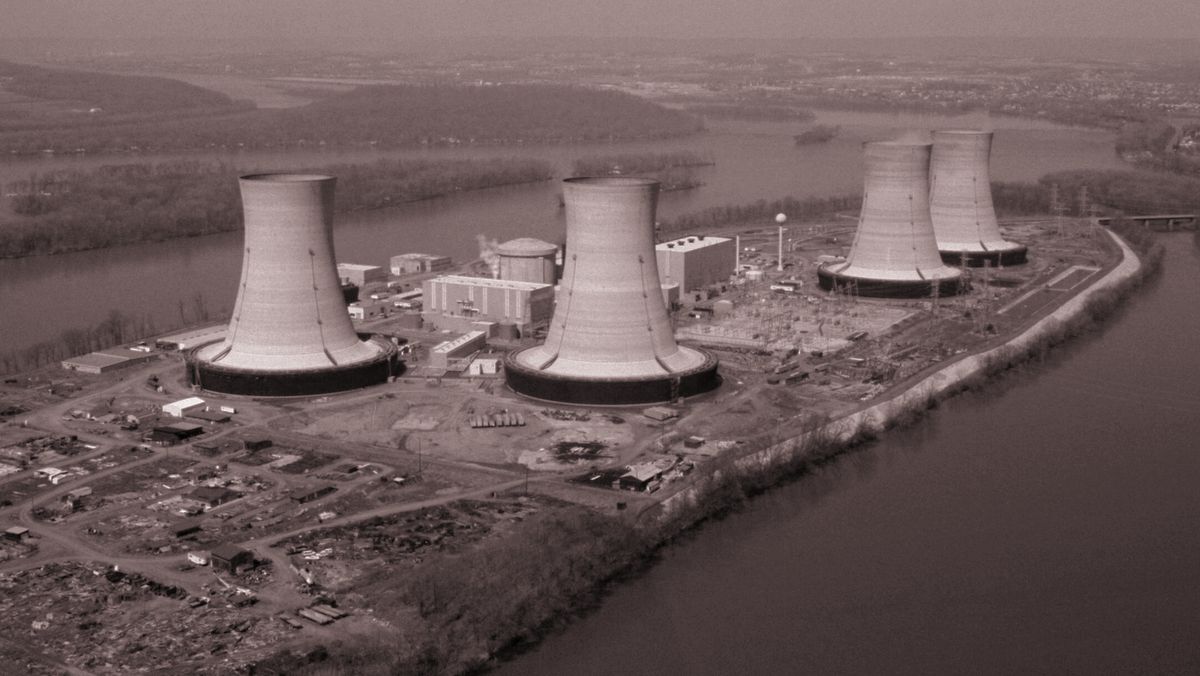
signed a 20-year deal over the summer with Constellation to help realize that goal. In 2023, Microsoft inked a deal with Helion (which is backed by Sam Altman) to purchase nuclear fusion power, and has partnered with Constellation to bring Three Mile Island
back online. Last year, Amazon signed several deals to bring small modular reactors (S.M.R.s) online, and, over the summer, expanded its nuclear purchase
agreement with Talen Energy. Google partnered with Kairos Power to bring its S.M.R.s online by 2030 and secured agreements to bring nuclear power plants online in Tennessee and Iowa; in October, Google DeepMind offered Commonwealth Fusion Systems its latest A.I. technology to accelerate nuclear fusion development.
Critics are quick to point out that nuclear
power isn’t exactly carbon-free—it involves uranium mining, enrichment, plant construction, etcetera—which means it’s perhaps better described as a very low carbon option. They’re also concerned about the amount of
emissions that will be produced during the decade-plus required to bring plants online. But Jacopo Buongiorno, a professor of nuclear science at M.I.T., told me that the nuclear approach is “infinitely better than gas turbines,” and called the idea of bringing plants back online a “slam dunk.”
Among other benefits, he noted, nuclear plants require less land than renewables like solar—and, unlike other renewables, produce energy continuously. Buongiorno also called the
problem of nuclear waste more political than technical. “The issue has always been the political process that leads you to identifying and licensing and finally opening a repository,” he told me. (The U.S. appointed Nevada’s Yucca Mountain as the country’s permanent, underground disposal center for all nuclear waste in 1987, but the state has long resisted the designation, so it hasn’t happened yet.)
The bigger concern, according to Buongiorno, is cost and demand, specifically for building new reactors from scratch. Even small reactors take around a decade to come online, and their operators must be sure “the demand is going to be there once you’ve finished building it,” he said. “Logically, it seems plausible that we’ll continue to need more and more energy in the form of
electricity.” But, he shrugged, “who can predict what’s going to happen in 10 years?” |
Obviously, the notion of a self-serving A.I.
“arms race” with China is fueling this sense of urgency. “There’s no way to get there without a breakthrough,” said Altman—a financial backer of two separate nuclear startups—at an event last year. “We need [nuclear] fusion or we need, like, radically cheaper solar plus storage or something at massive scale.” In a recent
letter submitted to the White House Office of Science and Technology Policy, OpenAI said the U.S. should attempt to build 100 gigawatts of new energy capacity a year to maintain an edge over China, and that the government ought to “step back by streamlining and modernizing outdated and onerous regulations to unlock energy
innovation.”
In many ways, this is already happening. In May, President Trump signed a series of executive orders intended to “accelerate” nuclear technology, one of which
outlined reforms for the Nuclear Regulatory Commission, stating that it must not “unduly restrict the benefits of nuclear power.” The order also claimed that the N.R.C.’s current safety models—particularly the linear no-threshold (L.N.T.) model for radiation protection—lack a “sound scientific basis” and produce
“irrational results,” and that the N.R.C. must consult with the Departments of Defense and Energy on regulations concerning radiation exposure limits going forward.
There are a few potential problems here. First, while it’s true that the L.N.T. model is complex, it’s also been scientifically validated. Meanwhile, Dr. Heidy Khlaaf, the chief A.I. scientist at
the AI Now Institute, who also has a background in auditing nuclear power plants for safety, told me that proven alternatives to the model don’t exist. In a new report written with Dr. Sofia Guerra, titled “The Undermining of Nuclear Regulation in Service of A.I.,” Khlaaf synthesized most of her criticisms about the politicization
of A.I. regulation, arguing that reducing oversight could have severe public safety consequences.
Indeed, when it comes to nuclear power plant construction, Khlaaf told me, “any small mistake can cascade very quickly into a nuclear accident. And that means public exposure to ionizing radiation.” Her fear is that nuclear regulators are losing their independence to partial, nonexpert parties who frame safety evaluations as bureaucratic red tape. In reality, she said, when it comes to
construction, it’s “never really the safety people” who are responsible for delays: There are supply constraints, geological and soil assessments, and a shrinking workforce of expert technicians. She’s also concerned that newer S.M.R.s might receive less regulatory due diligence due to their smaller size, despite producing harmful byproducts.
At the same time, major A.I. companies are hoping to expedite the development of nuclear power by introducing their own technology into the process.
In July, for example, Google partnered with Westinghouse to infuse the company’s nuclear power plant construction process with A.I.-generated efficiencies. That same month, the Idaho National Laboratory
said it would leverage Microsoft’s A.I. tech to “streamline the nuclear permitting and licensing application process.” But as two NASA engineers wrote earlier this year, L.L.M. outputs
are “at best, factually unreliable and, at worst, downright dangerous,” which means they must be reviewed by a human expert, undermining the idea that auto-generated paperwork saves time. (Khlaaf also worries about model developers accidentally ingesting highly sensitive nuclear data.) Microsoft declined to comment on how it’s mitigating these risks.
None of this means that Khlaaf is opposed to nuclear energy. In fact, she told me that nuclear absolutely should play an important
role in energy production, alongside solar, wind, and other renewables. Like Buongiorno, she noted the value of a 24/7 stream of power from nuclear, especially in light of unpredictable weather patterns associated with climate change. Handled safely, the proliferation of nuclear energy should be a net benefit for both the industry and the environment—not to mention Americans’ household energy bills.
But without meaningful regulation, Khlaaf warned, the risks might outweigh the upside.
“Nuclear is safe only because we make it safe, and only because we have this red tape,” she said, adding that any disaster might sour public opinion. “If you take this back, then, unfortunately, that means people will not see nuclear as a viable energy source in a decarbonized future.” |
Yann LeCun, Meta’s longtime chief A.I. scientist, has been noticeably quiet amid the
company’s expensive push to become a leading A.I. lab. Now, we seem to have a partial explanation: He’s reportedly planning to call it quits and launch his own A.I. startup focused on world models rather than L.L.M.s, leaving Zuck and Alexandr Wang to plot language model–based superintelligence on their own. [FT]
Determining the
environmental cost of A.I. is no easy task. But a recent investigation shed some light on the ecological footprint of semiconductor chip fabrication—a process that’s consuming more energy, and releasing more pollutants, than ever before. [Truthdig]
Based on documents reviewed by Ed Zitron, OpenAI is apparently spending
a lot more money on inference, and earning far less revenue, than has been previously reported. Zitron arrived at the second revelation based on leaked revenue-share payments sent to Microsoft. [Where’s Your Ed At] |
That’s all for today. I’ll see you next week.
Ian |
|
|
Join Emmy Award-winning journalist Peter Hamby, along with the team of expert journalists at Puck, as they let you in on the
conversations insiders are having across the four corners of power in America: Wall Street, Washington, Silicon Valley, and Hollywood. Presented in partnership with Audacy, new episodes publish daily, Monday through Friday. |
|
|
Unique and privileged insight into the private conversations taking place inside boardrooms and corner offices up and down Wall
Street, relayed by best-selling author, journalist, and former M&A senior banker William D. Cohan. |
|
|
Need help? Review our
FAQ page or contact us for assistance. For brand partnerships, email ads@puck.news.
You received this email because you signed up to receive emails from Puck, or as part of your Puck account associated with {{customer.email}}. To stop receiving this newsletter and/or manage all your email preferences, click here. |
Puck is published by Heat Media LLC. 107 Greenwich St., New York, NY 10006 |
|
|
|