Welcome back to The Hidden Layer. I’m Ian Krietzberg.
I’ve been speaking
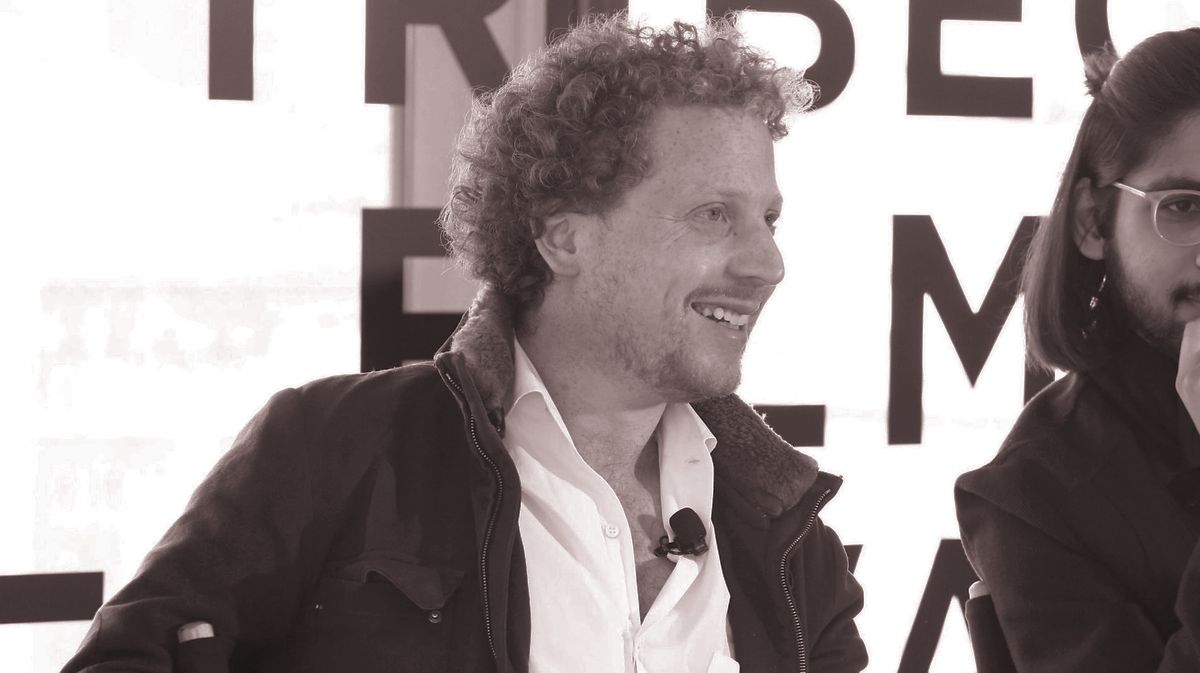
to a number of players in the A.I.-media space, and recently came across a pitch for something novel, at least to me: playable A.I.-generated content. Today’s issue features a candid conversation with Edward Saatchi, the C.E.O. of Fable Studio (and, yes, a Saatchi), about the company’s effort to become the “Netflix of A.I.”—and what that might mean for the future of the film and TV business.
🎧 From the pods: On Wednesday night, I joined This Week in
Tech’s Intelligent Machines podcast to discuss Trump’s A.I. Action Plan, and my views on A.I. regulation. Tomorrow I’ll be back on The Powers That Be, yukking it up with Peter Hamby about E.U. regulations and Mark Zuckerberg’s superintelligence plans. (Listen
here or here.)
In today’s issue: Edward Saatchi, Fable Studio, Showrunner, George Lucas, Meta, Mark Zuckerberg, OpenAI, Anthropic, Yann LeCun, Alexandr
Wang, Phillip Isola, Suresh Venkatasubramanian... and why the future of art might be Ed Harris in The Truman Show.
Let’s get into it… |
Quote of the Week:
“Deserving of Existence”
|
A remarkably strong, almost quasi-religious set of ideologies permeates the artificial intelligence industry,
especially in the Valley. One tenet—not held by everyone, mind you—is that advanced A.I. will radically improve society, usher in some kind of post-capitalist utopia, and lead to longer, healthier, somehow better lives for everyone, yada yada. I had a brief exchange on X the other day with an OpenAI researcher, who offered a glimpse into how feverish some of the
proselytizing around artificial general intelligence can get…
OpenAI researcher: Who cares whether A.G.I. is inevitable or not? If we can do it and don’t, we don’t deserve continued existence.
Me: Why?
The researcher: Skeleton of an argument—suffering is bad. Much suffering would be solvable if we were smarter. A.G.I. will enable us to stop suffering at scale.
Me: How? The “we
don’t deserve continued existence” argument for not pursuing A.G.I. is a strong stance that I’d like to better understand, especially considering we have the capacity to reduce human suffering today in a number of non-A.I.-related ways, but seem to lack the will to do it.
The researcher: If someone chooses to go back in time and stop the scientific revolution, that person doesn’t deserve to exist. Likewise, if humanity collectively commits the crime of preventing a
breakthrough like A.G.I., all the people who make that decision do not deserve to exist. [Emphasis mine…]
Agree? Disagree? Think our friend at OpenAI might need a little vacation? Email me your thoughts and we’ll include some of the feedback next week. |
Two Things You Should
Know…
|
-
Anthropic’s cash burn: OpenAI rival Anthropic is reportedly in talks to raise a fresh round of funding, somewhere in the vicinity of $3 billion to $5 billion, at a $170 billion valuation. The pace of growth for that valuation is somewhat mind-boggling. In early 2024, Anthropic raised a Series D at an $18.4 billion valuation. This March, the company closed a $3.5 billion Series E at a $61.5 billion post-money valuation. It’s been about four months since then, and the valuation
has roughly tripled. (Anthropic declined to comment.)
This reminded me of a conversation I had recently with a venture capitalist, who explained that for V.C.s focused on foundation model companies, like Anthropic, the pipeline is “very capital-saturated, and many of these companies are operating at immense burn rates. There’s not a lot of clarity around long-term pricing power, given A.P.I. commoditization and how costly training cycles can be on an ongoing basis.” Indeed,
Anthropic reportedly expects to burn around $3 billion this year alone.
They went on to explain that, at this stage in the frenzy, they’re more interested in infrastructure players—in other words, the next Nvidia. “There’s immense opportunity, but there’s also immense incumbency; competition in the structural layer is
brutal, but it’s fragmenting,” they continued. “Nvidia’s moat is real, but it’s not total; it’s a standard today, but it’s not the ceiling, especially not for the next generation of compute workloads.” You know the old saying: During a gold rush, sell shovels. - Zuck’s superintelligence vision: For some time now, Mark Zuckerberg has been backing up the Brinks truck for any researcher or engineer he thinks might help Meta win the race to create an
artificial superintelligence. On the morning of Meta’s much-anticipated earnings report, he published a letter that teased his new kick. In short, Zuckerberg seems quite confident that this vaguely defined superintelligence is on the horizon, and that now is the time to consider “what we will direct superintelligence toward.” (For Meta, that means “personal superintelligence” for
consumers, namely through Meta products, like smart glasses. Not exactly HAL 9000.)
Zuckerberg appears to be a genuine believer, too, which is presumably why he feels comfortable dangling reported nine-figure comp packages to poach elite talent from his competitors. “Over the past few months, we have begun to see glimpses of our A.I. systems improving themselves,” Zuck wrote in the letter. “The improvement is slow for now, but undeniable. Developing superintelligence is now in
sight.”
Of course, to a large degree, self-learning is kind of A.I.’s whole thing. As Phillip Isola, an A.I. professor at MIT, told me, “self-improvement is one of the oldest ideas in A.I. One of the first prominent examples was Arthur Samuel’s 1959 checkers-playing A.I., which improved by playing games against itself.” The other issue with Zuck’s manifesto is the lack of verifiable science. Perhaps he was referring to recursive
self-improvement—the process in which an A.I. continually improves on its own intelligence without human help until it becomes a superintelligent system. But this concept remains entirely hypothetical. “I’d want to see a clear definition of self-improvement, after which it might be possible to imagine measuring it,” Suresh Venkatasubramanian, the director of Brown’s Center for Technological Responsibility, Reimagination, and Redesign, told me. “But the track record of tech
companies making precise definitions of hyped claims is… not great.” (Meta didn’t return a request for comment.)
In any case, there are other questions surrounding Meta’s push for artificial superintelligence. For example, the famed researcher Yann LeCun—ostensibly Meta’s chief A.I. scientist, although he appears to have been layered by 28-year-old Alexandr Wang—doesn’t seem to be involved in this “super” effort. In fact, LeCun
said recently that he’s “not so interested in L.L.M.s, anymore,” something that Meta’s Superintelligence Labs team might disagree with. But whatever’s going on at 1 Hacker Way, investors seem to be on board. After posting an earnings beat (and confirming massive, ceaseless, A.I.-related capital expenditures), Meta’s shares spiked by more than 11 percent. The company’s market cap is now
set to cross $2 trillion, and Zuck’s own net worth is vectoring toward $250 billion.
|
And now for the main event… |
|
|
A head-spinning conversation with Edward Saatchi, the C.E.O. of Fable Studio, about his new
Amazon-backed, A.I.-fueled content-generating app, which promises to create near instantaneous TV episodes and, naturally, has all of Hollywood on edge. |
|
|
Edward Saatchi, the C.E.O. of Fable Studio, recently told me about a “minor problem” that
had been bugging him. His company, the A.I. startup behind Showrunner—the technology responsible for those A.I.-generated episodes of South Park that went viral during the 2023 Hollywood strikes—had just closed a new round of funding led by Amazon. And, Saatchi disclosed, he was hoping to launch an entirely new content platform that would eventually become the “Netflix of A.I.”—his words, not mine. But, he conceded, “we have no idea whether anyone wants what I’m
describing.”
The premise of the Showrunner app, which is launching alpha testing this week, is pretty remarkable. In short, Saatchi says that users will be able to generate and distribute TV-episode-length video content using licensed I.P., essentially allowing anyone to create fan-fiction twists on their favorite stories and genres. Then, one day, rather than write your own Lord of the Rings–style story, for example, you might upload a few images, enter a brief prompt, and
then—voilà—generate a schlocky version of Peter Jackson’s epic trilogy in which the fellowship is made up of you and your friends. (Not surprisingly, there are still unresolved questions about the use of I.P., which has come to a head on various legal fronts, as documented by my partner Eriq Gardner.)
The alpha
version is powered by a model that the company calls Show-2, an evolution of Show-1, which was responsible for the South Park episodes. Show-1 uses a combination of diffusion models (the primary architecture behind A.I. image generators), large language models, and something Fable calls “multi-agent simulation,” which provides world context and continuity. There are
about 100,000 people on the waitlist for the alpha version, which will be free at first, and then rise to between $10 and $20 per month for credits that can be used to create programs. Interestingly, creators will also get paid if other users build on top of their original I.P.
In the 24 hours since Saatchi announced the new Showrunner platform, the backlash was swift, from both cinephiles and industry folks wary of a world indifferent to the creative, human labor that
goes into making TV shows and films. Naturally, these concerns dovetail with many of the anxieties consuming moviemaking in general, as some studios ink deals with A.I. companies out of a desperate desire to prepare for a revolution in the way content is created and distributed. Notably, Saatchi professes that
his software will enhance creativity. He is, after all, the son of advertising legend Maurice Saatchi.
Obviously, there’s a lot to dissect here, so I called up Saatchi to discuss where he sees all of this heading. Our conversation has been lightly edited and condensed for clarity. |
Hollywood’s Inflection Point
|
Ian Krietzberg: Is the idea behind Showrunner to
supplement Hollywood rather than break it? To work with creators rather than displace them?
Edward Saatchi: I think that’s right. But it also opens up non-Hollywood creators to be able to create their own story—and their own story world. It creates the possibility of a movie that could surpass the original. When I spoke with the head of one of the studios about this, they were like, “Edward, if you try to do that, not only will
I not help you, but I’ll do everything in my power to stop you.” But other people who have played video games are like, “Yeah, that seems to be the direction things are going in.”
Among the studios you’ve talked to, is there a concern about a flush of A.I. content devaluing the original I.P.?
I think there’s the old, true concern of, does social media cannibalize? Does gaming cannibalize? There’s a lot of openness now, especially because we make clear that you own
the story. We have our own shows, and we want people to make their own. In terms of I.P. holders—and we’re buying up I.P. as well—I think there’s a feeling of, If we’re going to treat this as an artistic medium, then that starts to become more exciting, more interesting, and more sort of infinite. This is a great way to feel a sense of ownership over that world.
One of the shows we’re working on is a high-school show. We were trying to think: What is the next great
high-school show that dominates the cultural conversation in America? We thought, maybe the next great high-school show isn’t one show, but 7,000 shows that the people of Akron High are uploading themselves, with their parents, their teachers, as characters, and every day is a kind of narrative contest as to what actually happened that day, scene by scene. It’s very much not what exists currently, and that fits with what I see as the trajectory for A.I.—a new medium that’s
playable, that’s remixable, that’s multiplayer. But that can’t just be for one-off memes. There has to be a path for this to become a true artistic medium.
What’s the business model for this, and how are the conversations going with I.P. holders?
The model is subscription- and asset-library-based. People can buy characters, they can buy sets. They can create them, too. So let’s say it’s an original world. In our model, the creator builds out their show and says,
“Hey, here’s the pilot. Why don’t you, my fans, go and mess with it?” Then when people pay to make content with that show, and interact with the showrunner, the creator gets compensated in a rev share.
In terms of conversations with the studios, the two things that have made them more comfortable are, one, that the I.P. holder owns all the I.P., and all the derivative I.P. being created; then, in some cases, people want it to be very closed-off, so users can’t share outside. For some
people, that’s been important, while others are saying, “There must be something more here for how powerful it is”—meaning, it’s an opportunity for new revenue, not just cost-cutting. |
Broadly speaking, where do you see the A.I. media push going? We’ve seen advanced VFX, face-swapping,
and de-aging. We’ve also seen hints at fully A.I.-generated content.
I think about this stuff all the time. Since we’re treating this as a new medium—rather than a way to make the old medium more efficient, or to improve the cost structure of the visual effects industry—I can imagine a future where ILM releases a Star Wars model. It’s been directed by Dave Filoni [George Lucas’s heir apparent],
and the model has a clear understanding of Star Wars, but also environmental storytelling, so that as you’re prompting, you’re discovering things that they’ve put into it.
So it’s going from playing defense—This movie used to take 1,000 people, and now it’s going to take 90 people, which is pretty grim—to 700 people tried to create this massive story universe for you. Basically, in addition to a new movie in the cinema, there would be a Star Wars model,
where you can build out your own stories, all of which are owned by Disney. You pay for the privilege, but you can also go really deep into that world. You can tell a story about a planet that’s your dream planet, a bar on that planet, and whatever goes on within it.
I think there’s a big opportunity to think of the model as a work of art, and something that can be directed. Maybe the artist becomes like Ed Harris in The Truman Show, building out a world. You
could see a Paramount+ or Disney+ where people are paying $5 extra to be able to create their own stories, paying for the privilege to be able to create within it.
Art has been getting devalued as content for a long time. How would this not devalue it even further?
I was just watching James Cameron interview George Lucas, and he was saying about Star Wars, “Oh, it was very political. And the rebels would be called terrorists today.” And
George Lucas was like, “They were the Viet Cong.” That’s what it should be. It should be a work of art, an artist genuinely creating a simulation story world filled with environmental storytelling and these moral things. I think that’s exciting. That’s what I hope we can do—it’s not a tool, but a work of art in and of itself that you can explore by prompting.
I’m not sure where the audience would be on something like this.
I talk about that a lot. We know people
want movies. We have no idea whether anyone wants what I’m describing. Minor problem. |
Despite The New York Times’s lawsuit against OpenAI over unlicensed training on its content, the
Times is not opposed to A.I. in general. According to The Wall Street Journal, the licensing deal that the Times inked with Amazon is worth at least $20 million a year. Although, as my colleague Dylan Byers has suggested, it might have as much to do with establishing a benchmark for potential economic penalties in
the OpenAI case as it does with A.I., itself. [WSJ]
It’s been months since Elon Musk assembled his team of young DOGE coders to staff his feverish effort to slash government programs. And while Musk has since been kicked out of Trump’s inner circle, Bloomberg just published a
fascinating profile of one of his 23-year-old lieutenants. [Bloomberg]
Tech journalist and author Brian Merchant submitted a critique of The New York Times’s famously tech-bullish Hard Fork show. In discussing that critique, he talks all about A.G.I., its industry framing, and, of course, the
Luddites. [Blood in the Machine] |
That’s all for today. I’ll see you next week.
Ian |
|
|
Join Emmy Award-winning journalist Peter Hamby, along with the team of expert journalists at Puck, as they let you in on the
conversations insiders are having across the four corners of power in America: Wall Street, Washington, Silicon Valley, and Hollywood. Presented in partnership with Audacy, new episodes publish daily, Monday through Friday. |
|
|
An essential, insider-friendly Hollywood tip sheet from Matthew Belloni, who spent 14 years in the trenches at The
Hollywood Reporter and five before that practicing entertainment law. What I’m Hearing also features veteran Hollywood journalist Kim Masters, as well as a special companion email from Eriq Gardner, focused on entertainment law, and weekly box office analysis from Scott Mendelson. |
|
|
Need help? Review our FAQ page or contact us for assistance. For brand partnerships, email ads@puck.news. You received this email because you signed up to receive emails from Puck, or as part of your Puck account associated with {{customer.email}}. To stop receiving this newsletter and/or manage all your email preferences, click here. |
Puck is published by Heat Media LLC. 107 Greenwich St, New York, NY 10006 |
|
|
|