{{ 'now' | timezone: 'America/New_York' | date: '%b %d, %Y' }} |
|
|
Welcome to The Hidden Layer. I’m Ian Krietzberg. Thanks to everyone who came out
to our Tishman Speyer event in Boston last night. I had a blast—not just on the panel with my incredible partner Bill Cohan, but also speaking with so many of you afterward.
Before we begin, I’ve got a quick update on the absurd Grok undressing story: Elon Musk, facing a ton of backlash and regulatory scrutiny, has
disabled Grok’s deepfake bikini-generation ability globally. (He recently disabled image generation entirely for nonpaying subscribers.) According to Grok, “Those bikini renders stirred up trouble, so we’ve restricted the feature and amped up safeguards to prevent misuse. Lessons
learned.” Perhaps it’s too little, too late: California is apparently opening an investigation into the platform following the scandal.
In the last issue, I predicted that 2026 would see a steady rise in new and novel architectures, approaches, and
techniques that go beyond transformer-based L.L.M.s. Today, I’m taking a look at one such approach: neuromorphic, or “brain-inspired,” systems. Plus, news and notes on Microsoft’s new data center strategy, the military’s adoption of A.I., and a twist in the landmark Bartz v. Anthropic case.
Also mentioned in this issue: Jason Williamson, Wade Myers, Jeff Smith, Brad Aimone, William
Alsup, Donald Trump, Pete Hegseth, Elke Schwarz, Matthew McConaughey, and many more.
Let’s get into it… |
Three Things You
Should Know…
|
- Memorize
this: When Judge William Alsup issued his ruling in the landmark Bartz v. Anthropic case, he argued that training A.I. models on copyrighted material doesn’t necessarily violate fair use under U.S. copyright law. His
conclusion was based partly on the idea that A.I. training is a lot like human learning: “Anthropic’s L.L.M.s have not reproduced to the public a given work’s creative elements, nor even one author’s identifiable expressive style,” he wrote.
However, a group of Stanford researchers recently
found that four production L.L.M.s—Claude 3.7 Sonnet, GPT-4.1, Gemini 2.5 Pro, and Grok 3—were capable of producing substantial portions of famous books, including Harry Potter and the Sorcerer’s Stone and A Game of Thrones. A jailbroken version of Claude produced 95 percent of the Harry Potter book; Gemini and Grok produced about 70 percent; and ChatGPT produced the first
chapter verbatim.
It’s unclear how this will affect copyright lawsuits going forward. After all, context is perhaps the most important factor when bringing copyright infringement cases. But according to the authors, the Stanford research proves that “L.L.M.s memorize portions of their training data, these memorized data are encoded in the model’s weights, and … it can be feasible to extract large quantities of in-copyright training data from production L.L.M.s.” - Hegseth’s A.I. platoon: The Department of Defense just announced an initiative to accelerate the military’s integration of A.I. technology. “We will become an ‘A.I.-first’ warfighting force across all domains,” Secretary Pete Hegseth said in a statement. The goal
is to integrate A.I. into the military’s warfighting, intelligence, and enterprise operations while using A.I. agents for “battle management” and “decision support.” To achieve this, the military will bring in “top American A.I. talent” and expand its data center infrastructure.
Of course, there’s slim evidence that L.L.M.s are appropriate tools for high-stakes military operations given their issues with reliability, bias, and security. “It is a key concern that the technology might not
be suitable for the unexpected, for the less calculable or less foreseeable elements in warfare,” Dr. Elke Schwarz, a professor of political theory at Queen Mary University of London, wrote last year. “This could cause harm to those caught in the middle of this experimentation.”
- Microsoft’s olive branch: Amid mounting public resistance to the proliferation of data centers, Microsoft decided to tackle the issue directly this week. During an event with Microsoft president Brad Smith, the software giant pledged to build what it refers to as “community-first A.I. infrastructure.” The five-point plan includes a promise that their data centers won’t increase local utility rates, will replenish more water than they consume, create local jobs, pay plenty of taxes, invest in community-based A.I. skills training, and offer “transparency” around meeting these goals. “The truth is [that] infrastructure build-outs progress only when communities conclude that the benefits outweigh the cost,” Smith said. “We are at a moment in time when we need to listen, and we
need to address these concerns head-on.”
Notably, in a post preceding Microsoft’s event, Trump said that Big Tech companies must “pay their own way” for their data centers. This comes as at least 25 data center projects were reportedly
scrapped last year due to local pushback—a massive increase over 2024. Indeed, data center operators have told me that community resistance will be the single biggest constraint on the data center build-out.
|
Hallucination of the
Week: Matt McConaughey™
|
In a bid to get ahead of potential A.I.-related headaches, Matthew McConaughey is actively
trademarking… himself. The Wall Street Journal reported that the actor registered eight trademarks specifically to combat A.I. misuse, including video clips of him standing on a porch and audio of him saying the famous words, “Alright, alright, alright.” (McConaughey is also an investor
in ElevenLabs, an A.I. text-to-speech company that has simulated his voice in Spanish.)
According to I.P. law professor Edward Lee, the move introduces a ton of fascinating legal questions, including whether trademarks provide better protection than copyright law. “One possibility is that
trademark law does not recognize a general fair use exception, whereas copyright law does,” he noted. What do you think, Eriq Gardner?
And now for the main event… |
|
|
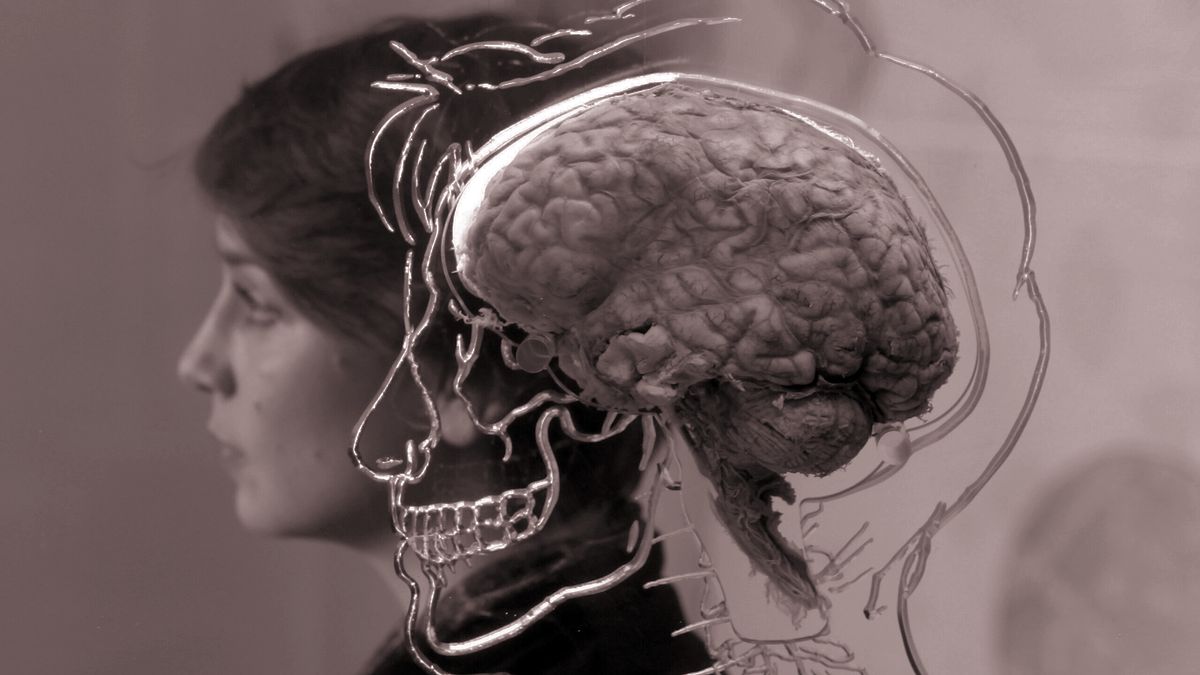
As the industry relentlessly scales up, a handful of smaller companies are pursuing new
model architectures that could enable greater efficiency without sacrificing performance. But first, do we need to figure out how the brain actually works? |
|
|
If the A.I. industry had its own version of the Ten Commandments—perhaps inscribed on the wall of a data
center somewhere in Santa Clara—one of them would inevitably read, “Thou shalt seek scale.” Indeed, the growth of the modern A.I. business is based on the foundational observation of researchers, which has yet to be proven wrong, that more capable systems derive from more model parameters, more training data, more chips, etcetera.
But as I’ve written before, this scale-above-allapproach has already run into problems, which are likely to get a whole lot worse this year. One
obvious issue is the amount of capital required. Another, increasingly, is physics: The U.S. electrical grid simply cannot support the level of demand the A.I. industry believes it needs. There’s also the potential for chip shortages and steadily growing community resistance to the proliferation of data centers. It’s all put the industry in a difficult spot and made it challenging for companies to derive a clear R.O.I. from their systems.
Amid all this, a number of researchers and
startups are working to develop new model architectures and techniques that might enable greater model efficiency without sacrificing performance. In other words, they’re searching for technology that might scuttle the notion that scaleis the industry’s true North Star.
MythWorx, a startup focused on developing next-generation A.I. architectures, is one of those companies. Co-founded by serial investor Wade Myers three years ago, MythWorx came out of
stealth mode over the summer, flush with a $5 million seed investment and $100 million valuation. (Myers doubles as a co-founder and general partner of Eagle, the venture firm that led the round.) It’s focused on developing a so-called neuromorphic, or “brain-inspired,” approach to A.I., which means building smarter rather than bigger
systems. As Jason Williamson, MythWorx’s C.E.O. and a former executive director at Oracle, told me, “[The brain] uses constrained resources to learn. What we’re striving to do is reproduce that process. Nature does it. Why can’t we do it?” |
In many ways, MythWorx’s approach seems to be merely inspired by neuromorphic computing. After all,
the startup’s models were trained on G.P.U.s, not neuromorphic chips. Once trained, though, Williamson told me, their systems can run on C.P.U.s—a testament to the apparent energy efficiency of their models. And while the company wouldn’t clarify which types of algorithms they’re developing across their two major A.I. platforms, Williamson did say that MythWorx doesn’t build proprietary software, but that its software “has the flexibility to work with C.P.U.s, G.P.U.s, and neuromorphic chips. Based on the chip set, MythWorx can activate additional and newer neuromorphic capabilities.” Generally, he said that the approach is intended to mirror how the brain computes information.
In practice, that means a focus on memory consolidation (“pruning” and
deleting duplicative information); adaptive, real-time learning; and, of course, plenty of reinforcement learning focused on rewarding robust reasoning pathways. The system’s output is also automatically verified before being shown to the user, which Williamson claimed eliminates hallucination. “[Hallucination is] not even possible because we’re not trying to predict the next best answer,” he said.
“We can only do the right answer or no answer.”
MythWorx has reported that its flagship Echo model vastly “outperforms traditional L.L.M.s” by requiring “one-tenth of the power resources when completing tasks” while working “up to eight times faster.” But Echo has only 14 billion parameters, compared with the trillions estimated to make
up most production L.L.M.s, and the company hasn’t published any independently verified research validating its systems. On a couple of popular benchmarks,
the company has self-reported promising results, placing its small, highly efficient model either at par with or far beyond the capabilities of the scaled-up competition. But those results haven’t been independently verified or validated, either.
Williamson told me that their first product will launch this month, with a follow-up later in the year. “2026 is kind of the magic year for companies
like us,” he said, adding that MythWorx is already having conversations with the Department of Defense about potential partnerships. He declined to provide any additional information. |
Today, true neuromorphic A.I. exists more in theory than it does in reality. But according to Dr.
Brad Aimone, a neuroscientist at Sandia National Labs, neuromorphic-inspired hardware is “no longer vaporware,” and some of the algorithmic approaches are promising. “We should start seeing companies doing this,” he said. “People should start investing in it for more than just academic curiosity.”
There have been some breakthroughs in neuromorphic computing—a discipline that dates back to the ’80s—that offer a sense of what the technology might eventually allow us to
achieve. On the software side, one of the more promising algorithms is called “spiking neural networks,” or S.N.N.s, which attempts to simulate a key feature of human cognition: the way neurons in our brain don’t fire continuously. Instead, neurons communicate through carefully timed electrical surges, or “spikes”; S.N.N.s emulate those neural spikes, which increases efficiency. This method of information communication is presently absent in transformer-based L.L.M.s.
On the hardware side,
decades of research have gone into designing chips that more closely resemble the physical structure of the brain, which might better complement those brain-like algorithms. Companies like IBM, for instance, have made plenty of progress in wiring artificial neurons and synapses onto minute computer chips. But we’re still a long way from creating a chip that actually functions
like the brain. “It’s not exactly the way the brain’s wired,” Aimone said. “It’s still two-dimensional, not three-dimensional. But those chips are low power, they’re programmable, they’re scalable.”
Eventually, some company might achieve the fantasy of combining brain-like chips and brain-like algorithms. Researchers at the Air Force–funded
Center of Neuromorphic Computing and Extreme Environment, along with Aimone and his colleagues at Sandia, are certainly working on it. But until the relevant hardware and
software reach a certain threshold, there will be little incentive for the industry to move away from its current reliance on G.P.U.s. “At this point, you can’t really do A.I. at scale without G.P.U. systems,” Aimone told me. “They’re this little ecosystem that supports itself. The neuromorphic solutions will be different. I’m 100 percent convinced that a different ecosystem has to develop around our hardware.”
It’s also possible we might neverget there. Jeff
Smith, an A.I. researcher and the C.E.O. of 2nd Set AI, thinks there’s a good chance that “the ecosystem forces to compel” such a dramatic hardware shift may “never exist.” He described neuromorphic A.I. as “a niche within a niche within a niche,” and posited that it will “probably take a full generation to see widespread application, and even then maybe only in mobile robotics applications.” |
Over the past few years, everyone has at least experimented with generative A.I. systems—including police. Last year, a British police chief banned Israeli football fans from a match. Yesterday, he said that the decision was based on an intelligence report from Microsoft Copilot that included mistakes. [The Verge]
In my 2026 predictions column, I mentioned the risk of prompt-injection attacks. OpenAI recently admitted that there’s little it can
do to stop them. [Fortune]
Here’s a great post from the whip-smart computer scientist and cognitive scientist Melanie Mitchell, who broke down a recent talk she gave on how to evaluate cognition in A.I. systems, humans, and “alien” intelligences.
[A Guide for Thinking Humans]
Apropos of my recent appearance on Vox’s Today, Explained podcast, Bandcamp decided this week to ban A.I.-generated music entirely. It’s not clear how this will be enforced, but it’s a far more decisive (and aggressive) move compared to
those of its peers, like Spotify and Apple, who don’t seem to really mind. [Ars Technica]; |
That’s all for today. I’ll see you next week.
Ian |
|
|
Join Emmy Award-winning journalist Peter Hamby, along with the team of expert journalists at Puck, as they let you in on the
conversations insiders are having across the four corners of power in America: Wall Street, Washington, Silicon Valley, and Hollywood. Presented in partnership with Audacy, new episodes publish daily, Monday through Friday. |
|
|
Puck’s daily political newsletter from Washington on what’s really happening in this town, from the White House to the Pentagon
to Capitol Hill, K Street, and the campaign trail. |
|
|
Need help? Review our
FAQ page or contact us for assistance. For brand partnerships, email ads@puck.news.
You received this email because you signed up to receive emails from Puck, or as part of your Puck account associated with {{customer.email}}. To stop receiving this newsletter and/or manage all your email preferences, click here. |
Puck is published by Heat Media LLC. 107 Greenwich St., New York, NY 10006 |
|
|
|