 |
 |
|
Welcome back to Dry Powder.
|
|
At Goldman Sachs, high-level departures are a normal course of business, and part of the reality of ascending Wall Street’s greasiest pole. But the firm is on its third round of layoffs since last September, and a number of recent exits have turned more heads than usual. Somehow, this feels different.
|
 |
| After the Goldman Rush |
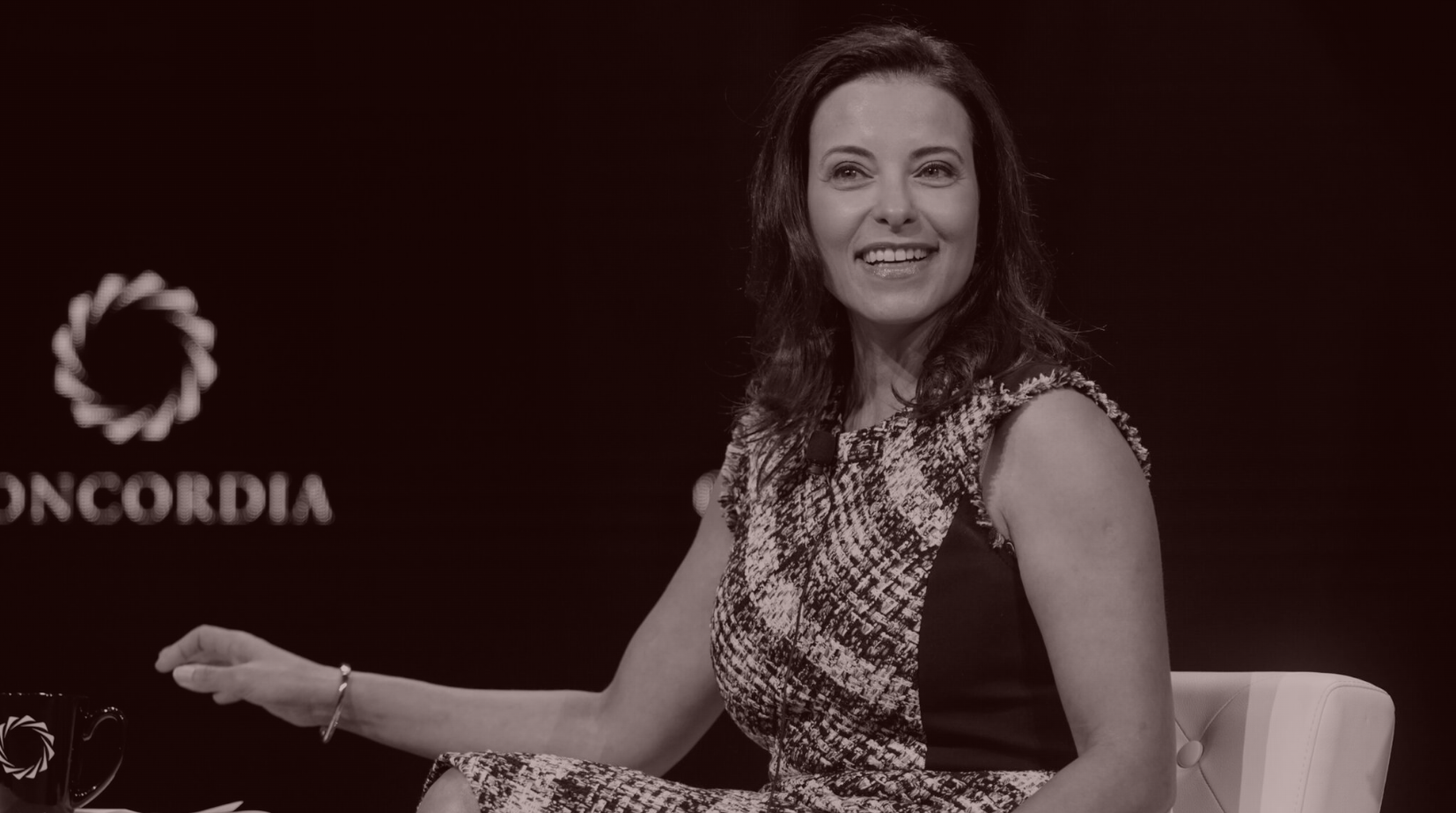
| Dina Powell-McCormack is the latest in a surprisingly high-level cohort of partners exiting the bank. It’s the latest sign of how finance is changing and just how hard it is for Goldman Sachs to be Goldman Sachs. |
|
|
|
| Things are starting to look a little more angsty than usual at Goldman Sachs these days, as more and more high-profile bankers, traders, and executives are voting with their feet and exiting the firm. Among them are people like Katie Koch, a partner who left last September to become the C.E.O. of TCW, the big Los Angeles-based alternative asset management firm that was bought in February by the Carlyle Group, now run by Harvey Schwartz, who lost out to David Solomon for Goldman’s top job in 2018.
Blackstone, the alternative-asset giant, has also poached at least two partners from Goldman, including Heather von Zuben, who had been named a partner a year earlier, and Craig Russell, a vice-chairman of Goldman’s asset management division. Maeve DuVally, formerly a Managing Director in the Corporate Communications group, left last year to write a gripping memoir about her gender transition while working at Goldman. (Maeve Rising: Coming Out Trans in Corporate America.)
More recent departures this year include Peeyush Nahar, who had joined Goldman in 2021, from Uber. In March and April came the announcements that a group of equity-related traders and bankers in Goldman’s Asia Pacific region were leaving the firm, including Canute Dalmasse, Fredrik Grunberger, Tomiyuki Oji, and David Williams. Also in March came the departures of three of Goldman’s top technology bankers, including Rob Chisholm, who is off to Qatalyst Partners; Nick Pomponi, who joined Evercore; and Colin Ryan, who is retiring. Then, in May, Troy Broderick, a partner who had just been promoted to the chief operating officer of Goldman’s world-beating M&A group, left to join Perella Weinberg, which is run by former Goldman partners Peter Weinberg and Bob Steel. (For what it’s worth, Goldman’s market value of $111 billion dwarfs that of Perella Weinberg, at $720 million.)
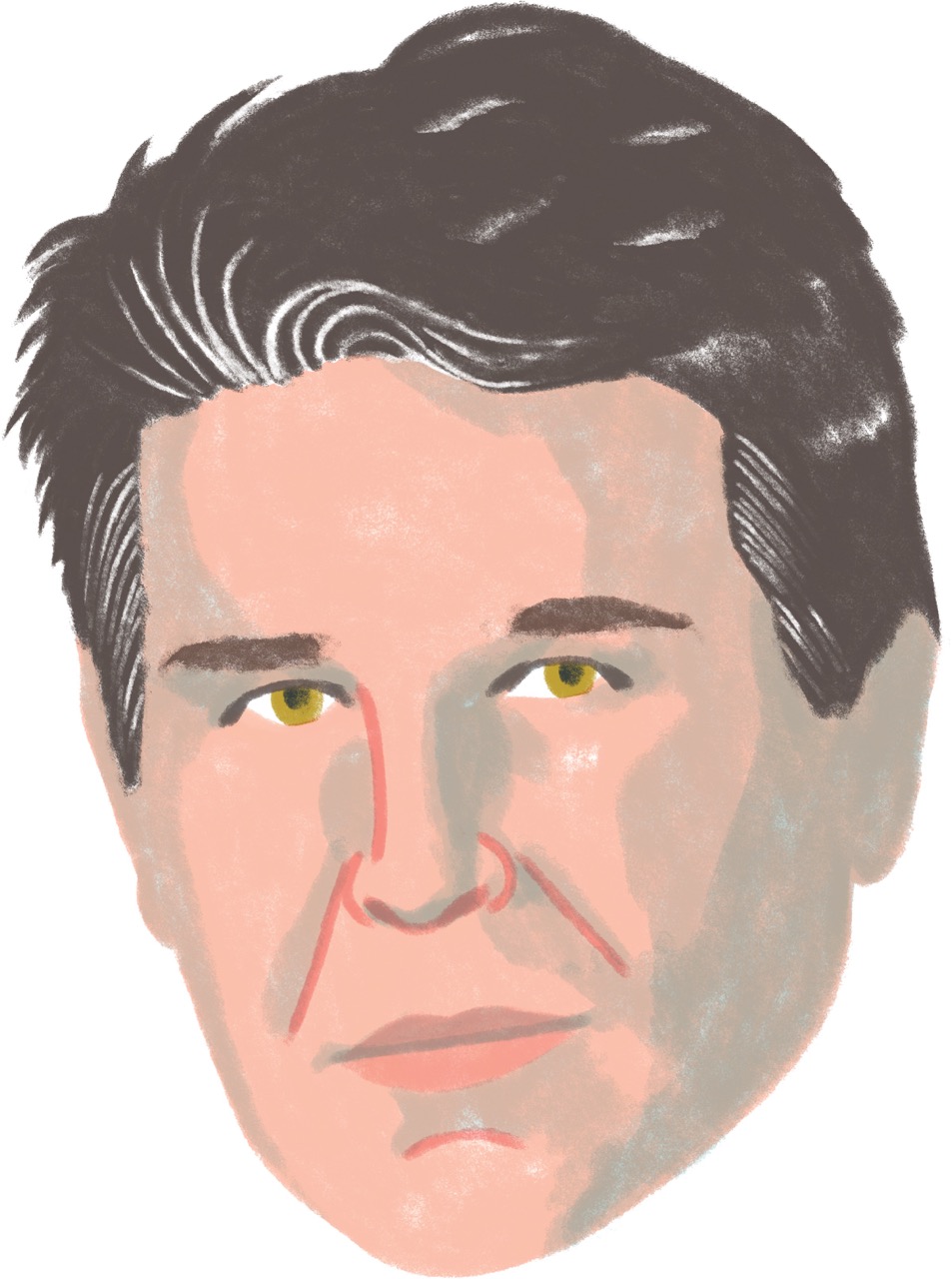
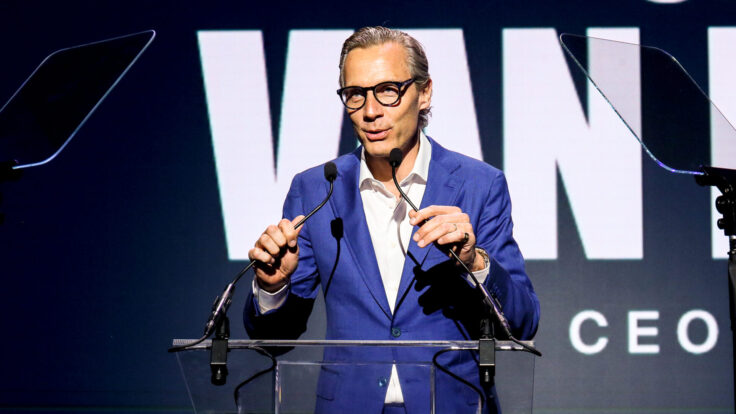
What really caught my attention, however, was the unexpected departure last week of Dina Powell-McCormick, after two tours of duty totaling 16 years. Dina, who was on the Goldman management committee and who came back to the firm at the behest of Solomon, himself, after her year-long stint as Donald Trump’s deputy national security advisor, will be leaving Goldman shortly to be a partner and “vice-chairman and president of its global client services business” at BDT & MSD Partners, the firm created late last year by former Goldman senior partners Gregg Lemkau and Byron Trott. (Lemkau left Goldman in 2021 to become the C.E.O. of MSD Partners, the investment firm founded using Michael Dell’s fortune in 2009, and by Trott, who was once Warren Buffett’s favorite investment banker.)
It is, truly, a bit of a watershed moment for both firms. “Dina has dumped David Solomon for her first love, Greg Lemkau,” one Goldman wag told me. What the heck is going on down at 200 West Street? As one former Goldman executive put it to me, “The whole Goldman Sachs situation is not looking as fabulous as it once did.”
|
|
A MESSAGE FROM OUR SPONSOR
|
 |
| You’re invited to register for Threads 2023, a virtual event by Plaid, the industry's leading network empowering financial institutions, enterprises, and fintechs to build the future of finance. Hear from Plaid CEO and Co-Founder, Zach Perret, CTO, Jean-Denis Greze, and other leaders in digital banking on how to supercharge every aspect of your financial offering. Accelerate payments, fight fraud, onboard more users, and more—all with the help of Plaid’s new products and cutting-edge updates. Register today, stream June 22.
Register Now |
|
|
|
|
| Goldman, of course, views the recent departures as just the normal course of business and part of the reality of ascending Wall Street’s greasiest pole: Others are always trying to poach the most exquisite Goldman employees, whether to be Treasury Secretary (as with former partners Bob Rubin and Hank Paulson) or to lead rival hedge funds, private-equity firms, or other financial institutions. Any organization that has grown to some 45,400 people is going to have plenty of departures, some desirable and some unexpected. And clearing out the top partners—usually after they have had a highly lucrative eight- to ten-year run—is empowering for the younger, more aggressive type-A Goldmanites, eager to become partners themselves, and is an essential part of the firm’s ethos.
But, somehow, this time it feels different. Goldman is now on its third round of layoffs since last September, including the mass firing of 3,200 employees in January, with another wave of 250 or so layoffs, some quite senior, rumored to be coming soon, thanks to the continuing slump in investment-banking deal activity.
Dina, who I have known for years, declined to comment on her departure from Goldman. She told me she’s not giving interviews about it. But since she returned from her stint in Trump’s White House and was installed on the management committee, she’s had a good run. She’s helped increase Goldman’s share of the sovereign wealth fund business and other large, institutional business. And I’m sure, as someone who has worked in large institutions her entire career—before Goldman and the Trump White House, Dina spent nearly a dozen years in Washington—she probably sees working with Lemkau and Trott as a chance to skate to where the puck is going to be on Wall Street.
After all, while retail money is flowing out of regional banks, the smartest money in finance these days is gravitating toward less regulated, more nimble, more bespoke firms, such as Blackstone, Apollo and KKR, as well as to the new crop of merchant banks, like BDT & MSD, that both advise clients and invest in them. (BDT & MSD Partners just invested around $100 million in the shares of Under Armour, buying them from founder Kevin Plank.) Dina will be part of the small group, along with Lemkau and Trott, that will be thinking about how to run the firm on a day-to-day basis, build for its future, and focus on its institutional and high-net-worth clients. She will start at the firm after her gardening leave and, in the meantime, will be helping Solomon with her transition any way that she can.
All of which is to say, good luck to Dina working at a much smaller, albeit high-wattage firm that still needs to figure out what its role will be in the fast-evolving Wall Street ecosystem. “I’m sad because she won’t be here,” said John F. W. Rogers, Goldman’s powerful longtime consigliere with the amorphous title of Chief of Staff and Secretary to the board of directors.
Rogers, who has been around Goldman for nearly 30 years and sits on the management committee, is the ultimate insider and survivor. He personally recruited Dina to Goldman after her first stint in Washington. “We’ve traveled a great journey together,” Rogers told me. “And we have got a lot of other things we’re engaged in that I hope will continue. But, for me personally, I’ll miss her creativity. And her energy is just infectious.” |
|
|
| One interesting subtext of the recent departures is the number of people who reported directly to Rogers who are no longer at Goldman, including Jake Siewert, who ran corporate communications and now works at Warburg Pincus, and his successor Andrea Williams.
Other recent departures who reported up to Rogers included Russell Horwitz, now at Citadel; the late David Wells, who had joined BlackRock shortly before his death; Amanda Rubin, now also at Citadel; Noa Meyer, now at BDT & MSD, like Dina; Patrick Scanlan, now at Viking Global Investors; Patrick Lenihan, now at Grindr; Andrew Williams, now at Brunswick; Lisa Shalett; and Rich LaTour, now at BlackRock. “A number of those people I wish were still here,” Rogers said. “I wish Russell was here. I wish Jake was here, particularly, because they were unique talents.”
Why did they all leave, I wondered? Rogers said he didn’t think there was anything out of the ordinary about the departures. That’s what often happens with talented people, he said. But one former Goldman executive told me that he thinks some of them left because they felt their upside at Goldman may have been capped. “There’s no room to grow,” this person explained. “Because John [Rogers] won’t leave. And David won’t make him. So at a certain point, everyone looks around and says, ‘Well, he’s never leaving. So I’ve got to find something else to do.” (For the curious among you, Rogers is 67 years old.)
This strikes me as surprising behavior for Goldman, which was once upon a time famous for pushing out partners after a decade or so at the top in order to give more junior bankers and traders a chance to move up. Are these high-level departures from Goldman just a coincidence? Are they all part of the Goldman plan? Or are they related to the firm’s ongoing struggles in a deflated market for deals?
Another theory posits that they related to Solomon’s leadership, which has been marked by silly critiques about his extracurricular DJ-ing and his use of Goldman’s two new corporate jets, as well as by more significant concerns about his management style and the fact that the firm seems to be losing ground to its chief rivals, JPMorgan Chase and Morgan Stanley, which have made a number of timely and clever strategic moves that have left Goldman more or less in the dust.
In February, the Financial Times editorialized that Goldman was looking more like a “damp squid” than the “vampire squid” that Matt Taibbi once depicted in and around the 2008 financial crisis. “That’s an opinion from one source,” Solomon told CNBC’s Andrew Ross Sorkin, back in February, about the FT’s editorial. “I look to our clients, and I listen to our clients, and the feedback from our clients about the way we serve them continues to be excellent.”
|
|
|
|
|
| Nevertheless, Dina’s departure seems to have struck a nerve with a number of old Goldman hands who knew that Solomon treated her very well—by bringing her back to the firm after the Trump fiasco, giving her a seat on the management committee, and compensating her handsomely—“but it’s kind of amazing that she didn’t feel compelled to stick around,” one told me. “What’s interesting is these people didn’t leave because of David. But David also couldn’t get them to stay. He couldn’t convince them to stay.”
Making matters worse, according to my Goldman sources, is the fact that Powell left Goldman for Lemkau’s firm. “There’s a whole psychodrama between Solomon and Lemkau,” I’m told. After all, Lemkau and Solomon were once close. But during the early days of the Covid pandemic, Lemkau moved to Hawaii. He had clients there, no doubt—particularly Egon Durban, the head of Silver Lake Partners—and thought it would be better for his family to be based there during the pandemic.
But Solomon understandably didn’t like the fact that one of the co-heads of investment banking was six hours behind New York. Early on in the pandemic, Solomon urged Lemkau to return to 200 West Street. But he didn’t. In November 2020, Lemkau announced that he was leaving Goldman at the end of the year to become the C.E.O. of BDT & MSD Partners. “There’s just a pattern there of David alienating people,” the old Goldman hand said. “And that just builds on itself, right? Because if Lemkau leaves, who is close to him, that makes it much easier for Dina.”
Tony Fratto, a deputy press secretary to George W. Bush and the highly respected co-founder of Penta (née Hamilton Place Strategies), now leads communications at Goldman. During a recent chat, Tony told me that accomplished people leaving is all part of the plan. He urged me not to look for “new storylines” related to the recent departures and what they might say about the state of the firm in 2023. “It’s one of the special, great things about Goldman,” he said during our conversation. “We attract amazing, talented people. So many of them are fully capable of running things. And they get those opportunities and it happens with regularity. And it has happened this way for decades.” (He’s right about that.)
He continued: “The only thing I’ll concede is that all of our departures at Goldman Sachs are high profile. These [people] are all the best at what they do. And they leave because they get to go do some interesting things and most of them have spent decades at Goldman and they get some different opportunities and they take [them]. And there’s nothing wrong with that. In fact, it is a feature of our talent, recruitment, and professional development here—not a bug. Not everybody can stay forever here. And you know, we all would have loved for Dina to stay, obviously”—Tony and Dina are close friends and have known each other for years from their Washington days—“but it is usual for people to leave.”
But Goldman may be starting to lose the war for talent, a battleground it dominated so profoundly that even Bill Gates once remarked that the bank was Microsoft’s biggest competitor for talent. Back in 1994, Mark Schwartz, one of Goldman’s patented “culture carriers,” as they were once known around the firm, gave a speech to the incoming class of partners. Goldman was coming off a horrible year, one that almost sunk the firm from a financial point of view. He told them that the whole partnership was going to be tested as never before. “But remember this,” he told them, “we have three things that make us the best firm on Wall Street, three things that our competitors want: our people, our clients, and our reputation. These three things are our most valuable assets. How we manage these assets will determine how successful we are in the future.”
Of course, high-powered Wall Street types, no matter how well managed, can lose altitude if they feel undervalued or underappreciated. Steve Schwarzman, the multi-billionaire co-founder of The Blackstone Group, was once asked why Blackstone is constantly moving into new businesses, such as hedge funds, private credit and distressed securities, along with its core business of private equity. He replied that he decided to get into new businesses at Blackstone because he believed he needed to provide his roster of talented executives a reason to stay at the firm, rather than a reason to leave the firm to find better opportunities elsewhere. “I want to keep my top people,” Schwarzman said, “but I need to provide them better opportunities. And when you expand into new geographies, new products and new businesses, they can see that there will be the opportunity for them to run things. That’s why I keep my people.”
Perhaps there is a lesson there for Goldman, at this crucial juncture in its long history. |
|
|
|
| FOUR STORIES WE'RE TALKING ABOUT |
 |
|
 |
|
 |
| Licht’s Out |
| CNN is turning the page on Chris Licht. |
| DYLAN BYERS |
|
 |
|
|
|
|
|
 |
|
|
|
Need help? Review our FAQs
page or contact
us for assistance. For brand partnerships, email ads@puck.news.
|
|
|
|
Puck is published by Heat Media LLC. 227 W 17th St New York, NY 10011.
|
|
|
|